
You sit down.
The chair rocks.
Your heart skips for a second.
If you’ve ever grabbed the table to stop yourself from tipping over, you already know how scary a wobbly chair can feel.
For older adults, one loose chair leg is all it takes to lose your balance. A fall can happen in seconds, and the recovery can take months.
A shaky chair can lead to:
- Falls
- Hip injuries
- Back strain
- Loss of balance
Most of us use the same chair every single day. We eat in it, read the newspaper, watch TV, chat with family, or do gentle chair yoga. When that chair isn’t stable, every sit-down becomes a gamble.
The good news? You probably don’t need a new chair.
Most wobbly chairs can be fixed at home with a few basic tools and about 20 minutes of work.
I’ll show you 7 simple ways to find the problem, fix it safely, and make your chair feel solid again.
This guide will show you exactly how to fix a wobbly chair step-by-step even if you’re not handy.
Table of Contents
Why Chairs Become Wobbly Over Time
Chairs loosen for several common reasons:
- Loose screws
- Uneven legs
- Wood joint separation
- Floor unevenness
- Worn-out hardware
Wood expands and contracts with temperature changes, especially in U.S. homes with seasonal humidity changes.
Over time, joints loosen.
The result?
That annoying wobble.
Fixing furniture is one piece of the picture. Our guide to home safety for the elderly covers the rest, room by room.
Find the real source before you touch a screwdriver
Most people grab a screwdriver first. I get it. But a wobble has 4 possible causes, and tightening screws only fixes one of them.
Test in this order: floor, then feet, then leg length, then joints.
Step 1: Move the chair to another room with a hard floor.
Wobble gone? Your floor was the problem. Stick rubber grips under the legs and leave the chair alone.
Step 2: Press each corner of the seat, one at a time.
One corner dips? A leg is short. Shim it. Don’t tighten anything.
Step 3: Hold two diagonal legs and rock gently.
If the frame twists side to side, the joints are loose. Now the screwdriver comes out.
Step 4: Sit down and lean back slowly.
Wobbles only when you lean back? That’s the back joints or seat rails, not the legs. I’ve seen people tighten leg screws for months chasing this one.
And here’s a trick for measuring a short leg exactly: slide sheets of paper under it until the rocking stops. Count the sheets. That stack is your gap, so buy a felt pad or leveler that thick.
A steady chair matters more when your balance is already shaky. These balance exercises for seniors go hand in hand with it.
7 Easy Ways to Fix a Wobbly Chair
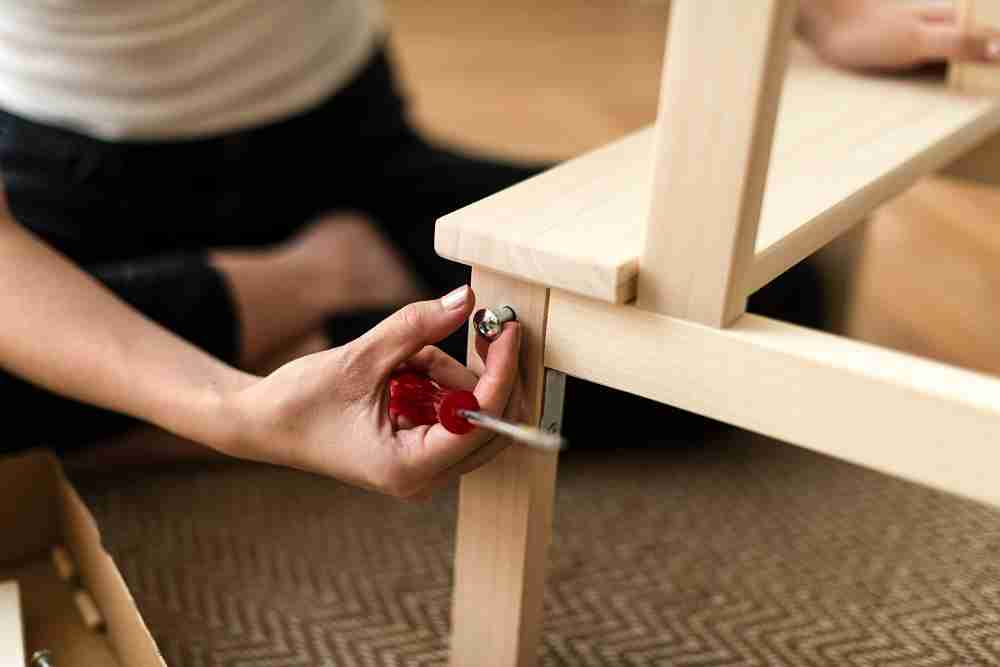
1. Tighten All Screws and Bolts (Most Common Fix)
Tools needed:
- Screwdriver
- Allen wrench (if needed)
Steps:
- Turn chair upside down
- Check all screws
- Tighten firmly (not overly tight)
In most cases, this solves the problem immediately.
2. Check for Uneven Chair Legs
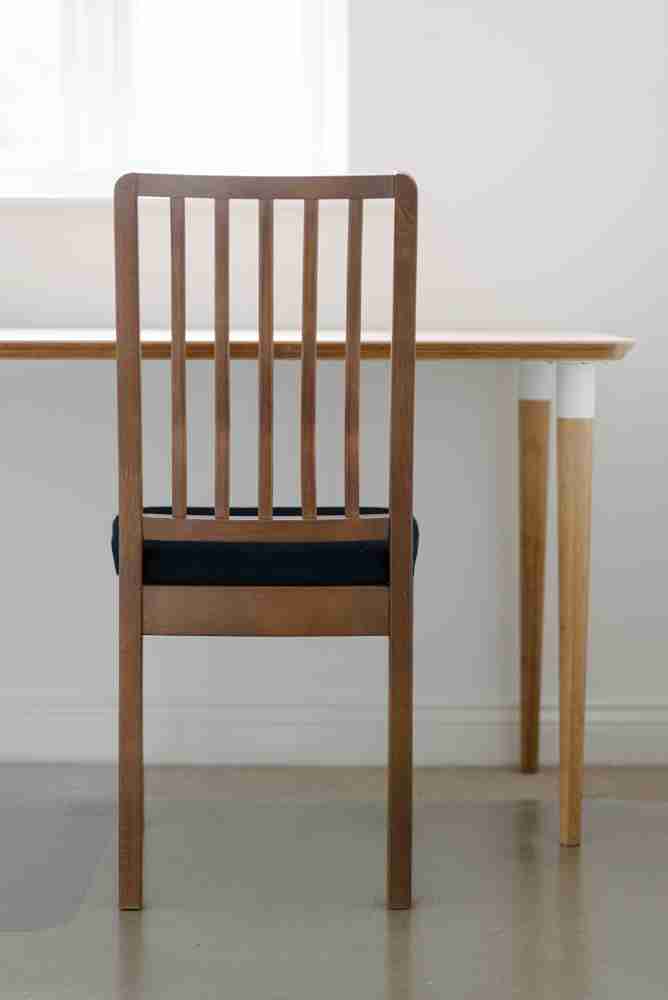
Place the chair on a flat surface.
Press each corner.
If one leg doesn’t touch the floor — that’s the problem.
Simple fix:
✔ Attach furniture pads
✔ Use adjustable chair levelers
✔ Add felt protectors
These are inexpensive and available at hardware stores.
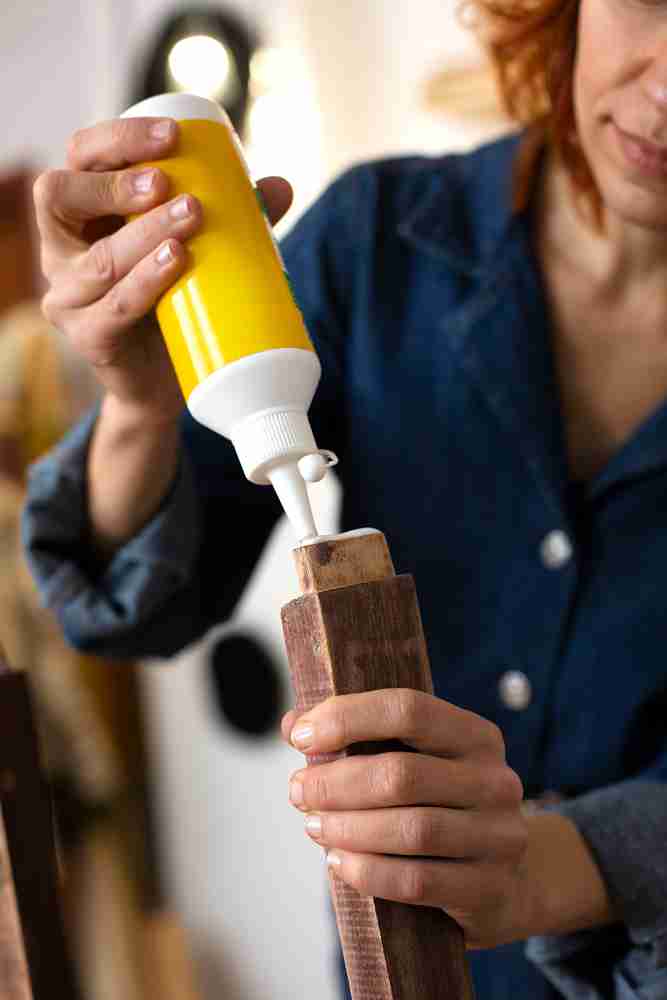
3. Use Wood Glue for Loose Wooden Joints
If the chair is wooden and joints feel loose:
Tools needed:
- Wood glue
- Clamp
- Clean cloth
Steps:
- Gently separate loose joint
- Apply wood glue
- Reattach tightly
- Clamp for 24 hours
This strengthens the frame significantly.
4. Insert Toothpicks for Loose Screw Holes
If screws won’t tighten:
Fix:
- Remove screw
- Insert wooden toothpicks dipped in glue
- Break off excess
- Reinsert screw
This fills the hole and creates grip.
5. Add Corner Brackets for Extra Stability
For heavily used chairs (like chair yoga chairs):
Install small metal L-brackets under the seat.
They:
✔ Reinforce structure
✔ Prevent future wobbling
✔ Improve weight support
Especially useful for seniors doing seated exercises.

6. Fix Uneven Floors Instead
Sometimes the floor is uneven — not the chair.
Test:
Move chair to different room.
If wobble stops, the floor is uneven.
Solution:
✔ Use rubber pads
✔ Add anti-slip furniture grips
7. Replace Worn-Out Hardware
Old bolts and screws can wear out.
Take one screw to hardware store and match it.
Replace all similar screws for uniform strength.
Myths that quietly make chairs worse
Some popular advice will damage your chair. A few I keep seeing:
| ❌ The advice | ✅ What actually happens |
|---|---|
| “Tighter is always better” | Overtightening strips the wood threads and cracks joints. Snug is enough. Stop when it firms up. |
| “Just add more glue” | Fresh glue won’t stick to old dried glue. Scrape the old stuff off first, or the joint fails again in about a month. |
| “Saw the longer legs to match” | You’ll end up with a shorter chair that still wobbles. Shim the short leg instead. |
| “Duct tape works as a quick fix” | Tape hides the movement while the joint grinds itself looser underneath. You feel safe. You aren’t. |
| “New chairs can’t wobble” | Flat-pack chairs loosen within 90 days as the wood compresses around the bolts. Retighten every new chair after 3 months. |
The dangerous fixes are the ones that hide movement. Especially if you trust that chair fully during seated exercises.
The right fix depends on your chair
A wooden dining chair and an IKEA flat-pack fail in completely different ways. So the fix changes too.
| Chair type | What usually fails | Do this | Skip this |
|---|---|---|---|
| Solid wood | Glue joints | Wood glue + clamp, toothpick trick | Overtightening |
| Flat-pack / particleboard | Cam locks, screw holes | Re-seat the cam bolts, use threaded inserts | The toothpick trick. It crumbles particleboard. |
| Metal | Weld fatigue, bent tubing | Replace it. Welds can’t be safely fixed at home. | Any DIY patch |
| Cane / rattan | Bindings and wraps | Professional repair | Glue-only fixes |
Climate matters too. Wood swells in humid months and shrinks in dry ones. If your chair loosens every winter and firms up every summer, glue it during the dry season. Glue a swollen joint and you lock the problem in.
And usage. A chair used for daily seated exercise loosens maybe 3 to 4 times faster than a dining chair, because every sit-to-stand rocks the joints.
✔ Exercise chair: check every 3 months
✔ Dining chair: every 6 months is fine
One more trap: carpet hides wobble. A chair can feel solid on carpet and be dangerously loose. Always test on a hard floor.
Building a routine around that chair? Start with mobility training for seniors.
Check the parts under the seat first
The legs are rarely the first thing to fail. The early warnings show up in 3 places most guides skip:
- Stretchers, the horizontal rungs between the legs
- Corner glue blocks, the small wooden blocks under the seat corners
- Seat rails, the frame the seat sits on
These parts take the side-to-side force every time you sit down. When one fails, the chair wobbles again 2 weeks after you tighten the screws. And you blame the screws.
The check takes 5 minutes:
- Flip the chair upside down in good light
- Grip each stretcher rung and twist gently. Any movement means that joint is failing
- Look at all 4 corners under the seat. A cracked or missing corner block is a silent wobble source
- Press each seat rail joint and listen for creaks
Regluing a loose stretcher properly:
- Pull the rung out of its socket
- Scrape off every bit of old glue (this step decides whether the repair holds)
- Fresh wood glue, reinsert
- Wrap a rope around all 4 legs and twist it tight with a stick. Old restorer’s trick, works better than most clamps
- Leave it 24 hours
My rule: if the same joint fails twice in a year, the hole has worn oval. Glue won’t hold it a third time. Retire the chair from daily use, and maybe look at whether a recliner built for seniors suits you better anyway..
For chairs you refuse to replace
This part assumes you’re comfortable with everything above. If you’re new to this, master the 7 basic fixes first.
Some chairs earn a proper restoration. Your grandmother’s dining chair, the reading chair you’ve had 20 years. Here’s how repairs get made to last decades:
Reglue the whole side, not one joint. Fix a single joint and the stress just moves to its neighbors. Restorers knock down and reglue every joint on the affected side in one session.
Pick your adhesive carefully. Standard wood glue works if the joint is scraped clean. Joint-swelling liquids can rescue slightly loose joints without disassembly. Epoxy is the strongest option, and also irreversible. Use it only as the last repair that chair will ever get, because nobody can fix that joint again.
Upgrade stripped holes with threaded inserts. The toothpick trick is a home imitation of this. Drill out the worn hole, screw in a small metal insert, and the bolt grips metal instead of tired wood. Costs almost nothing at a hardware store and it’s permanent.
Clamp square. After gluing, measure both diagonals of the leg frame with a tape. Unequal diagonals mean you’re about to glue a twist into the chair. Adjust before the glue dries, not after.
Know when to stop. If the repair costs more than about half the price of a good sturdy chair, replace it. And even a beautifully restored heirloom shouldn’t be your exercise chair. Keep a plain solid chair for your chair yoga practice and let the heirloom rest.
Printable Wobbly Chair Fix Checklist (Senior-Friendly)
Your printable checklist includes:
✔ Step-by-step repair guide
✔ Safety reminders
✔ Tool checklist
✔ Stability testing guide
Keep it in your home repair drawer.
Combine Safe Furniture With Safe Movement
Once your chair is stable, you can safely practice:
- Chair yoga
- Gentle stretches
- Balance exercises
For a complete senior-safe mobility plan, see:
Gentle Yoga & Mobility Guide for Stiff Joints, Balance & Daily Comfort
It includes:
✔ Beginner chair routines
✔ Balance improvement
✔ Fall prevention tips
✔ Joint protection exercises
How Long Does a Chair Repair Last?
If properly repaired:
✔ Tightened screws: 6–12 months
✔ Wood glue repairs: Several years
✔ Bracket reinforcement: Long-term
Regular maintenance prevents future wobbling.
How Often Should You Check Chairs?
Recommended:
✔ Every 6 months
✔ After moving furniture
✔ Before starting exercise routines
Preventative checks reduce accidents.
Conclusion
Learning how to fix a wobbly chair is simple and important — especially for seniors.
A stable chair:
- Prevents falls
- Improves posture
- Makes chair yoga safe
- Reduces injury risk
Most repairs take less than 20 minutes.
Small fixes make a big difference in safety.
FAQs for How to Fix a Wobbly Chair
Why is my chair wobbly?
Usually loose screws or uneven legs.
Can seniors fix a wobbly chair safely?
Yes, with simple tools and proper precautions.
Is a wobbly chair dangerous?
Yes. It increases fall risk, especially for seniors.
What is the easiest way to fix a wobbly chair?
Tightening screws is the fastest solution.
Should I replace my chair instead?
If the frame is cracked or broken, replacement is safer.