If belly fat makes everyday movement feel uncomfortable, chair yoga can be a practical way to get started with exercise. You can practice seated movements at home, use a sturdy chair for support, and build a routine that fits your current fitness level.
The goal is to move regularly and build habits you can maintain. Chair yoga works on flexibility, movement control, and muscular activity. Some yoga programs may also support weight management, especially when combined with changes to eating habits and other physical activity.
There is one thing to understand before you begin: chair yoga cannot selectively burn fat around your stomach. Your body loses fat overall, and where that fat comes off first depends partly on genetics, age, hormones, and other individual factors.
Table of Contents
Can chair yoga help reduce belly fat?
Yes, chair yoga can support a weight-management routine, but the results depend on how you use it alongside your other habits.
Seated yoga involves movements that engage your muscles, raise your activity level, and encourage you to move throughout the day. Some routines also include repeated arm movements and seated marching, which can increase the physical effort of a session.
Research reviewed by the National Center for Complementary and Integrative Health found that yoga programs may help some people with overweight or obesity reduce body weight, body fat, and waist size. The studies involved different types of yoga, so those findings don’t establish that chair yoga alone produces the same results.
You can read the NCCIH guide to yoga effectiveness and safety for more information.
Why belly fat can increase
Several factors influence how much fat your body stores around the waist.
- Age: Muscle mass tends to decline with age if you don’t maintain it through activity.
- Hormonal changes: Changes associated with menopause can affect where women store body fat.
- Daily activity: Long periods of sitting can leave you with fewer opportunities to move.
- Eating habits: Regularly consuming more energy than your body uses can contribute to weight gain.
- Genetics: Your genes influence your natural body shape and fat distribution.
Sleep, stress, medications, and some medical conditions can also affect body weight. You don’t need to change everything at once. Start with manageable activity and make eating habits easier to maintain.
For more information about abdominal fat and health, see the Mayo Clinic guide to belly fat.
How chair yoga fits into a belly-fat routine
Chair yoga is a good starting point if you’re new to exercise or need a seated alternative. It lets you practise movement without getting down on the floor.
A session can include gentle trunk rotations, seated marching, knee lifts, and controlled arm movements. These exercises use different muscle groups and can help you stay active during the day.
However, a few minutes of gentle stretching won’t necessarily burn enough energy to change your waist measurement. Combine chair yoga with other activity that suits your abilities, such as walking or additional seated exercise.
The NHS has a useful guide to simple sitting exercises for people who want to improve their mobility.
7 chair yoga exercises for belly fat
You can perform the following movements at home with a sturdy chair. They focus on abdominal engagement, trunk movement, and general physical activity.
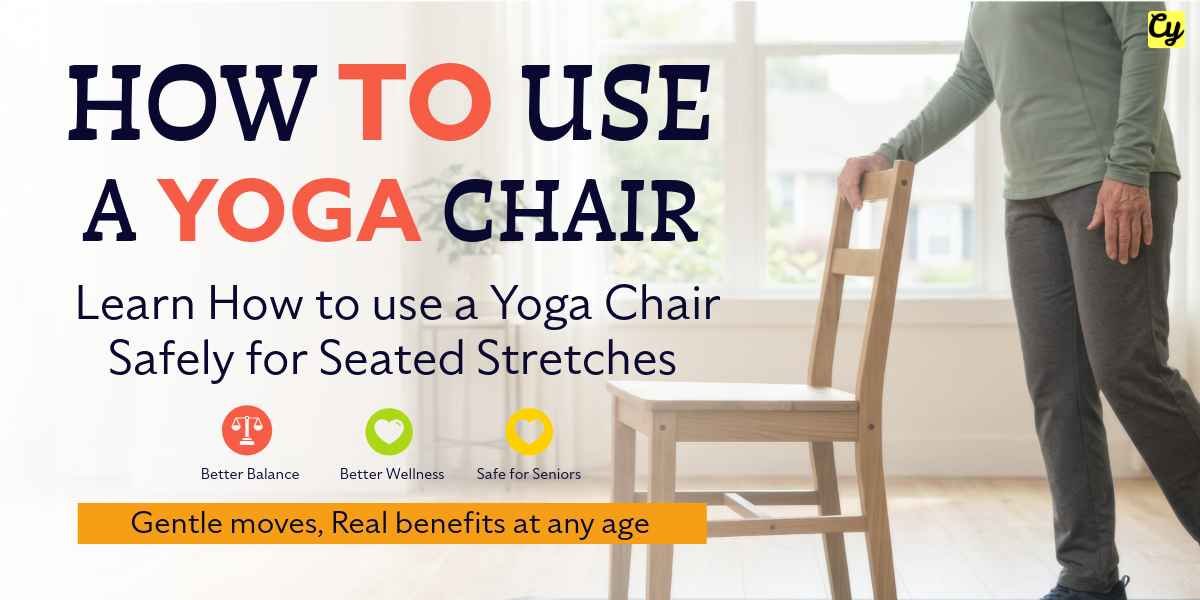
Choose a chair without wheels. Place it on a flat surface, keep your feet supported, and leave enough room around you to move your arms.
These exercises are general fitness suggestions, not a treatment for abdominal fat. Keep each movement comfortable, particularly if you’re new to exercise.
1. Seated abdominal brace
Suggested duration: 5 to 8 repetitions, holding each for 3 to 5 seconds.
Main focus: Abdominal muscle engagement.
The seated abdominal brace is a useful starting point because it lets you practise tightening your abdominal muscles while sitting upright.
- Sit toward the front of a sturdy chair.
- Place both feet flat on the floor, about hip-width apart.
- Keep your shoulders relaxed and your back in a comfortable upright position.
- Gently tighten your abdominal muscles as if preparing for a small cough.
- Hold the contraction for 3 to 5 seconds while breathing normally.
- Relax your abdomen and repeat.
You should feel your abdominal muscles working, but you shouldn’t strain or hold your breath. This exercise can help you become more aware of your core muscles. It doesn’t directly remove fat from your abdomen.

2. Seated marching
Suggested duration: 30 to 60 seconds.
Main focus: General movement and hip strength.
Seated marching is a simple way to add repeated movement to your routine. It works your hip flexors and engages your trunk as you control your position.
- Sit upright with both feet flat on the floor.
- Hold the sides of the chair if you need extra support.
- Lift your right knee a few inches.
- Lower your right foot gently.
- Repeat with your left knee.
- Continue alternating at a comfortable pace.
If the movement feels easy, add a gentle opposite-arm swing. Keep your back comfortable and avoid leaning backward as you lift your knees.
Start slowly. As your fitness improves, you can increase the duration or pace, provided you can still breathe comfortably.
Seated marching is also included in many senior exercise routines. You can find more accessible movements in our guide to chair yoga for obesity.
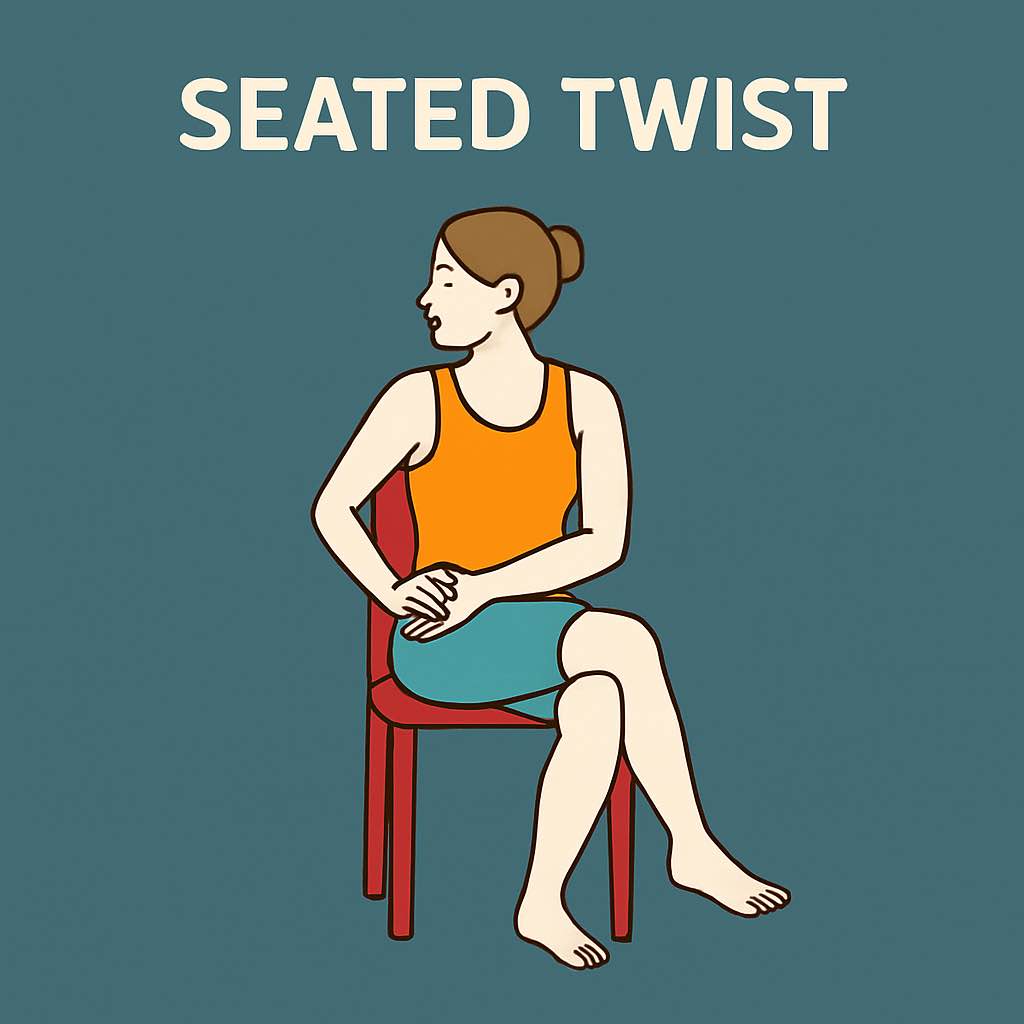
3. Seated torso twist
Suggested duration: 5 repetitions per side.
Main focus: Trunk mobility and movement control.
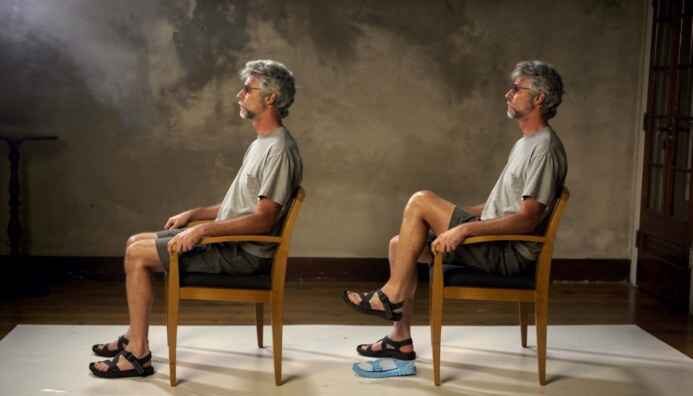
A seated torso twist lets you move your upper body while keeping your legs supported. The exercise works your trunk muscles and helps you practise gentle rotation.
- Sit upright with your feet flat on the floor.
- Place your hands comfortably on your thighs.
- Inhale and sit tall without forcing your back into an arch.
- Exhale and turn your chest gently to the right.
- Return to the centre.
- Repeat on the left side.
Keep the movement small and comfortable. Your hips should remain mostly facing forward, and you shouldn’t force your spine to rotate farther than it naturally allows.
A seated twist can help maintain comfortable trunk movement. It won’t specifically burn the fat covering your waist.
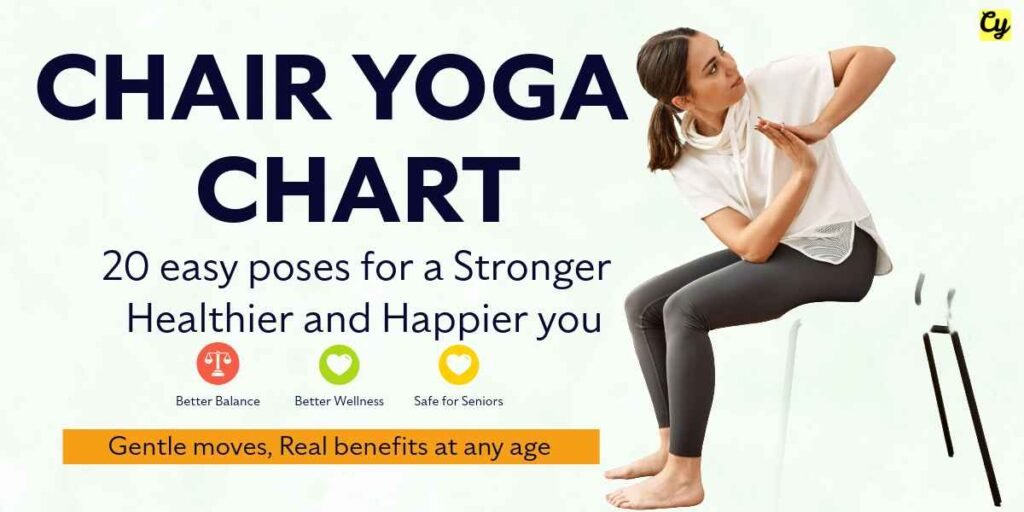
For more seated movements, visit our chair yoga chart for seniors, which includes gentle twists and other mobility exercises.
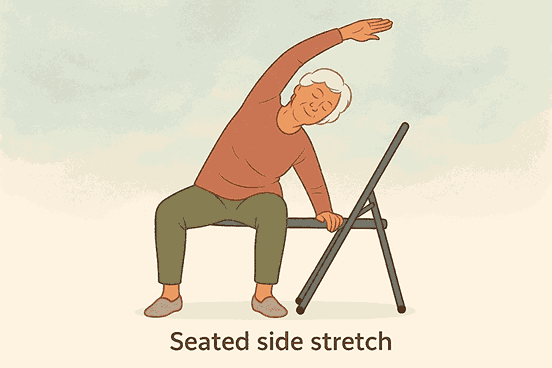
4. Seated side stretch
Suggested duration: 3 to 5 comfortable breaths per side.
Main focus: Side-body flexibility.
Side stretches move the muscles along your trunk and can help reduce the feeling of stiffness after long periods of sitting.
- Sit tall with your feet flat on the floor.
- Keep your left hand resting on your thigh or the side of the chair.
- Raise your right arm only as high as your shoulder allows comfortably.
- Lean gently to the left without twisting your torso.
- Take a few relaxed breaths.
- Return to the starting position and switch sides.
Keep both sitting bones supported by the chair. Avoid leaning so far that you feel unstable.
If lifting your arm causes shoulder discomfort, keep your hand at shoulder height or skip the arm movement.
This exercise can improve your ability to move comfortably through your trunk. You can include it in a longer seated routine with other stretches.
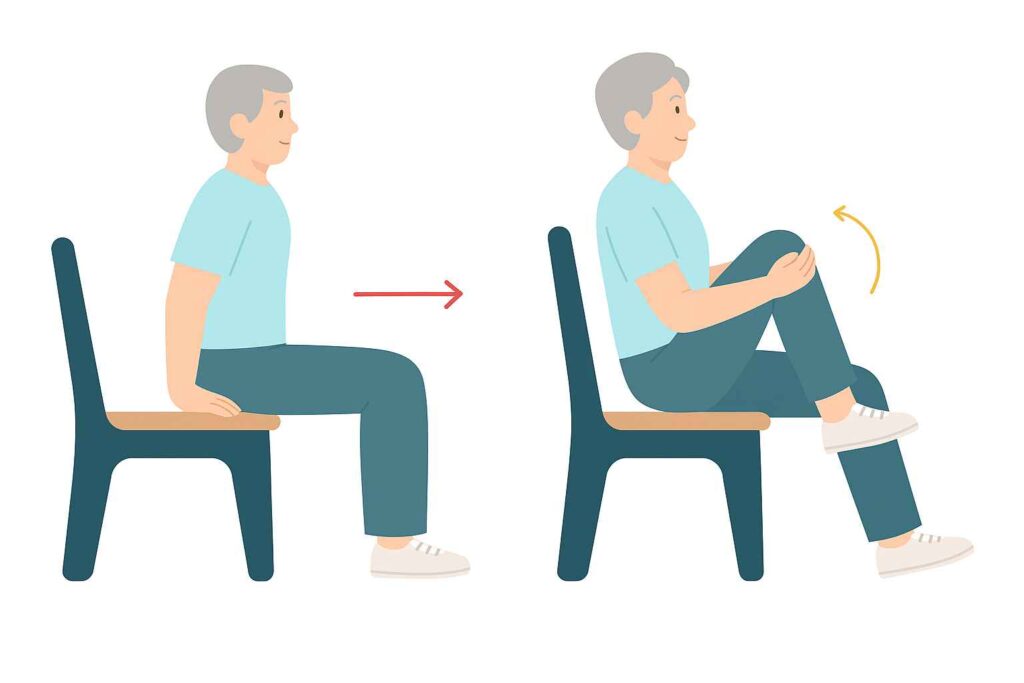
5. Seated knee lifts
Suggested duration: 6 to 10 repetitions per leg.
Main focus: Hip movement and core control.
Seated knee lifts are similar to seated marching, but you perform each repetition more slowly. This makes it easier to focus on control.
- Sit near the front of a stable chair.
- Place both feet flat on the floor.
- Hold the chair’s sides if necessary.
- Lift your right knee toward your chest as far as feels comfortable.
- Pause briefly without leaning backward.
- Lower the foot and repeat with your left leg.
You don’t need to lift your knee very high. Even a small movement can be a reasonable starting point if your hip mobility is limited.
Keep your breathing steady and stop if you experience hip or back pain.
Seated knee lifts engage the muscles around your hips and abdomen. They also give you another opportunity to add movement to your day.
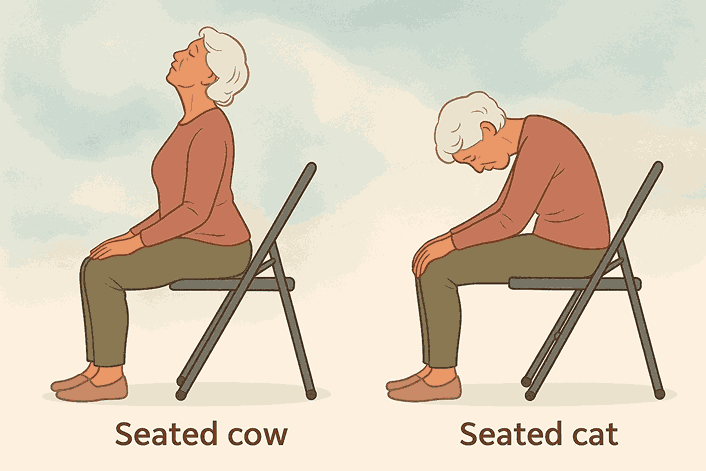
6. Seated cat-cow
Suggested duration: 6 to 8 repetitions.
Main focus: Gentle spinal movement and posture awareness.
The seated cat-cow movement alternates between gently rounding and extending your back. It’s often used in chair yoga to practise comfortable spinal movement.
- Sit with your feet flat on the floor and your hands resting on your thighs.
- Inhale and gently lift your chest, allowing a small natural arch in your back.
- Keep your shoulders relaxed.
- Exhale and gently round your upper back.
- Allow your chin to lower slightly without forcing your neck.
- Move between these positions slowly for 6 to 8 repetitions.
Keep the range small if your back feels stiff. You shouldn’t force your spine into either position.
The movement can help you practise spinal mobility and coordinate movement with breathing. It isn’t a direct belly-fat exercise, but it can form part of a routine that keeps you active.
For more ideas, explore our printable chair yoga exercises.
7. Seated arm reaches with abdominal engagement
Suggested duration: 8 to 10 repetitions.
Main focus: Upper-body movement and trunk control.
Adding arm movements can make a seated routine more active. This exercise also gives you a chance to practise maintaining a comfortable upright position while your arms move.
- Sit upright with your feet supported.
- Keep your abdomen gently engaged.
- Extend both arms forward at chest height.
- Reach forward slightly without rounding your back excessively.
- Bring your arms back toward your body.
- Repeat at a comfortable pace.
If your shoulders allow it, you can raise your arms slightly higher. Avoid reaching overhead if that causes pain or dizziness.
Keep your movements smooth and breathe normally.
This exercise is easy to adapt. You can perform it with one arm at a time or reduce the range if your shoulders are stiff.
A simple 10-minute chair yoga routine
You don’t need to perform all 7 exercises for a long time. Start with a short routine that you can repeat consistently.
| Time | Exercise | What to focus on |
|---|---|---|
| 1 minute | Comfortable seated breathing | Relax your shoulders |
| 1 minute | Seated abdominal brace | Gentle muscle contraction |
| 2 minutes | Seated marching | Smooth alternating knee lifts |
| 1 minute | Seated torso twists | Comfortable rotation |
| 1 minute | Seated side stretches | Gentle stretching |
| 2 minutes | Seated knee lifts | Controlled movement |
| 1 minute | Seated cat-cow | Coordinate movement with breathing |
| 1 minute | Seated arm reaches | Comfortable upper-body movement |
Rest whenever you need to. If 10 minutes feels too long, begin with 5 minutes and add time gradually.
You can also split your movement into shorter sessions throughout the day. For example, practise seated marching in the morning and do your stretches later.
The best starting routine is one you can complete comfortably and repeat without feeling exhausted.
How often should you do chair yoga for belly fat?
If you’re new to exercise, begin with 5 to 10 minutes of gentle chair yoga on several days of the week. Increase the duration gradually when your body tolerates the routine well.
As your fitness improves, you can aim for longer sessions or combine chair yoga with other activities.
For general health, the CDC recommends that adults aged 65 and older work toward at least 150 minutes of moderate-intensity aerobic activity per week, alongside muscle-strengthening activities on at least 2 days and activities that improve balance. Your appropriate target may differ if you have a medical condition or significant mobility limitations.
Chair yoga can contribute to your activity routine, but gentle stretching alone may not provide all the aerobic or strength activity you need.
If you’re unable to walk comfortably, a healthcare professional or physiotherapist can help you find appropriate seated alternatives.
What else helps reduce belly fat?
Chair yoga is one part of the picture. If your goal is to reduce abdominal fat, your everyday eating habits and overall activity level matter, too.
Eat balanced meals
Build meals around vegetables, fruit, whole grains, and suitable sources of protein. Include healthy fats in moderate amounts and choose portions that meet your needs.
You don’t need to eliminate every food you enjoy. Small changes that you can maintain are generally more practical than strict eating rules that leave you hungry or frustrated.
If you have diabetes, kidney disease, or another condition that affects your diet, seek advice tailored to your needs.
Pay attention to drinks
Sugary drinks can add energy to your diet without making you feel as full as a meal. Replacing some of them with water or unsweetened drinks can be a useful change.
You don’t need special detox drinks, slimming teas, or products advertised as belly-fat burners.
Move more throughout the day
Long periods of sitting can leave little room for movement. Stand, walk, or perform seated exercises at regular intervals if your health and mobility allow.
You can combine chair yoga with short walks, household activities, or other exercises recommended for your abilities.
The British Heart Foundation’s guide to belly-fat exercise explains why overall activity matters more than exercising one body area alone.
Include strength exercises when appropriate
Maintaining muscle becomes increasingly important as you age. If you’re able to do so safely, include appropriate strength exercises alongside your chair yoga routine.
These might include resistance-band exercises, light hand weights, or supported movements selected for your fitness level.
Ask a qualified professional to help you choose exercises if you have joint pain, balance problems, or a history of injury.
Get enough sleep
Sleep affects appetite, energy, and your ability to maintain everyday habits. Try to keep a regular sleep schedule and speak with a healthcare professional if persistent sleep problems are affecting your daily life.
There is no single sleep routine that guarantees fat loss, but getting enough rest can make healthy habits easier to maintain.
How long does it take to lose belly fat with chair yoga?
There is no reliable timeline for losing belly fat through chair yoga. Some people may notice better mobility or improved exercise tolerance before they notice changes in their weight or waist measurement.
Fat loss depends on your overall activity, food intake, body composition, age, and other personal factors. Gentle chair yoga alone may not create a large enough change in energy expenditure to produce noticeable weight loss.
Give yourself time to build a routine. Track progress using measures that matter to you, such as being able to complete a longer session, move your knees more comfortably, or participate in daily activities with less fatigue.
If you choose to track your waist measurement or body weight, look at changes over time rather than judging your progress from a single day.
Avoid extreme diets or exhausting exercise sessions in an attempt to speed up results.
Is chair yoga suitable for older adults?
Chair yoga can be a useful way for older adults to practise movement, especially when getting down to the floor or maintaining standing balance is difficult.
A 2024 randomized controlled trial examined a 12-week chair-based yoga program for adults aged 65 and older who had multiple long-term health conditions. The program was considered safe and acceptable, although it didn’t produce statistically significant improvements in the main quality-of-life outcome compared with usual care.
You can read the study on PubMed Central.
Chair yoga can help people participate in physical activity, but research on one program doesn’t prove that every routine will produce the same health outcomes.
If you’re older and want to reduce belly fat, begin with movements that match your strength and mobility. Increase the effort gradually and get professional advice if you have ongoing health concerns.
Safety tips before starting chair yoga
Use a sturdy chair with no wheels. Place it on a level, non-slip surface and make sure your feet can reach the floor comfortably.
Start with gentle movements and avoid forcing your spine, hips, or shoulders into uncomfortable positions.
Keep breathing throughout each exercise. Stop if you experience chest pain, unusual shortness of breath, dizziness, or sharp or worsening pain.
Speak with a healthcare professional before beginning a new routine if you’ve recently had surgery, have significant joint or spinal problems, or have a condition that affects your ability to exercise safely.
You can find additional seated movement ideas in our guide to printable chair exercises for seniors.
Frequently asked questions
Does chair yoga burn belly fat?
Chair yoga uses energy and can support a more active lifestyle. However, it doesn’t specifically burn fat from your stomach. Reducing abdominal fat depends on changes in overall body fat, which are influenced by diet, activity, and individual factors.
Which chair yoga exercise is best for belly fat?
Seated marching is a practical starting point because it involves repeated movement of the legs and can be performed at different paces. Seated knee lifts, abdominal bracing, and gentle torso movements can also fit into a balanced routine.
No single exercise is best for everyone, and none can guarantee belly-fat loss.
Can I reduce belly fat without standing up?
You can increase your activity through seated exercises if standing is difficult. Chair yoga and seated marching can help you move more, but the amount of fat lost depends on your overall routine and eating habits.
A physiotherapist can help you select seated activities if you have limited mobility.
Can seniors do chair yoga every day?
Many older adults can practise gentle seated movements regularly, provided the exercises suit their abilities. Start with a short session, allow time for recovery, and adjust the routine if you experience discomfort.
People with medical conditions or injuries should ask their healthcare professional about appropriate exercises and frequency.
How many minutes of chair yoga should I do?
Start with 5 to 10 minutes if you’re new to exercise. You can gradually increase the duration as your fitness improves.
Your ideal routine depends on your health, mobility, and other physical activity. Longer sessions aren’t automatically better if they leave you exhausted or cause pain.
Will seated twists make my waist smaller?
Seated twists work on trunk movement and flexibility. They don’t selectively remove fat from the waist.
Include them because they help you practise comfortable movement, and combine them with other activities if your goal is weight management.
Can chair yoga help after menopause?
Chair yoga can help postmenopausal women stay active and practise gentle movement. Changes in hormones during menopause can affect abdominal fat distribution, so a broader approach involving physical activity, eating habits, sleep, and appropriate medical guidance may be useful.
Anyone experiencing significant symptoms or unexplained weight changes should discuss them with a healthcare professional.
Final thoughts
Chair yoga for belly fat can be a practical starting point if you want to move more without relying on floor exercises or prolonged standing. Begin with seated marching, abdominal bracing, gentle twists, and other comfortable movements.
Pair your routine with balanced meals and other physical activity that suits your abilities. Give yourself time to build the habit, and pay attention to changes in your strength, mobility, and everyday comfort.
Your aim is steady progress that fits your life. A short session you can repeat regularly is a sensible place to start.
Medical disclaimer: This article is for general educational purposes and isn’t a substitute for medical advice, diagnosis, or treatment. Consult a qualified healthcare professional before starting a new exercise program if you have an existing medical condition, an injury, or concerns about your ability to exercise safely.