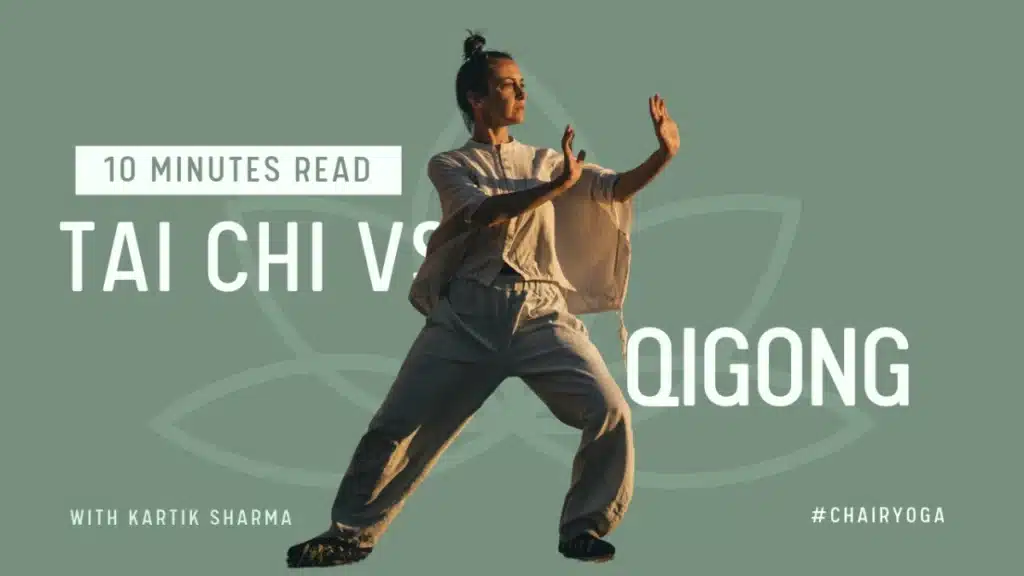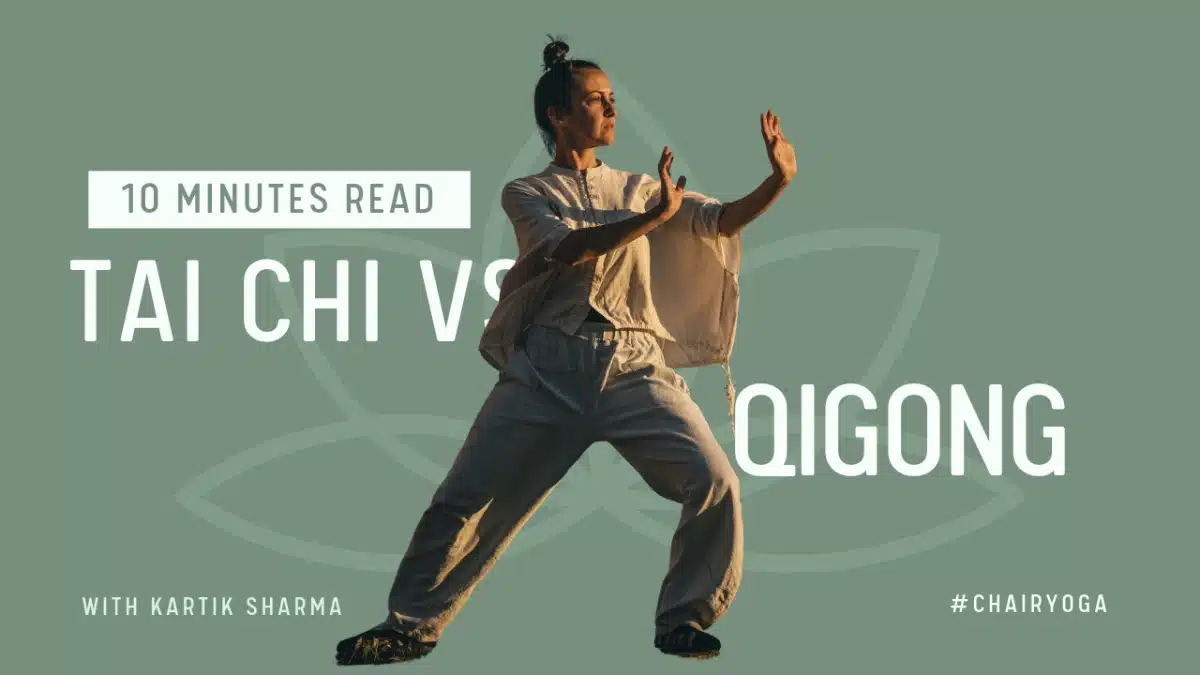

Qigong and tai chi can look identical from your armchair: slow arms, calm faces, and gravity-defying patience. Then you take a class, and one instructor hands you a 100-move form to memorize while the other says “we’ll repeat this one wave for six minutes.” Tai chi vs qigong is a real choice with real consequences, and for seniors the differences matter more than the marketing of either camp says.
This guide settles it the practical way: what each practice actually is, where they genuinely differ (with a table so you stop guessing from prose), what the balance research says for your bones, and two starter weeks you can run from your chair or behind it.
Table of Contents
The 60-second answer
If you only read one part of this page, read this.
| Your situation | Start with | Why |
|---|---|---|
| You struggle with balance or walking stability | Qigong first | Most moves stay in one spot; less memorized stepping on day one |
| You want visible “progress” to stay motivated | Tai chi | Forms give you milestones: level 24, level 48 |
| You want chair-friendly exercise | Qigong | Largest seated repertoire of the two |
| You want meditative breathing as the main event | Qigong | Breath training is explicit, not incidental |
| You enjoy learning choreography | Tai chi | The form is the product |
| You can’t commit to weekly classes | Qigong | Repeating 3 moves daily beats half-learning 24 weekly |
| Honestly torn | Either, honestly | Both beat the sofa; one studies in yours too |
Both work. The one you’ll show up for tomorrow morning wins, every time the question gets asked.
What qigong actually is
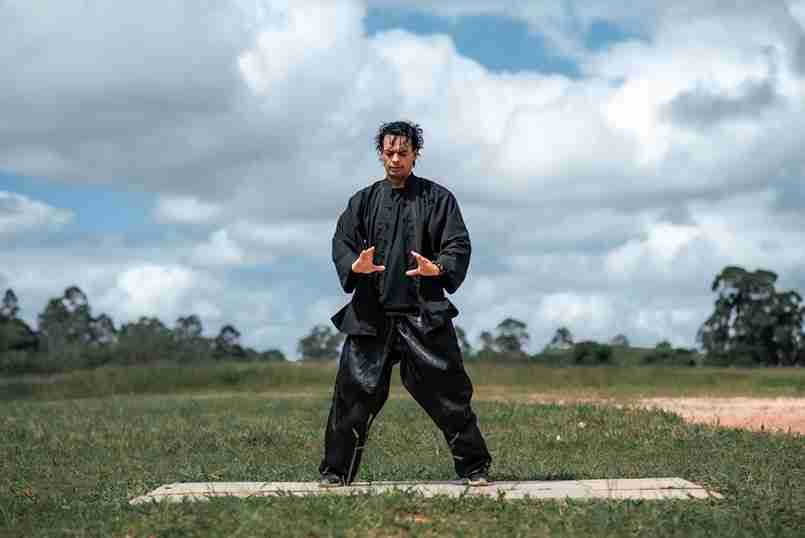
Qigong (you’ll see it typed as chi gong, qi gong, and qigong; all three point at the same practice, pronounced “chee-gong”) is an umbrella term for Chinese mind-body exercises built on three ingredients: gentle movement or stillness, slow breathing, and directed attention.
That umbrella is wide. Some qigong is one posture held for ten minutes. Some is a repeated arm wave with breathing counts. The famous sets you’ll actually meet in classes include the 8 Brocades (eight standing exercises, each targeting a body region) and cloud-style flowing arm patterns. Seated adaptations exist for almost all of it, which is why qigong shows up constantly in senior classes.
Qigong’s roots run through Traditional Chinese Medicine and Taoist tradition, so classes sometimes explain moves in terms of meridians and energy flow. You can take that framing or leave it; the movements and breathing work on their own terms. The NIH’s NCCIH research summary is the best neutral explainer if you want the evidence-first view.
What tai chi actually is
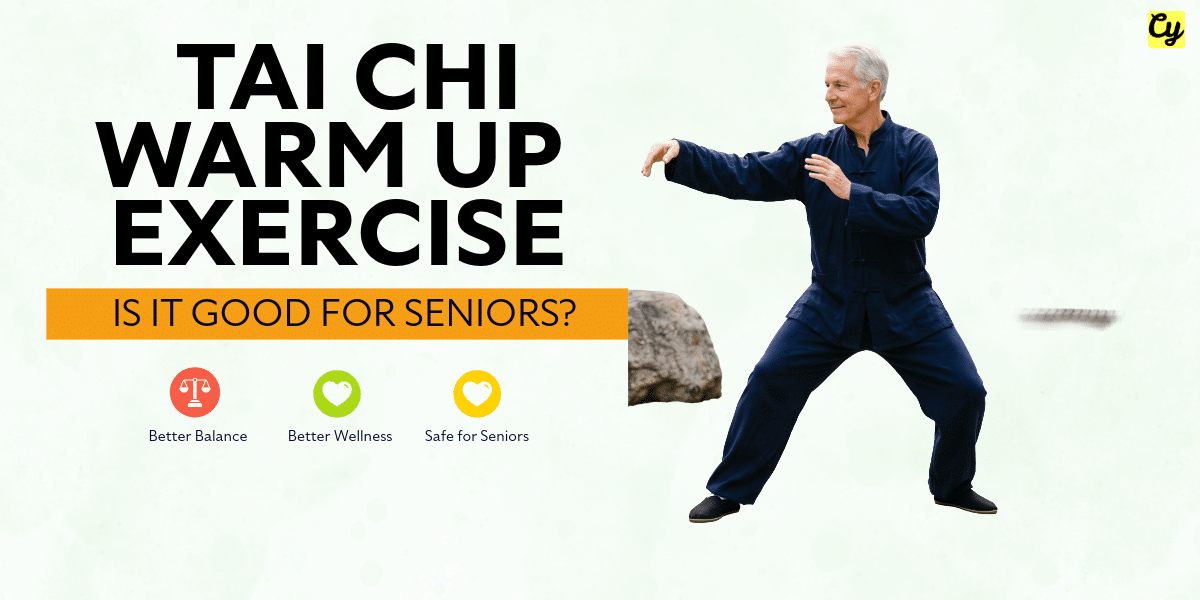
Tai chi (taijiquan) is a Chinese internal martial art that most people today practice for balance, coordination, and calm rather than combat. The signature feature is the form: postures linked into one continuous choreography.
Forms come in flavors named after families: Yang (slow, wide, the most common senior class style), Chen (lower stances, some explosive energy), Wu (smaller, tighter frames), and Sun (lively footwork, popular in physical therapy settings). A short form runs about 24 movements; long forms go deep into triple digits.
Learning tai chi means learning footwork, weight shifting, and sequence memory together. That’s the honest cost. The payoff shows up in your legs: the constant, controlled weight transfer is why balance researchers love studying it.
One sentence on the relationship before the next section: tai chi practiced for health sits inside the broader qigong family, the way square sits inside rectangle, but tai chi carries its own martial history and choreography that qigong doesn’t.
Where they overlap completely
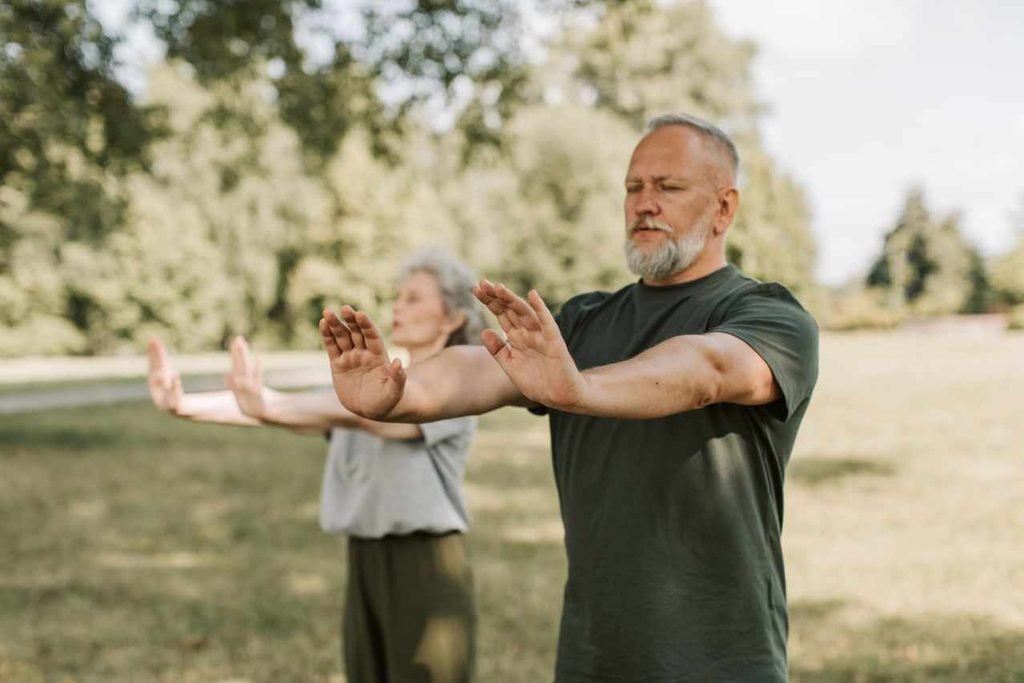
Both traditions deliver the same foundational four:
- Slow, intentional movement instead of speed or force
- Breathing coordinated with movement
- Relaxed but upright posture
- Attention paid inward (a moving meditation, in plain words)
Both are low impact. Both scale to your current ability. Both improve with daily 10-minute practice more than weekly hourlong heroics. And both are studied the same way: small trials, real effects on balance and stress, and honest borders around what they can’t treat.
The real differences (table + plain words)
| Factor | Qigong | Tai chi |
|---|---|---|
| Structure | Individual exercises, repeated | Linked choreography (a form) |
| Memory load at the start | Low: one move at a time | Higher: sequences, directions, transitions |
| Footwork | Mostly stationary | Constant stepping and weight shifting |
| Breath training | Explicit: an actual skill of the practice | Present, woven inside the form |
| Chair version | Huge repertoire | Exists, but it’s an adaptation of the art |
| Martial heritage | Some systems, not all | Core to the tradition, even in health practice |
| Beginner visible wins | Days: a calming routine you own | Weeks: the first section of a form |
| Session shape | Flexible, gaps-proof | Best learned in connected blocks |
| Best-fit student | You want calm on demand | You love learning skills with depth |
The learning-curve row deserves emphasis because it decides most seniors’ outcomes. Qigong gives you a complete, satisfying practice in one session. Tai chi asks for weeks of classes before the routine feels complete. If consistency is your weakness, qigong covers for it. If routine boredom is your weakness, tai chi feeds your progress-hungry brain for years.
Which is better for seniors? (what the evidence says)
Balance and falls, the two stakes that matter most after 60, favor tai chi in the literature. The JAMA Internal Medicine 2018 trial (Li et al.) found a tai ji quan program cut falls in older adults more effectively than stretching or a mixed exercise approach, and the effect strengthened in people with multiple falls already on their record. The NCCIH overview above points in the same direction for both practices.
Two honest caveats before you run out to enroll:
The research studies taught and supervised programs. Self-taught via smartphone, results are much murkier. A weekly class plus daily home practice is how the actual trials were run, and it’s how you should copy them.
The winner for you is the one that doesn’t injure you into quitting. Falls prevention needs months, and months need attendance. That 60-second table at the top is the attendance predictor.
For mood, pain, and quality-of-life outcomes, the evidence for both practices reads similarly and reasonably: meaningful improvements in quality-of-life measures and weaker proof for specific disease claims. Neither practice replaces your doctor, your physio, or your medication list.
The costs, honestly
This decides as many choices as the philosophy does.
- Free path: YouTube is loaded with quality qigong and tai chi instruction (full 8 Brocades sessions, full short forms). Cost: $0. Downside: nobody corrects your posture.
- One good class per week: typically $10-20 in community or senior centers, sometimes free through libraries or parks departments. This is the trial-tested format.
- Online courses and certifications: anywhere from ~$50 courses to thousands for instructor training. Only worth it if teaching others is the goal, and that’s a different conversation than getting your own balance back.
Our recommendation shape: one weekly class if it’s within reach, daily 10-minute home practice either way, free videos filling the gaps in between.
Two starter weeks (10 minutes a day)
| Day | Qigong beginners (10 min) | Tai chi beginners (10 min) |
|---|---|---|
| 1 | Seated breathing + posture check, 6 slow breaths; one arm wave, 2 min | Standing posture + 3 slow weight shifts behind a chair |
| 2 | Repeat day 1, one extra minute of settling | Re-learn day 1 sequence, add 2 more steps |
| 3 | 8 Brocades, exercises 1-2 only, slow reps | Find a beginner step video: learn 4 movements |
| 4 | Seated cloud hands, 3 minutes, breathing counted | Practice your 4 moves + review |
| 5 | One held standing posture, 3 minutes attention | Walk your sequence slowly, no rush |
| 6 | Full 10 min of your favorites | Join the pieces together once, twice |
| 7 | Note how the week felt | Same, then rest |
The qigong column is complete by design. The tai chi column is the opening section of a longer journey; expect 6-10 lessons before a short form is yours.
Both practices, chair edition (our home territory)
You don’t need a trad-class standing requirement to start either practice. Seated tai chi and qigong are real, and for a share of readers they’re the only honest entry point.
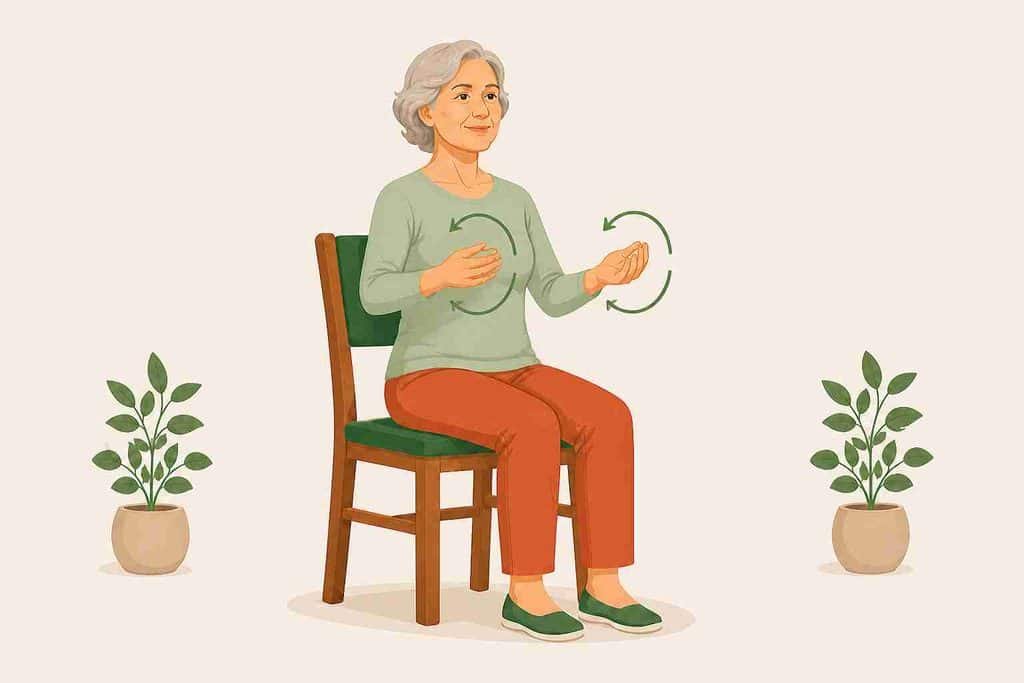
- Seated qigong keeps nearly everything: breath training, cloud hands, upper-body waves, even modifications of the Brocades.
- Chair tai chi adapts weight shifting and turning into supported ranges. It’s slower, still real, and building blocks for standing work later if your legs allow it.
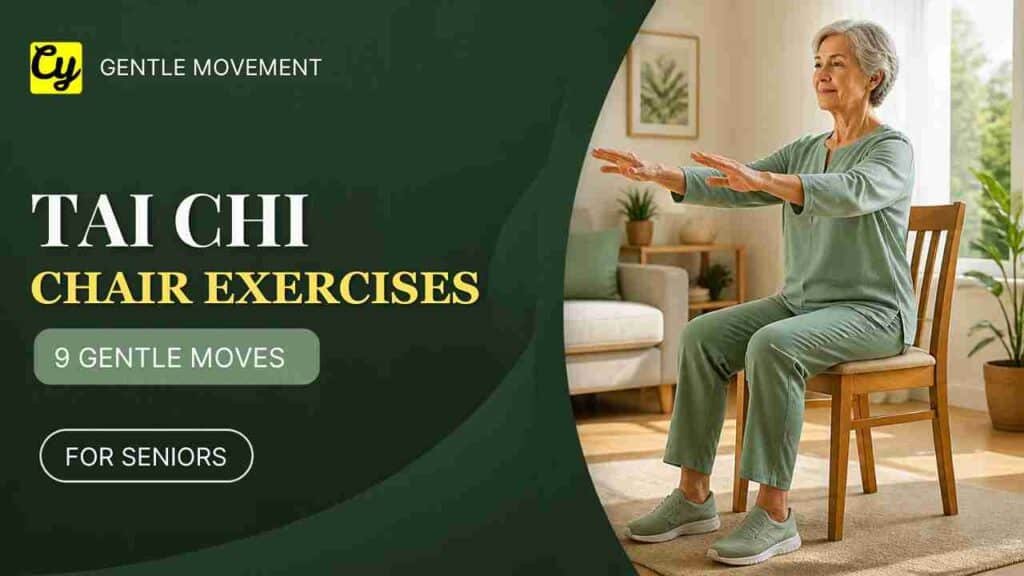
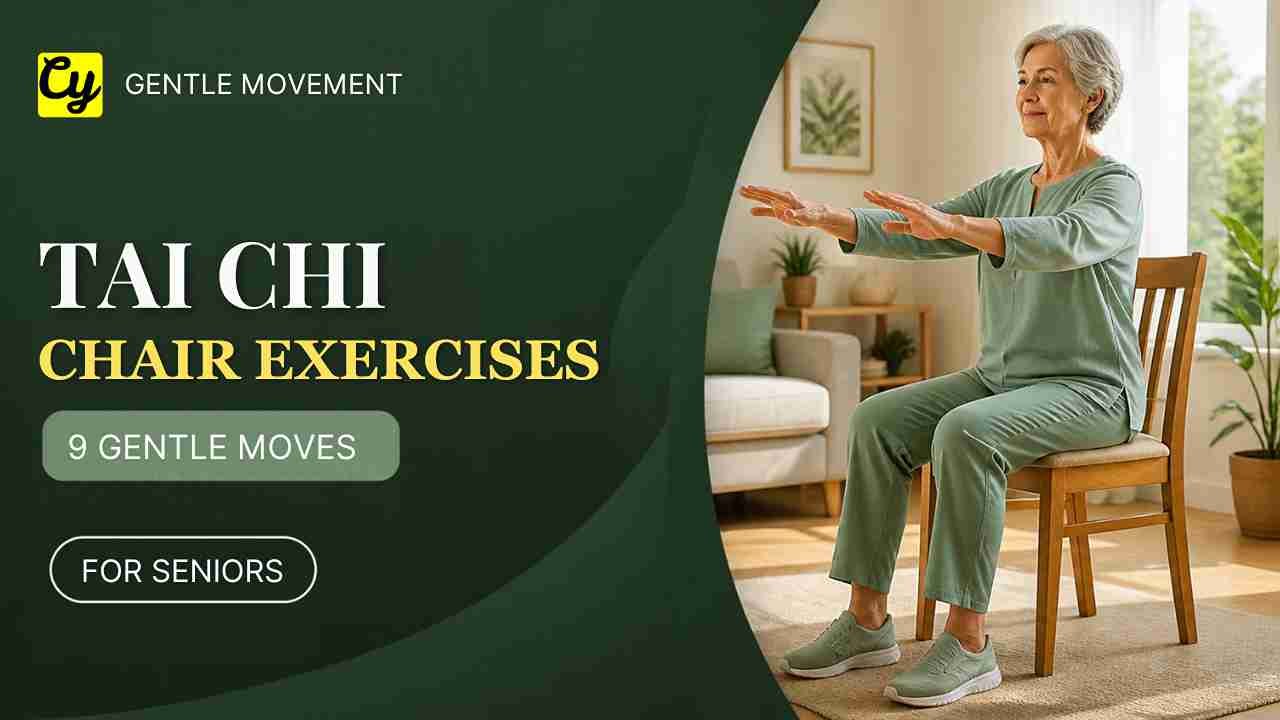
If seating yourself is the honest choice, start with our 9 tai chi chair exercises for seniors, then the fuller tai chi in a chair guide. Your balance work can graduate you to standing behind a chair with both practices over the coming months. Severe osteoporosis or recent surgery? Clear it with your doctor first, then follow the same advance.
Quick verdicts (pick your goal)
- Fall prevention is goal number one: weekly tai chi class (JAMA-backed format) + daily self practice.
- Stress and sleep head the list: qigong, breath-first, seated or standing.
- Arthritis-stiff joints drive your choice: gentle qigong first (more seated range), then add tai chi stepping gradually.
- You want a hobby with a ladder: tai chi, forms and styles give years of levels.
- You want zero cost and zero commute: qigong from free videos, practiced daily.
And if you want to settle the deeper framing: the tai chi vs yoga comparison takes the third tradition head-on, and stronger bones have their own guide in our yoga for osteoporosis pillar.
Frequently asked questions
Is qigong the same as tai chi? They share slow movement, breathing, and attention, but they’re distinct. Qigong is a broad family of practices, many built around repeating single exercises or holding posture. Tai chi is a specific martial art, practiced through connected forms, and it carries that martial framework even in health-focused classes.
Is tai chi a form of qigong? Fairly classified, tai chi for health lives inside the qigong family umbrella. But its forms, techniques, and history keep it a distinct tradition rather than a qigong subset.
Is qigong easier than tai chi? To start, yes for most people: you can repeat one exercise forever without memorizing a sequence. Both deepen with years of study, and advanced qigong is not a beginner’s recess by any stretch.
Which is better for seniors with balance problems? The falls research favors taught, supervised tai chi programs, while qigong’s stationary moves make it the safer daily home practice. The best practical combo: one tai chi class weekly for the balance training, daily qigong for the home routine, with your doctor’s clearance for anything steadier than “careful.”
Can you do qigong sitting down? Yes, and it’s one of qigong’s best features. Breath work, arm patterns, and attention practices all have seated versions, which is why qigong dominates chair-based mindful movement classes.
Can you practice qigong and tai chi together? They mix well and many classes teach them together. A common rhythm: qigong to warm up and settle the breath, then tai chi form work, then qigong standing to close.
Tai chi vs qigong vs yoga: which one should I pick? Yoga brings floor work, poses, and a South Asian lineage; tai chi adds stepping and choreography to slow movement; qigong is the gentlest entry with the strongest seated repertoire. Pick by what your body tolerates and your brain enjoys: you can rotate later. None of the three replaces medical care.
Key takeaways
- Qigong = broad family of gentle practices; tai chi = specific martial art built on linked forms.
- Beginners usually land easier with qigong; motivated learners usually progress further with tai chi.
- Taught tai chi programs carry the strongest balance and falls evidence for older adults.
- Seated versions of both exist, and qigong’s chair repertoire is the larger.
- One weekly class plus daily 10-minute home practice is the format the actual studies used.
Final thought
The debate between these two practices gets argued by people who never practiced either. Run the 60-second table instead, pick the column that matches your body this month, and give it two honest weeks. The practice you actually show up for will beat the theoretically superior one every single time.
This article shares general wellness information, not medical advice. Talk to your doctor before starting a new exercise practice, especially with balance disorders, severe osteoporosis, recent surgery, or a chronic condition.