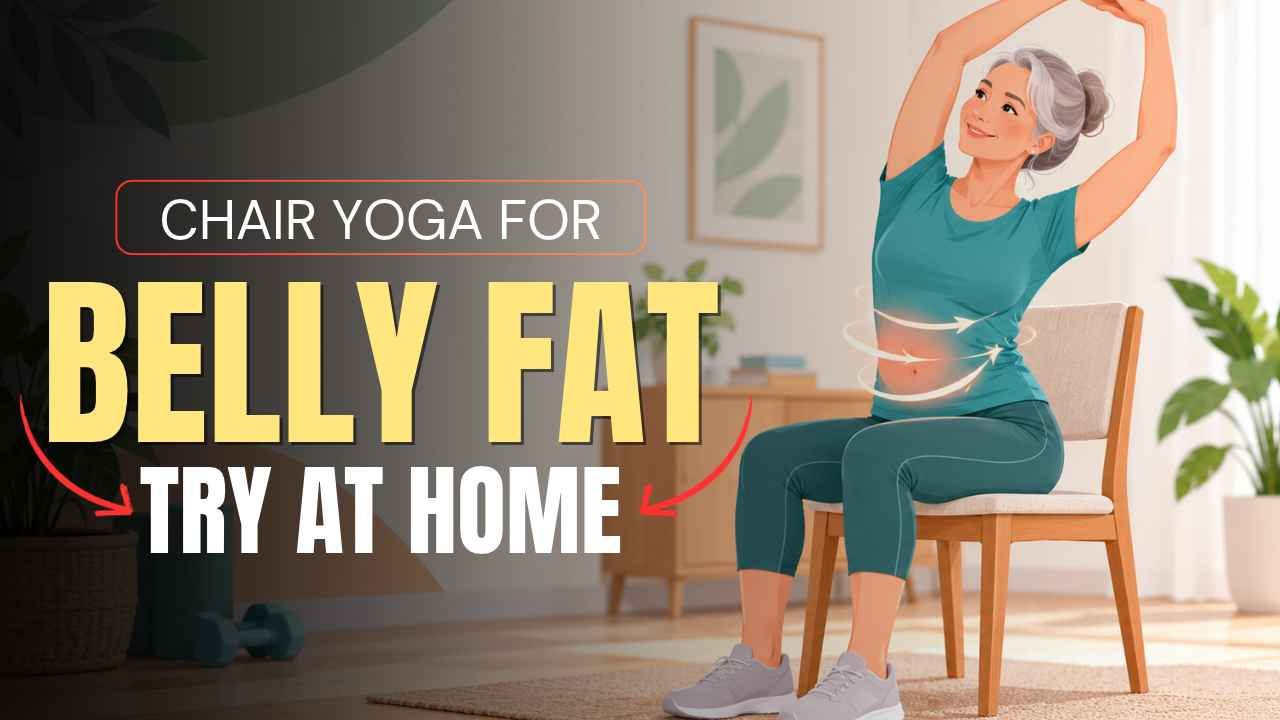

Knees run the show. They decide whether you take the stairs, whether a long drive sounds fun, and how much you enjoy sitting through a two-hour school play. The catch with seeking relief is that most knee advice assumes you can kneel, lunge, or drop to the floor, which rules out exactly the people who need the help most. Chair yoga for seniors with bad knees solves that. Every exercise here happens sitting down or holding a sturdy chair; nothing ever touches the floor, and the moves were selected the way a careful physical therapist would select them: to strengthen the muscles that baby the knee joint from all sides.
By the end you’ll have the 10 moves, a 10-minute routine that fits any morning, and a clear list of what to skip so your knees never pay for someone’s yoga choreography.
Table of Contents
Why seated yoga goes easy on bad knees
Unloading the joint is the obvious benefit. Two more reasons earn this practice a permanent slot on a bad-knee day.
Movement without the load. A knee that hurts while bearing weight usually tolerates slow, supported bending while seated, where the chair carries your weight and the leg moves freely. That gentle range-of-motion work spreads synovial fluid, the joint’s natural lubricant, across the cartilage surfaces. Familiar proof: knees feel looser after a short stroll than after an hour in an armchair. Joints like steady, easy movement and hold grudges against stillness.
Building the knee’s bodyguards. The quadriceps, hamstrings, and calves absorb work that the knee joint would otherwise face alone, and research keeps settling the same question about keeping them strong: exercise programs reliably reduce knee pain and improve day-to-day function in knee osteoarthritis, a finding Cochrane’s review library has documented across dozens of trials (land-based exercise for knee osteoarthritis). Most of those programs assume you can get on the floor. Seated quad sets, heel slides, and supported marching deliver the same muscle stimulus at a fraction of the joint load.
One more reassurance: arthritis sits behind a huge share of bad knees, and the CDC’s arthritis pages push the same two messages this practice does. Keep moving, and protect the joint while you move it.
What to skip when knees complain
Certain poses take out regular knees, and bad knees notice faster. Four to avoid, with the swap already written:
| Skip this | Why it bites | Our swap |
|---|---|---|
| Kneeling poses (hero pose, tabletop work) | Direct pressure squeezes the kneecap and the tendons beneath it | Everything below; the knees never touch a surface |
| Deep lunges and deep squats | Highest kneecap pressure plus a balance risk | Chair warrior legs (hips and thighs, partial bend only) |
| Cross-legged floor sitting | Long holds in a deep outward twist of the knee | Figure-4 stretch, 20 seconds a side |
| Fast leg kicks and high knees | Sudden speed aggravates cranky tissue | Slow, counted lifts and extensions |
The knee sorts pain into two piles, and the sorting matters more than any single rule. Discomfort that stays in the 1-to-3 range out of 10 and eases as you keep moving gently lives in the fair-game pile, and light movement often improves it while you practice. Sharp or stabbing pain, anything above 4, or a knee that swells, locks, or buckles sits in the other pile: stop that move, and have it checked if the trouble keeps returning.
New knee under warranty? After a knee replacement, gentle seated movement is one of the friendliest ways to keep range of motion coming back, on one condition: follow the timeline your surgical team gave you, and save the strength moves they haven’t approved yet for later. Your physical therapist’s word outranks every list on this page, including this one.
The setup that makes every move kinder
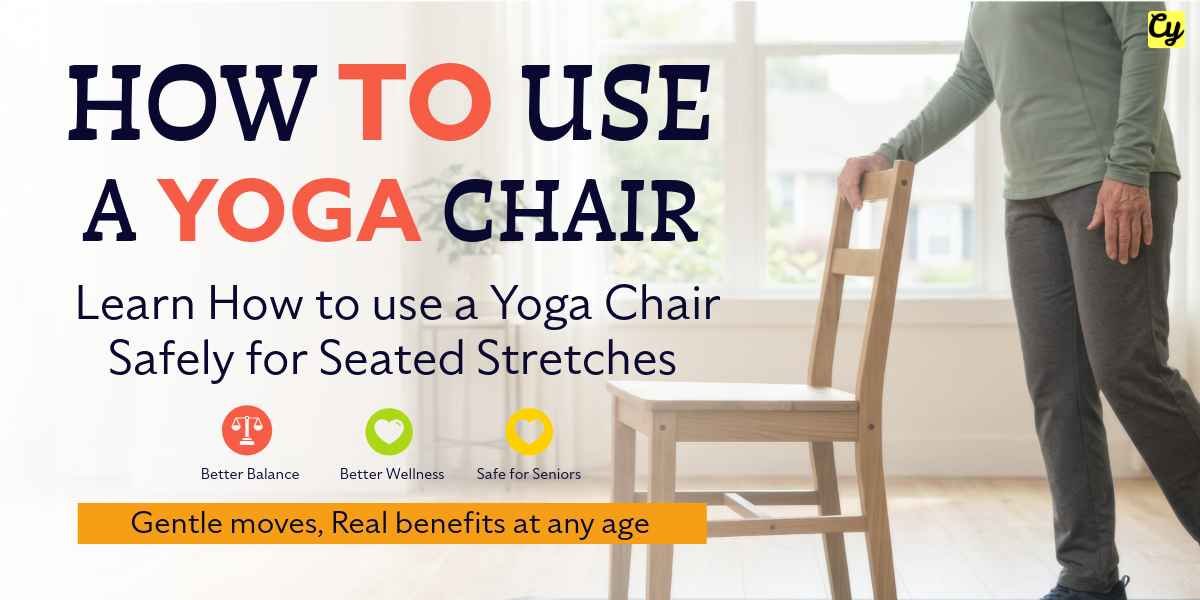
An armless, sturdy chair parked against a wall stays the foundation. Two knee-specific adjustments go on top.
Seat height does the heavy lifting. In a chair that’s too low, standing up drags the knees through a deep bend under full body weight, the exact moment grunting starts. If that sounds like your chair, sit on a firm cushion. The goal: hips level with or slightly above the knees.
Blocks or books lift the feet. This trick comes straight from the competitor’s own description, and it earns the mention: thick books or yoga blocks under both feet raise the knees slightly, which relaxes the hips and makes every exercise below feel lighter. A footstool does the same job. Start with feet raised and lower them over the weeks as the hips loosen.
Loose clothes, shoes off at home, and a water bottle in reach. That’s the whole kit.
The 10 moves for bad knees (with a knee note on each)
Run them in order; they warm up from the feet upward so the knee is never the first joint asked to work.
1. Ankle circles. Lift one foot a few inches, or slide it forward with the heel staying grounded. Circle the foot 8 times in one direction, 8 times in the other, then switch. Knees dislike sudden, cold loads, and waking the ankles and calves first removes most of that surprise. This is the always-first move.
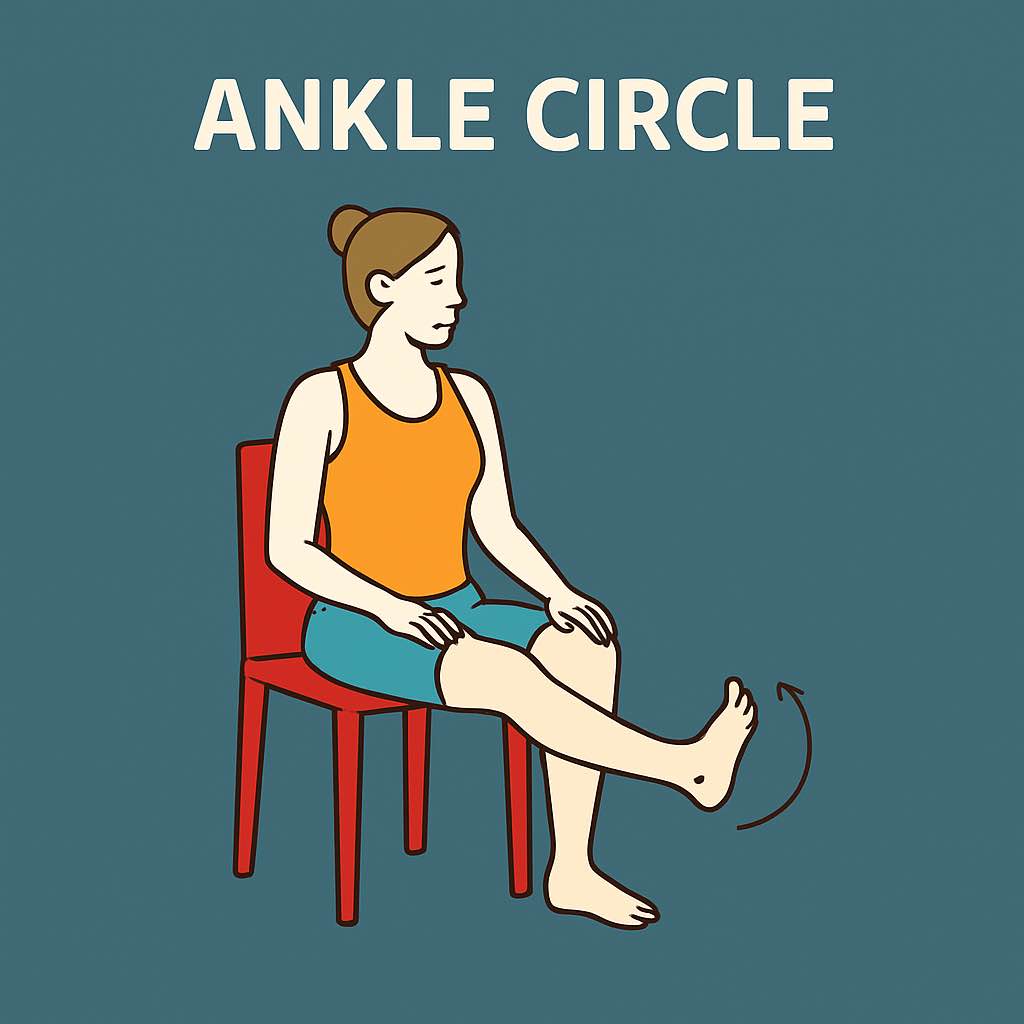
2. Seated knee extensions. Sit tall and straighten one leg in front of you, stopping wherever the knee travels freely (no shoving). Hold 2 seconds, lower slowly. 10 reps per leg, building toward 15. This lights up the quadriceps, the knee’s number one support muscle, with almost zero pressure through the joint. If the leg can’t fully straighten, straighten to 90% and progress over weeks.
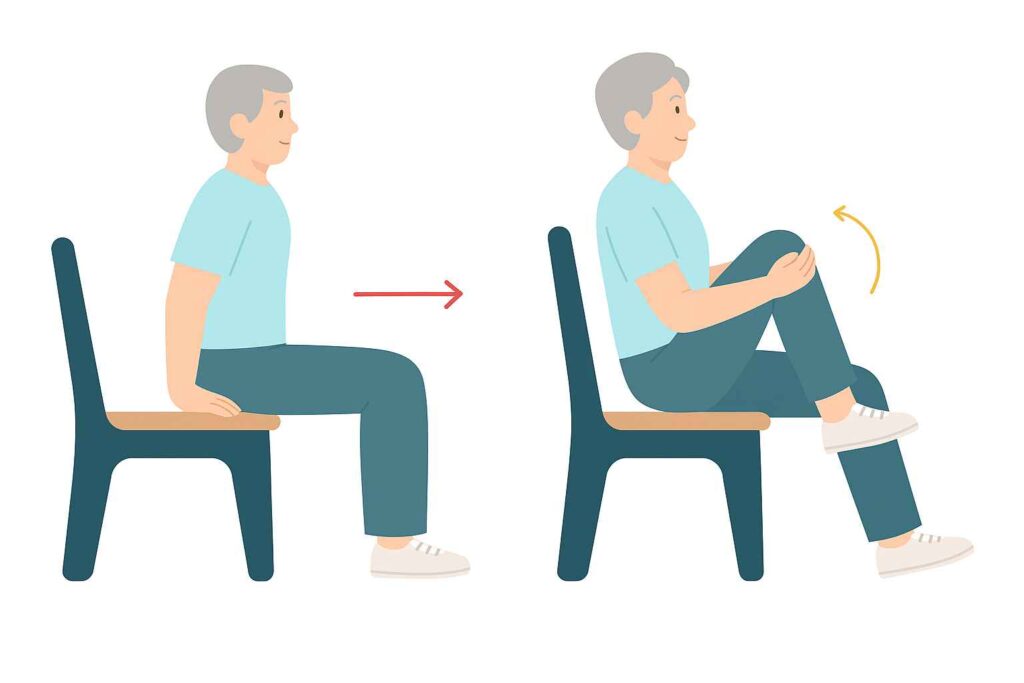
3. Heel slides. With one hand under the thigh (or a small towel under the foot), slide the heel toward the chair’s front edge until a mild stretch shows up behind the knee, then slide it back. 8 slow slides per leg. Heel slides circle the knee through its whole range of motion and are the classic move for keeping post-injury or post-surgery stiffness headed the right way.
4. Seated marching. Sit tall and lift one knee a few inches off the seat line, hold for 2 seconds, lower, and switch. Sixty easy seconds. Marching trains the quadriceps and hip flexors as a team and drives the circulation that settles irritated knees. Raise your feet on blocks for a lighter version.
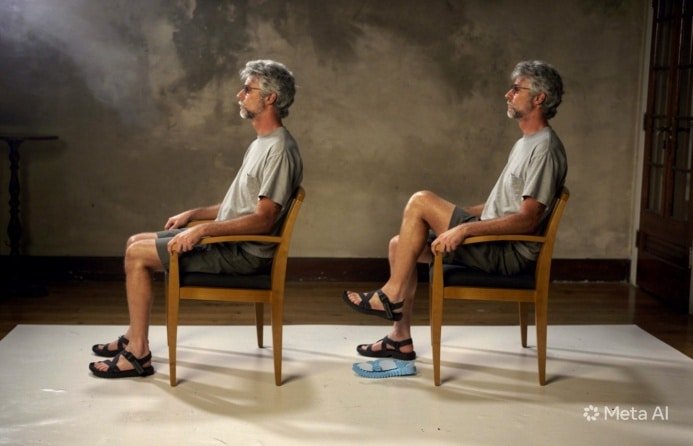
5. Seated calf raises (feet on blocks). Rest the balls of both feet on your blocks or books, let the heels drop slightly, then press up onto the toes and lower with control. 12 slow reps. Strong calves stabilize the ankle, and a steady ankle keeps the kneecap tracking the way it should, a partnership the knee notices every single step.
6. Hamstring stretch, heel on a stool. Set one heel on a footstool or second chair with the knee nearly straight. Hinge forward from the hips with a long, flat back until a stretch arrives behind the thigh. Hold 20 to 30 seconds, then switch. Tight hamstrings tug the knee’s rhythm out of alignment, which is why a muscle that sits behind the knee earns a place in a knee routine.
7. Figure-4 glute stretch. Cross your right ankle over the left thigh just above the knee, forming a 4 with the legs. Sit tall and lean forward from the hips until you feel the stretch along the outer hip and glute. Hold 20 seconds, switch. Loose hips reduce the twisting and pulling forces that trickle down and end up scattered across the knee.
8. Inner-thigh squeeze. Place a pillow or rolled towel between your knees. Squeeze to about 70% of your effort, hold for 5 seconds, and release. 10 reps. The inner-thigh muscles plug directly into the tissues at the knee, so this quiet squeeze trains them while both joints stay relaxed and unloaded.
9. Knee scoops. Rest your hands lightly on your thigh just above the kneecap and circle it in slow, small rings, 8 each direction (or simply tap and release around it if your knee dislikes direct touch). Kneecaps glide up to 8 centimeters as a knee bends; a few seconds of gentle tissue prep keeps that gliding easy. A resting hand warms the area as a bonus.
10. Slow sit-to-stand (with the chair’s help). Sit forward in the seat, feet flat and hip-width. Lean the chest over the toes and stand up, using hands on the thighs or the chair’s arms for as much help as needed. Lower back down over 4 slow counts. 5 reps. Real-world knees stand up dozens of times a day, so this is the one move that pays rent outside the article. Pain above the 3 out of 10 line? Turn it into stand-and-tap, where you rise an inch and sit right back down.
A 10-minute daily routine for bad knees
Print or copy this table. Times are loose; consistency beats precision.
| Time | Moves | Notes |
|---|---|---|
| 0:00 to 1:30 | Ankle circles | Both feet, both directions |
| 1:30 to 3:30 | Seated knee extensions + heel slides | 10 extensions, 6 slides per leg |
| 3:30 to 5:00 | Seated marching | Easy pace, steady breathing |
| 5:00 to 6:30 | Calf raises + inner-thigh squeeze | 12 raises, 10 squeezes |
| 6:30 to 8:30 | Hamstring stretch and figure-4 | 20-30 seconds each side |
| 8:30 to 9:30 | Knee scoops | Small, slow, warm |
| 9:30 to 10:30 | Slow sit-to-stands and close breathing | 5 reps, then 6 slow breaths |
How often: daily for 10 minutes beats 40 minutes twice a week for bad knees. On flare mornings (noticeable swelling or a knee that wakes up angry), run moves 1, 3, 4, and 9 only, at half effort, and let the rest wait for a quieter morning. Morning stiffness, the type that eases with movement, responds especially well to the ankle-circles opening; keep the chart folded on the kitchen table for the first week of the habit.
When to call the doctor
Chair practice shrugs off most day-to-day knee noise, but a few signals belong in a clinic: a knee that swells after every session, catches or locks partway through bending, gives way under you, turns hot and red, or aches alongside a fever. Pain that holds past 48 hours after a light session counts too. One bad session needs a doctor, unlikely. A pattern of them always does.
Frequently asked questions
Is chair yoga good for bad knees? Yes, and it’s among the safest exercise choices for them. Seated movement strengthens the quadriceps, hamstrings, and calves while the chair carries your weight, so the joint gets training benefits without the grinding load of floor work.
What exercises should seniors avoid with bad knees? Kneeling, deep lunges, deep squats, cross-legged floor sitting, and any fast, jumpy leg work. Every one of these pushes the kneecap into maximum pressure or twists the joint under load. The swap table above gives a seated replacement for each.
Can I do chair yoga after a knee replacement? Usually, yes, with timing from your surgical team. Gentle seated range-of-motion work commonly supports early recovery, but the strength moves and hold times should wait for clearance from your physical therapist, whose plan outranks any general guide.
How often should seniors exercise bad knees? A daily 10-minute session beats occasional long ones. On flare mornings, run moves 1, 3, 4, and 9 at half effort and let the rest wait for a quieter knee.
Why does my knee sometimes hurt more after gentle exercise? A small, temporary soreness after new activity is common and normally settles within a day or two. Pain that climbs past 4 out of 10, brings swelling, or lasts past 48 hours means that session asked too much. Halve the effort, use the flare-day routine, and have a clinician check persistent patterns.
What chair works best for knee pain? An armless chair without wheels, high enough that your hips sit level with or slightly above your knees. Raise low chairs with a firm cushion, park the chair against a wall, and lift the feet on blocks, books, or a footstool.
Does walking help or hurt arthritic knees? For most people with knee osteoarthritis, regular gentle walking helps: it feeds the joint, controls weight, and keeps the support muscles working. Build distance slowly, and check with your doctor when walking reliably triggers sharp pain.
Key takeaways
- Bad knees respond best to light, frequent, seated work, the exact shape of this routine.
- Strength lives in the thigh, hip, and calf muscles; all 10 moves train those guards without loading the joint.
- Kneel never: kneeling, deep lunges, and cross-legged floor sits are the pose family to skip, and each has a seated swap.
- The 1-to-3 / above-4 pain rule sorts fair-game discomfort from stop-and-check signals.
- Ten minutes daily, with flare-day versions held ready, beats the occasional long session.
Final thought
Bad knees reward patience over heroics. Ten unremarkable minutes a day builds the muscle padding, the resting joint rhythm, and the steadiness in walking that no painkiller bottle supplies. Bookmark this page, put the chart on the fridge while you’re at it, and let the ankle circles start tomorrow’s session before your knees even notice they’re warming up.
This article shares general wellness information, not medical advice. Talk to your doctor before changing an exercise routine, especially with a joint condition, a recent surgery, or a knee replacement.