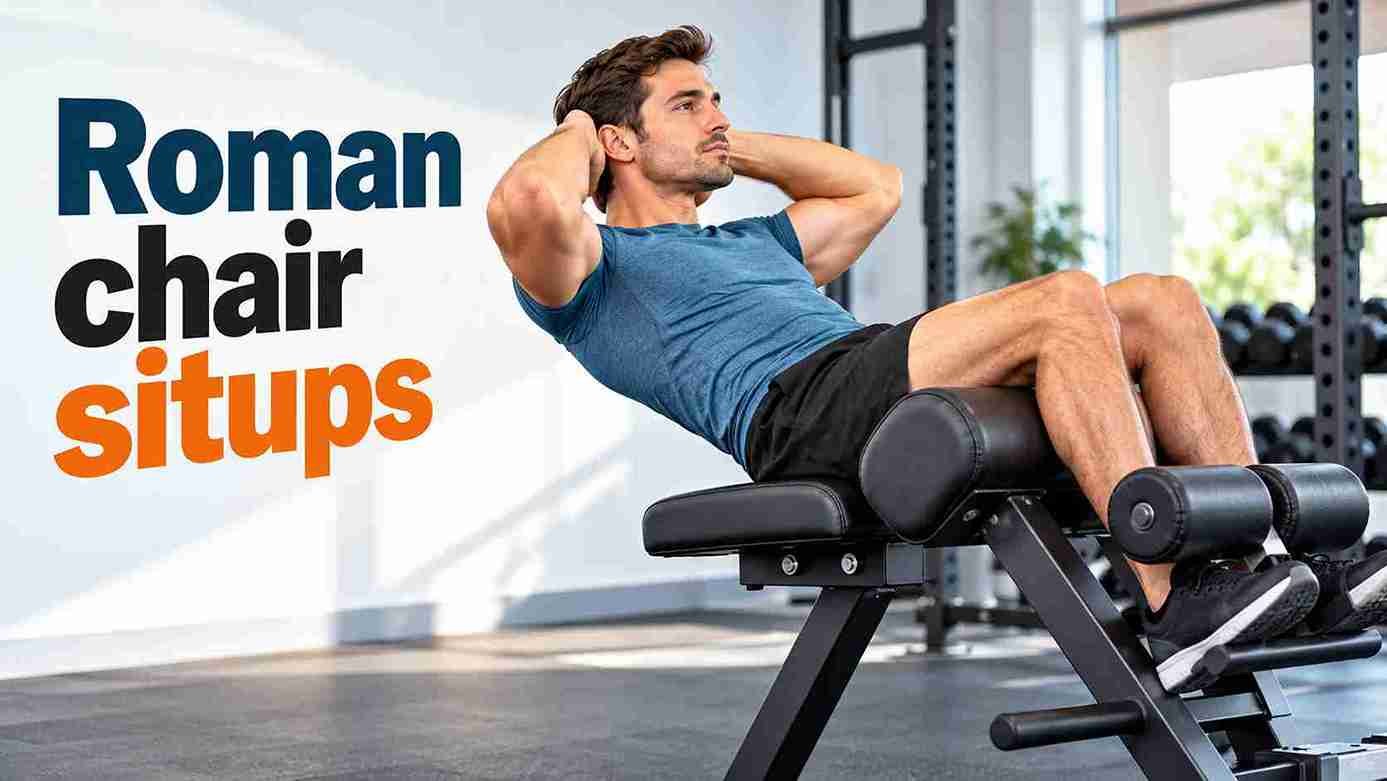
Roman chair situps are an abdominal exercise performed on specialized gym equipment that supports your legs while you raise and lower your upper body. The movement works your abdominal muscles and can help build core strength when you use controlled technique.
You’ll usually find Roman chairs in gyms, although the name can refer to different types of equipment. Some benches have padded leg supports, while others are designed for back extensions. The setup matters because it changes how you position your body and perform the exercise.
Before you begin, check that your equipment is designed for the movement you want to perform. Start with a comfortable range of motion, keep your neck relaxed, and increase the workload gradually as your strength improves.
Table of Contents
What are Roman chair situps?
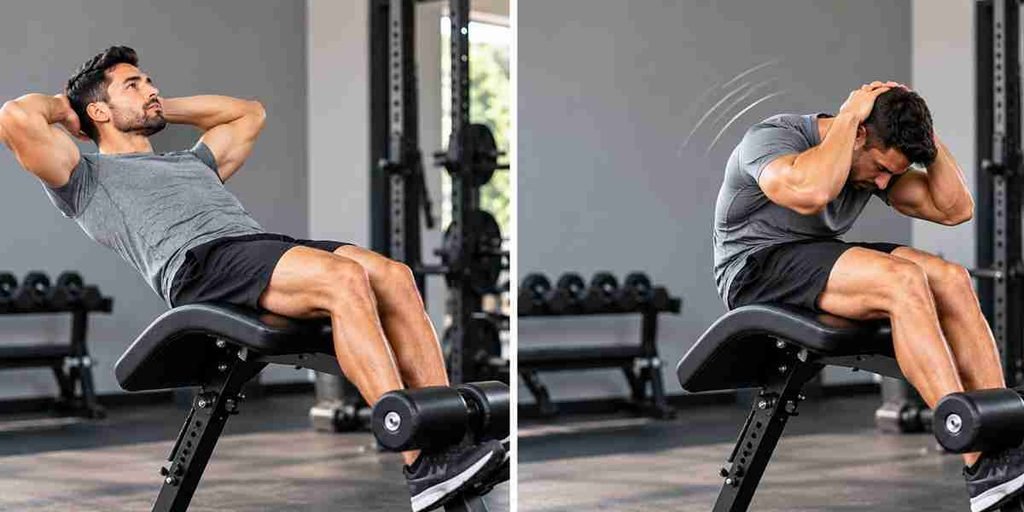
Roman chair situps involve lifting your torso against gravity while your legs remain supported by a bench or padded supports. Depending on the equipment, you might perform a short abdominal curl or a fuller sit-up that brings your torso closer to your thighs.
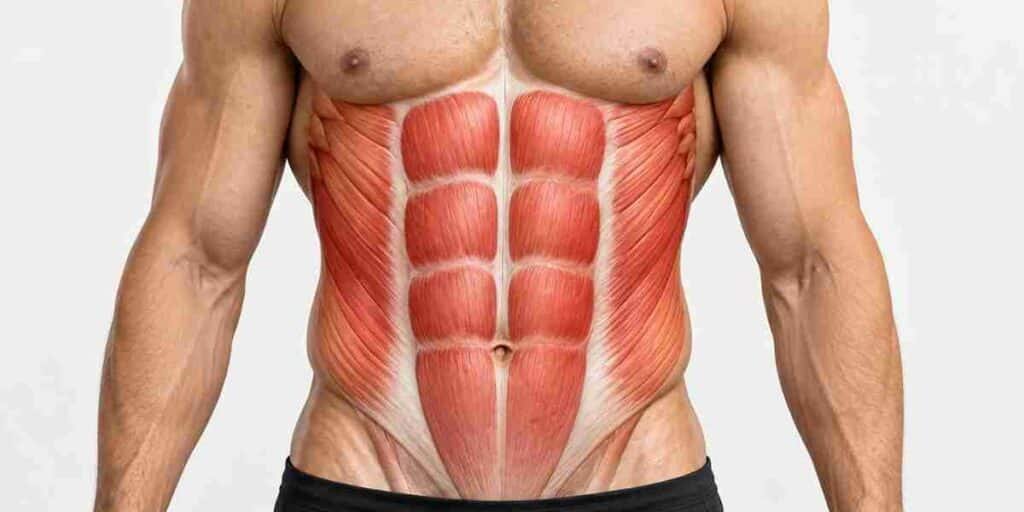
Your rectus abdominis, the long muscle running along the front of your abdomen, helps flex your trunk. Your obliques assist with trunk control, while your hip flexors contribute more when you perform a full sit-up.
The exercise can feel demanding because you must control your torso throughout the movement. The difficulty depends on the bench design, your range of motion, and your current strength.
Roman chair sit-ups are usually included in abdominal or general strength workouts. Beginners can start with body weight and fewer repetitions before considering more demanding variations.
How to do Roman chair situps correctly
Good technique starts before your first repetition. Check the bench, adjust the supports, and make sure your legs feel secure.
Step 1: Check the equipment
Identify the type of Roman chair you’re using. Read the machine’s instructions and confirm that it’s suitable for the exercise you intend to perform.
Some Roman chairs are built for back extensions, which involve a different movement. A back-extension bench isn’t automatically suitable for traditional sit-ups.
Step 2: Position your body
Set your feet and legs against the padded supports according to the machine’s instructions. Your body should feel stable before you begin moving.
Avoid positioning yourself so that the pads press painfully against your ankles or knees. Adjust the equipment if necessary.
Step 3: Tighten your abdominal muscles
Gently tighten your abdomen as if preparing for a small cough. Keep breathing normally and allow your neck and shoulders to remain relaxed.
You don’t need to hold your breath. A comfortable abdominal brace helps you control the movement.
Step 4: Raise your upper body
Lift your torso slowly, using your abdominal muscles to control the movement. Keep your head in a natural position and avoid pulling your neck forward.
The correct range depends on the bench and the version of the exercise you’re performing. Stop at a point where you can maintain control without straining.
Step 5: Lower yourself slowly
Return to the starting position without dropping backward. Resist the urge to let gravity do all the work on the way down.
The lowering phase requires muscular control, too. Move at a pace that lets you manage the entire repetition.
Step 6: Breathe naturally
Exhale as you raise your torso and inhale as you lower it. Keep your breathing steady instead of holding your breath during the hardest part of the exercise.
Step 7: Finish when your form starts to slip
Start with a small number of repetitions. If your movements become jerky, your neck begins to strain, or you can no longer control the descent, end the set.
For more guidance on a basic abdominal movement, see the Mayo Clinic’s abdominal crunch instructions.

Which muscles do Roman chair situps work?
Roman chair situps mainly train the abdominal muscles, although other muscles assist with the movement.
Rectus abdominis
The rectus abdominis runs vertically along the front of your abdomen. It helps flex your trunk when you curl your upper body forward.
This muscle works during abdominal crunches and conventional situps. Strengthening it can improve your control during exercises that involve trunk flexion.
Obliques
Your obliques sit along the sides of your abdomen. They help control your torso and contribute to trunk rotation and side bending.
During a regular Roman chair sit-up, the obliques assist with stabilizing the movement. You don’t need to twist your torso to train them during the standard version.
Hip flexors
Your hip flexors help bring your thighs and torso closer together by producing movement around the hips. Their contribution tends to increase when you perform a full sit-up rather than a short abdominal curl.
This distinction matters if your goal is to focus on abdominal curling. A shorter, controlled movement may suit you better than repeatedly lifting your torso through the largest possible range.
Supporting trunk muscles
Other muscles around your trunk help maintain control while you move. Their contribution depends on your position, the equipment, and how far you lower your torso.
The amount of work each muscle performs can vary considerably between different Roman chair designs.
Benefits of Roman chair situps
Roman chair situps can be useful when they suit your fitness level and fit into a balanced exercise routine.
They help strengthen your abdominal muscles.
Repeated, controlled contractions can help develop abdominal strength over time. As your ability improves, you may find it easier to complete the same number of repetitions with better control.
For continued progress, gradually adjust the workload rather than adding a large number of repetitions immediately.
They train trunk flexion.
The exercise involves bending your torso forward, which trains the muscles responsible for trunk flexion. This can be useful if your training program includes several types of abdominal movements.
Your routine should also include exercises that train your core to resist unwanted movement, such as a dead bug or bird dog.
They add variety to your workout.
If you’ve been performing the same floor exercises for months, Roman chair sit-ups give you another option. Changing your exercises can help keep your workouts interesting and let you practice different movement patterns.
Choose the version that feels comfortable and suits the equipment available to you.
They allow gradual progression.
You can begin with fewer repetitions and a shorter range of motion. As your control improves, you can gradually increase the range or number of repetitions.
Experienced exercisers might eventually consider additional resistance, provided they can maintain proper form.
They fit into a general strength routine
Roman chair sit-ups can be included in a workout alongside exercises for your legs, back, chest, and shoulders. You don’t need to train your abs every day to work on core strength consistently.
For more information about core training, read the Mayo Clinic’s guide to core-strength exercises.
Common Roman chair situp mistakes
Small technique errors can make the exercise uncomfortable or reduce your control. Pay attention to these common problems.
Moving too quickly
Fast repetitions often encourage momentum. You might lift your torso easily, but controlling the movement becomes harder when you rush.
Slow down and use a pace that allows you to manage both the upward and downward phases.
Pulling on your neck
Some people pull their head forward while trying to lift their torso. This can create unnecessary tension around the neck.
Keep your head in a comfortable position and concentrate on moving your torso without tugging on it.
Lowering too far
A deep backward lean increases the range of motion and may feel uncomfortable for some people. You don’t need to lower your torso as far as possible to train your abdominal muscles.
Start with a manageable range. Increase it only if you can maintain control and the movement feels comfortable.
Relying heavily on your hip flexors
The hip flexors naturally contribute to full sit-ups. If your goal is to focus on abdominal curling, lifting your entire torso toward your thighs might be more movement than you need.
Try a smaller, controlled curl when the equipment allows it. You can also use a floor crunch if that movement suits your body better.
Using an unstable setup
Poorly adjusted supports can make you feel insecure during the exercise. This is especially concerning when you’re leaning backward.
Check the bench before each session and stop if the equipment moves or your legs cannot remain securely positioned.
Ignoring discomfort
Muscle fatigue can occur during exercise, but sharp pain or pain around your spine deserves attention. Stop if the movement causes back pain, neck pain, dizziness, or other unusual symptoms.
Don’t try to finish a set through pain.
For a demonstration of a basic crunch, the American Council on Exercise’s exercise library provides another reference for abdominal exercise technique.
Are Roman chair situps good for beginners?
Roman chair situps can suit some beginners, but the equipment and movement may be challenging if you have limited abdominal strength or little experience with exercise.
Start by learning how to tighten your abdomen while breathing normally. Then practise simple movements that let you maintain control without leaning far backward.
A dead bug, for example, lets you practise coordinating your arms and legs while keeping your trunk stable. A basic abdominal brace is another option.
Beginners don’t need to chase high repetition counts. A few controlled repetitions are a sensible starting point.
If you find the bench difficult to use, choose a floor exercise or a supported movement that feels comfortable. A qualified fitness professional can check your technique and help you select an appropriate progression.
Roman chair situps for older adults
Older adults can benefit from maintaining abdominal strength, but the right exercise depends on mobility, balance, strength, and medical history.
A full Roman chair sit-up can be demanding for someone who has difficulty getting onto the equipment or controlling their torso while leaning backward. The padded supports might also be uncomfortable for people with sensitive joints.
If you’re an older adult starting an exercise routine, consider beginning with a seated abdominal brace. Sit upright in a stable chair, gently tighten your abdominal muscles, breathe normally, and hold the contraction for a few seconds.
You can also ask a physiotherapist or qualified exercise professional to recommend core exercises based on your abilities.
For more accessible movement ideas, explore our guide to chair exercises for seniors. You can also use this chair yoga chart to find seated movements that fit your routine.
People with osteoporosis, a history of spinal fractures, recent abdominal surgery, or ongoing back problems should obtain individual medical guidance before attempting repeated trunk-flexion exercises. The safest choice depends on the person’s condition.
Beginners who prefer following a printed guide can also try these printable chair exercises for seniors, provided the movements are suitable for their abilities.
How many Roman chair situps should you do?
There is no single repetition target that suits everyone. Your starting point should reflect your current strength, comfort, and experience.
| Fitness level | Suggested starting point | Main focus |
|---|---|---|
| Beginner | 1 set of 6 to 10 repetitions | Learn the movement |
| Intermediate | 2 to 3 sets of 10 to 15 repetitions | Maintain control across sets |
| Experienced | 2 to 4 sets, based on your program | Adjust workload to your goals |
These are general guidelines rather than strict rules. If 6 repetitions feel difficult, reduce the range of motion or choose an easier exercise.
Rest between sets until your breathing settles and you feel ready to continue. You should finish each set with enough control to avoid swinging or dropping your torso.
How often should you do them?
For many people, training the abdominal muscles 2 or 3 times per week can fit into a balanced strength routine. Leave enough recovery time between demanding sessions, especially when your abdomen remains sore.
You can also train your core through other exercises during the week. Your workout doesn’t need to revolve around sit-ups.
Roman chair situps vs. regular sit-ups
Both exercises train the abdominal muscles, but the setup changes the movement.
Regular sit-ups are generally performed on the floor with bent knees. Depending on your technique, you may lift your torso until you’re sitting upright.
Roman chair sit-ups use specialized equipment that supports the legs or positions the body differently. The equipment can change the starting position and the amount of movement available.
Neither exercise is automatically the best option for every person. Consider your comfort, training goals, and ability to perform the movement under control.
If you experience discomfort during a full sit-up, a short abdominal crunch or a core-stability exercise might be more appropriate.
Roman chair situps vs. back extensions
These exercises are sometimes confused because they can involve similar-looking equipment.
Roman chair sit-ups focus on lifting the torso forward through trunk flexion. Back extensions involve extending the trunk from a bent position, with the precise movement depending on the equipment and technique.
The muscles involved and the direction of movement differ. A back-extension bench isn’t automatically suitable for sit-ups, so check the manufacturer’s instructions before using it.
If you’re unsure which movement your equipment supports, ask a gym instructor to demonstrate the correct setup.
Can Roman chair situps help you get six-pack abs?
Roman chair sit-ups can strengthen the rectus abdominis, which contributes to the appearance of abdominal definition. However, visible abs depend on more than the exercise itself.
Body fat distribution, genetics, nutrition, and your overall training routine all influence how visible your abdominal muscles are. Repeatedly exercising one area doesn’t specifically remove fat from that part of your body.
If your goal is a stronger abdomen, focus on consistent training and gradual progression. If your goal includes visible definition, your overall eating habits and activity levels also matter.
Avoid extreme diets or excessive exercise in an attempt to produce results quickly. Progress varies from person to person.
Should you add weights to Roman chair situps?
Beginners should start with body weight and learn to control the movement first. Adding a weight increases the demand on your muscles and can make poor technique harder to correct.
If you have experience with the exercise and can complete your planned repetitions comfortably, ask a qualified trainer whether additional resistance is appropriate. Begin conservatively and keep the weight close to your torso if your trainer recommends a weighted variation.
Avoid holding a heavy weight behind your head or using a load that forces you to swing. If your back or neck becomes uncomfortable, stop the exercise.
More resistance is useful when it suits your training goals and you can manage it safely.
How to include Roman chair situps in a workout
You can place Roman chair sit-ups near the end of a general strength session or include them in a dedicated core workout.
Here’s an example for someone who already tolerates basic core exercises:
| Exercise | Suggested amount |
|---|---|
| Dead bug | 2 sets of 8 repetitions per side |
| Roman chair sit-ups | 2 sets of 6 to 10 repetitions |
| Bird dog | 2 sets of 8 repetitions per side |
| Rest | As needed between sets |
Adjust the repetitions to your ability. These numbers are examples, not a requirement, and you should use an alternative to Roman chair sit-ups if the movement causes discomfort.
You can also separate your abdominal training from your main workout if that fits your schedule better.
Safety tips before you start
A few basic precautions can help you approach the exercise sensibly.
- Check that the bench is stable and suitable for sit-ups.
- Adjust the leg supports according to the machine’s instructions.
- Warm up with a few minutes of comfortable movement.
- Begin with body weight and a small range of motion.
- Keep your breathing steady throughout each repetition.
- Stop if you experience sharp pain, back pain, neck pain, or dizziness.
- Seek professional guidance if you have a medical condition or a history of spinal problems.
If you’ve been inactive for a long time, start with easier exercises and build up gradually. You don’t need to rush into a demanding abdominal movement.
Frequently asked questions
Are Roman chair sit-ups effective?
They can help strengthen your abdominal muscles when performed with controlled technique and included in a consistent exercise routine. Results depend on your training, recovery, and starting fitness level.
Do Roman chair sit-ups work the lower abs?
The rectus abdominis is one continuous muscle with upper and lower regions, rather than 2 completely separate muscles that can be isolated independently. Your technique changes the movement, but the exercise doesn’t selectively remove fat from the lower abdomen.
Can Roman chair sit-ups reduce belly fat?
They train your abdominal muscles, but they don’t specifically burn fat from your stomach. Changes in body fat depend on overall energy balance, activity, nutrition, genetics, and other individual factors.
Are Roman chair sit-ups safe for people with back pain?
They may aggravate some back conditions, particularly if repeated trunk flexion or leaning backward causes symptoms. People with back pain should obtain individual guidance from a qualified healthcare professional before trying them.
Can I do Roman chair sit-ups every day?
Daily training isn’t necessary. Allow time for recovery and consider your total exercise workload. For many people, 2 or 3 weekly core sessions can fit into a balanced routine.
What should I do if I can’t complete a full sit-up?
Try a smaller range of motion or choose an easier movement, such as a dead bug or a basic abdominal brace. Build your strength gradually and ask a qualified professional to check your technique if needed.
Should I feel Roman chair sit-ups in my hips?
Your hip flexors contribute to the movement, especially during full sit-ups. Some involvement is expected, but pain in the hips or lower back is a reason to stop and reassess your technique.
Are Roman chair sit-ups better than crunches?
The better option depends on your goals, comfort, and ability. Roman chair sit-ups may involve a larger range of motion, while crunches generally involve a shorter movement. Both can train the abdominal muscles.
Final thoughts
Roman chair sit-ups can be a useful abdominal exercise when the bench is designed for the movement and your technique stays controlled. Start with a comfortable range of motion, use body weight, and increase the workload gradually as your strength improves.
Choose an easier core exercise if you struggle to control the movement. Consistent training that suits your body will serve you better than forcing yourself through repetitions that cause discomfort.
Medical disclaimer: This article is for general educational purposes and isn’t a substitute for individual medical advice. Consult a qualified healthcare professional before starting a new exercise program if you have an existing medical condition, an injury, or concerns about your ability to exercise safely.