You’ve probably seen chair yoga photos before.
Someone smiling. Sitting perfectly upright. Looking suspiciously comfortable.
Then you try it.
- Your back feels stiff.
- Your shoulders feel weird.
- You spend more time adjusting the chair than moving.
That’s usually where people decide chair yoga “isn’t for them.”
If your goal is to learn how to do chair yoga, start smaller than you think.
- A few controlled movements.
- A stable chair.
- A little patience.
That’s enough.
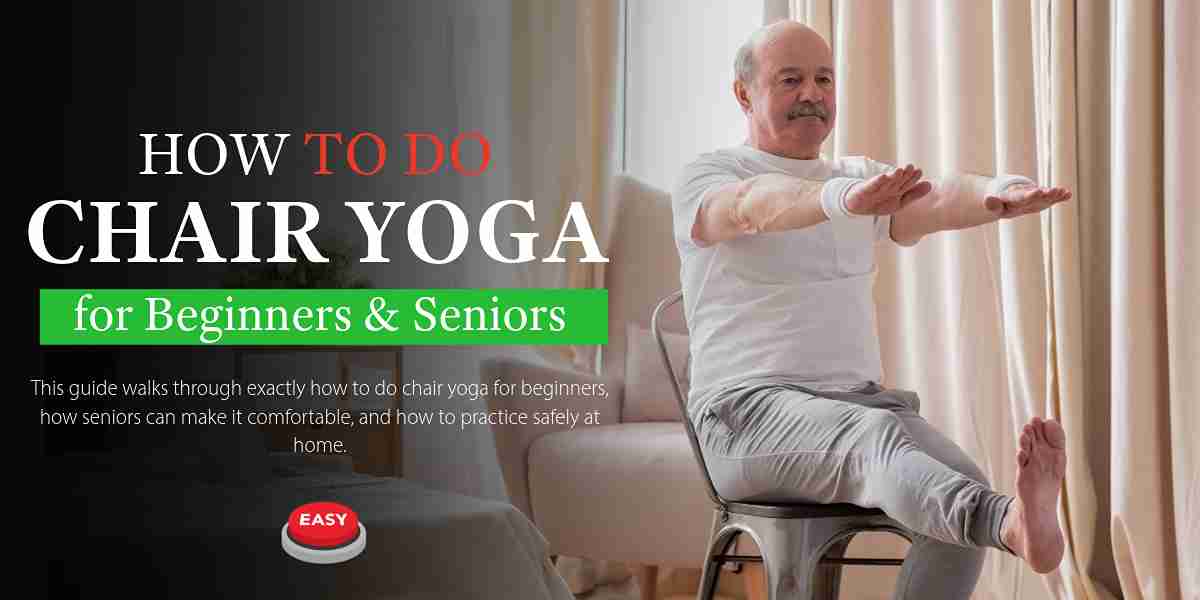
This guide walks through exactly how to do chair yoga for beginners, how seniors can make it comfortable, and how to practice safely at home.
I think that’s a shame because chair yoga is one of the few forms of movement that meets people where they already are.
- You don’t need a yoga mat.
- You don’t need flexibility.
- You definitely don’t need to touch your toes.
- You sit down and move.
That’s the whole idea.
Chair yoga works especially well for people who want movement without turning exercise into an event. Seniors. Beginners. People getting back into activity. Office workers. Someone recovering from a rough week and wanting to move without negotiating with their knees.
And chair yoga doesn’t have to look elegant.
I’ve seen people overthink posture, breathing, timing, and whether their chair is “yoga approved.”
Meanwhile, someone else sits in a dining chair for 8 minutes, moves slowly, and finishes feeling better.
That person usually wins.
There’s also a Free printable chair yoga PDF later so you don’t have to keep reopening the page.
Table of Contents
What is chair yoga?
Chair yoga is yoga adapted around a chair.
- Some poses happen fully seated.
- Some use the chair for support while standing.
The point isn’t making yoga easier.
The point is removing barriers.
That changes everything for people who:
- don’t enjoy floor exercises
- have limited mobility
- want low-impact movement
- feel intimidated by traditional yoga classes
- want free chair yoga exercises they can do at home
Chair yoga still uses the same ideas:
- breathing
- controlled movement
- mobility
- body awareness
The chair just gives you more support.
And support changes confidence.
Does chair yoga really work?
Short answer: Yes, if your expectations match what chair yoga actually does.
People sometimes expect dramatic changes after 1 session.
- Usually the first thing people notice is smaller.
- Less stiffness.
- Better posture.
- Feeling more awake.
- Walking feels easier.
- Getting out of a chair feels smoother.
- That’s where momentum starts.
Research has looked at yoga for flexibility, stress reduction, balance, mobility, and quality of life in older adults. Results vary by person, but gentle movement tends to work best when people actually stick with it.
Consistency beats heroic effort.
How to do chair yoga at home
Good news.
Your setup matters less than people think.
You need:
✅ A sturdy chair
✅ Flat floor
✅ Comfortable clothes
✅ Enough room to move arms
Skip:
- rolling office chairs
- soft couches
- slippery floors
Chair setup:
- Sit near the front edge
- Feet flat
- Knees around hip level
- Relax shoulders
- Keep breathing normally
You’re ready.
How to do chair yoga step by step
Step 1: Sit before you move
Most beginners start moving immediately.
- Pause first.
- Sit.
- Feel both feet.
- Notice if one shoulder sits higher.
- Relax your jaw.
- Take 3 slower breaths.
That’s your starting point.
Step 2: Start with shoulder rolls
- Lift shoulders.
- Roll backward.
- Move slowly.
- Do 8 rounds.
Your body usually tells you pretty quickly whether movement feels good today.
Step 3: Add seated breathing
- Place hands on thighs.
- Breathe in.
- Let ribs expand.
- Breathe out slowly.
- Don’t force big breaths.
Repeat for 60 seconds.
Step 4: Move your spine
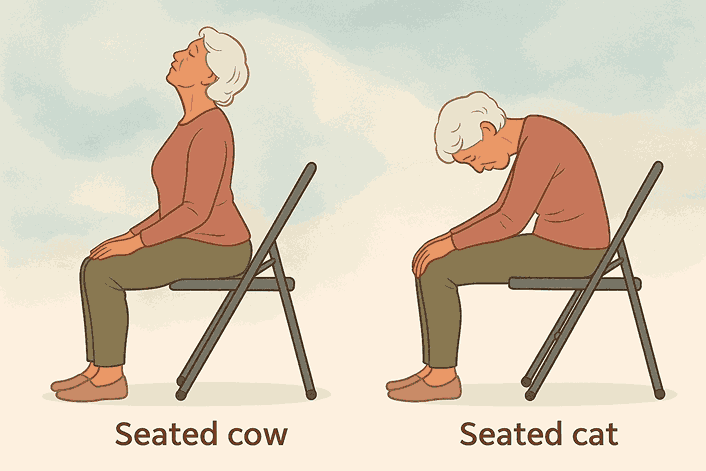
Try seated Cat-Cow.
Inhale:
Lift chest slightly.
Exhale:
Round gently.
Do 5–8 rounds.
Keep it comfortable.
Step 5: Add gentle rotation
- Place right hand on left knee.
- Turn gently.
- Pause.
- Switch sides.
Twisting doesn’t need to look dramatic.
Tiny movement counts.
Step 6: Finish with stillness
Sit.
Notice:
- breathing
- shoulders
- energy
Done.
Whole session:
Around 8–12 minutes.
That’s enough.
How to do chair yoga for seniors
People overcomplicate this.
If you’re doing chair yoga for seniors over 70, focus on comfort first.
Use these adjustments:
Shorter sessions
Start with 5–10 minutes.
Smaller movement
Half range is completely fine.
Rest often
Pause between poses.
Keep feet grounded
Stable feet make movement feel safer.
One thing I notice often:
- People try to move like younger versions of themselves.
- Move like today’s version.
- Today’s version matters.
How to do chair yoga for beginners without feeling awkward
Everyone feels awkward at first.
- Yoga has weird names.
- Breathing feels dramatic.
You wonder if you’re doing it wrong.
That fades quickly.
Try this beginner schedule:
| Week 1 | 5 minutes |
| Week 2 | 8 minutes |
| Week 3 | 10 minutes |
| Week 4 | 12–15 minutes |
Stop before exhaustion.
Ending with energy makes people come back tomorrow.
7 beginner mistakes that make chair yoga harder
1. Sitting too far back
Move forward slightly.
2. Holding your breath
Keep breathing.
3. Going too deep
Small movement wins.
4. Looking at other people online
Your body isn’t theirs.
5. Using unstable chairs
Dining chair > rolling chair.
6. Practicing too long
Consistency beats marathon sessions.
7. Ignoring discomfort
Pain isn’t a badge.
Adjust.
7 simple chair yoga poses to start with today
You already know how to set up.
Now you need movements.
One thing before starting:
- Your goal isn’t collecting poses.
- Your goal is finishing the session feeling like you could do it again tomorrow.
- That changes how people move.
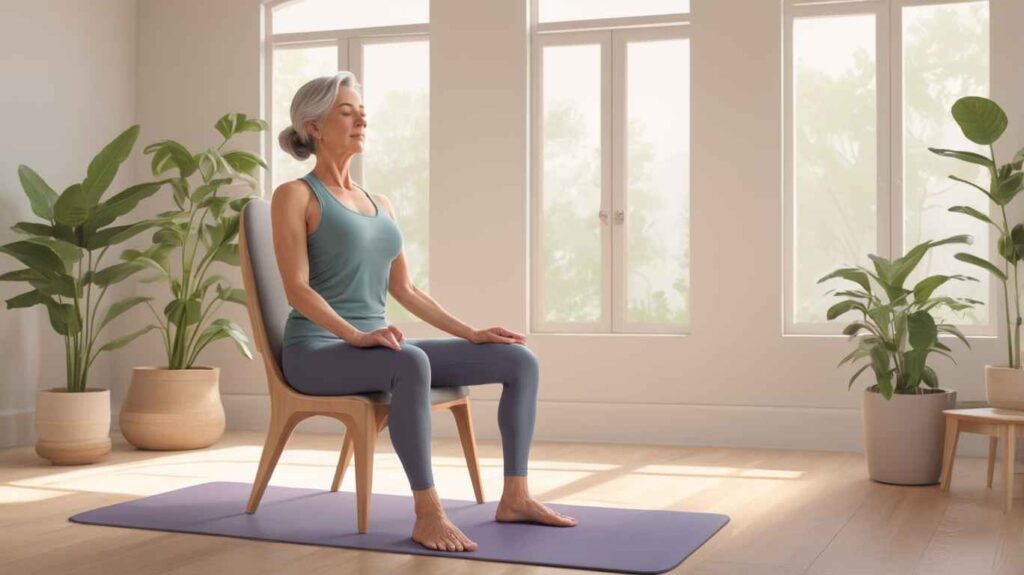
1. Seated mountain pose
Good for:
- posture
- breathing
- beginners
- starting every session
How to do it:
- Sit tall
- Feet flat
- Hands resting on thighs
- Relax shoulders
- Look forward
Take 5 slow breaths.
This one looks almost too simple.
Then people try sitting tall for 60 seconds and realize posture takes work.
Hold:
30–60 seconds
2. Chair cat-cow
Good for:
- stiff backs
- morning movement
- beginners
How to do it:
- Sit tall
- Hands on knees
Inhale:
Lift chest.
Exhale:
Round gently.
Move slowly.
Do:
6–8 rounds
Related:
→ Chair Yoga for Back Pain
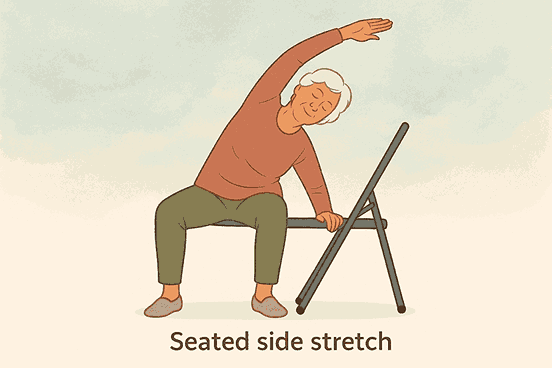
3. Seated side stretch
Good for:
- tight ribs
- breathing
- mobility
How to do it:
- Raise right arm.
- Lean left.
- Breathe.
- Switch sides.
- Small movement counts.
Hold:
20 seconds each side
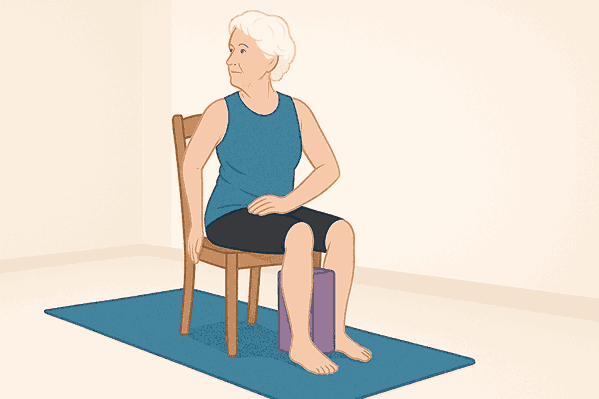
4. Seated twist
Good for:
- spinal mobility
- gentle rotation
How to do it:
- Sit tall.
- Place right hand across left knee.
- Turn gently.
- Pause.
- Switch.
Do:
3 rounds
Twisting doesn’t need drama.
If your shoulders rotate more than your spine, that still counts.
5. Knee lift
Good for:
- beginners
- hip movement
- circulation
How to do it:
- Sit tall.
- Lift one knee.
- Lower.
- Alternate.
Do:
10 each side
People underestimate this one.
Try it slowly.
6. Seated forward fold
Good for:
- relaxation
- light stretching
How to do it:
- Sit toward chair edge.
- Lean forward.
- Rest arms.
- Stay soft.
Hold:
20–30 seconds
Skip if dizziness shows up.
7. Ankle rolls
Good for:
- circulation
- seniors
- daily movement
How to do it:
- Lift one foot.
- Rotate ankle.
- Switch.
Do:
- 10 circles each way
- Tiny movement.
- Big fan club.
Free chair yoga for seniors: a weekly schedule
People ask:
“How often should I do chair yoga?”
Here’s what works for most beginners.
| Day | Time | Focus |
|---|---|---|
| Monday | 10 min | Mobility |
| Tuesday | 8 min | Breathing |
| Wednesday | Rest | ——— |
| Thursday | 12 min | Full routine |
| Friday | 10 min | Stretch |
| Saturday | Optional | ——— |
| Sunday | Recovery | ——— |
If you miss a day:
Continue.
Missing once doesn’t erase anything.
Chair yoga for seniors over 70: adjustments that actually help
Age changes movement.
That’s normal.
Try these:
- Sit closer to the chair edge. (Makes movement easier)
- Use shoes if balance feels uncertain
- Keep eyes forward. (Reduces dizziness)
- Take more pauses
- End before fatigue
One thing I notice often:
People stop because they think they need longer sessions.
You probably don’t.
Free chair yoga exercises PDF
Prefer something printable?
Download the Chair Yoga for Beginners PDF and keep it near your chair.
Include:
✅ Large text
✅ Beginner routine
✅ Daily tracker
✅ Pose reminders
Related:
→ Free Printable Chair Yoga Exercises for Seniors
→ 21-Day Chair Yoga Challenge
FAQs for how to do chair yoga
Do chair yoga really work?
Yes.
People usually notice mobility, comfort, posture, and confidence first.
Results depend on consistency more than intensity.
If someone moves gently 4 times per week for a month, they’ll usually notice more than someone doing one hard session.
Which yoga is best for endometriosis?
If someone has endometriosis and wants movement, gentle approaches usually feel easier.
People often start with:
- Supported breathing
- Reclined positions
- Gentle twists
- Light stretching
Pain levels vary.
Heavy abdominal pressure during flare-ups usually feels less comfortable.
For medical guidance, check:
American College of Obstetricians and Gynecologists
Which yoga is best for IBS?
People with IBS often prefer:
- Chair breathing
- Cat-Cow
- Gentle twists
- Light walking
Large meals before yoga can feel uncomfortable.
Tracking timing helps.
More information:
International Foundation for Gastrointestinal Disorders
What yoga poses help scoliosis?
Movement needs individual adjustment.
Common gentle options:
- Seated side stretch
- Cat-Cow
- Mountain pose
- Breathing work
Large twisting ranges may not feel good for everyone.
Consider professional guidance.
Reference:
Scoliosis Research Society
Final thoughts
Chair yoga works because it removes friction.
Sit.
Move.
Breathe.
Repeat tomorrow.
Your body usually notices consistency long before it notices intensity.