
Tai Chi is known for its slow movements, relaxed breathing, and steady pace. You can adapt some of its movements to a chair when standing for long periods feels uncomfortable or your balance needs extra support.
Tai Chi chair exercises let you practice controlled arm movements, gentle trunk turns, weight shifts, and coordinated breathing while seated. You can do them at home with a sturdy chair and a little space around you.
Seated Tai Chi has also been studied in older adults. In a randomized controlled trial involving 59 older adults, participants who practiced sitting Tai Chi for 3 months improved their seated weight-shifting ability, reaching distance, and accuracy on a finger-pointing task. The study used supervised sessions, so its results shouldn’t be treated as a guarantee for every home routine. Read the research on seated Tai Chi.
This guide gives you 9 gentle movements to try, instructions for each exercise, and a short routine you can practice at home.
Table of Contents
What are Tai Chi chair exercises?
Tai Chi chair exercises adapt selected movements from traditional Tai Chi for people who prefer to remain seated. They use slow, controlled actions rather than quick or forceful movements.
A typical session might include lifting and lowering the arms, turning the upper body gently, opening the hands, and shifting your weight from one side to the other while sitting.
These movements can help you practice body awareness, coordination, and controlled movement. Your range of motion should stay comfortable throughout the session.
Chair-based Tai Chi can be useful if standing exercise feels difficult, but your needs matter. If you have recently had surgery, experienced a fall, or have a condition that affects movement, ask your healthcare professional or physical therapist which exercises are appropriate.
If you enjoy seated movement, you can also explore our guide to Tai Chi in a chair.
Potential benefits of seated Tai Chi for seniors
Tai Chi research has examined balance, mobility, physical function, and well-being in older adults. The amount of evidence varies by outcome, and studies of standing Tai Chi don’t always apply directly to seated practice.
Here are a few areas worth understanding.
1. Practising seated balance and controlled movement
Even while sitting, you can practise reaching, turning, and shifting your weight within a comfortable range.
A small randomized trial published in Disability and Rehabilitation examined 3 months of sitting Tai Chi among older adults in residential care. The Tai Chi group improved on measures of seated weight shifting and maximum reaching distance compared with the control group. These were specific results from a supervised program, not a promise that every seated exercise will produce the same changes.
Read the seated Tai Chi trial on PubMed.
2. Working on coordination
Tai Chi asks you to coordinate your arms, upper body, breathing, and attention. Seated movements let you practice those actions without needing to move around the room.
For example, you might slowly raise one arm while turning your head slightly in the same direction. The goal is to move with control and notice how your body responds.
3. Making movement more accessible
A chair gives you a stable place to sit while you practice gentle movement. This can make it easier to begin a short session if standing exercise is tiring.
Choose a chair that fits your body and allows your feet to rest on the floor. If your feet don’t reach, use a firm footrest where appropriate.
4. Supporting a regular movement habit
A short routine can be easier to fit into your day than a long workout. You might practice for 5 minutes in the morning, after a break from reading, or at another time when you feel comfortable.
Consistency matters more than forcing yourself through a session when you’re tired or in pain.
What does the wider research say?
A 2024 systematic review with meta-analysis examined Tai Chi and balance in older adults. It reported improvements in several measures of dynamic and static balance among the included studies. Those findings concern Tai Chi programs studied in the review and shouldn’t be used as direct proof that a short seated routine prevents falls.
Read the systematic review on older adults’ balance.
Before you start: set up your chair safely.
You don’t need special equipment for these tai chi chair exercises. A suitable chair and a clear space are enough.
Use these setup tips:
- Choose a sturdy chair that doesn’t roll or swivel.
- Place it on a level, nonslip floor.
- Sit with your hips supported and your back comfortably upright.
- Keep both feet flat on the floor or on a stable footrest.
- Wear clothing that lets you move freely.
- Keep the area around your arms clear of tables, lamps, and other objects.
- Move slowly and breathe normally.
Avoid a soft sofa or a chair that tips easily. A firm dining chair without wheels is often a practical choice.
If sitting upright is difficult, use the backrest for support. You can make the movements smaller or skip any exercise that causes discomfort.
9 tai chi chair exercises for seniors
Start with 3 to 5 repetitions of each movement. Rest whenever you need to, and work within a comfortable range.
These are beginner-friendly seated movements inspired by common Tai Chi principles. They are not a standardized or clinically tested Tai Chi program, so treat them as gentle movement practice rather than a substitute for individualized instruction.
1. Seated Tai Chi breathing
Begin with a simple breathing exercise to settle into the session.
How to do it:
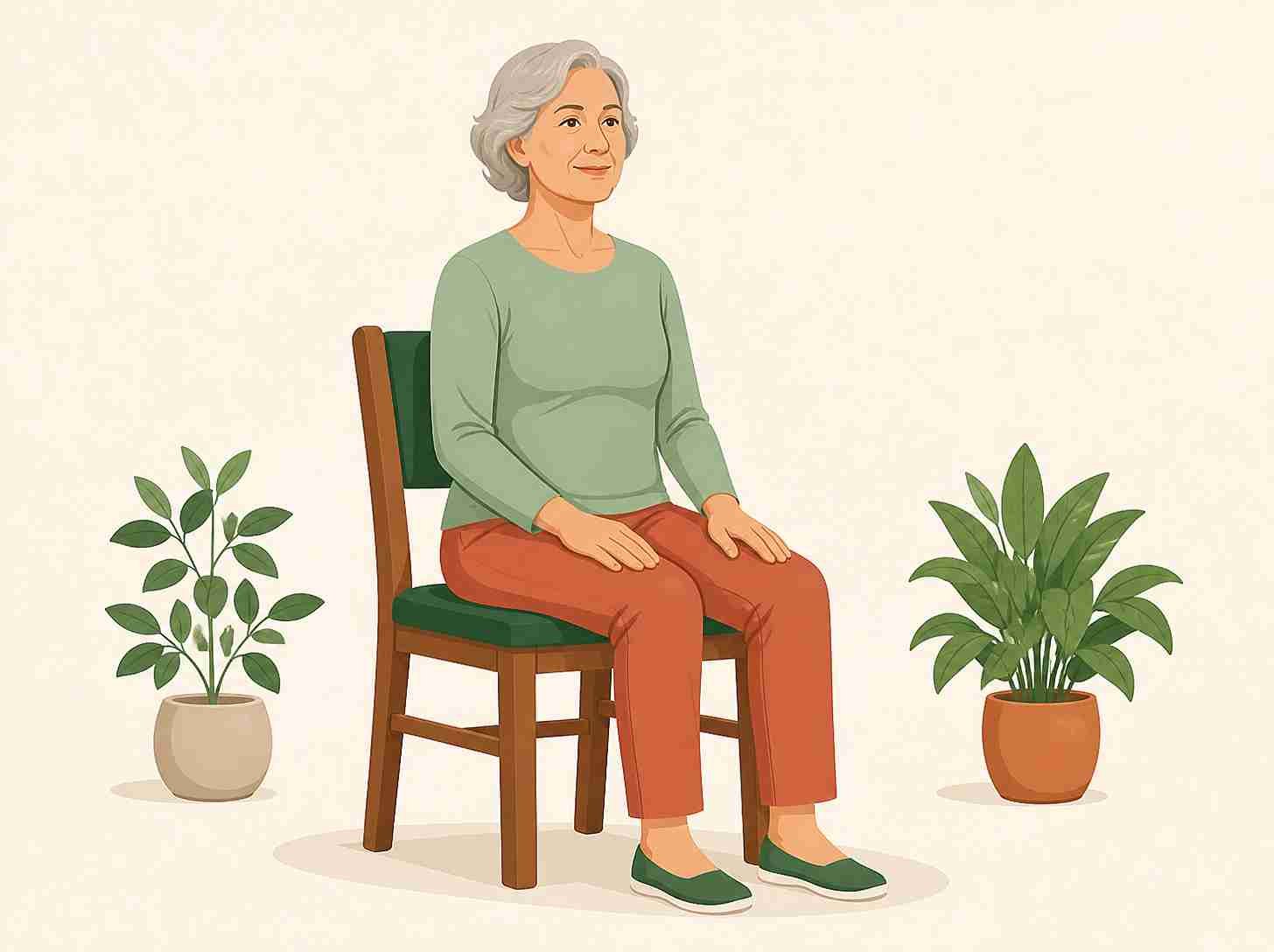
- Sit upright with your feet flat on the floor.
- Rest your hands gently on your thighs.
- Relax your shoulders and jaw.
- Breathe in comfortably through your nose if that feels natural.
- Breathe out slowly without forcing your breath.
- Repeat for 5 to 8 comfortable breaths.
Keep your breathing natural. There’s no need to take very deep breaths or hold your breath.
Tip: If focusing on your breathing makes you dizzy or uncomfortable, return to normal breathing and stop the exercise.
2. Opening and closing the hands
This movement uses slow hand and arm actions to practice control and coordination.
How to do it:
- Sit with your elbows bent and your hands in front of your chest.
- Keep your shoulders relaxed.
- Slowly open your hands, spreading your fingers comfortably.
- Gently bring your hands closer together and relax your fingers.
- Repeat 6 to 10 times.
Don’t force your fingers into a wide stretch. Keep the movement comfortable if your hands feel stiff.
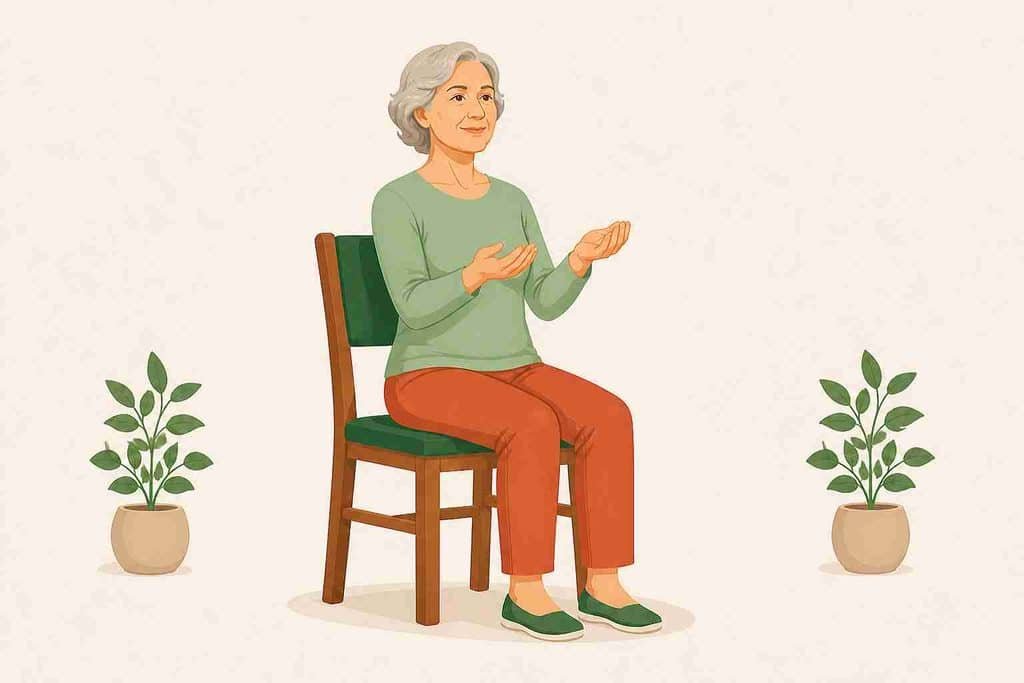
3. Seated gathering the arms
Imagine drawing your hands gently toward your body and then letting them float forward again.
How to do it:
- Begin with your hands resting near your waist.
- Turn your palms upward.
- Slowly bring your hands toward the front of your chest.
- Turn your palms outward as you extend your hands a short distance forward.
- Bring your hands back toward your body.
- Repeat 5 to 8 times.
Keep your elbows slightly bent. You don’t need to straighten your arms fully.
This exercise gives you a chance to coordinate your arm movement with relaxed breathing.
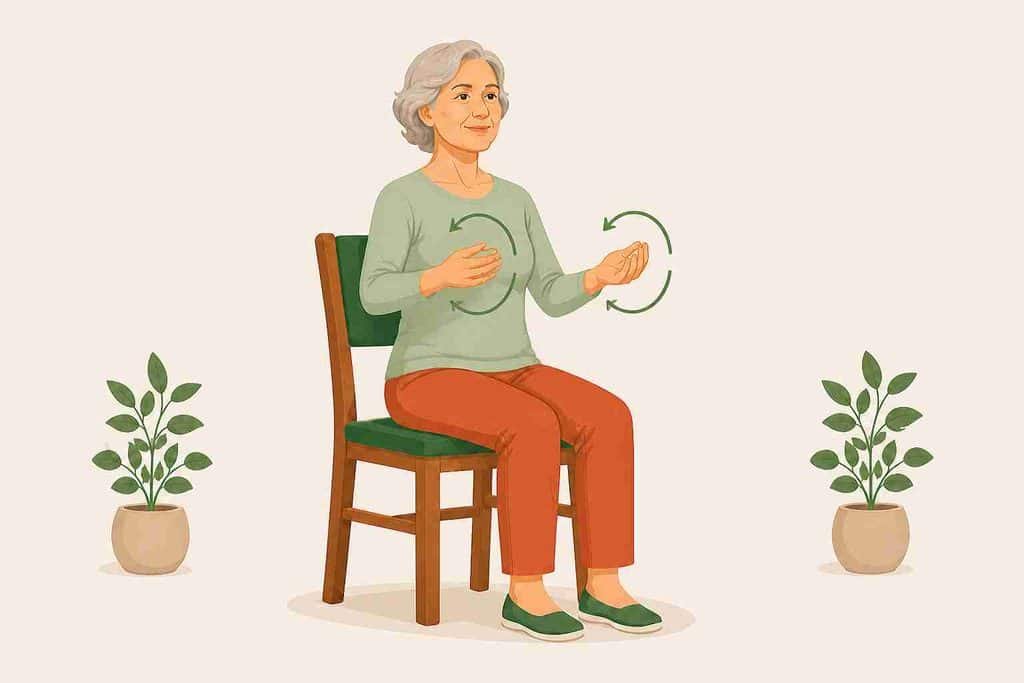
4. Seated Tai Chi arm circles
Small arm circles help you practise smooth shoulder movement.
How to do it:
- Sit upright with your arms resting beside your body.
- Lift your hands slightly in front of you.
- Make small, slow circles with your hands.
- Complete 4 circles in one direction.
- Reverse the direction for another 4 circles.
Keep the circles small and your shoulders relaxed. If lifting your arms causes pain, lower them and make smaller movements with your hands.
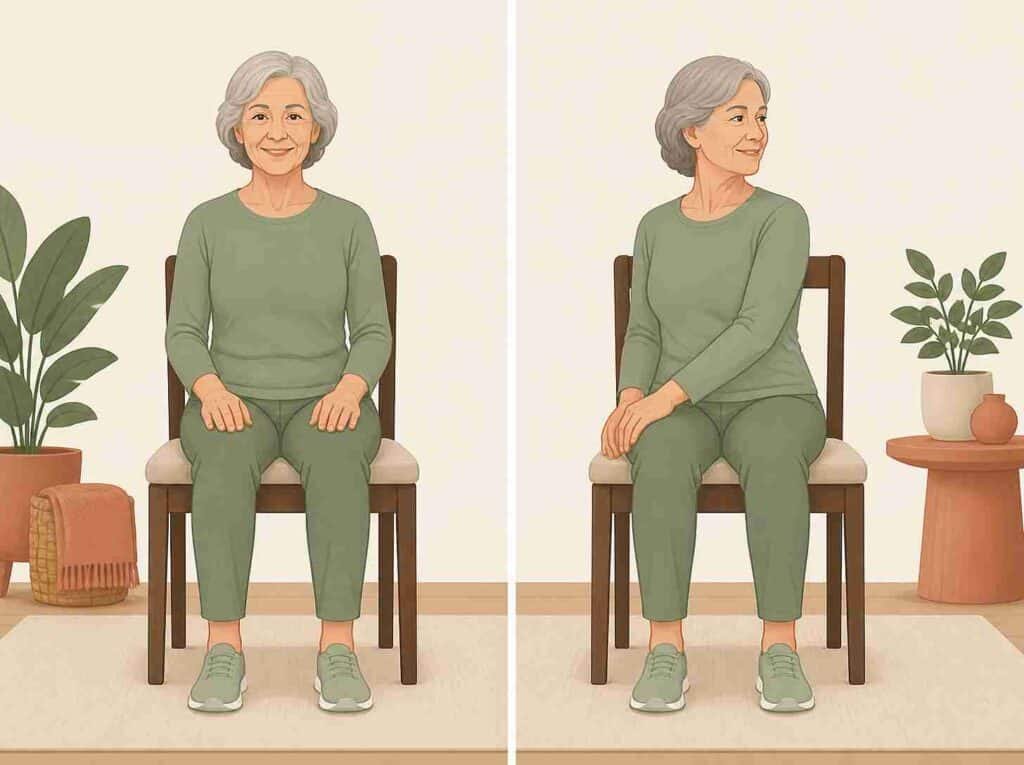
5. Gentle seated torso turns
Tai Chi uses turning movements to connect the upper body with the arms. You can practise a small version while seated.
How to do it:
- Sit with your feet flat and your hands resting on your thighs.
- Slowly turn your chest a little to the right.
- Let your head follow only as far as feels comfortable.
- Return to the centre.
- Repeat to the left.
- Complete 3 to 5 turns on each side.
Keep your hips supported by the chair. Avoid twisting sharply or trying to reach your maximum range.
If you have a spinal condition or have been told to limit twisting, ask your healthcare professional before trying this movement.
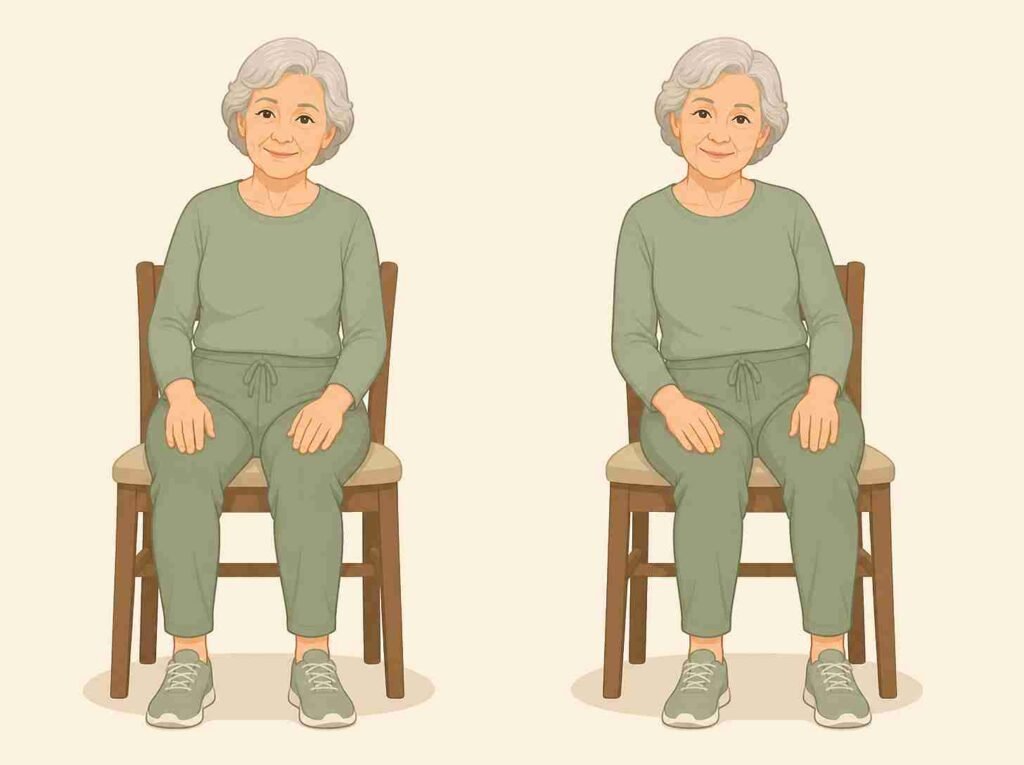
6. Seated side-to-side weight shifts
This exercise lets you practise a small change in your sitting position while keeping your feet supported.
How to do it:
- Sit near the middle of the chair with both feet flat.
- Keep your back upright and your hands on your thighs.
- Gently shift a little of your weight toward your right side.
- Return to the centre.
- Shift slightly toward your left side.
- Repeat 4 to 6 times on each side.
Keep your movements small. Don’t slide toward the edge of the chair or lean far enough to feel unstable.
If you need support to remain upright, keep your back against the chair and reduce the movement.
7. Floating arms
This slow movement involves raising and lowering the arms with control.
How to do it:
- Begin with your hands resting on your thighs.
- Slowly raise your hands in front of your body.
- Stop at a height that feels comfortable, such as your waist or chest.
- Turn your palms gently downward.
- Lower your hands back to your thighs.
- Repeat 5 to 8 times.
Let your arms move smoothly. Keep your shoulders away from your ears and breathe normally.
You can lift one arm at a time if raising both arms feels tiring.
8. Seated heel and toe movements
Gentle foot movements add lower-leg activity to your seated routine.
How to do it:
- Sit with your knees bent and feet flat.
- Keep your heels on the floor and raise your toes.
- Lower your toes.
- Raise your heels while keeping the balls of your feet on the floor.
- Lower your heels.
- Alternate between the two actions for 8 to 10 repetitions.
Move slowly and keep your knees relaxed. Stop if you feel pain or cramping.
These movements are simple seated foot exercises rather than formal Tai Chi forms, but they fit naturally into a gentle movement session.
9. Closing movement
Finish by slowing down and returning to a comfortable resting position.
How to do it:
- Sit upright with your hands resting on your thighs.
- Let your shoulders relax.
- Take a few normal, comfortable breaths.
- Slowly lift your hands a short distance, then lower them.
- Rest for 20 to 30 seconds before standing or moving elsewhere.
Take your time when the session ends. If you feel light-headed, remain seated until you feel normal and seek medical advice if symptoms persist or recur.
A simple 10-minute tai chi chair routine
You can combine the exercises into a short practice session. Use this schedule as a starting point and adjust it to your comfort.
| Time | Exercise | Suggested duration |
|---|---|---|
| 0:00 to 1:00 | Seated Tai Chi breathing | 1 minute |
| 1:00 to 2:00 | Opening and closing the hands | 1 minute |
| 2:00 to 3:00 | Gathering the arms | 1 minute |
| 3:00 to 4:00 | Seated arm circles | 1 minute |
| 4:00 to 5:30 | Gentle torso turns | 1.5 minutes |
| 5:30 to 7:00 | Side-to-side weight shifts | 1.5 minutes |
| 7:00 to 8:00 | Floating arms | 1 minute |
| 8:00 to 9:00 | Heel and toe movements | 1 minute |
| 9:00 to 10:00 | Closing movement and rest | 1 minute |
You can shorten the session to 5 minutes when you’re tired. It’s fine to take breaks between movements.
If you’re new to exercise, begin with a few movements and gradually add more as you become familiar with them.
How often should you practise Tai Chi chair exercises?
Start with a short session 2 or 3 days a week if that feels comfortable. You can increase the frequency gradually, based on your energy, mobility, and any guidance from your healthcare professional.
Research programmes vary in length and frequency. The seated Tai Chi trial discussed earlier used supervised 1-hour sessions 3 times per week over 3 months. That doesn’t mean you need to copy its schedule at home. Your routine should fit your abilities and current activity level.
Keep a simple note of the exercises you completed and how you felt afterward. If a movement repeatedly causes pain, dizziness, unusual shortness of breath, or discomfort, stop and seek appropriate advice.
Tai Chi chair exercises PDF: how to make a printable routine
Looking for a tai chi chair exercises PDF you can keep beside your chair?
A printable routine can help you remember the order of the movements without checking your phone after every exercise. You can make your own one-page checklist using the 9 exercises above.
Include these details:
- The exercise name.
- One or two short instructions.
- A suggested repetition count or duration.
- A reminder to breathe normally.
- A note to stop if pain or dizziness occurs.
Use a large, readable font and leave enough space between exercises. Older readers should be able to scan the page without straining their eyes.
You can also visit our printable chair exercises for seniors page for related seated exercise resources. For a broader collection, see our free printable chair yoga exercises PDF.
These pages cover chair-based exercise resources and may not contain a dedicated Tai Chi PDF. Check the contents before downloading or printing.
Tai Chi chair exercises for seniors with limited mobility
A seated routine can make movement practice more accessible, but one set of instructions won’t suit every person.
If you have limited mobility, try these adjustments:
- Reduce the range: Move your hands or torso only a short distance.
- Use the backrest: Keep your back supported if sitting upright for long periods is difficult.
- Move one arm at a time: This can reduce effort and make coordination easier.
- Take frequent breaks: Stop before fatigue affects your control.
- Keep your feet supported: Use a suitable footrest if your feet don’t reach the floor.
- Ask for individual guidance: A physical therapist can help adapt movements to your needs.
If you’ve recently had a stroke, surgery, or a significant change in mobility, get professional guidance before beginning a new routine. The fact that an exercise is seated doesn’t automatically make it suitable for every medical condition.
For more ideas, visit our guide to chair exercises for seniors.
Common mistakes to avoid
Moving too quickly
Tai Chi relies on controlled movement. Slow down if your arms swing or your torso turns abruptly.
Holding your breath
Breathe naturally throughout the session. Avoid forcing long breaths or holding them during a movement.
Stretching beyond your comfortable range
A small movement is enough to practise coordination. Stop before you feel pain, pinching, or strain.
Using an unstable chair
Avoid chairs with wheels, swivel bases, or loose legs. Check that the chair stays firmly in place before you begin.
Expecting immediate results
One session won’t tell you whether a routine is helping. Give yourself time to learn the movements, and pay attention to how comfortable and manageable the practice feels.
Safety tips before you begin
Most gentle seated movements are low intensity, but you still need to pay attention to how your body responds.
- Stop if you experience chest pain, severe shortness of breath, sudden weakness, or sudden dizziness. Seek urgent medical care for serious or sudden symptoms.
- Don’t continue a movement that causes sharp pain or repeated discomfort.
- Ask your healthcare professional about exercise restrictions if you have a medical condition that affects your movement or balance.
- If you need help transferring into or out of a chair, arrange suitable assistance.
- Keep water nearby and take breaks as needed.
If you’re unsure which exercises are suitable, a physical therapist or qualified exercise professional can help you choose movements that match your abilities.
Frequently asked questions
Can seniors do Tai Chi while sitting in a chair?
Yes, some Tai Chi movements can be adapted for seated practice. Chair-based routines can be useful for people who find standing difficult, although the right exercises depend on each person’s mobility and health needs.
Do Tai Chi chair exercises help with balance?
Research on seated Tai Chi has found improvements in specific measures of seated balance and reaching in a small randomized trial. Evidence from standing Tai Chi programmes is broader, so don’t assume every chair routine produces the same results.
How long should I practise seated Tai Chi?
You can begin with 5 minutes and add time as you become comfortable. The 10-minute routine in this guide is a starting point, not a required target.
Can I find printable Tai Chi chair exercises?
You can print the exercise instructions in this guide for personal use. Our printable chair exercises for seniors and free printable chair yoga exercises PDF pages provide related resources. Check each page to see whether it contains the specific movements you want.
What’s the difference between chair yoga and Tai Chi chair exercises?
Chair yoga adapts yoga poses and stretches for seated practice. Tai Chi chair exercises draw on Tai Chi’s slow, coordinated movements and attention to body position. Both can be adapted to a person’s comfort and ability, but their movements and teaching methods differ.
Can I practise seated Tai Chi every day?
Some people can comfortably practise gentle seated movements daily. Start with a manageable amount, rest when needed, and follow professional advice if you have a condition that affects exercise tolerance.
Give yourself a gentle place to start
Choose 3 movements from this guide and practise them slowly. Once they feel familiar, you can add another exercise or try the 10-minute routine.
If you’d like more seated movement ideas, browse our Tai Chi in a chair guide and our chair yoga chart.
Medical disclaimer: This article is for general educational purposes and isn’t a substitute for medical advice, diagnosis, or individualized exercise instruction. Speak with a qualified healthcare professional if you have concerns about starting a new exercise routine.