
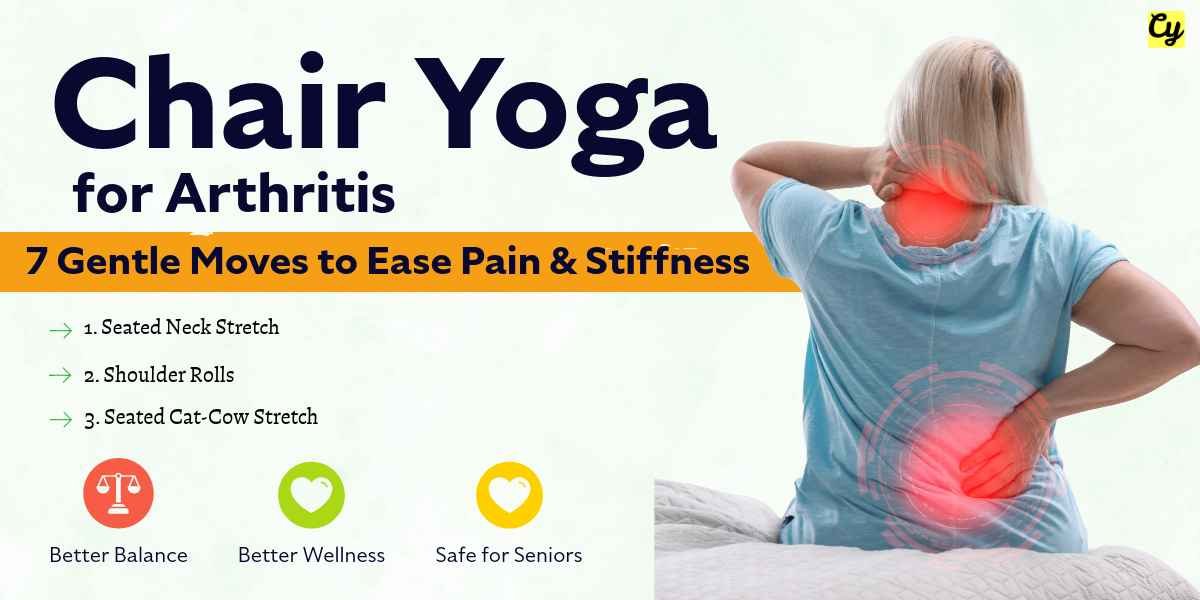
Chair yoga for arthritis has become one of the most recommended low-impact routines for older adults managing joint pain.
In this guide, we’ll show you 7 simple chair yoga poses for arthritis, ideal for seniors with knee, hip, or hand joint pain. No special equipment needed, just a sturdy chair and 10 minutes a day.
But we’re not stopping at the basics. Arthritis isn’t one condition; it’s several, and what helps one type can quietly aggravate another. Below, alongside the 7 core poses, you’ll find the practitioner-level details most chair yoga guides skip entirely: how to tell osteoarthritis and rheumatoid arthritis apart in your routine, what to actually do on a flare day, which “common knowledge” is outdated, how to progress once the basics feel easy, and the small setup details that change everything.
Arthritis can make simple movements feel difficult and painful, especially for seniors. But here’s the good news: gentle chair yoga can help reduce stiffness, improve joint mobility, and ease chronic pain, all without getting down on the floor.
The Science-Backed Benefits of Chair Yoga for Arthritis
- Reduces joint pain and stiffness
- Improves circulation and flexibility
- Strengthens muscles around painful joints
- Helps with balance and posture
- Low-impact and joint-safe
- Boosts mood and reduces stress (which can worsen arthritis)
👉 Source: Arthritis Foundation — Yoga and Arthritis
(Replace the # links above with the live URLs of your existing posts before publishing.)
Table of Contents
7 Beginner-Friendly Chair Yoga for Arthritis Exercises
One of the reasons chair yoga for arthritis works so well is that every pose can be scaled to your pain level on any given day.
Each of these chair yoga for arthritis poses targets a specific joint group: neck, shoulders, spine, ankles, knees, wrists, and hips.
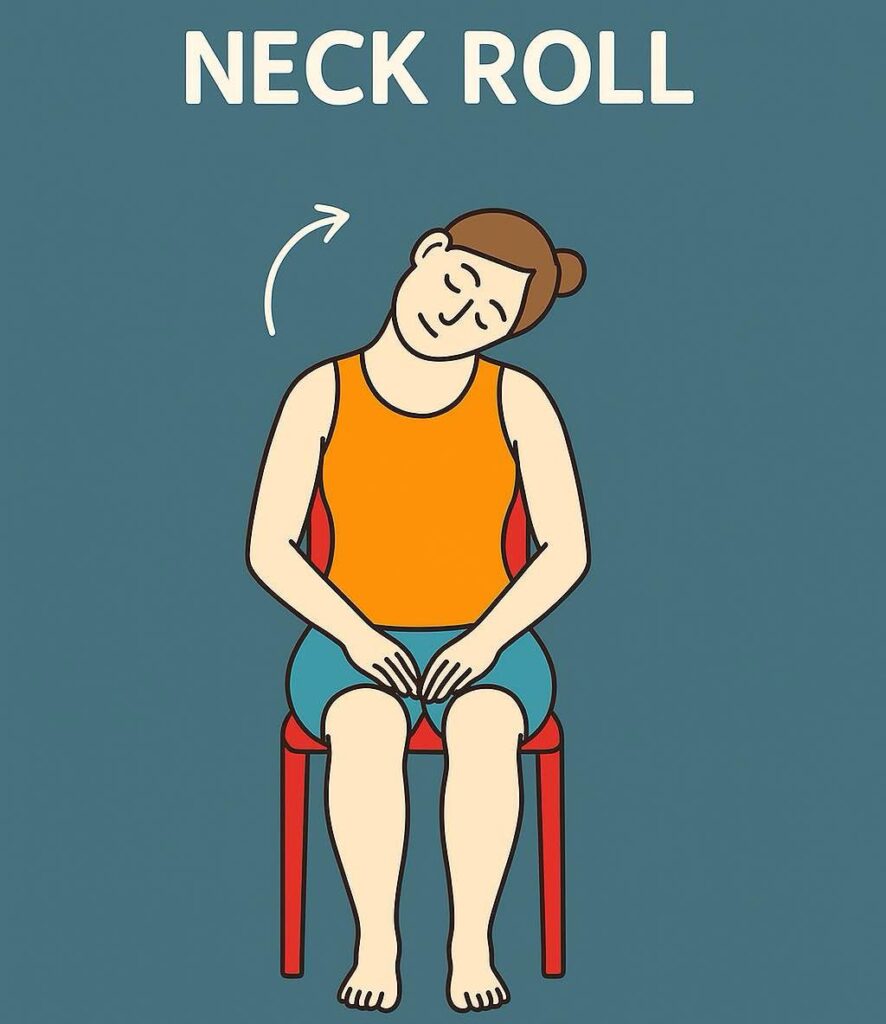
1. Seated Neck Stretch
Gently relieves neck tension from arthritis in the cervical spine.
- Sit tall in your chair.
- Tilt your right ear toward your right shoulder.
- Hold for 5 breaths. Switch sides.
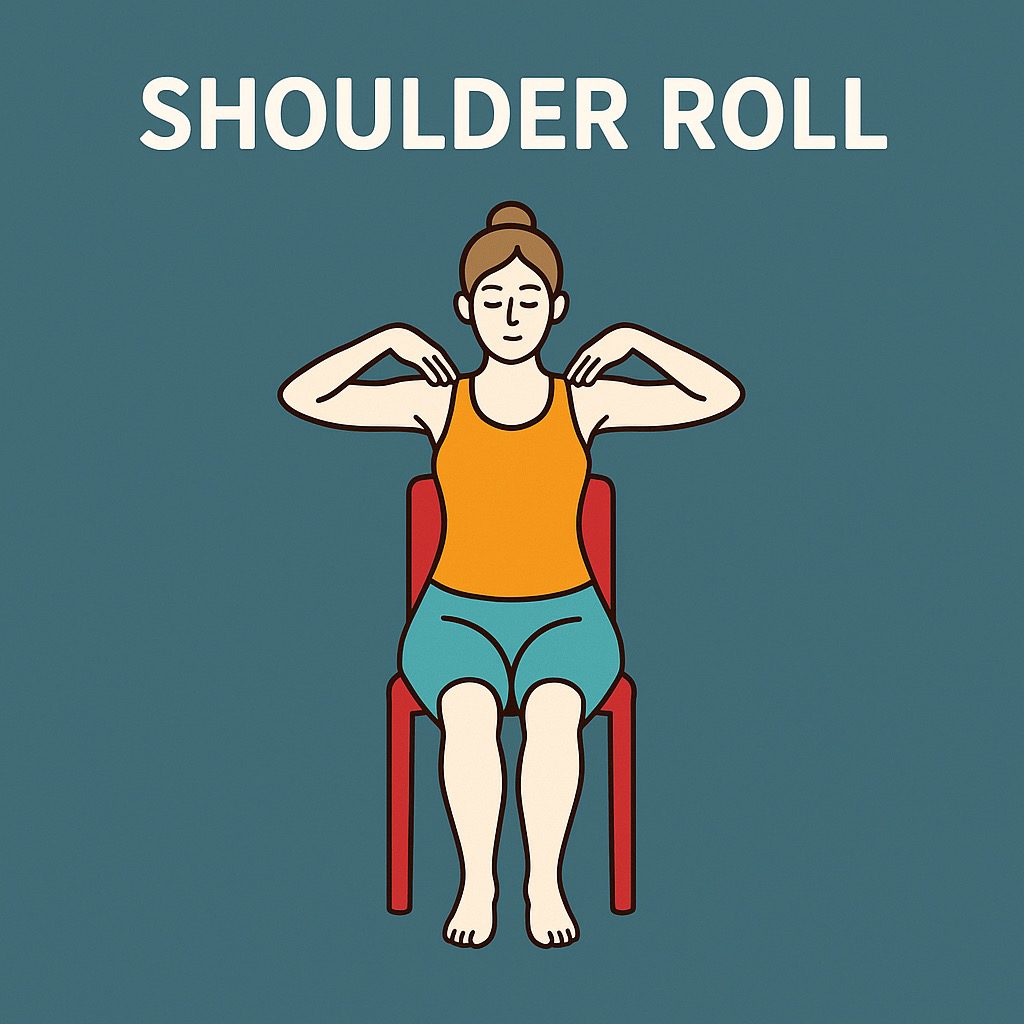
2. Shoulder Rolls
Loosens stiff shoulders and upper back.
- Inhale: Lift shoulders up.
- Exhale: Roll them back and down.
- Repeat 5 times.
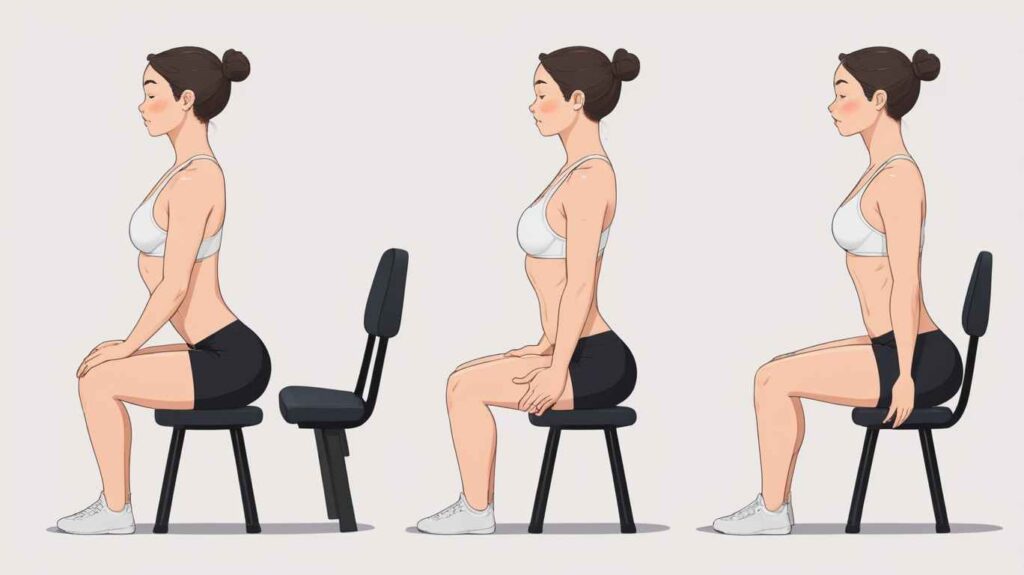
3. Seated Cat-Cow Stretch
Improves spinal mobility and eases back/hip stiffness.
- Inhale: Arch back, lift chest (cow)
- Exhale: Round back, tuck chin (cat)
- Repeat 5–7 times.
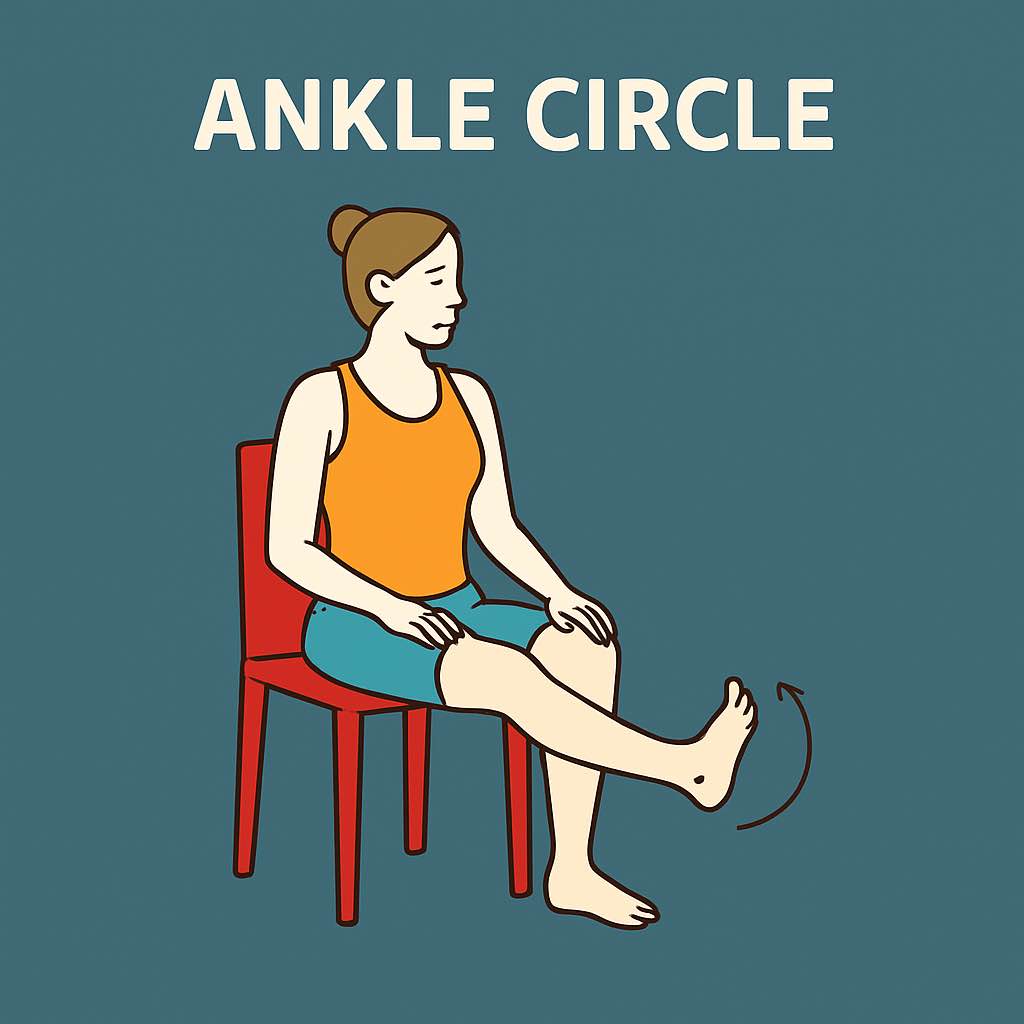
4. Ankle Rolls
Boosts circulation and eases foot/ankle joint stiffness.
- Lift one foot and roll your ankle in circles (10 times each direction)
- Switch legs.
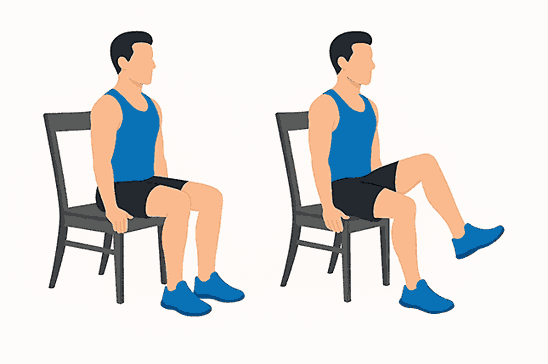
5. Seated Knee Lifts
Strengthens hip and knee joints safely.
- Lift one knee slowly toward your chest (hold chair sides)
- Lower and repeat 10 times per leg.
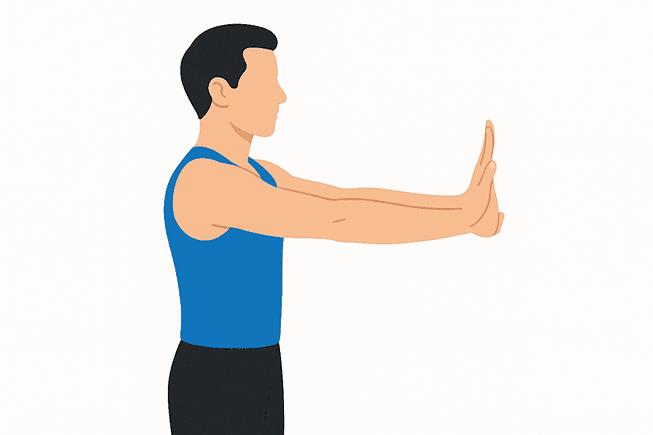
6. Wrist & Finger Stretches
Relieves arthritis in hands and wrists.
- Make a gentle fist, then spread fingers wide.
- Rotate wrists in slow circles.
- Repeat 5–8 times.
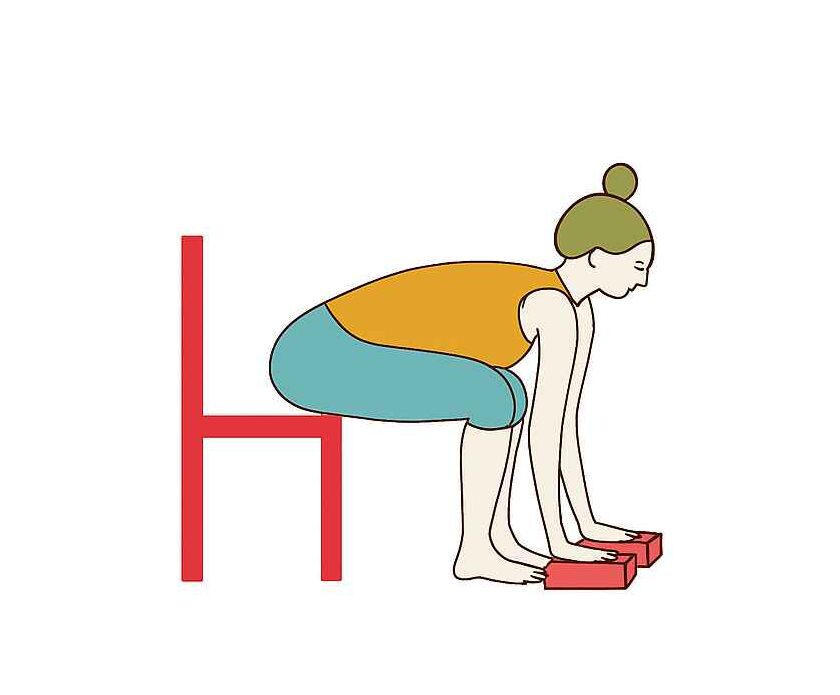
7. Seated Forward Fold (Modified)
Relieves lower back tightness and stretches hamstrings.
- Sit with feet flat.
- Hinge forward at the hips, keeping the spine long.
- Reach toward your knees or shins (not toes).
- Hold for 10–15 seconds, and breathe.
Not All Arthritis Is the Same: Adjusting Chair Yoga for Arthritis by Type
Most guides treat “arthritis” as a single condition with a single protocol. In practice, osteoarthritis (a mechanical, wear-and-tear condition) and rheumatoid or psoriatic arthritis (autoimmune, inflammatory conditions) respond to movement differently — sometimes in opposite ways. Using the wrong approach for your type isn’t just less effective; it can actively make things worse.
| Type | What’s Happening | Best Time to Move | Movement Style | Watch For |
|---|---|---|---|---|
| Osteoarthritis (OA) | Cartilage wear, mechanical joint stress | Late morning–early afternoon, after stiffness eases | Steady, moderate reps; joint loading generally fine | Pain that worsens with overuse late in the day |
| Rheumatoid Arthritis (RA) | Autoimmune inflammation of joint lining | Gently, right upon waking, to shorten stiffness window | Range-of-motion first; isometrics over dynamic movement during flares | Morning stiffness lasting 45–60+ minutes signals active inflammation |
| Psoriatic Arthritis (PsA) | Autoimmune, often affects fingers/toes asymmetrically | Similar to RA — gentle AM movement | Avoid loading swollen joints during flares | Sausage-like swelling in a single digit |
| Gout | Acute crystal-induced inflammation | Fine between attacks; avoid during an acute attack | Rest and avoid loading the affected joint during a flare | Sudden, intense pain/redness in one joint (often the big toe) |
A simple self-check: how long does your morning stiffness last? Under 30 minutes tends to point toward OA; 45–60 minutes or more is a classic RA/PsA pattern worth mentioning to your doctor.
Why this matters: advice like “push through the stiffness” that works for OA can genuinely backfire during an RA or PsA flare, where loading an inflamed joint prolongs the flare rather than resolving it. If you don’t already know which pattern fits you, this is worth raising at your next appointment.
External reading: Mayo Clinic — Rheumatoid Arthritis vs. Osteoarthritis
The Flare-Day Guide to Chair Yoga for Arthritis
“Just listen to your body” is common advice and mostly useless without a framework. Here’s a practical decision tree practitioners actually use.
Step 1: Is this normal exercise discomfort or a flare?
- Mild, dull ache that fades within an hour of stopping → normal. Continue as planned.
- Heat, swelling, redness, or pain lasting more than 2 hours after stopping → likely a flare. Move to Step 2.
Step 2: How intense is the flare?
- Mild flare (manageable stiffness, no swelling) → apply the 50% rule: cut your range of motion and reps roughly in half, drop any held stretches, and keep only gentle circulation moves like ankle rolls and wrist circles.
- Moderate-to-severe flare (visible swelling, joint hot to the touch, sharp pain) → skip structured chair yoga for the affected joint entirely today. Light circulation movement in unaffected joints is still fine.
Step 3: Should you rest completely instead?
- No — full rest during a flare can lead to deconditioning and more stiffness over time. The goal is modification, not elimination.
- Heat before movement helps loosen stiff joints; ice after movement helps if a joint feels hot or swollen post-session.
Step 4: Red flags, stop and call your provider
- Sharp, sudden pain
- A joint that feels unstable or “gives way”
- Swelling that worsens rather than improves over 24–48 hours
Treating flare days as a graded response, modify, reduce, or skip, rather than a yes/no decision is one of the biggest gaps between generic advice and how this is actually managed in practice.
Common Myths About Chair Yoga for Arthritis, Debunked
| Myth | Reality |
|---|---|
| “Yoga can reverse arthritis damage.” | It manages symptoms and preserves function — it does not regenerate cartilage or undo joint erosion. |
| “If it hurts, you’re doing it wrong and should stop altogether.” | Mild discomfort during stretching is normal. Pain that lingers or sharpens is the real red flag, not discomfort itself. |
| “Cracking or popping during stretches is dangerous.” | Usually harmless gas release (crepitus) — only a concern if paired with pain or swelling. |
| “More reps means faster results.” | For inflammatory arthritis especially, overtraining can trigger flares. Consistency beats volume. |
| “Chair yoga is only for people who can’t do ‘real’ exercise.” | Many practitioners use it as a legitimate mobility layer or warm-up even for active seniors — not just a fallback option. |
Being upfront about what chair yoga won’t do is just as important as promoting what it can, it sets realistic expectations and builds trust with readers who’ve already heard the overhyped version elsewhere.
Beyond the Basics: Advancing Your Chair Yoga for Arthritis Practice
This section is for readers who’ve already built consistency with the 7 poses above and are ready for the next stage, not for beginners.
1. Know your progression marker. You’re generally ready to add standing or chair-assisted work once you can complete all 7 poses pain-free for two consecutive weeks.
2. Add light resistance thoughtfully. Once grip strength allows, light resistance bands can be layered into wrist and shoulder work. Keep wrists neutral and avoid locking joints at the end of a range of motion.
3. Use periodization, not constant progression. Alternate a “build” week (slightly more reps or hold time) with a “deload” week (reduced volume) rather than always adding more. This prevents the cumulative joint irritation that comes from continuous progression.
4. Track the right metrics. “Days practiced” is a weak signal. Track range-of-motion changes, the duration of morning stiffness over time, and functional milestones like standing up from a chair unassisted.
5. Know the ceiling. If chair yoga stops producing improvement or pain patterns change, that’s the signal to bring in a physical therapist or rheumatologist-guided program rather than pushing the same routine harder.
External reading: CDC — Physical Activity for Arthritis
What Experts Know About Chair Yoga for Arthritis (That You Don’t)
These are the details that only surface after actually teaching this population repeatedly and are rarely covered in basic guides.
- Chair setup matters more than people think. Seat height should let your knees sit at roughly 90°. Armless chairs are often preferable for shoulder rolls and forward folds, since armrests restrict range and can force compensatory shoulder hiking.
- Medication timing affects feedback, not just pain. Pain relief from NSAIDs or other medication can mask overexertion signals. Practicing while relief is still fading rather than immediately after a fresh dose helps you get honest feedback from your joints.
- Post-injection windows. After a corticosteroid joint injection, it’s common guidance to avoid loading that specific joint for 48–72 hours, even though it may feel noticeably better right away.
- Time-of-day biomechanics differ by type. OA-dominant stiffness often eases by late morning to early afternoon, a good movement window. RA-dominant stiffness often benefits from gentle movement immediately upon waking to shorten the stiffness period.
- Weather sensitivity is common, if not fully proven. Many people with arthritis report increased stiffness before a pressure drop. The practical response isn’t to skip the session; it’s to shorten and gentle it down for that day.
Is Chair Yoga for Arthritis Safe for Seniors?
Yes! Chair yoga is one of the safest and most recommended movement practices for older adults with arthritis. It’s low-impact, adjustable to your pain level, and can even be done during flare-ups; just listen to your body and use the flare-day framework above to decide how much to scale back.
Always check with your doctor if you have severe joint damage or are recovering from joint surgery.
FAQs
Q: Can chair yoga reduce arthritis pain?
Yes, gentle chair yoga helps reduce stiffness, improve circulation, and ease pain in arthritic joints.
Q: How often should seniors do chair yoga for arthritis?
2–3 times a week is ideal. Even 10 minutes a day can improve mobility.
Q: Is chair yoga safe for knee arthritis?
Absolutely. These exercises strengthen muscles and improve range of motion without stressing your knees.
Q: Does chair yoga work the same for rheumatoid arthritis as it does for osteoarthritis?
Not exactly; see the OA vs. RA comparison above. Timing and intensity should be adjusted based on your specific type.
Q: What should I do if chair yoga makes my joints hurt more?
Use the flare-day decision tree above to figure out whether it’s normal discomfort or a sign to scale back.
Final Thoughts
If arthritis pain is limiting your movement, don’t give up; just sit down and start moving gently. These simple chair yoga poses are a safe way to ease pain, improve strength, and feel better every day. And once the basics become easy, the advanced progression track above gives you a safe way to keep growing instead of plateauing. Most people who try chair yoga for arthritis notice reduced stiffness within the first 1–2 weeks of consistent practice.
Remember: consistency, not intensity, is the secret.
👉 Want more help? Try our free 7-day printable plan coming soon!







1 thought on “Chair Yoga for Arthritis: 7 Gentle Moves to Ease Pain & Stiffness”
Pingback: 7 Easy Ways How to Fix a Wobbly Chair (Stop Shaking & Avoid Falls) – Senior Home Guide