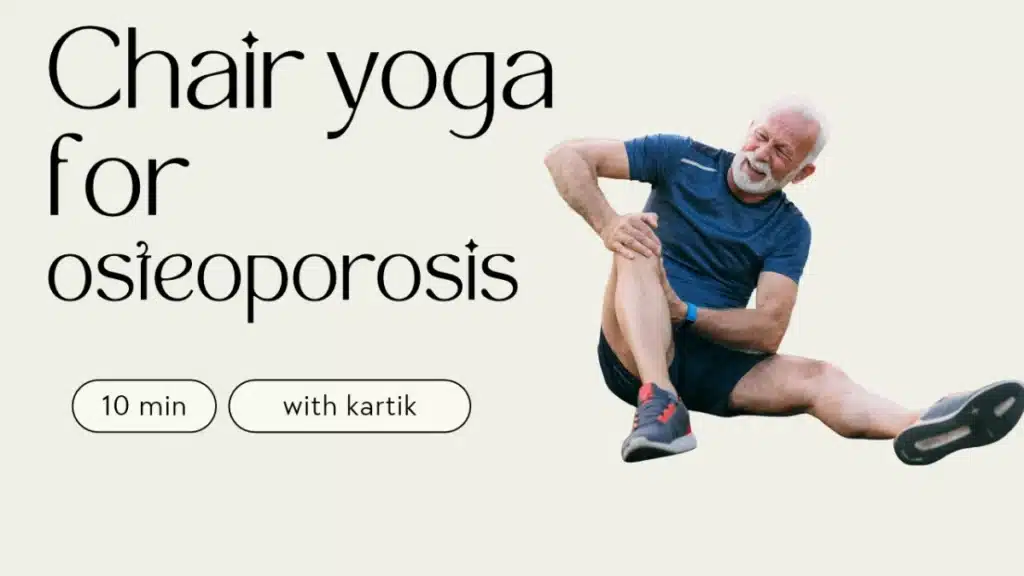
Osteoporosis changes the rules of exercise in a way most yoga articles never mention. Bones can grow stronger under the right pressure, and yet the same article that says that also hands you floor poses with deep forward folds and end-range twists, the two movements an osteoporotic spine handles worst. Chair yoga for osteoporosis fixes the mismatch. Every move below happens seated or holding a chair, every pressure line runs through your bones politely, and each one exists to serve the job that actually matters: telling your vertebrae, hips, and wrists, the three fracture zones, to stay in business.
You’ll get the 10 moves, the safety rules spine experts beg people to follow (including the truth about twisting), and what to skip, written down at last.
Table of Contents
What osteoporosis actually changes for you
Bone loss itself rides silently for years; usually the first event is a broken wrist at the sidewalk or a vertebra that compresses while lifting a full laundry basket. Roughly half of women and one in four men past 50 will break a bone for this reason, per the Bone Health and Osteoporosis Foundation. Two facts matter for your chair work:
Bones are living cement. Old bone gets hauled out by cleanup cells; new bone gets laid down by builders. Exercise is the loudest signal your body hears to hire more builders. Pressure on a bone, at the right dose, is the message.
Weakness concentrates in predictable spots. The mid-spine vertebrae, hip, and wrist take the worst hits. Good news: all three can be prodded into activity while seated, and posture work guards the mid-spine against the folding that causes compression fractures. So a practice built for osteoporosis is really three practices stacked: gentle load, extension-friendly posture, and balance.
How movement tells bone to stay strong
Bone listens to load, a principle called Wolff’s law. Muscle tugging on bone, and weight passing through it, registers as “add material here.” Take the pressure away and bone thins; bear pressure carefully and it thickens.
The research on yoga reached an interesting place here. Dr. Loren Fishman, a Columbia-trained physician, spent years studying a plain 12-pose yoga series, holding each pose comfortably and returning daily. In his published series of over 700 practitioners (Topics in Geriatric Rehabilitation, 2016), spine and hip bone density measurements improved in many participants, including beginners practicing at home. A different large trial (the LIFTMOR study) found heavy supervised lifting beat standard exercise for bone density in older adults too. Translation: Bone wants a challenge, delivered safely, with seated options included.
The NIH’s bone-health materials say the same in patient language: weight-bearing, muscle-strengthening, and balance exercise form the exercise prescription for osteoporosis. The chair versions of all three are on this page.
The rules that keep weak bones safe
Four rules cover most of the danger, and they matter most in week 40, not week 1, when habits harden:
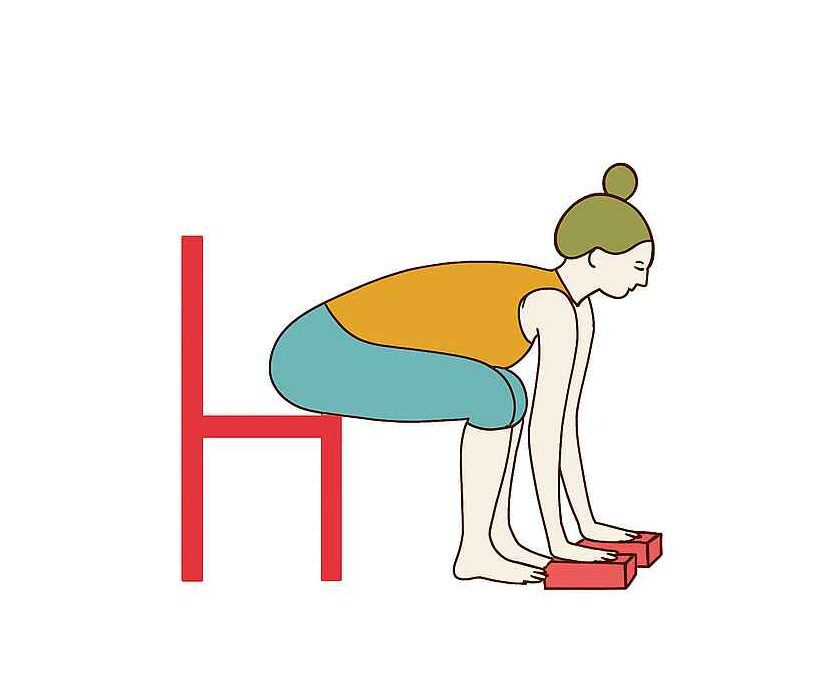
Rule 1: Spare the spine the fold. Bending forward with a rounded back (loading the spine in flexion) squeezes the front edges of the vertebrae, precisely where compression fractures live. Keep folds modest: hinge gently from the hips with a long, tall chest, and laugh at any instruction that says round toward your toes.
Rule 2: Twist with a tall spine, small range. Pure gentle rotation (sitting tall, turning ribs like a lighthouse beam) stays within most experts’ comfort zone. The recipe for fracture is twisting plus folding plus speed, so we practice twist alone, slowly.
Rule 3: Loading beats floating. Gentle compression, standing tall, pressing the heels, pushing the arms overhead with 1-pound bottles, feeds bone. A practice of pure stretches misses half the prescription. Both live here.
Rule 4: Balance protects more bones than strength. A hip fracture usually needs a fall first. Balance work is bone insurance and appears throughout the moves below.
Have severe osteoporosis (T-score at or below 3.5), a recent compression fracture, or a new back pain that arrived without a fall? Those cases deserve a physiotherapist’s eyes before anything on this list, and most will approve exactly this kind of gentle practice.
Poses and habits to skip (from the same rules)
| Skip this | Why it bites weak bone | Our swap |
|---|---|---|
| Rounded seated forward folds (even the stretchy kind) | Loads spinal flexion at the mid-back | Chest lifts + gentle seated hinge, tall spine |
| Deep end-range twists, twisting knee-to-chest | Rotation stacked on flexion compresses vertebrae | Supported neutral twist, small range, tall spine |
| Full cat rounds (big rounding phase) | Loads the spine at its weakest angle | Chest lifts only: the arch phase minus the round |
| Aggressive standing side-bends | Squeezes vertebrae on one edge | Small-range side reach, one hand bracing |
| Hot-yoga deep backbends | End-range extension in one hard push | Controlled chest lifts; extension needs repetition, not depth |
The standing fights begin elsewhere: stairs at speed, icy sidewalks, carrying grandkids up curbs. Our home safety guide for the elderly covers the fall side; yoga handles the bone side.
The 10 moves (each with a bone note)
No jumping, no mats, and nothing happens on the floor. Keep two light water bottles (or 1-2 lb hand weights) within arm’s reach for move 9, and a footstool nearby for the balance work.
1. Seated mountain posture (the spine habit). Sit at the chair’s front, feet flat. Grow tall through the crown, and draw the shoulder blades gently back and down (not pinched), with ribs stacked over hips. Breathe there for a minute. This is the anti-slouch position your mid-spine vertebrae have been aching for; practice it daily and your default posture drifts younger.
2. Chest lifts (gentle thoracic extension). Hands behind the head or crossed on the chest, sit tall. On a slow inhale, lift the chest and gaze slightly before you (a small lean back, not a bend). Hold 3 breaths, then return. 8 reps. Extension is the direction osteoporotic spines starve for; research favors repeated small doses, so a few inches of range done eight times beats one dramatic backbend done once.
3. Shoulder blade squeezes. Arms at sides, elbows bent 90 degrees. Pull the elbows back and squeeze the blades together for 3 seconds, release. 10 reps. Upper-back vertebrae get the squeeze signal; slouching stops being comfortable (which is the point).
4. Seated march with thigh presses. Sit tall, press one thigh down firmly into the chair for 5 seconds (the hip muscles work against the steady seat), then lift that knee for a march step. Alternate for 8 pairs. The press-and-lift combo loads the hip from two directions, and hip bone responds to exactly that kind of repetition.
5. Seated knee extensions, band optional. Straighten one leg, hold 3 seconds, lower slow. 10 per side. Optionally loop a light band over the shin and press down. Femur and shin get gentle axial load; the quad (the fall-prevention muscle) strengthens; and the move doubles as the knee-care favorite from our bad knees guide.
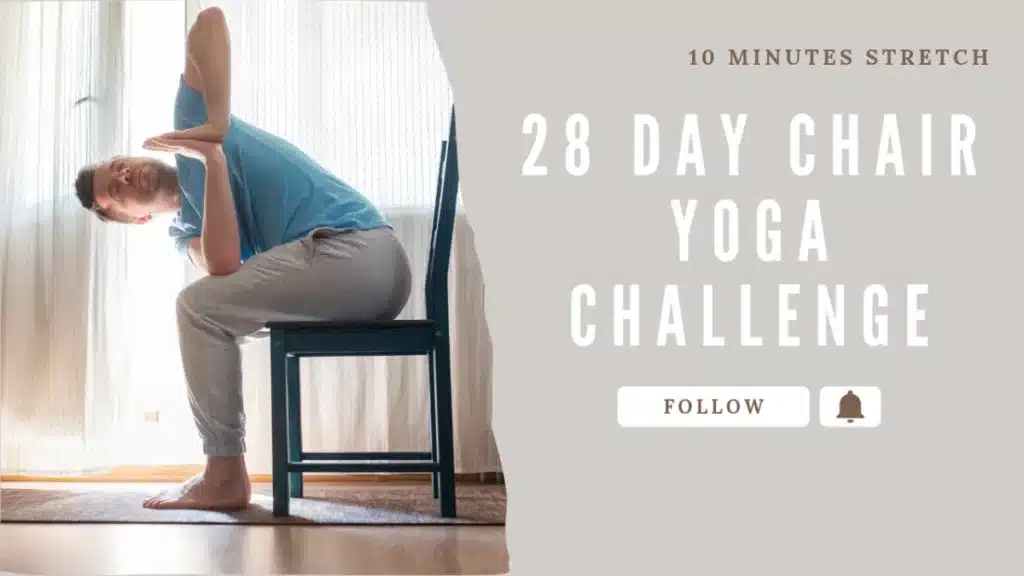
6. Seated torso twist (tall spine, small beam). Sit tall. On an exhale, rotate the ribs to the right like a slow lighthouse beam, hips planted, palms resting somewhere reachable. Hold 3 breaths, return, switch. 4 gentle rounds each way. This is Rule 2 in practice: the twist is real, but the spine stays long, the range stays modest, and speed stays at zero. Most researchers put this in the safe column for osteopenia and mild osteoporosis; severe cases ask the physio first.
7. Seated side reach (small, braced). One hand braces the chair seat; the other arm rises, and you lean a few degrees sideways (a credit-card of movement), then return. 5 per side. Opens the ribs and loads the spine sideways within a safe range; do it slowly to earn the bone signal without the edge bend.
8. Heel presses and raises with the chair as anchor. Stand behind or beside your chair, hands resting on its back. Rise slowly onto the toes, hold 2, lower slow with control. 10 reps, then finish with 5 firm heel press-downs while seated. The calf and femur feel the load the way standing work should feel; heel raises rank among the best leg-bone exercises in senior studies.
9. Overhead press with light bottles. Sit tall with a bottle in each hand (or light 1-2 lb weights). Press both arms up and feel the spine grow longer as you go, then lower with control. 8 reps. The vertical thrust carries a friendly load to the wrist bones and mid-spine. Small weight with honest reps beats big numbers with bad form.
10. Slow chair stand-to-sit. Sit forward in the seat, feet flat and hip-width apart. Lean the chest over the toes and stand up, using hands on the thighs or the chair’s arms for as much help as you need. Sit back down over 4 slow counts. 5 reps. Every stand-up loads the femur and hip with your full body weight, the highest-value bone signal available without a barbell. Once the both-hands version feels easy, drive the move with one hand resting on the chair only.
A 10-minute daily routine for bone strength
| Minutes | Focus | The moves |
|---|---|---|
| 0:00 to 1:30 | Posture habit | Mountain sit, breathing tall |
| 1:30 to 3:30 | Spine extension | Chest lifts, shoulder blade squeezes |
| 3:30 to 5:30 | Load the legs | Seated marches, knee extensions |
| 5:30 to 7:30 | Controlled range | Torso twist (tall spine), small side reach |
| 7:30 to 9:30 | Load the wrists + hips | Overhead presses, heel raises at the chair |
| 9:30 to 10:30 | Anchor | Slow chair stand-to-sits, 6 tall breaths |
How often: 10 minutes daily beats two 45-minute sessions a week, because bone research keeps landing on frequency over ritual. On tired days, run the first 4 minutes (posture + chest lifts + blade squeezes) and the spine gets its dose anyway. Add a walk when the knees cooperate; keep two safety habits sharp: never rush a stand-to-sit, and skip any move that sends sharp pain into the mid-back.
Progress check: ask your doctor whether a DEXA scan (the bone density X-ray) is due; improvements take 6-12 months to appear on scans, and comparing scans beats comparing soreness.
Frequently asked questions
Is chair yoga good for osteoporosis? Yes, and it covers the whole exercise prescription: gentle axial load, extension-based posture work, and balance, all with the fall risk that floor poses carry removed. The one caveat: severe cases (T-score 3.5 or below, or recent fractures) deserve a physiotherapist’s blessing on the exact range and reps first.
Can you twist with osteoporosis? Gentle twisting with a tall spine and a small range sits in the safe column for most people with osteopenia or mild osteoporosis. Flexed-spine twisting, deep end-range rotations, and fast russian-twist-style work compress vertebrae and belong on the skip pile. When in doubt, twist less and taller.
Which yoga poses should be avoided with osteoporosis? The rounded-forward family (deep folds, full cat rounds, toe-touch stretch holds), deep end-range twists, aggressive side bends, and hard one-push hot-yoga backbends. The swap table above converts each danger into a seated, spine-friendly alternative.
Can you increase bone density after 60? Usually, yes. Studies on yoga participants (Fishman’s 12-pose series) and supervised strength programs (LIFTMOR) both reported density gains in older adults, with improvements showing up on scans over 6-12 months. Gains are modest, but reduced fracture risk arrives faster than the scan shows, because strength and balance improve first.
Are planks safe with osteoporosis? Planks load the spine in a neutral, mostly straight line, which many specialists now accept for mild cases, though most seated alternatives deliver similar core work with less body weight on vertebrae. Beginners and severe cases should prefer seated marches, the blade squeezes above, and the knee extensions, and ask a physiotherapist before adding planks.
How often should you do chair yoga with osteoporosis? Daily short sessions win again, for two reasons: bone loads respond to frequency, and extension habits form through repetition. Ten minutes most days, with the tired-day version (4 minutes) available, is a strong schedule.
Is yoga bad for osteoporosis if it’s severe? Yoga is not the problem, poses are. With severe bone loss, floor transitions and loaded flexion moves add risk, while seated extension work, supported loading, and balance training stay on the helpful list. Loop in your physician or physiotherapist for a severity-specific range, and recheck after any new vertebra event.
Key takeaways
- Bone answers load: seated pressure, posture work, and balance are all trainable from a chair.
- Guard the spine first: no rounded folds, no end-range twists, and gentle extension daily.
- Twist tall or don’t twist: slow, tall-spine rotation in a small range is the research-favored approach.
- Frequency beats heroics: 10 minutes daily signals bone more reliably than rare hourlong sessions.
- Re-scan with DEXA on your doctor’s schedule; strength and balance improve before scans show it.
Final thought
Osteoporosis asks you to trade dramatic poses for disciplined ones. Good trade, honestly: twenty chest lifts a day buy more bone than a textbook of painless stretches, and a tall spine during twists buys you decades of intact vertebrae. Bookmark this page and run the 10-minute table tomorrow morning. Your skeleton is listening more closely than you think. Give it a reason to stay in business.
This article shares general wellness information, not medical advice. Talk to your doctor before changing an exercise routine, especially with diagnosed osteoporosis, osteopenia, or a history of fractures.