Your maintenance calories are the number that decides everything else: eat that amount and your weight holds steady, eat below it and you lose, eat above it and you gain. This free maintenance calorie calculator gives you that number in ten seconds, with the ±100-calorie stability band, a senior-friendly protein target, and the weigh-in protocol that verifies the estimate against your real body. Large controls, plain language, no signup.
How this maintenance calorie calculator works
The calculator estimates your Basal Metabolic Rate (BMR) with the Mifflin-St Jeor equation, the formula validated in the American Journal of Clinical Nutrition and shown to predict resting calorie burn more accurately than older formulas in healthy adults (Mifflin et al., 1990). It then multiplies BMR by an activity multiplier to produce your Total Daily Energy Expenditure (TDEE) — and TDEE is simply the scientific name for maintenance calories: the intake at which your weight stays where it is.
Because the estimate is built from your age, height, weight and activity, it lands far closer than generic charts. The USDA's MyPlate for Older Adults guidance underlines how widely calorie needs vary among people of the same age — which is why the smartest maintenance plan starts with a personal number and then confirms it on the scale.
The formulas behind your number
- Men: BMR = 10 × weight (kg) + 6.25 × height (cm) − 5 × age + 5
- Women: BMR = 10 × weight (kg) + 6.25 × height (cm) − 5 × age − 161
- Maintenance: BMR × activity multiplier
Where activity changes your maintenance calories
BMR assumes a body at rest for 24 hours; real life multiplies it. The multiplier you pick does most of the heavy lifting in this calculation, so pick honestly:
| Activity level | Multiplier | Plain English |
|---|---|---|
| Sedentary | 1.2 | Desk or chair living, little deliberate movement |
| Lightly active | 1.375 | Easy movement 1–3 days a week |
| Moderately active | 1.55 | Real exercise 3–5 days a week |
| Very active | 1.725 | Hard exercise most days |
| Extremely active | 1.9 | Physical job plus daily training |
Most people grade themselves one level above the truth. A daily 20-minute walk is lightly active, whatever it felt like. Choosing a flattering level inflates your maintenance number by 200–300 calories, and the scale quietly corrects that error within a month. When in doubt, choose the lower level: you can always add calories later with evidence.
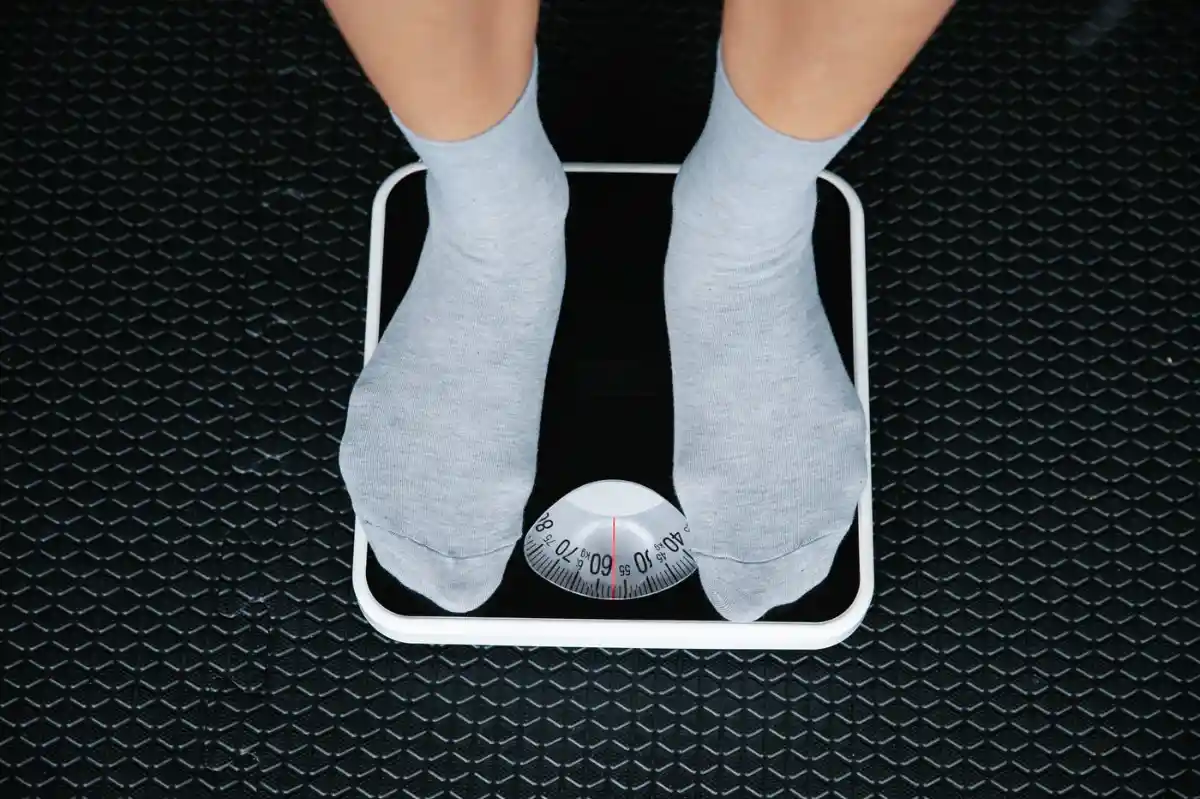
The weigh-in protocol that verifies your number
An estimate from any maintenance calorie calculator carries an honest margin of error of around 10%. Two weeks of data turn the estimate into a measurement:
| Step | What to do | What it tells you |
|---|---|---|
| 1. Weigh in daily | Same time each morning, after the bathroom, before food | Single readings are water; the weekly average is the truth |
| 2. Eat at your number | Hit the maintenance calories the tool gave you for 14 days | Removes guesswork about what you were actually eating |
| 3. Compare averages | Week 1 average vs week 2 average | Within ±2 lb → this is your maintenance. Climbing → drop 100–150 calories. Falling → add 100–150 |
After 60, weigh-ins matter more, not less: unexpectedly quick loss often reflects muscle, and slow unexplained gain can flag fluid changes worth mentioning to your doctor. If weight swings by more than 3–4 lb in a few days with leg swelling or breathlessness, call your doctor rather than adjusting your diet.
Maintenance calories after 60 (and every decade chart)
Maintenance is a moving target with age: muscle mass and typical activity both decline, so the number that held your weight at 45 overshot at 65. Ballpark maintenance figures for moderately active adults look like this:
| Group | Sedentary | Moderately active | Very active |
|---|---|---|---|
| Women 60+, 140–160 lb | ≈ 1,550 | 1,750–2,000 | ≈ 2,200 |
| Men 60+, 160–190 lb | ≈ 2,000 | 2,200–2,400 | ≈ 2,600 |
| Women 40s, same size | ≈ 1,700 | 1,950–2,150 | ≈ 2,400 |
| Men 40s, same size | ≈ 2,200 | 2,500–2,800 | ≈ 3,000 |
Treat the table as orientation and your calculator result as the personal version. Two age-specific adjustments matter most:
- Protein. Adults over 65 benefit from about 1.2 g of protein per kg of body weight per day — the level shown in your results. Holding protein at maintenance protects the muscle that keeps your BMR up.
- Movement. Gentle daily activity — a 10-minute chair yoga routine, for example — raises true maintenance more in later life than any diet trick, because it reverses the inactivity slide that shrinks the number.
The National Institute on Aging highlights nutrient-dense foods for older adults precisely because calorie budgets shrink while nutrient needs hold steady or rise.
Living above and below your maintenance number
Once you know maintenance, every eating decision becomes simple arithmetic against one reference line:
| Goal | Where to eat vs maintenance | Realistic pace |
|---|---|---|
| Lose fat gently | 15–20% below (or the calculator's lower band) | 0.5–1 lb per week |
| Hold your weight | At maintenance, judged by 2-week scale trend | No change — that's the point |
| Build strength | 10–15% above, with plenty of protein | 0.25–0.5 lb per week, mostly muscle when paired with resistance work |
| Recovery break after dieting | At maintenance for 4–8 weeks | Averages stabilize, hunger settles, next diet works better |
That last row deserves attention: research on diet breaks suggests that stretching at maintenance between weight loss phases helps protect muscle and adherence. Use the calorie deficit calculator when you want to leave maintenance, and come back to this page when you reach your goal — maintenance is where results live permanently.

Why the number moves even when you don't
Maintenance calories shift with weight, season, medication changes, sleep and daily step counts. The body also adapts to long deficits — a phenomenon the literature calls metabolic adaptation — and the reverse happens after weeks at maintenance. This is why "find it once, never think again" is the wrong model. Recalculate every couple of years, and treat the scale trend, never the estimate, as the final authority.
Frequently asked questions
What are maintenance calories?
The number of calories your body burns in a typical day, including activity. Eating that amount keeps your weight steady: this is your total daily energy expenditure (TDEE). Eat below it and you lose weight; eat above it and you gain.
How do I find my maintenance calories?
Use the maintenance calorie calculator above for an instant estimate, then confirm it with the two-week weigh-in protocol: eat at that number for two weeks and compare weekly average weights. If both averages agree within about 2 lb, you have found it.
What are maintenance calories for seniors over 60?
Most women over 60 hold their weight somewhere around 1,550–2,100 calories per day and most men around 2,000–2,600, depending on size and activity. The formula behind the calculator drops BMR by roughly 5–10% per decade after 40, which is why older adults often find their old eating habits now produce slow gain — recalculating fixes that.
Why am I gaining weight eating so little?
Usually because the estimate of what you eat is lower than reality — drinks, oils, bites and weekends tend to escape food logs — or because your true maintenance is below the estimate after a low-activity stretch. Run the two-week protocol at a set calorie level and the scale will identify the real number quickly. Genuine medical causes exist too, so mention steady gain to your doctor, especially with new medications.
Should I eat at maintenance while losing weight?
You can't do both at once, but alternating works: weight loss phases below maintenance, then 1–2 weeks at maintenance, then another phase. This diet-break pattern is easier to sustain than one long grind and appears to protect muscle better in older adults.
Do maintenance calories change after you reach your goal weight?
Yes — a smaller body burns less. Someone who loses 20 lb will typically find their new maintenance is 100–200 calories below the old one, and slightly more efficient movement. Recalculate at your new weight instead of trusting the number from before the diet.
How accurate is this maintenance calorie calculator?
The Mifflin-St Jeor equation is accurate within about 10% for most healthy adults — the strongest showing among common BMR formulas, and roughly 5% more accurate than the older Harris-Benedict equation in validation studies. The two-week weigh-in protocol closes the gap between estimate and reality, which is why we built it into the results.
Pair the maintenance calorie calculator with our free tools and guides
- Calorie Calculator — daily calorie needs for losing, maintaining or gaining, with BMI and macros
- Calorie Deficit Calculator — set a safe deficit below your maintenance number
- Protein Calculator for Seniors — the 1.2 g/kg target that protects muscle at any calorie level
- Diabetes Macro Calculator — blood-sugar-friendly macro splits at maintenance calories
- Water Intake Calculator — hydration targets that keep hunger signals honest
- Free Chair Yoga for Seniors to Lose Weight — raise your maintenance the easy way
- Chair Yoga for Belly Fat — the movement side of body composition
- Chair Exercises for Seniors — simple movements for every fitness level
- Daily Chair Yoga Routine — a repeatable daily habit that burns a little extra
- 28-Day Chair Yoga Challenge — build the habit with a free printable chart
- Tai Chi Chair Exercises — gentle burn plus balance
- Balance Exercises for Seniors — fall prevention that pairs with any eating plan