Most seniors don’t think of breathing as something to practice. It just happens.
But lung capacity drops about 1% per year after 30. By 70, most people are working with significantly reduced respiratory muscle strength, slower oxygen exchange, and a nervous system stuck in a low-grade stress response from decades of shallow chest breathing.
Seated breathing exercises for seniors fix all of that. Deliberately. Measurably. In as little as 5 minutes a day.
This guide covers 8 specific techniques, what the research says about each one, and how to build them into a daily routine alongside your chair yoga practice.
Table of Contents
What seated breathing exercises actually do
The short version: controlled breathing activates the parasympathetic nervous system, the “rest and digest” mode, and dials down the sympathetic “fight or flight” response.
For seniors, that translates to lower blood pressure, reduced anxiety, better sleep, improved lung function, and sharper cognitive focus. Not in a vague wellness way. In ways that have been measured in clinical trials.
A 2023 systematic review published in PMC reviewed randomized controlled trials on voluntary regulated breathing practices and found consistent evidence for stress and anxiety reduction across multiple populations. Slow breathing techniques specifically showed the strongest effects.
And a PMC study on pranayama neurophysiology confirmed that yogic breathing exercises improve lung capacity, reduce blood pressure, reduce anxiety, and improve cognitive function — likely by increasing parasympathetic tone through the vagus nerve.
The vagus nerve is the key. It runs from the brainstem to the abdomen and controls heart rate, digestion, and the stress response. Slow, deep breathing directly stimulates it. Fast, shallow breathing suppresses it.
Most seniors breathe fast and shallow without realizing it. That’s the starting point for this guide.
Before you start
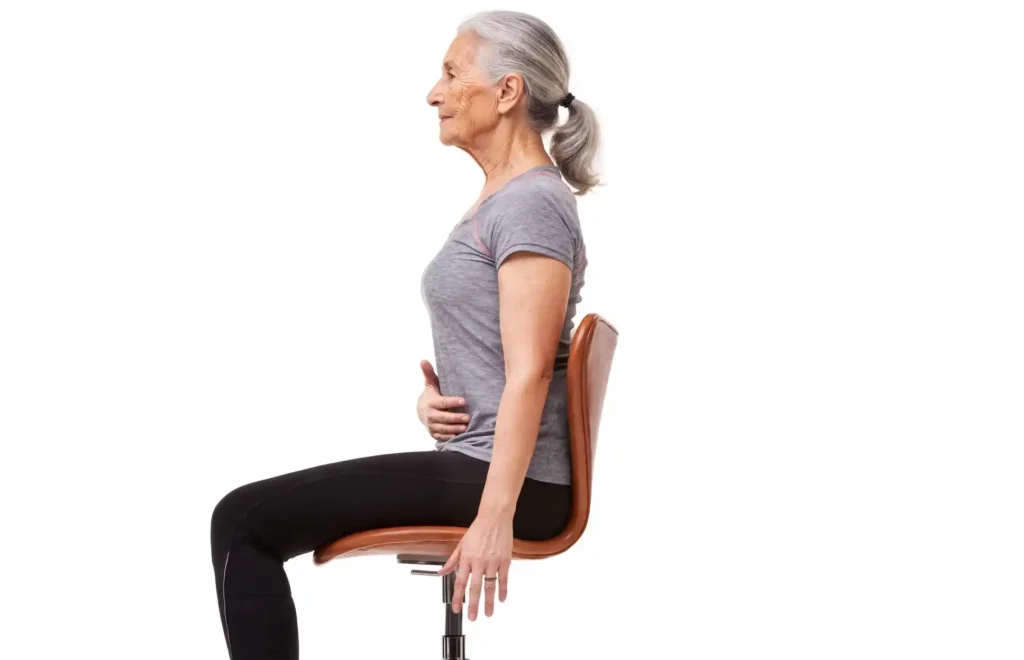
Sit in a sturdy chair with your feet flat on the floor and your spine upright but not rigid. Hands resting on your thighs, palms up or down.
Close your eyes if that feels comfortable. If not, soften your gaze toward the floor a few feet ahead.
No special equipment. No app. No timer is required for most of these; just count in your head.
8 seated breathing exercises for seniors
1. Diaphragmatic breathing (belly breathing)
Best for: lung capacity, blood pressure, relaxation
Place one hand on your chest and one on your belly. Inhale slowly through the nose for 4 counts; your belly should rise, and your chest should stay relatively still. Exhale slowly through the mouth for 6 counts, feeling the belly fall.
If your chest rises more than your belly, you’re chest-breathing. It takes a few sessions to retrain. Don’t force it — just notice.
Do 10 rounds. Then sit quietly for 30 seconds and notice how you feel.
A randomized clinical trial published in PMC found that diaphragmatic breathing significantly improved pulmonary function tests and oxygen saturation in institutionalized older adults after 8 weeks of practice 3 times per week. The control group who did only musculoskeletal exercises showed no change in respiratory parameters.
Start here. This is the foundation for every other technique on this list.
2. Box breathing (Sama Vritti)
Best for: stress, anxiety, focus, blood pressure
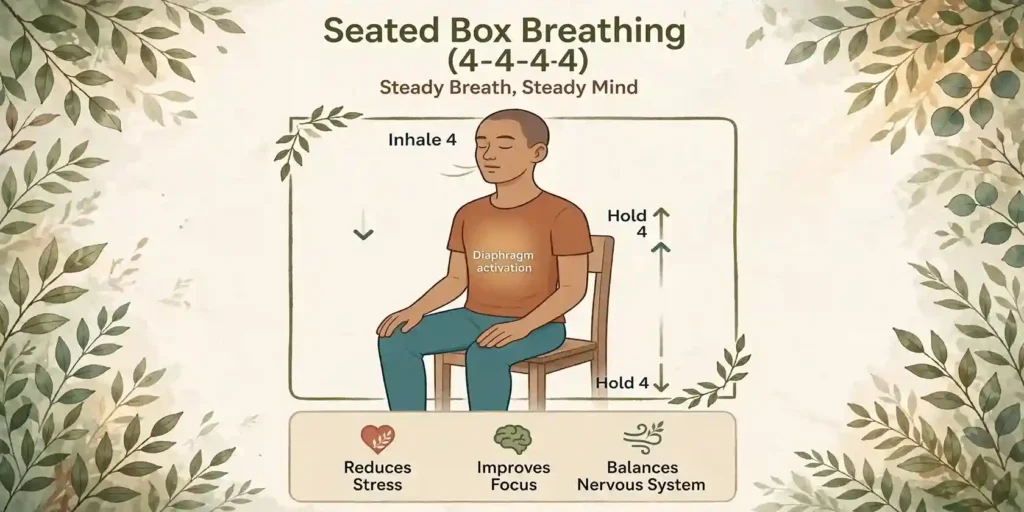
Inhale through the nose for 4 counts. Hold for 4 counts. Exhale through the mouth for 4 counts. Hold empty for 4 counts. That’s one round.
Do 6–8 rounds. The whole practice takes under 3 minutes.
Box breathing is used by US Navy SEALs for stress management under pressure. The equal ratio of inhale, hold, exhale, and hold creates a metronomic rhythm that has a direct calming effect on the nervous system. For seniors dealing with anxiety, pre-medical-appointment nerves, or sleep difficulties, this is the most immediately effective technique.
It pairs naturally with the opening of our chair yoga for seniors programme do 6 rounds before you start your poses, and the whole practice deepens.
3. Pursed-lip breathing
Best for: COPD, shortness of breath, breathing efficiency
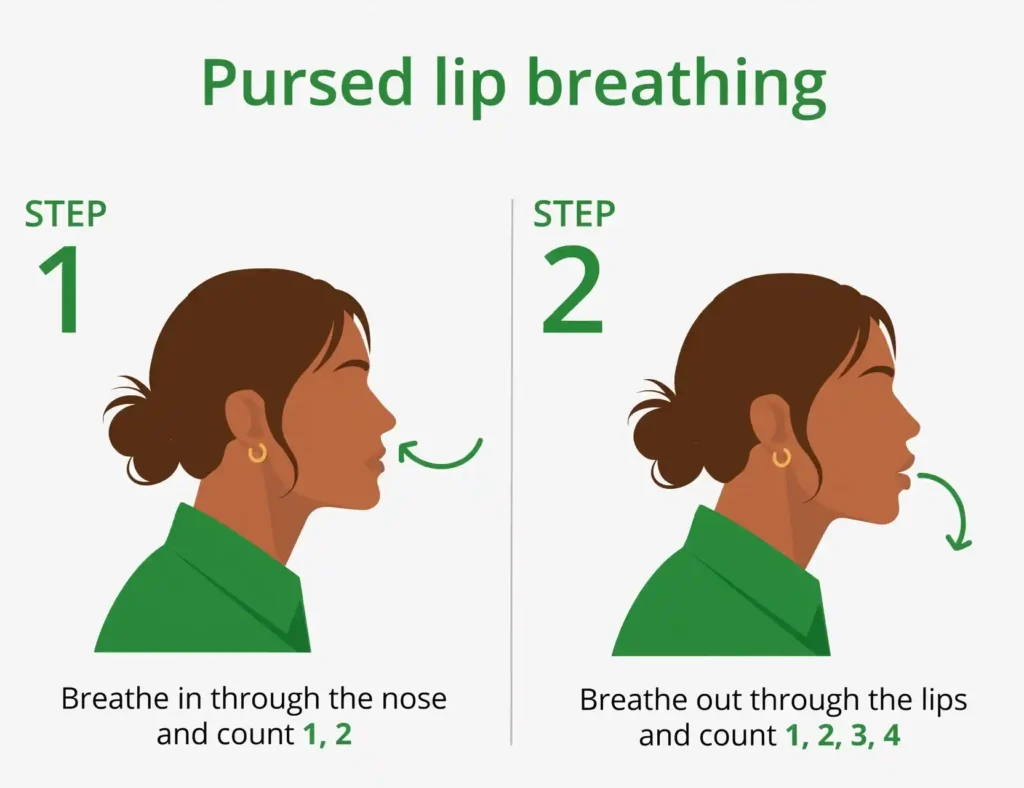
Inhale slowly through the nose for 2 counts. Purse your lips as if you’re about to whistle or blow out a candle. Exhale slowly through pursed lips for 4 counts — twice as long as the inhale.
The pursed lips create resistance that slows the breath and keeps the airways open longer during exhalation. This is a clinically recommended technique for seniors with COPD or chronic shortness of breath.
Do this for 5 minutes. If you get dizzy, slow the pace or stop and breathe normally for a minute.
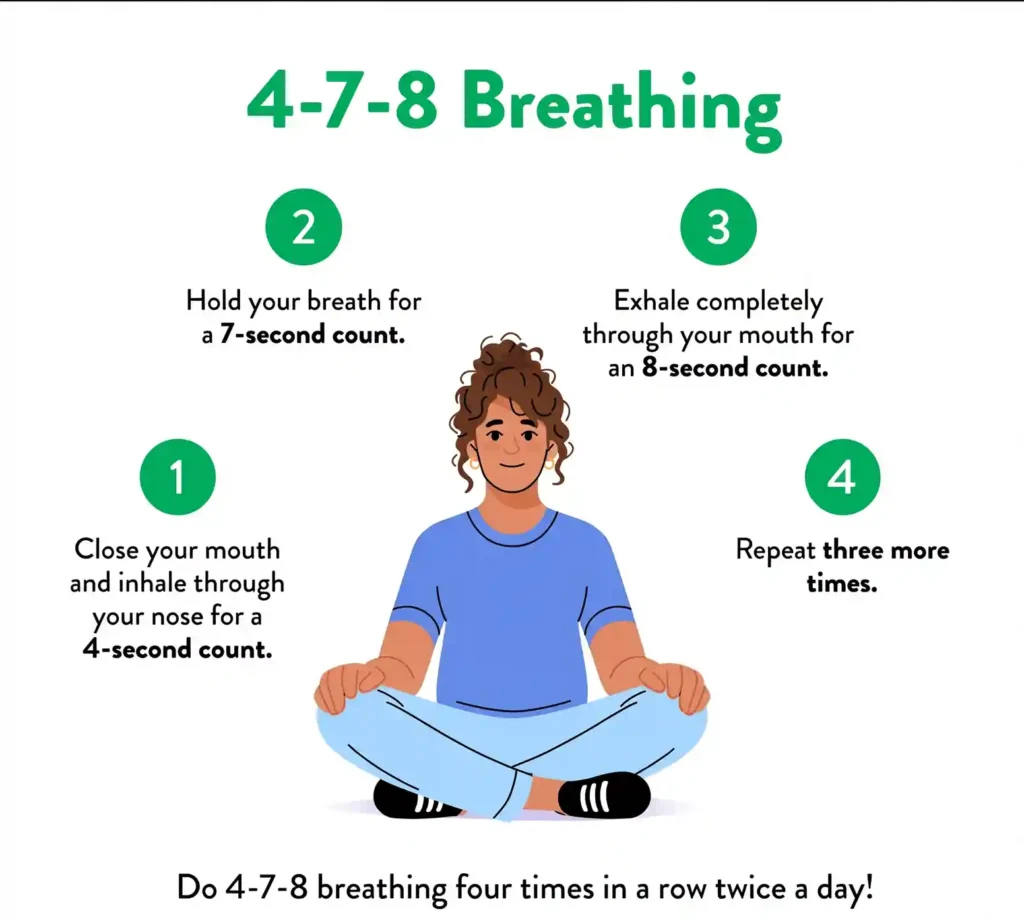
4. 4-7-8 breathing
Best for: sleep, anxiety, calming the mind before bed
Inhale through the nose for 4 counts. Hold the breath for 7 counts. Exhale completely through the mouth for 8 counts. That’s one round.
Start with 4 rounds. Work up to 8 over a few weeks.
The extended exhale activates the vagus nerve and slows the heart rate. Most seniors who practice this before bed report falling asleep faster within 1–2 weeks. It’s not a sedative; it’s your nervous system doing what it was designed to do when the threat response is off.
One caution: the breath hold can feel uncomfortable at first. If 7 counts is too long, start with 4-5-6 and build gradually.
5. Alternate nostril breathing (Nadi Shodhana)
Best for: cognitive function, brain balance, anxiety, blood pressure
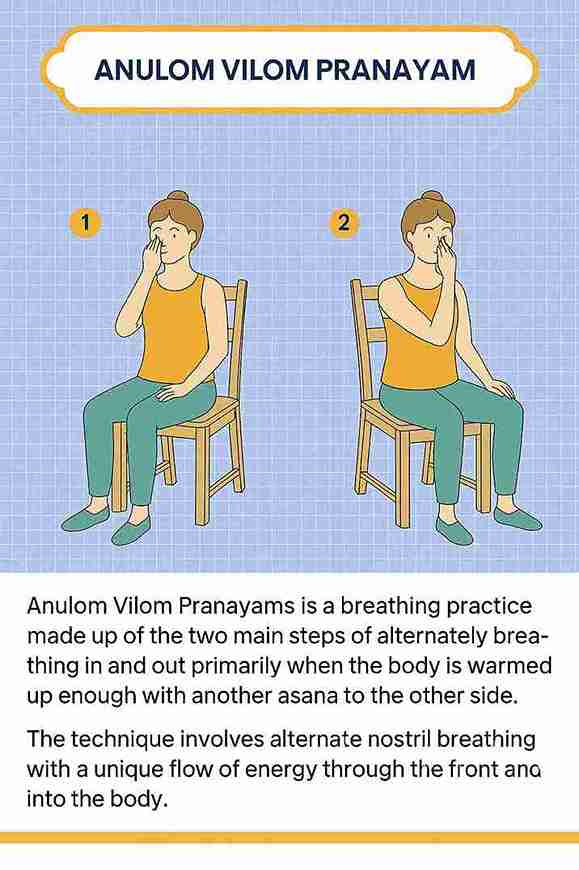
Sit tall. Rest your left hand on your left knee. Bring the right hand to your face: place the thumb near the right nostril and the ring finger near the left.
Close the right nostril with your thumb. Inhale through the left nostril for 4 counts. Close both nostrils, hold for 2 counts. Release the thumb, exhale through the right nostril for 6 counts. Inhale through the right nostril for 4 counts. Close both, hold 2 counts. Exhale through the left for 6 counts. That’s one round.
Do 5–10 rounds. Switch the hand if the arm gets tired.
Research on pranayama neurophysiology found alternate nostril breathing generates phase-locked oscillations in the hippocampus and amygdala, the brain regions involved in memory and emotional regulation. For seniors concerned about cognitive decline or mood, this is the most neurologically targeted breathing practice available.
It also connects directly to our memory exercises for seniors guide Kirtan Kriya and alternate nostril breathing on the same morning; it covers both memory and stress in under 20 minutes.
6. Humming bee breath (Bhramari)
Best for: anxiety, high blood pressure, tinnitus, sleep
Inhale through the nose. On the exhale, close your ears with your thumbs, rest your fingers lightly over your closed eyes, and hum a continuous “mmm” sound until you run out of breath. Repeat 5–7 times.
The vibration from humming stimulates the vagus nerve directly through the ear canals and the facial bones. A Cairo University clinical trial compared Bhramari pranayama with another breathing technique for hypertensive patients and found measurable improvements in sleep quality and quality of life scores.
For seniors with tinnitus, some find that the internal sound of Bhramari temporarily masks the ringing and reduces the associated anxiety. Results vary, but the risk is zero.
7. Lion’s breath (Simhasana)
Best for: tension release, throat and facial muscles, energy
Sit tall, hands on knees. Inhale deeply through the nose. Open the mouth wide, stick out the tongue as far as it goes, and exhale forcefully with a “haaa” sound. Eyes wide. Hold the exhale position for 2 seconds. Repeat 5 times.
This one looks undignified. That’s partly the point. Lion’s Breath releases tension held in the jaw, throat, and face places seniors often hold chronic tightness from stress, dental issues, or poor sleep posture. It also gives the facial muscles a workout that most exercises ignore.
Do it facing away from windows if you’re self-conscious. It works either way.
8. Cooling breath (Sitali pranayama)
Best for: hot flashes, overheating, inflammation, calming
Roll your tongue into a tube shape (like a straw). If you can’t roll your tongue, slightly part your lips and place the tip of the tongue between them instead. Inhale slowly through the rolled tongue or parted lips for 4–6 counts; you’ll feel the air cool as it passes over the tongue. Close the mouth. Exhale through the nose for 6–8 counts.
Do 8–10 rounds.
Sitali cools the body from the inside and has a direct calming effect on the central nervous system. For women experiencing hot flashes, or anyone in a heated room or hot weather, this is the most immediately useful breathing technique on the list.
How to build a daily routine
You don’t need to do all 8. Pick 2–3 and do them consistently.
Morning (5 minutes):
- Diaphragmatic breathing: 10 rounds
- Alternate nostril breathing: 5 rounds
Before chair yoga (3 minutes):
- Box breathing: 6 rounds
Before bed (5 minutes):
- 4-7-8 breathing: 4–8 rounds
- Humming bee breath: 5 rounds
That’s it. 13 minutes total across the day. The consistency matters more than the duration.
For a structured daily movement practice to pair with these techniques, our free 28-day chair yoga challenge incorporates breathwork before each session.
Seated breathing exercises and specific health conditions
High blood pressure: Diaphragmatic breathing, box breathing, and Bhramari all have clinical evidence for blood pressure reduction. The mechanism is vagal activation and cortisol reduction. Do them daily, not just when blood pressure is high.
Anxiety and sleep problems: 4-7-8 before bed and box breathing during the day. Both activate the parasympathetic system and reduce the physiological stress markers that drive anxiety and poor sleep.
COPD and shortness of breath: Pursed-lip breathing is the evidence-based first choice. Diaphragmatic breathing builds the respiratory muscle strength that supports it. Both are safe and recommended by respiratory physiotherapists.
Cognitive decline concerns: Alternate nostril breathing targets the hippocampus and amygdala directly. Pair it with the Kirtan Kriya meditation covered in our memory exercises for seniors guide for a complete morning brain practice.
Post-COVID fatigue: Slow diaphragmatic breathing helps retrain the respiratory pattern that often gets disrupted after a respiratory illness. Start with 5 minutes and build gradually over weeks.
FAQ’s for Seated breathing exercises for seniors
How often should seniors do breathing exercises?
Daily is the target. Even 5 minutes every morning produces measurable changes within 2–3 weeks. The 2023 PMC systematic review found consistent benefits across studies with practice frequencies ranging from daily to 3 times per week; daily produced the most reliable results.
Are seated breathing exercises safe for seniors with heart conditions?
Generally yes, with one caution: avoid breath-holding techniques (4-7-8, box breathing) if you have uncontrolled hypertension or have recently had a cardiac event. Start with diaphragmatic breathing and pursed-lip breathing, both of which are safe and used in cardiac rehabilitation programs. Tell your doctor you’re practicing breathing exercises.
How long does it take to notice results?
Blood pressure effects can show up within a single session. Anxiety and sleep improvements typically take 1–2 weeks of daily practice. Lung function improvements measured in clinical trials appeared at 8 weeks.
Can I do breathing exercises lying down?
Yes. Diaphragmatic breathing is often taught lying down first because it’s easier to feel the belly rise. All the techniques in this guide work seated or lying down. The chair is preferred because it keeps the spine aligned and the airways open.
What if I feel dizzy?
Stop and breathe normally. Dizziness usually means you’re breathing too fast or the breath holds are too long. Reduce the counts and build gradually. If dizziness persists, mention it to your doctor it can occasionally indicate an underlying issue worth checking.
The 5-minute start
Pick one technique, diaphragmatic breathing, and do 10 rounds tomorrow morning before you get out of the chair.
That’s the whole starting point. One technique. 10 rounds. Under 5 minutes.
Once that feels natural, add box breathing before your chair yoga session. Then alternate nostril breathing. Then 4-7-8 before bed.
Build it over weeks. Your lungs, your nervous system, and your sleep will all respond.
Download our free printable chair yoga for seniors to keep your full daily routine, including the breathwork, on one sheet of paper.