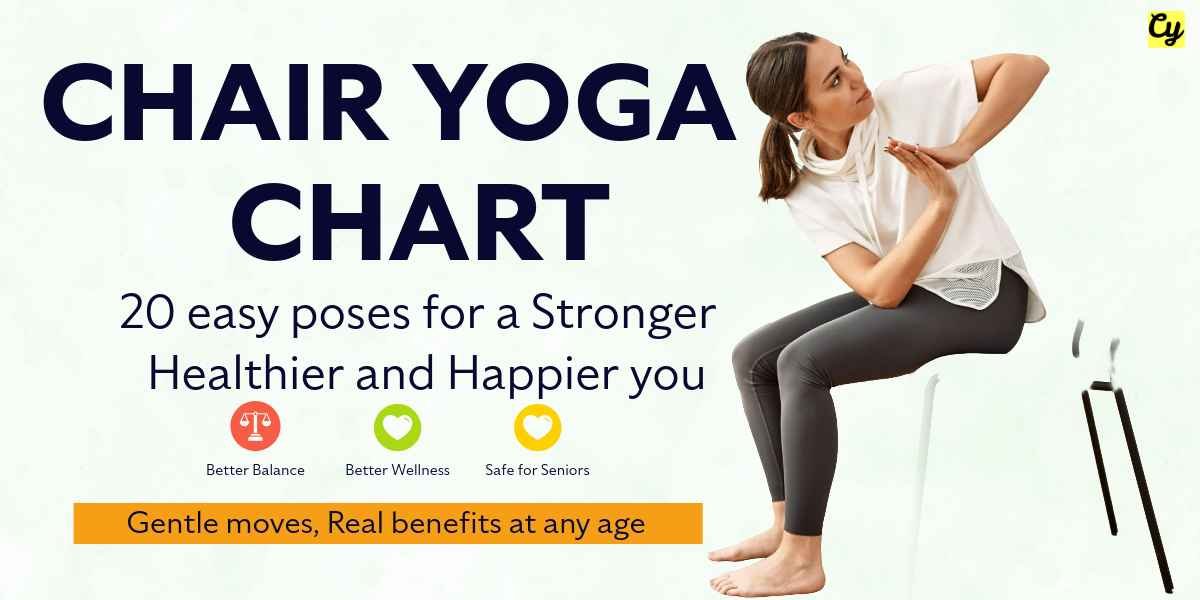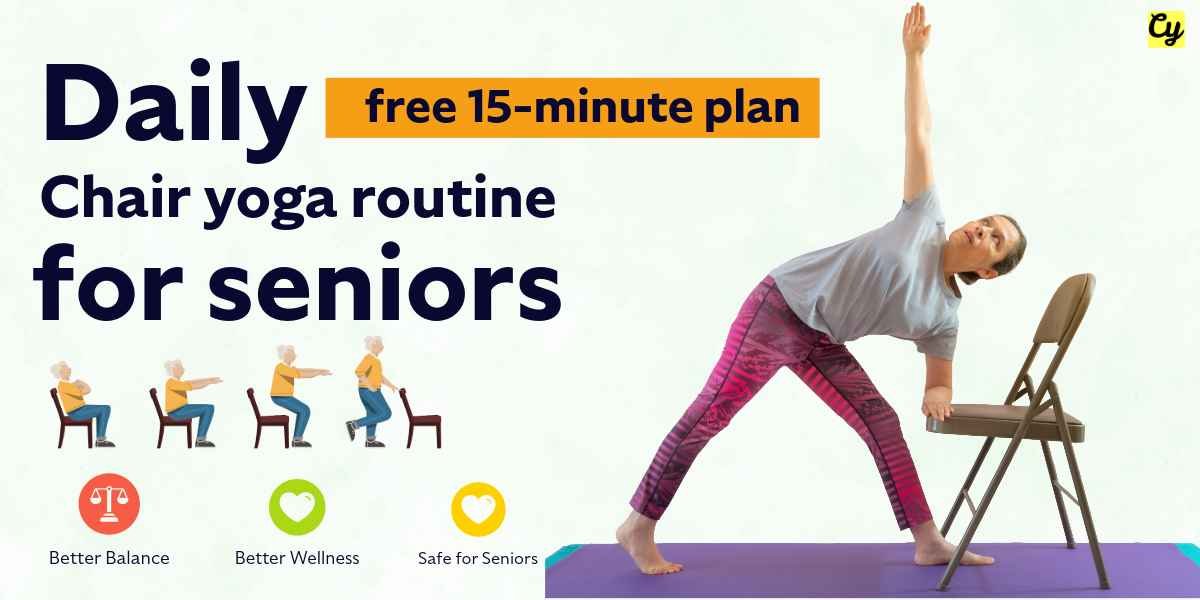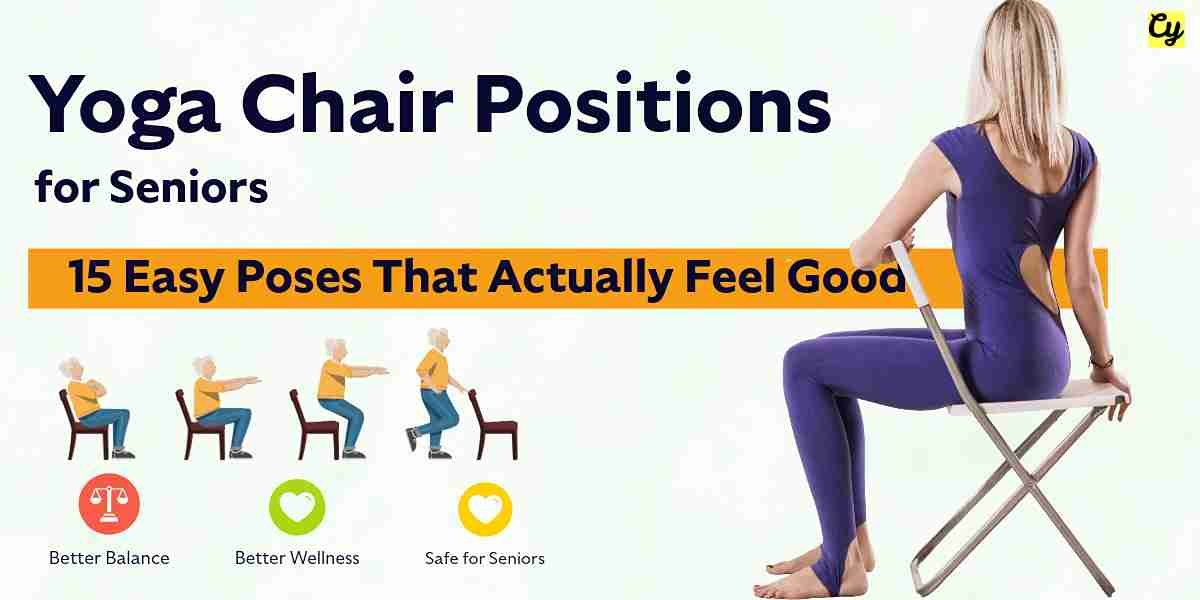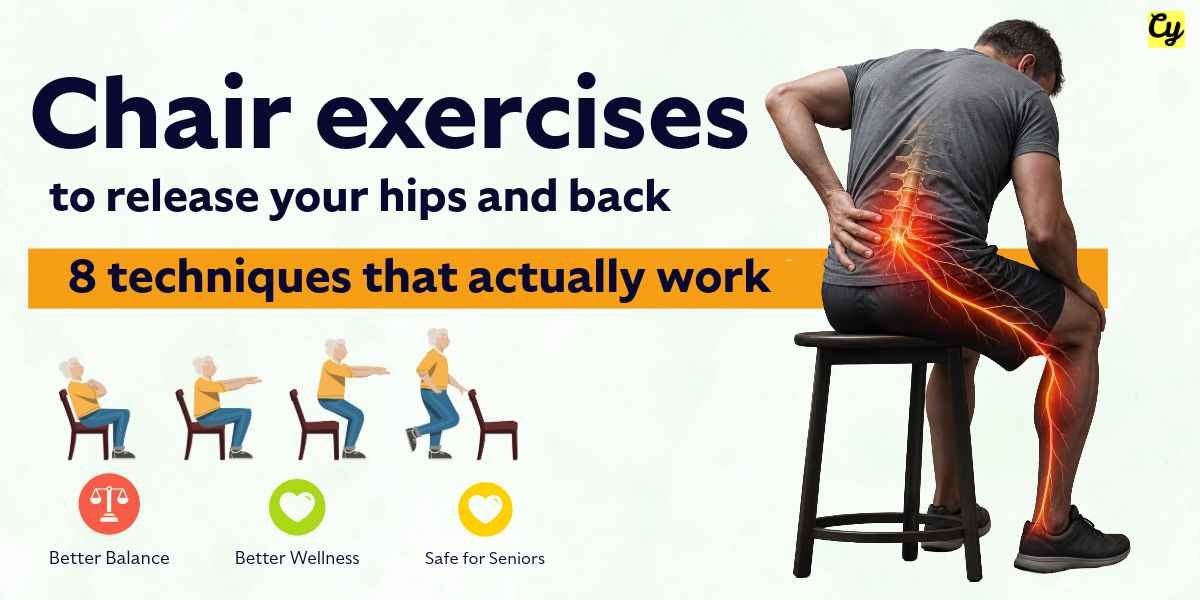
Download a free printable chair yoga for seniors PDF with pictures. Easy exercises for beginners to improve flexibility, balance, and strength at home safely. If you’re searching for a free printable chair yoga for seniors PDF with pictures, you’re in the right place.
This guide gives you:
✔ Easy step-by-step exercises
✔ Printable routine (perfect for daily use)
✔ Safe movements for age 60, 70, and beyond
👉 No floor work. No complex poses. Just simple, effective movement at home.
Table of Contents
Does Chair Yoga Really Work for Seniors? (Science-Based)
Chair yoga isn’t just “light stretching”; it’s clinically proven.
Research shows:
- Improves balance and mobility in older adults
- Reduces joint pain and stiffness
- Enhances mental well-being and mood
- Helps maintain independence with age
👉 Even seniors over 70–80 showed measurable improvements in mobility and daily function.
Free Printable Chair Yoga for Seniors PDF (What You Get)
Your printable plan should include:
✔ Large text (easy to read)
✔ Step-by-step pictures
✔ Daily routine layout
✔ Safety instructions
👉 This is why printable PDFs perform extremely well; they’re easy to follow without screen
Can Chair Yoga Help with Weight Loss?
Yes, but realistically.
- Burns light calories
- Improves metabolism
- Supports active lifestyle
👉 Best combined with walking or Tai Chi
Chair Yoga Exercises for Seniors (With Pictures Guide)
The best chair yoga exercises for seniors are simple, safe movements that improve flexibility, strength, and balance without putting stress on the joints. Some of the most effective exercises include
- Seated Mountain Pose for posture and breathing;
- Neck Stretches to relieve stiffness;
- Shoulder Rolls to loosen the upper body;
- Seated Twists to improve spine mobility and digestion;
- Leg Extensions to strengthen knees and legs; and the
- Seated forward bend to stretch the back and improve flexibility.
These exercises are easy to follow, can be done at home, and are especially helpful for beginners or seniors over 60 who want a gentle but effective daily routine.
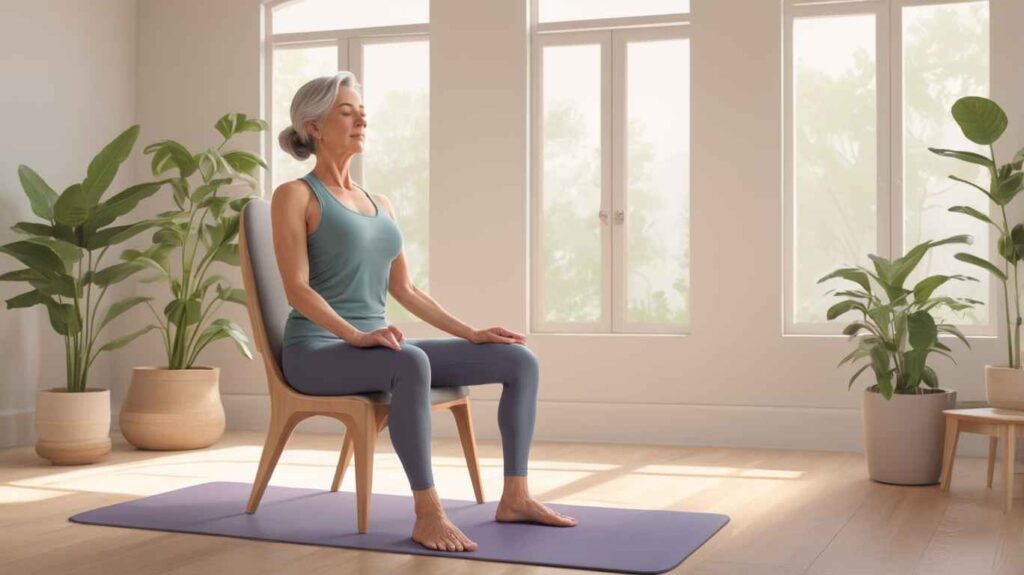
1. Seated Mountain Pose
Sit tall, feet flat, hands on thighs
👉 Improves posture and breathing
Steps to Practice:
- Sit on a sturdy chair with your feet flat on the floor.
- Keep your back straight but relaxed (don’t stiffen).
- Place your hands gently on your thighs.
- Relax your shoulders and keep your chin slightly up.
- Take slow deep breaths — in through your nose, out through your mouth.
👉 Do this for 1–2 minutes
💡 This helps improve posture and calms your mind
2. Neck Stretch
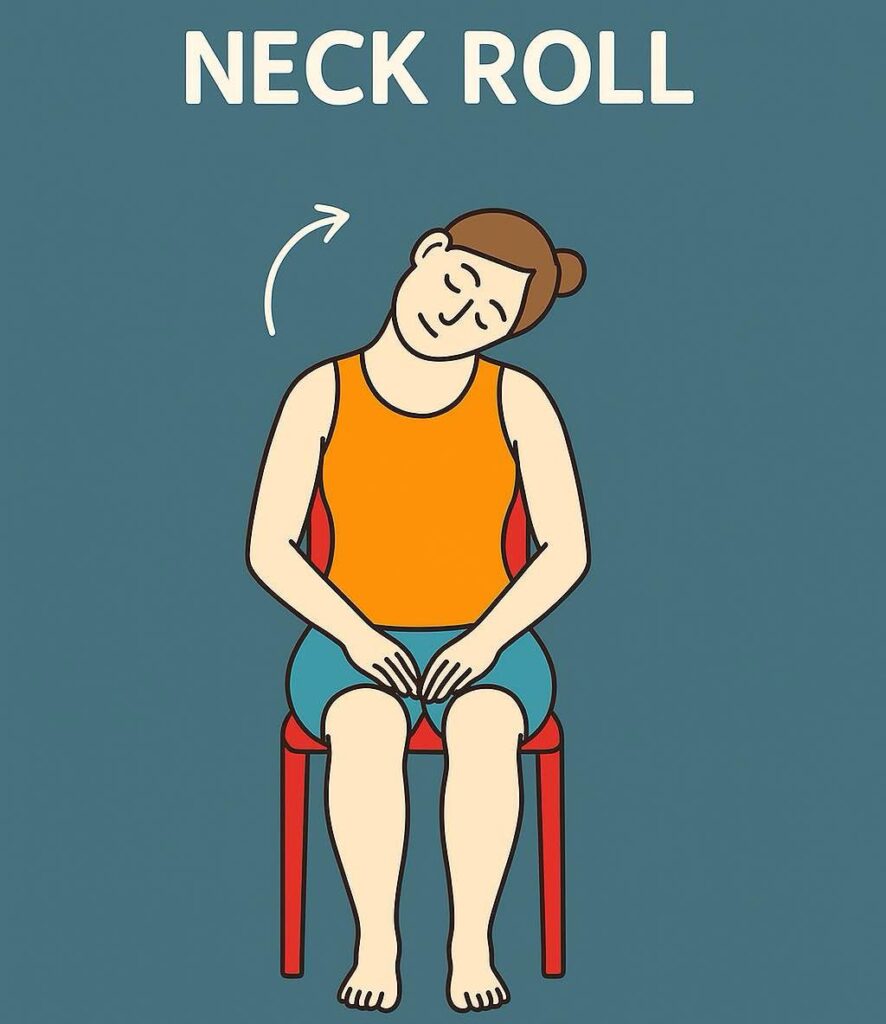
Gently tilt head side to side
👉 Relieves neck tension
Steps to Practice:
- Sit comfortably with your back straight.
- Slowly tilt your head toward your right shoulder.
- Hold for 3–5 seconds (no pain).
- Bring your head back to the center.
- Repeat on the left side.
👉 Do 5 times on each side
💡 This reduces neck pain and tension
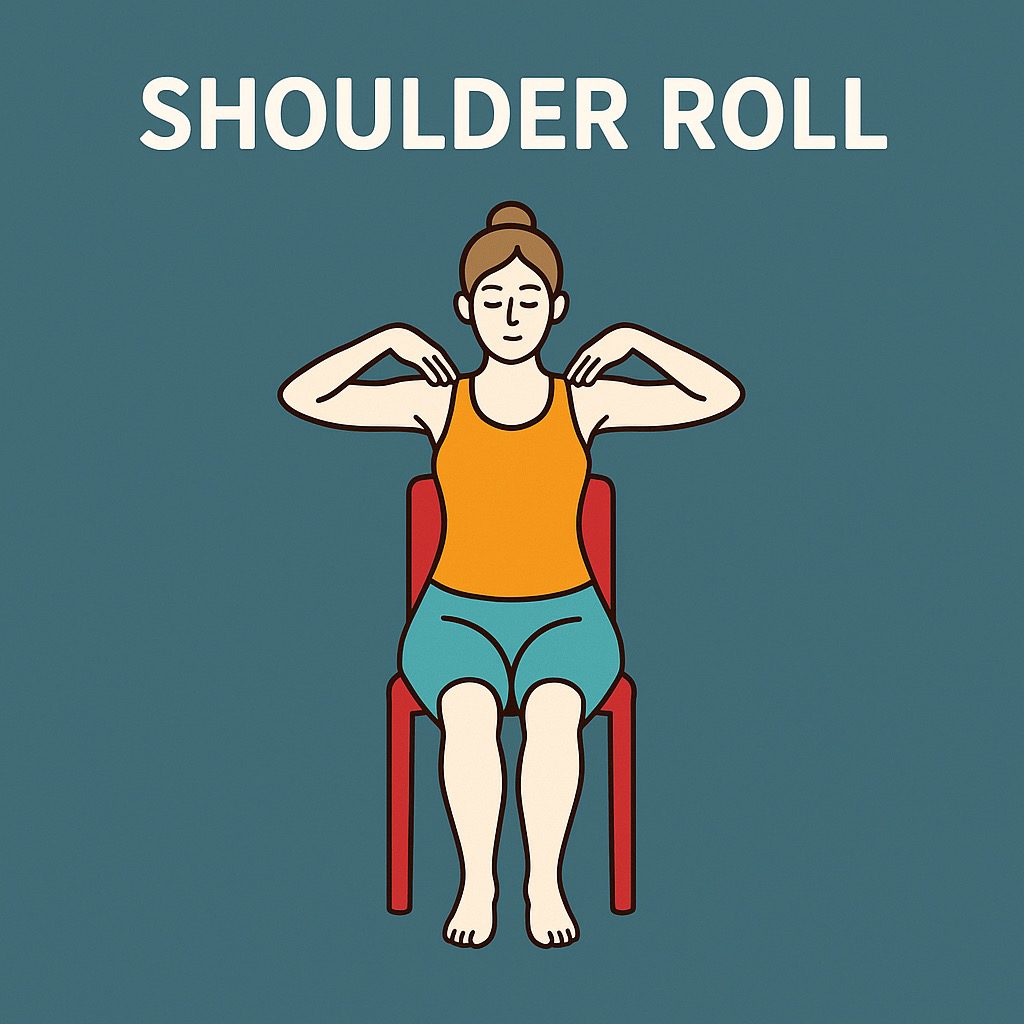
3. Shoulder Rolls
Roll shoulders forward and backward
👉 Reduces stiffness
Steps to Practice:
- Sit tall and relax your arms.
- Slowly lift your shoulders up toward your ears.
- Roll them backward in a circular motion.
- Then roll them forward in the same way.
👉 Do 10 rolls backward and 10 forward
💡 Helps reduce stiffness in shoulders and upper back
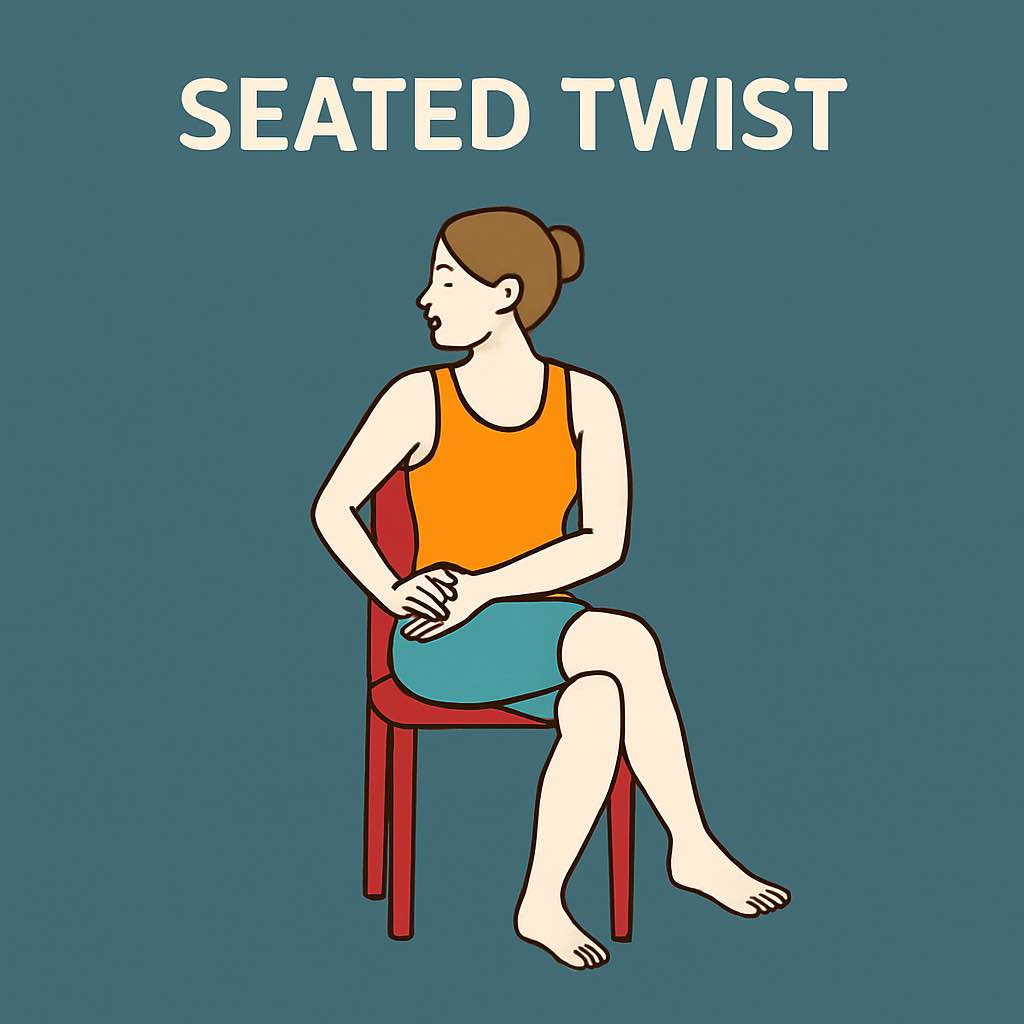
4. Seated Twist
Twist gently left and right
👉 Improves spine mobility
Steps to Practice:
- Sit straight with both feet on the floor.
- Place your right hand on your left knee.
- Slowly turn your upper body to the left.
- Keep your hips facing forward.
- Hold for a few seconds, then come back to center.
- Repeat on the other side.
👉 Do 5 times each side
💡 Improves spine flexibility and digestion
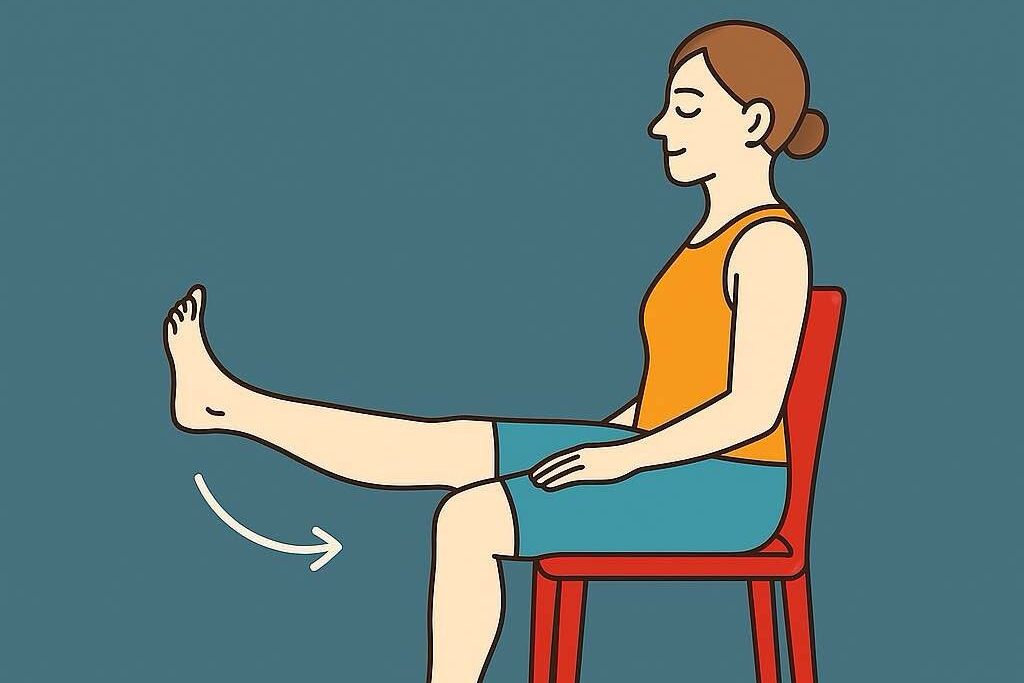
5. Leg Extension
Lift one leg and hold
👉 Strengthens knees
Steps to Practice:
- Sit straight and hold the sides of the chair.
- Slowly lift your right leg until it is straight.
- Keep your toes pointing upward.
- Hold for 3–5 seconds.
- Slowly bring your leg down.
- Repeat with the other leg.
👉 Do 8–10 times each leg
💡 Strengthens knees and improves balance
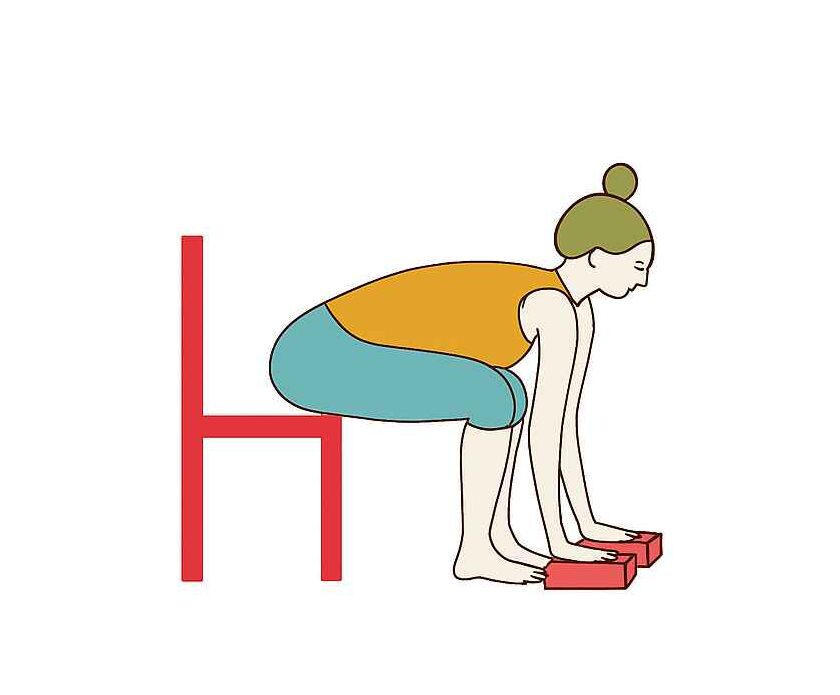
6. Forward Bend
Reach toward your feet
👉 Stretches back muscles
Steps to Practice:
- Sit at the edge of your chair.
- Keep your feet flat on the floor.
- Slowly bend forward from your hips.
- Reach your hands toward your knees or feet.
- Don’t force; go only as far as comfortable.
- Slowly come back up.
👉 Repeat 5–8 times
💡 Relieves back stiffness and stretches muscles
Free 28-Day Free Printable Chair Yoga for Seniors Plan (Printable Routine)
| Week 1 – Gentle Start | Breathing + light stretches 👉 Reduce stiffness |
| Week 2 – Mobility | Twists + arm raises 👉 Improve flexibility |
| Week 3 – Strength | Leg lifts + chair squats 👉 Build muscle safely |
| Week 4 – Energy | Flow routine + breathing 👉 Boost stamina |
Where can I find free chair yoga online?
You can find free chair yoga online in several reliable places, especially if you’re looking for simple routines you can follow at home. Many health websites, senior wellness blogs, and platforms like YouTube offer guided chair yoga sessions for beginners and older adults.
- However, the most helpful option is often a free printable chair yoga PDF, because it’s easy to follow daily without needing a screen.
- On sites like chairyoga.blog, you can access step-by-step plans, pictures, and structured routines designed specifically for seniors, making it easier to stay consistent and safe while improving flexibility, balance, and strength.

Why some seniors feel stiffer after chair yoga at first
This throws people off constantly.
A senior finally starts moving again.
Then wakes up the next morning feeling tighter.
They immediately think:
“I made things worse.”
Usually the body just got asked to move after months, sometimes years, of stiffness.
That adjustment period can feel weird.
Inactive joints react loudly at first
Older joints get irritated faster.
Especially after:
- long sitting habits
- arthritis
- surgery
- winter inactivity
The body loses tolerance for movement quietly.
Then even gentle stretching suddenly feels like “a workout.”
Aggressive stretching backfires quickly
A lot of seniors pull way too hard trying to loosen stiff areas.
Then the next morning:
- knees ache
- hips feel inflamed
- lower back tightens up
The Arthritis Foundation movement guide repeatedly recommends gradual movement for arthritic joints.
Small movement repeated consistently usually works better than intense stretching sessions.
Morning stiffness changes everything
Morning bodies behave differently.
Less circulation.
More joint stiffness.
Less tissue warmth.
I’ve seen seniors tolerate the exact same stretch much better at 4 PM than at 7 AM.
Especially forward bends.
Recovery slows down after 60
This frustrates active people.
A younger body might recover overnight.
Older adults often need:
- extra sleep
- lighter sessions
- more hydration
- recovery days
The body still adapts.
Just slower.
Why printable chair yoga PDFs work better than videos for many seniors
People assume videos automatically improve exercise routines.
Honestly, many seniors get overwhelmed by them.
Too much motion.
Too much instruction.
Too much noise.
Printed pages feel calmer.
Videos move faster than older adults process information
The National Institute on Aging cognitive health guide discusses slower processing speed with aging.
Younger people process:
- movement
- breathing
- posture
- instructions
…almost instantly.
Older adults usually need pauses.
That slower pace improves confidence.
Printed pages reduce mental fatigue
A visible PDF beside the chair becomes part of the room.
That matters.
People stop needing to:
- pause videos
- replay instructions
- remember sequences
The movement starts feeling familiar faster.
Seniors repeat familiar routines anyway
Most people don’t rotate through 40 poses consistently.
They find:
- 5 movements they trust
- stretches that feel safe
- routines they remember
Then repeat those daily.
That repetition works well for aging bodies.
Screens quietly drain energy
Glare matters more after 70.
Tiny buttons matter more.
Audio confusion matters more.
Printed pages remove those problems immediately.
Especially for beginners.
Chair yoga mistakes that quietly increase pain
Most seniors think injuries happen from “bad yoga.”
Usually smaller things cause more trouble:
- bad chair setup
- holding breath
- doing too much
- poor pacing
Tiny errors pile up.
Soft couches destroy posture immediately
People sink backward instantly.
Then:
- hips roll under
- shoulders collapse
- neck strains forward
The movement quality changes fast.
Firm chairs work better almost every time.
Holding breath increases tension
This happens constantly during stretching.
People focus so hard they stop breathing naturally.
Then suddenly:
- shoulders tighten
- neck stiffens
- fatigue spikes
Slow breathing changes movement quality immediately.
Long holds irritate older joints
Yoga culture loves static holds.
Older joints often prefer repeated motion.
I’ve watched seniors tolerate:
- 6 gentle repetitions
…far better than:
- one long hold
Especially knees and hips.
Too many repetitions create next-day pain
Some seniors think:
“If 10 helped, 30 will help faster.”
Usually the body disagrees tomorrow morning.
Recovery capacity changes with age.
That part matters more than people expect.
Myth vs reality: what chair yoga actually improves after 60
| Myth | Reality |
|---|---|
| “Chair yoga quickly restores flexibility” | Mobility changes gradually |
| “Stretching removes pain completely” | Strength and balance matter too |
| “Gentle movement doesn’t count” | Repetition changes the body slowly |
| “Older adults should avoid resistance” | Muscle loss speeds up after 60 |
| “Pain always means injury” | Stiff tissues become sensitive after inactivity |
| “One routine works forever” | The body adapts over time |
The CDC healthy aging resource constantly discusses strength, balance, and mobility together.
Most seniors improve in layers.
Movement confidence usually changes first.
Strength comes later.
How seniors can safely progress beyond beginner chair yoga
Beginner routines work well for a while.
Then something shifts.
Standing feels smoother.
Walking feels easier.
Balance improves slightly.
That’s usually the point where progression matters.
Weeks 1 to 2 rebuild movement confidence
Early improvements usually come from:
- moving daily
- breathing normally
- reducing stiffness
- rebuilding routine
That alone changes energy levels for inactive seniors.
Weeks 3 to 6 improve endurance
Now the body usually tolerates:
- longer sessions
- more repetitions
- light standing work
- balance drills near a countertop
Small increases work best.
Sudden jumps usually irritate joints.
Months 2 to 4 build strength slowly
This stage often introduces:
- resistance bands
- chair squats
- sit-to-stand drills
- longer walking sessions
The Harvard Health exercise archive has years of reporting on muscle loss after 60.
Strength protects independence.
That’s usually what seniors care about most.
Recovery starts controlling progress
Recovery changes a lot with age.
Bad sleep affects movement more.
Stress tightens the body faster.
Inflammation lingers longer.
Some weeks feel loose and energetic.
Other weeks feel stiff for no obvious reason.
That fluctuation is normal.
Chair Yoga for Seniors Over 70 (Safety Guide)
- Use a stable chair
- Move slowly
- Avoid pain
- Keep breathing
Chair yoga is one of the safest exercises for seniors
Common Mistakes (Why People Fail)
- Doing too much too fast
- Skipping days
- Poor posture
- No routine
👉 Solution: Follow a structured printable plan
Best Results Timeline
| Time | Result |
|---|---|
| Week 1 | Less stiffness |
| Week 2 | Better flexibility |
| Week 3 | Stronger legs |
| Week 4 | More energy |
FAQs for Free Printable Chair Yoga for Seniors
Q1: Is there a free printable chair yoga for seniors PDF?
Yes, many guides provide printable PDFs with step-by-step exercises.
Q2: Is chair yoga safe for seniors over 70?
Yes, it’s one of the safest low-impact exercises.
Q3: How often should seniors do chair yoga?
4–5 times per week for best results.
Q4: Can beginners do chair yoga?
Yes, it’s perfect for beginners with limited mobility.
Q5: Does chair yoga help with flexibility?
Yes, it improves flexibility, balance, and posture.