Most seniors don’t need more exercise information.
They need a plan.
That’s usually the real problem.
There are thousands of chair yoga videos online.
Hundreds of printable routines.
And enough advice to keep someone busy for years.
Yet many people still struggle to stay consistent.
Why?
Because random workouts create random habits.
A chair yoga program gives structure.
You know what to do today.
You know what to do tomorrow.
And you don’t spend 20 minutes searching YouTube before every session.
That’s a huge advantage.
Table of Contents
What is a chair yoga program?
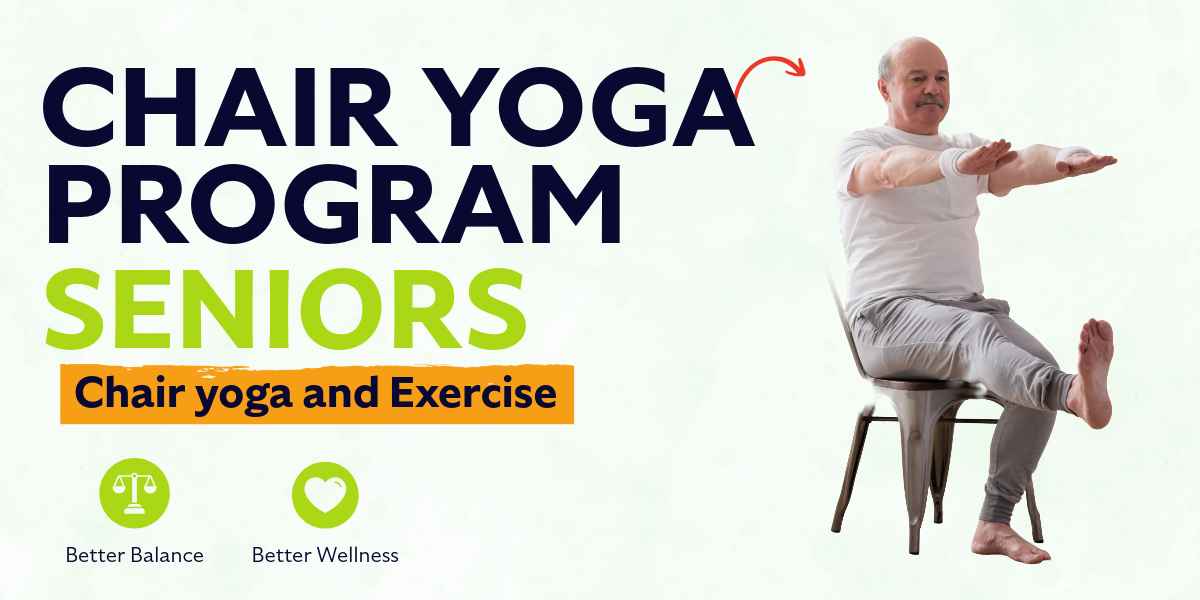
A chair yoga program is a structured series of chair yoga sessions designed to help you improve mobility, flexibility, balance, and confidence over time.
Instead of choosing random exercises every day, you follow a simple plan.
Think of it like following a map.
The destination matters.
The route matters too.
Good programs usually include:
- Daily routines
- Progression
- Rest days
- Mobility exercises
- Balance work
- Breathing exercises
The best programs feel manageable.
The worst programs feel overwhelming.
physical activity for older adults

Why most seniors quit exercise programs
This is rarely a motivation problem.
It’s usually a program problem.
Many plans fail because they’re:
- Too long
- Too difficult
- Too confusing
- Too aggressive
A 60-minute workout sounds impressive.
A 10-minute routine people actually complete is often more useful.
Consistency beats intensity.
Especially after 60.
Before you start: choose your goal
Not every senior starts chair yoga for the same reason.
Some want:
1. Better mobility
- You feel stiff.
- Getting out of chairs takes effort.
- You want easier movement.
2. Better balance
- You want more confidence walking and standing.
3. Weight management
- You want gentle daily movement that supports an active lifestyle.
4. Less stiffness
- You want mornings to feel easier.
- Choose one goal first.
- You can always add more later.

Which chair yoga program is right for you?
exercise recommendations for older adults
1. If you feel stiff most days
Start with:
- Mobility exercises
- Gentle stretching
- Short sessions
2. If balance feels less reliable
Focus on:
- Supported standing exercises
- Chair-assisted balance work
- Leg strengthening
3. If your goal is weight management
Combine:
- Chair yoga
- Walking
- Daily movement habits
4. If you’re completely new to exercise
Start with:
- 5 to 10 minutes.
- That’s enough.
- Really.
Week 1: build the habit
Most people try to do too much too soon.
Week 1 has one goal:
Show up.
| Day 1 | 5 minutes Breathing Shoulder rolls Seated marching |
| Day 2 | Repeat day 1. |
| Day 3 | Add seated twists |
| Day 4 | Rest or short walk |
| Day 5 | Repeat routine |
| Day 6 | Add side stretches |
| Day 7 | Recovery day |
You started.
Week 2: improve mobility and movement
By Week 2, the goal changes.
You’re no longer trying to build the habit.
You’re building movement.
Many seniors notice that simple activities already feel a little easier.
Maybe getting out of a chair feels smoother.
Maybe your shoulders feel less stiff.
Those small wins matter.
| Day 8-10 | Deep breathing Shoulder rolls Seated marching Seated twists Side stretches |
| Day 11-13 | Ankle circles Heel lifts Seated knee extensions |
| Day 14 | Recovery day |
Week 3: build strength and confidence
This is where many seniors begin noticing real changes.
Not dramatic changes.
Useful changes.
- Walking.
- Reaching.
- Standing.
Daily life starts feeling easier.
Day 15-17
Add:
- Sit-to-stands (5 repetitions)
- Chair punches (30 seconds)
- Arm raises
Day 18-20
Increase:
- Marching time
- Balance exercises
- Stretch duration
Day 21
Recovery day
Celebrate progress.
Most people quit before reaching this point.
You’re still going.
Week 4: support daily independence
Week 4 focuses on movement you use every day.
Because that’s what most seniors actually care about.
Day 22-24
Practice:
- Standing from a chair
- Reaching overhead
- Turning safely
- Balance support exercises
Day 25-27
Combine your favorite exercises into one routine.
This becomes your personal chair yoga program.
Day 28
Assessment day.
Ask yourself:
- Do I move easier?
- Do I feel less stiff?
- Am I more confident?
Those answers matter more than perfection.
Your 28-day progress tracker
Print this and keep it visible.
| Week | Goal | Completed |
|---|---|---|
| Week 1 | Build habit | □ |
| Week 2 | Improve mobility | □ |
| Week 3 | Build strength | □ |
| Week 4 | Improve daily movement | □ |
A simple checkmark creates momentum.
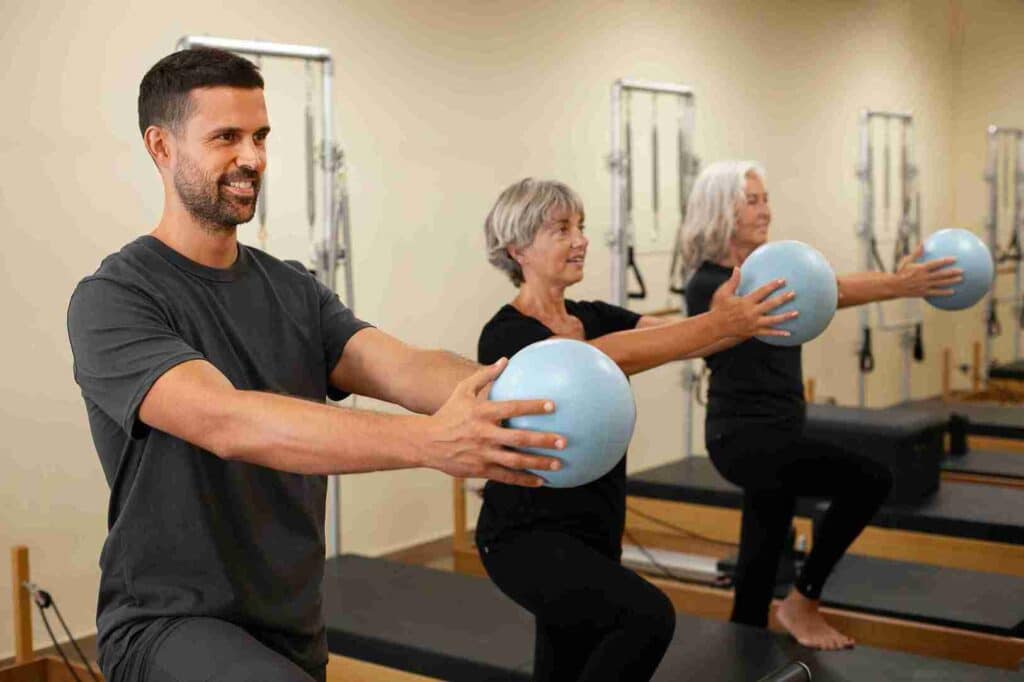
What happened when 3 seniors followed a similar program?
These examples are based on common experiences seniors report after following structured movement plans.
Susan, 68
Goal: Reduce morning stiffness.
After 4 weeks:
- Easier mornings
- Better posture
- More consistency
John, 73
Goal: Improve balance.
After 4 weeks:
- More confidence walking
- Better leg strength
- Less fear of falling
Carol, 71
Goal: Stay active after retirement.
After 4 weeks:
- Daily movement habit
- Improved flexibility
- Better energy levels
Their goals were different.
The benefit came from consistency.

Why structured programs often work better than random YouTube videos
YouTube is useful.
Most people still end up watching more videos than doing exercises.
A structured program removes decisions.
You already know:
- What to do
- How long to do it
- When to progress
That reduces friction.
And less friction usually means more consistency.
Free chair yoga program vs structured guide
| Free Resources | Structured Program |
|---|---|
| Great starting point | More guidance |
| Flexible | Clear progression |
| Lots of variety | Less decision fatigue |
| Easy access | Better long-term consistency |
Both have value.
Many seniors start free.
Then decide whether they want more structure.
PRINTABLE
Free Printable: Chair Yoga for Seniors (Step-by-Step Poses)
Get a beautiful A4 printable of 10 gentle chair yoga poses for seniors. Each pose includes clear instructions and breathing tips — perfect for daily use!
Start with free resources first
That’s what I recommend.
Use free chair yoga PDFs.
Try beginner routines.
Follow this 28-day program.
See how your body responds.
After that, some readers decide they want:
- Longer programs
- Printable schedules
- More progression
- Better organization
That’s exactly why we created our chair yoga and mobility guides.
The goal isn’t replacing free resources.
The goal is providing structure when you’re ready for it.
Looking for your next step?
Once you’ve completed this program, consider exploring:
- Chair Yoga For Seniors
- Chair Yoga Free
- Chair Yoga Book
- Chair Yoga For Weight Loss
- Chair Yoga For Back Pain
- How To Do Chair Yoga
Building movement becomes easier when each step feels manageable.
And that’s what a good chair yoga program should do.
Common mistakes that ruin a chair yoga program
Most seniors don’t quit because chair yoga doesn’t work.
They quit because they expect too much, too soon.
Trying to make up for lost time
Maybe you haven’t exercised in years.
That’s okay.
Trying to squeeze months of progress into one week usually ends badly.
Start where you are.
Changing programs every few days
This happens a lot.
A new YouTube video appears.
A friend recommends another routine.
Then another.
Consistency gets buried under endless options.
Stick with one program long enough to judge it.
Ignoring recovery days
Your body adapts during recovery.
Rest isn’t wasted time.
Comparing yourself to other people
Someone else might be 70 and moving effortlessly.
Someone else might be 70 and struggling to stand up.
Your progress belongs to you.
Myth vs reality: chair yoga program edition
Many myths stop seniors before they even begin.
| Myth | Reality |
|---|---|
| Chair yoga is only for very old adults | People of all ages use chair yoga |
| A program must be difficult to work | Consistency usually beats intensity |
| Missing a day ruins progress | One missed day changes very little |
| Longer sessions are always better | Many seniors succeed with 10-20 minute routines |
| You need special equipment | A sturdy chair is enough for most routines |
The people who succeed rarely have perfect schedules.
They simply keep coming back.
How to continue after 28 days
The end of a program isn’t really the end.
It’s the beginning of a routine.
You now have 3 options.
Option 1: Repeat the program
Many beginners benefit from running the same 28-day plan again.
The exercises feel more familiar.
Movement quality improves.
Option 2: Focus on your biggest goal
If balance is your priority:
Add more balance work.
If mobility is your priority:
Add more stretching and movement exercises.
If weight management is your goal:
Combine chair yoga with walking and daily activity.
Option 3: Move into a structured progression plan
Some seniors enjoy having a clear roadmap.
That’s where a structured guide becomes useful.
You spend less time deciding what to do and more time actually moving.
Advanced paths based on your goal
Not everyone should follow the same program forever.
For stiffness and joint discomfort
Focus on:
- Gentle stretching
- Daily mobility
- Short sessions
For balance and confidence
Focus on:
- Chair-assisted standing exercises
- Leg strength
- Stability practice
For weight management
Focus on:
- Consistency
- Daily movement
- Walking alongside chair yoga
For general healthy aging
Focus on:
- Mobility
- Strength
- Balance
- Flexibility
A good program grows with you.
A simple rule that works surprisingly well
Ask yourself one question:
“Can I do this routine again tomorrow?”
If the answer is yes, you’re probably training at the right level.
If the answer is no, reduce the intensity.
Long-term success usually comes from sustainable effort.
Final thoughts on finding the right chair yoga program
A chair yoga program doesn’t need to be complicated.
It needs to be realistic.
- You don’t need perfect flexibility.
- You don’t need expensive equipment.
- You don’t need an hour every day.
- You need a plan you can follow.
That’s why so many seniors start with simple routines, free printable PDFs, and short daily sessions.
Build the habit first.
Improve movement, second.
Everything else tends to follow.
FAQs
What is a chair yoga program?
A chair yoga program is a structured plan that combines chair yoga exercises, mobility work, stretching, and balance practice over a set period of time.
How often should seniors follow a chair yoga program?
Most seniors do well with 3 to 6 sessions per week. Short sessions performed consistently often produce better results than occasional long workouts.
Is a chair yoga program good for beginners?
Yes. Chair yoga programs are often one of the easiest ways for beginners to start exercising because they provide structure and support.
Can I lose weight with a chair yoga program?
Chair yoga can support weight management by helping you move more consistently, improve mobility, and stay active. Many seniors combine chair yoga with walking and healthy eating habits.
Do I need equipment for a chair yoga program?
Most programs require only a sturdy chair. Some people choose to add resistance bands or light weights later, but they’re optional.