Have you ever stood up from your chair and thought, “Why does my body feel so stiff?”
You’re not alone.
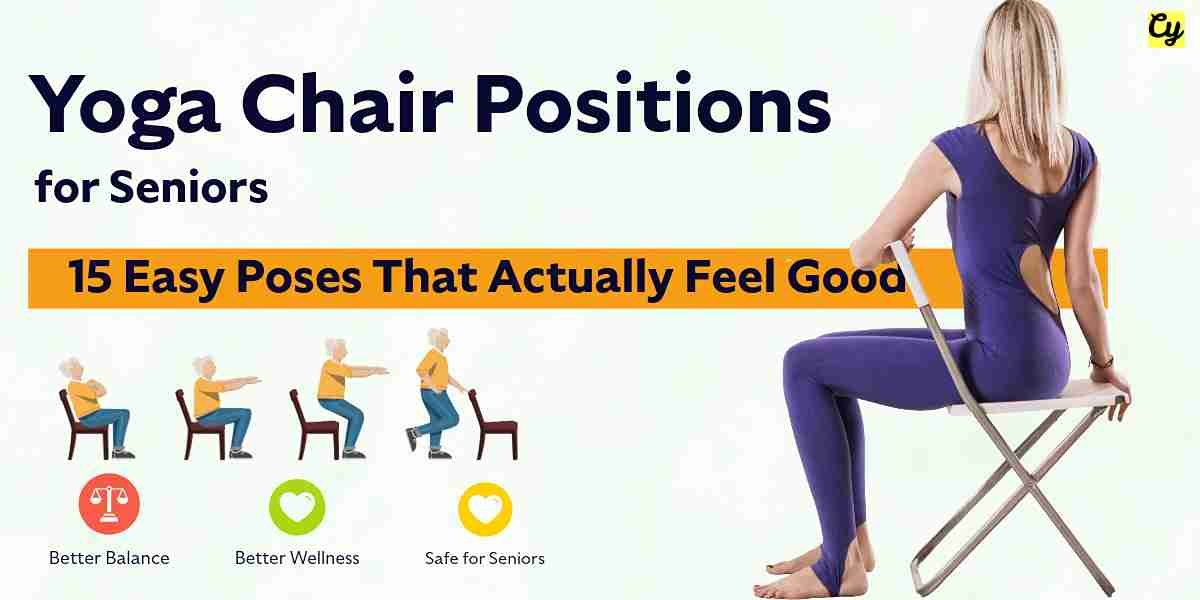
For a lot of seniors, the hardest part isn’t finding time to exercise. It’s finding something that doesn’t leave sore knees, an aching back, or the feeling that your body just isn’t built for workouts anymore. That’s exactly why yoga chair positions for seniors have become so popular.
You don’t need to kneel on a yoga mat. You don’t need to touch your toes. And you definitely don’t need to be flexible. All you need is a sturdy chair and 10 to 15 minutes. I’ve seen people avoid exercise because they believed yoga meant twisting into impossible poses. Chair yoga is different. It keeps your body moving in ways that feel comfortable, even if you haven’t exercised in years.
The best part? You can do most of these movements while watching the morning news or chatting with your family.
Table of Contents
What are yoga chair positions?
Yoga chair positions are traditional yoga poses that have been adapted for a seated position or with the support of a chair. Instead of balancing on one foot or lowering yourself to the floor, the chair helps support your body. That makes the exercises easier on your knees, hips, and lower back.
People often think chair yoga is only for seniors with limited mobility.
It isn’t.
Many physical therapists, yoga instructors, and fitness trainers recommend chair-based exercises because they’re gentle and practical. Even active adults use chair yoga to improve posture, stretch tight muscles, or recover after long hours of sitting.
If you’re over 60 and looking for a safe place to start, chair yoga is one of the easiest options.
Why seniors love chair yoga
Aging changes the way our bodies move. Muscles lose strength. Joints feel tighter. Balance isn’t always what it used to be. That doesn’t mean you should stop moving. In fact, gentle movement often helps reduce stiffness more than sitting still. Here’s what many seniors notice after practicing chair yoga consistently.
1. Better flexibility
- Ever struggle to reach your shoes?
- Or turn around while backing up your car?
- Simple stretches can help loosen tight muscles over time, making everyday movements feel easier.
2. Better balance
- Many chair yoga exercises strengthen your legs and core while keeping you supported.
- That extra strength can help you feel steadier when walking, climbing stairs, or getting out of bed.
3. Improved posture
- Hours spent sitting on the couch or looking down at a phone can pull your shoulders forward.
- Chair yoga encourages you to sit taller and become more aware of your posture.
4. Less stiffness
- Morning stiffness is common.
- Gentle stretches increase blood flow to muscles and joints, helping your body loosen up before the day begins.
5. A calmer mind
- Slow breathing and gentle movement can help you relax.
- Many people finish a short chair yoga session feeling lighter, both physically and mentally.
Who should try yoga chair positions for seniors?
Chair yoga works well for many people, including:
- Seniors over 60
- Beginners who’ve never tried yoga
- People recovering after long periods of inactivity
- Anyone with limited mobility
- Office workers who sit most of the day
- Caregivers looking for gentle exercises for loved ones
You don’t have to be fit before you begin. You just have to start where you are.
Before you begin yoga chair positions for seniors
- Take one minute to set yourself up.
- Choose a sturdy chair with four legs. Avoid chairs with wheels unless you can lock them securely.
- Wear comfortable clothes that let you move freely.
- Keep both feet flat on the floor whenever possible.
- Move slowly.
- If something hurts, stop.
- Stretching should create a gentle pulling feeling, never sharp pain.
- And don’t forget to breathe.
- People often hold their breath without realizing it.
- Slow, steady breathing helps your muscles relax during every movement.
Study: The effects of yoga on physical function and quality of life in older adults
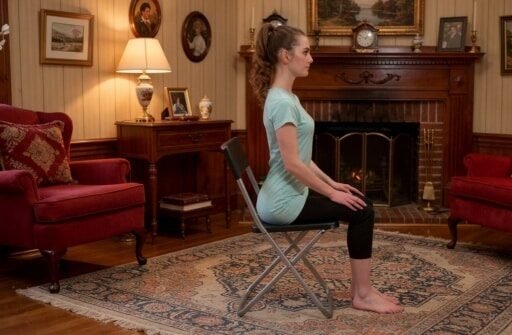
1. Seated mountain pose
This looks simple. It probably is. But it’s one of the most important yoga chair positions for seniors because it teaches good posture.
How to do it
- Sit near the front of your chair.
- Place both feet flat on the floor.
- Keep your knees about hip-width apart.
- Sit tall without forcing your back.
- Let your shoulders relax.
- Rest your hands on your thighs.
- Take five slow breaths.
Benefits
- Encourages better posture
- Improves breathing
- Helps you feel grounded before moving into other exercises
Common mistake
Many people raise their shoulders toward their ears.
Instead, let them soften naturally.
2. Seated overhead reach
If your shoulders feel tight after sleeping or reading, this stretch feels surprisingly good.
How to do it
- Sit tall.
- Raise both arms slowly toward the ceiling.
- Reach comfortably.
- Don’t force the movement.
- Hold for 10 to 20 seconds.
- Lower your arms slowly.
Benefits
- Stretches your shoulders
- Opens your chest
- Improves upper-body flexibility
Tip
If lifting both arms feels difficult, raise one arm at a time.
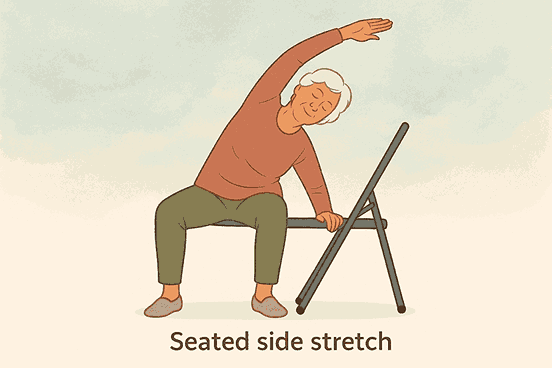
3. Seated side stretch
This exercise stretches muscles many people forget about. You may feel the stretch from your hips all the way to your ribs.
How to do it
- Sit tall.
- Raise your right arm overhead.
- Lean gently to the left.
- Keep both hips on the chair.
- Hold for 15 seconds.
- Return to the center.
- Repeat on the opposite side.
Benefits
- Improves flexibility through your sides
- Helps loosen your spine
- Encourages deeper breathing
Tip
Avoid leaning forward.
Think about reaching up first, then gently bending sideways.
4. Chair cat-cow stretch
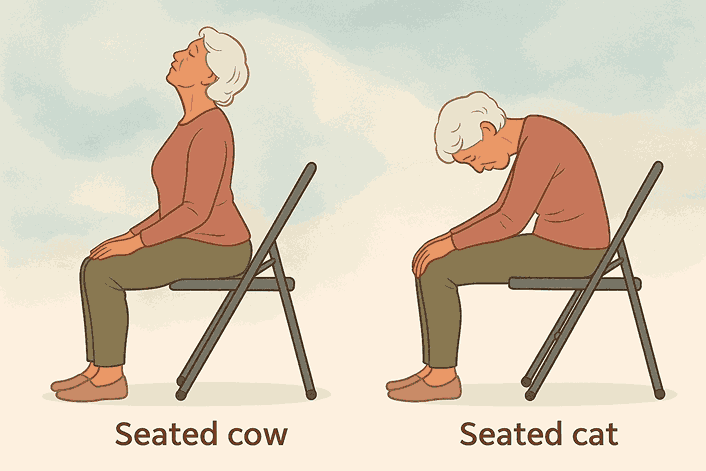
This is one of my favorite chair yoga movements because almost everyone notices immediate relief in their back. It combines slow breathing with gentle spinal movement.
How to do it
- Place both hands on your knees.
- Breathe in while lifting your chest and looking slightly upward.
- Breathe out while gently rounding your back and bringing your chin toward your chest.
- Repeat slowly 8 to 10 times.
Benefits
- Keeps the spine mobile
- Relieves back stiffness
- Helps improve posture
Tip
Move with your breathing instead of rushing through each repetition.
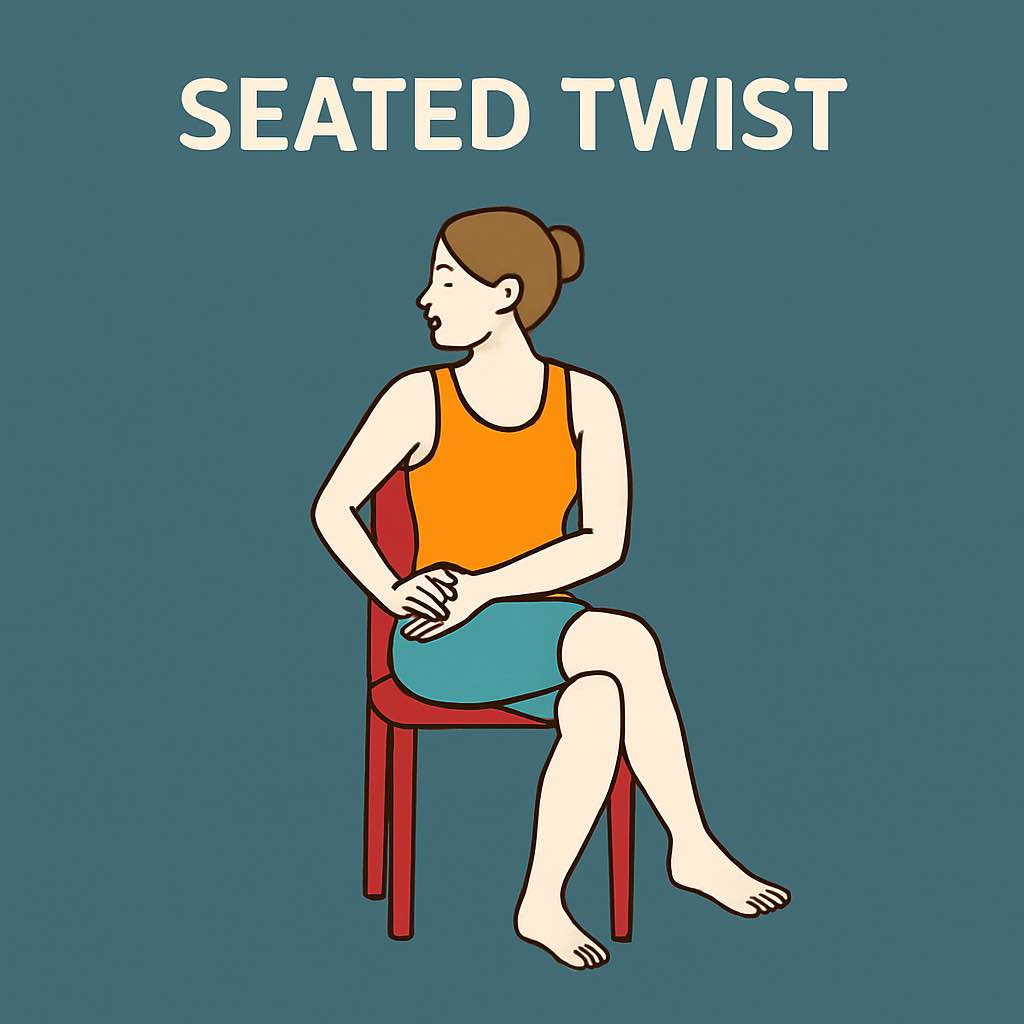
5. Seated spinal twist
Your spine rotates every day.
- Looking behind you.
- Reaching into the back seat.
- Turning while cooking.
This gentle twist helps keep those movements comfortable.
How to do it
- Sit tall.
- Place your right hand on the outside of your left thigh.
- Hold the side of your chair with your left hand.
- Turn your shoulders gently to the left.
- Hold for 10 to 15 seconds.
- Return to the center.
- Repeat on the other side.
Benefits
- Improves spinal mobility
- Relieves tension in your back
- Helps maintain everyday movement
Tip
Turn only until you feel a gentle stretch. There’s no prize for twisting farther.
A few reminders before your next session
You don’t have to finish all 15 yoga chair positions in one day.
- Start with these five.
- Practice them for a week.
Once they feel natural, add a few more. Your body usually responds better to small, consistent sessions than one long workout every now and then.
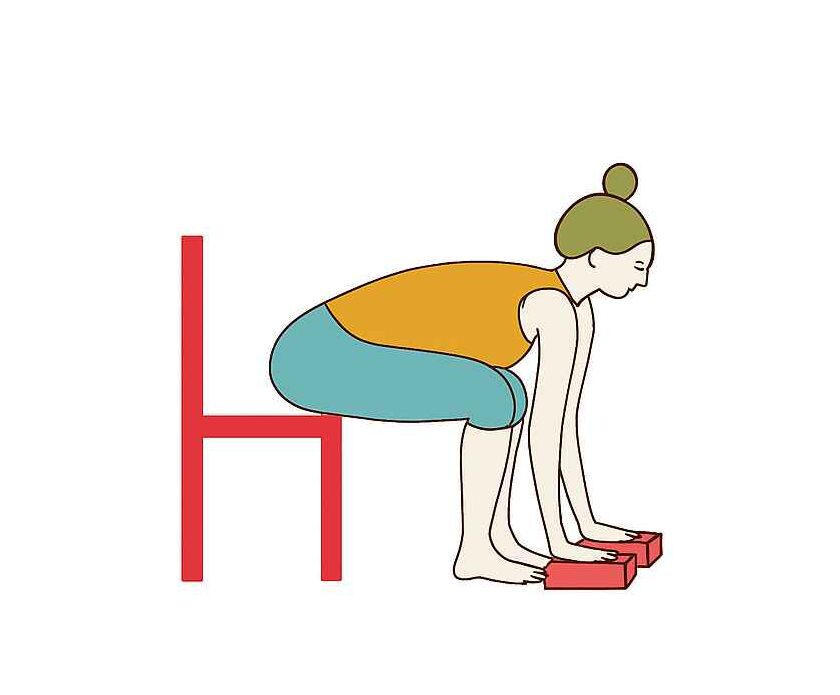
6. Seated forward fold
This is one of those stretches that feels different every day.
- Some mornings you’ll reach your knees.
- Other days you might get closer to your ankles.
- Either way, you’re doing it right.
How to do it
- Sit near the front of your chair.
- Keep both feet flat on the floor.
- Slowly hinge forward from your hips.
- Let your hands slide toward your knees, shins, or ankles.
- Keep your neck relaxed.
- Hold for 15 to 20 seconds.
- Return to sitting slowly.
Why it helps
This stretch gently loosens the muscles along your back and the back of your legs.
Many seniors say it also helps reduce lower back tightness after sitting for long periods.
Beginner tip
Don’t round your shoulders too much.
Think about folding from your hips instead of reaching as far as possible.
7. Figure four stretch
Your hips work hard every day.
- Walking.
- Standing.
- Getting into the car.
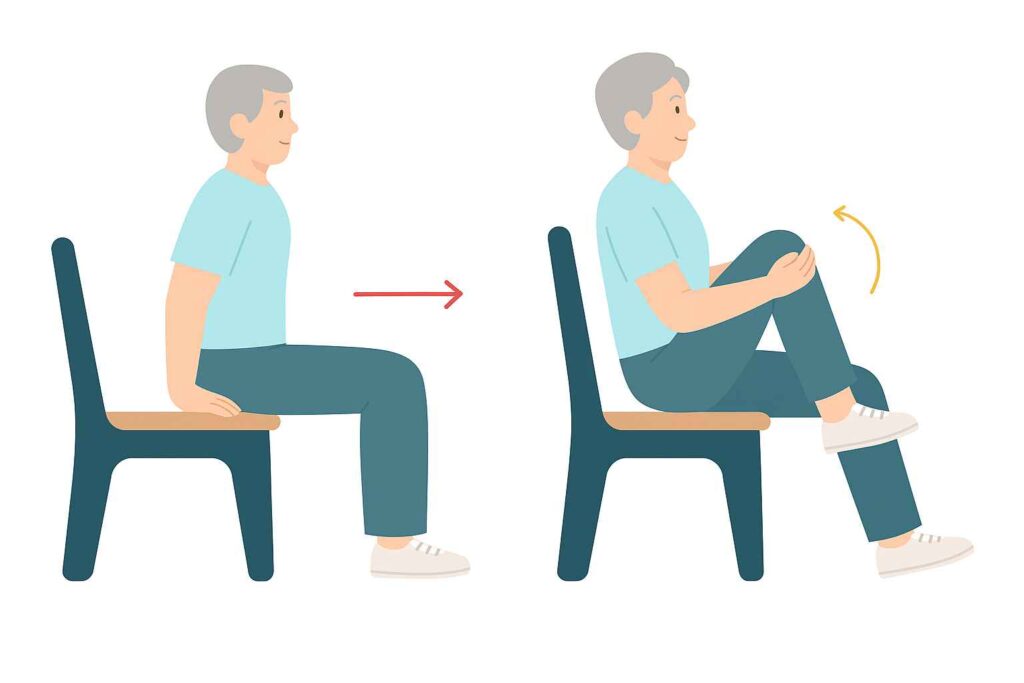
When they become stiff, almost everything feels harder. This stretch helps restore some of that lost movement.
How to do it
- Sit tall.
- Place your right ankle on your left knee.
- Keep your right foot flexed.
- Lean forward slightly until you feel a stretch.
- Hold for 20 seconds.
- Switch sides.
Benefits
- Opens tight hips
- Relieves tension around the lower back
- Helps improve mobility
Skip this pose if… You recently had hip surgery, or your healthcare provider has asked you to avoid crossing your legs.
8. Knee extensions
Strong legs make everyday life easier.
Getting out of a chair.
Walking across a parking lot.
Climbing stairs.
This simple movement helps build strength without putting much pressure on your knees.
How to do it
- Sit tall.
- Slowly straighten one leg.
- Point your toes toward the ceiling.
- Hold for 3 to 5 seconds.
- Lower slowly.
- Repeat 8 to 10 times before switching legs.
Benefits
- Builds strength in the front of your thighs
- Supports healthy knees
- Makes standing up easier
Tip
Move slowly. The lowering part of the movement is just as important as lifting.
9. Heel and toe raises
It doesn’t look like much.
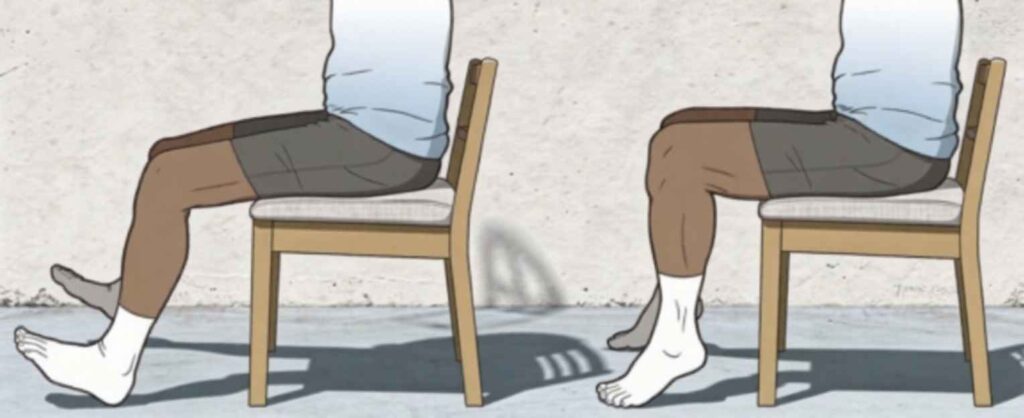
But this little exercise gets your ankles moving and helps improve circulation.
That’s especially helpful if you spend a lot of time sitting.
How to do it
- Sit comfortably.
- Lift your heels while keeping your toes on the floor.
- Lower them slowly.
- Now lift your toes while keeping your heels down.
- Repeat 15 times.
Benefits
- Encourages blood flow
- Strengthens your ankles
- Supports balance while walking
Extra challenge
- Once this becomes easy, slow the movement down.
- Your muscles work harder when you control every repetition.
10. Shoulder rolls
Stress has a funny way of settling into our shoulders.
You don’t always notice it until they start feeling tight.
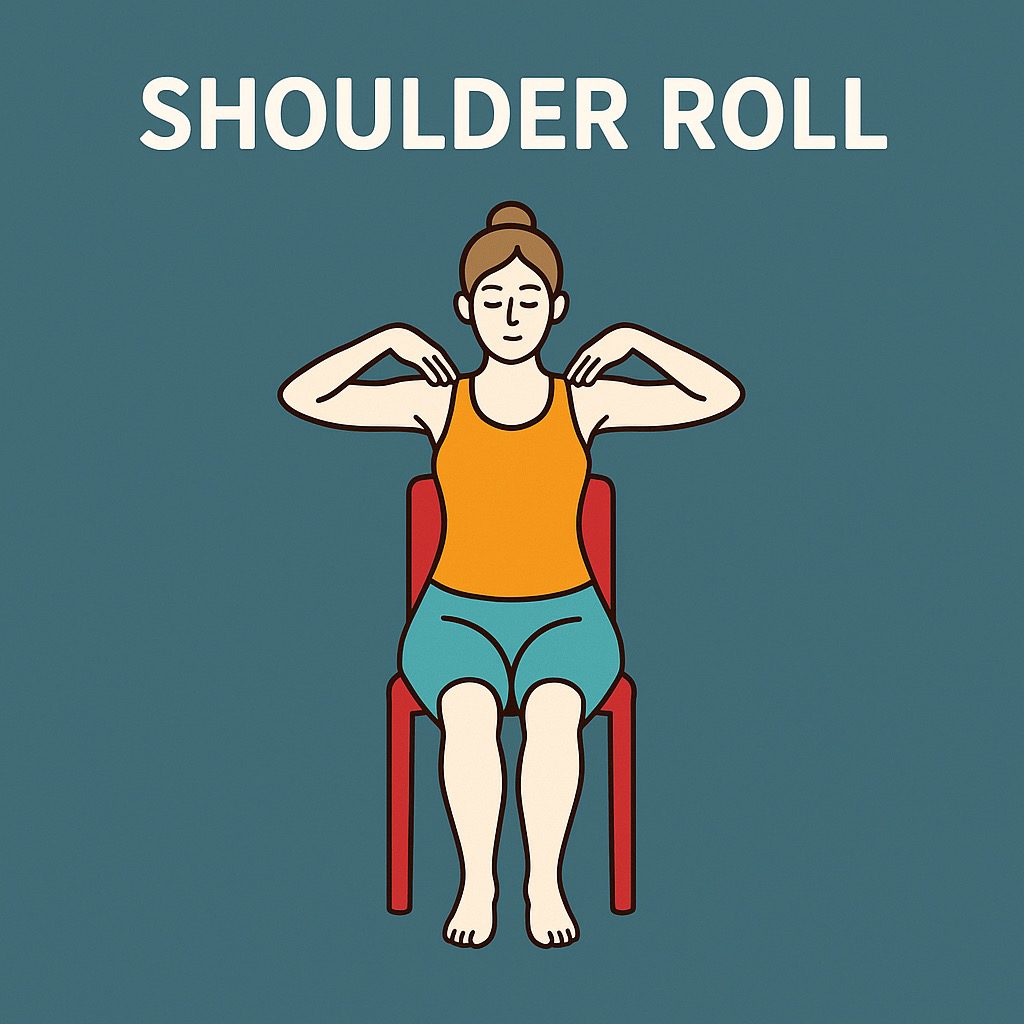
Shoulder rolls help release that tension in less than a minute.
How to do it
- Sit tall.
- Lift both shoulders toward your ears.
- Roll them backward.
- Lower them gently.
- Repeat 10 times.
- Reverse the direction.
Benefits
- Loosens stiff shoulders
- Improves circulation
- Helps reduce neck tension
Tip
Breathe naturally instead of rushing through the movement.
Putting these exercises together
- You now know ten yoga chair positions.
- That doesn’t mean you have to complete all ten every day.
- Here’s an easy routine many beginners enjoy.
| Exercise | Time |
|---|---|
| Seated Mountain Pose | 1 minute |
| Overhead Reach | 1 minute |
| Side Stretch | 1 minute |
| Cat-Cow | 2 minutes |
| Seated Twist | 1 minute |
| Forward Fold | 1 minute |
| Figure Four Stretch | 1 minute |
| Knee Extensions | 1 minute |
| Heel & Toe Raises | 1 minute |
| Shoulder Rolls | 1 minute |
That’s about 11 minutes.
Most people spend longer than that scrolling through their phone before breakfast.
Common mistakes I see all the time
Chair yoga is gentle. That doesn’t mean every movement feels right if your form is off. Here are a few habits worth watching.
1. Holding your breath
People do this without realizing it.
- Keep your breathing slow and steady.
- If you’re breathing comfortably, you’re usually moving at the right pace.
2. Sitting on a rolling chair
- Office chairs can slide unexpectedly.
- Choose a sturdy chair with four legs whenever possible.
- You’ll feel much more stable.
3. Moving too fast
- This isn’t a race.
- Your muscles respond better when movements are slow and controlled.
4. Ignoring pain
- A gentle stretch feels good.
- Sharp pain doesn’t.
- Stop immediately if something hurts.
- You can always skip a movement and come back another day.
5. Comparing yourself to someone else
- Everybody is different.
- Some people can reach their ankles.
- Others reach their knees.
- Both are making progress.
6. How often should seniors practice chair yoga?
People ask this question all the time.
- A good starting point is 3 to 5 sessions each week.
- If each session lasts about 10 to 20 minutes, you’re giving your body regular movement without overdoing it.
- Consistency matters much more than long workouts.
- Missing a day isn’t a problem.
- Giving up completely usually is.
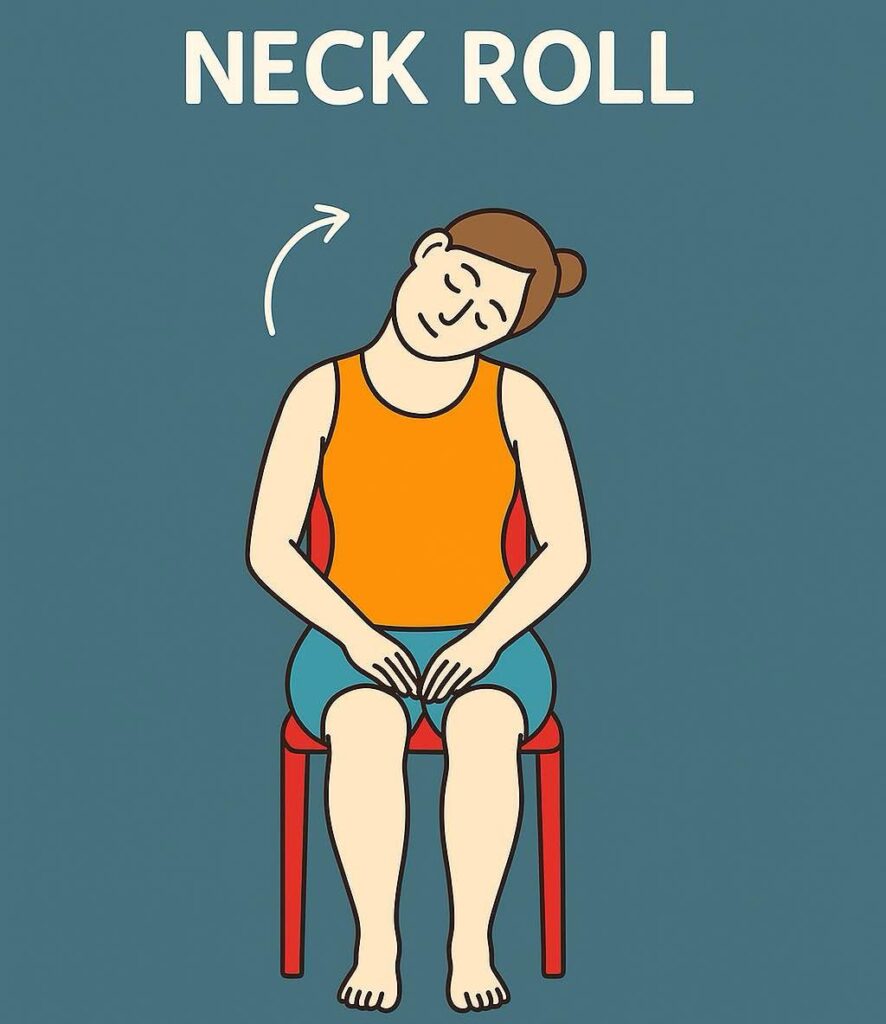
11. Neck stretch
Most of us don’t notice neck tension until it becomes uncomfortable.
Reading, watching TV, and looking at a phone all encourage the head to lean forward. Over time, those muscles tighten.
A gentle stretch can help.
How to do it
- Sit comfortably with your shoulders relaxed.
- Slowly tilt your head toward your right shoulder.
- Don’t lift your shoulder to meet your ear.
- Hold for 15 to 20 seconds.
- Return to the middle.
- Repeat on the other side.
Benefits
- Relieves neck tightness
- Improves flexibility
- Helps reduce muscle tension
Tip
Move slowly. Your neck doesn’t need big movements to feel the stretch.
12. Hamstring stretch
Tight hamstrings can make walking, bending, and even standing up feel harder than they should.
This seated stretch is gentle enough for most beginners.
How to do it
- Sit near the edge of your chair.
- Extend one leg.
- Keep your heel on the floor.
- Lean forward slightly while keeping your back long.
- Hold for 20 seconds.
- Switch legs.
Benefits
- Improves flexibility
- Helps reduce stiffness in the back of your legs
- Supports comfortable walking
13. Seated warrior arms
You don’t need to stand to strengthen your upper body.
This movement wakes up your shoulders and upper back.
How to do it
- Sit tall.
- Extend both arms out to your sides.
- Keep them level with your shoulders.
- Hold for 15 to 20 seconds.
- Lower slowly.
- Repeat three times.
Benefits
- Builds shoulder strength
- Encourages better posture
- Improves endurance
Tip
If both arms feel heavy, raise one arm at a time.
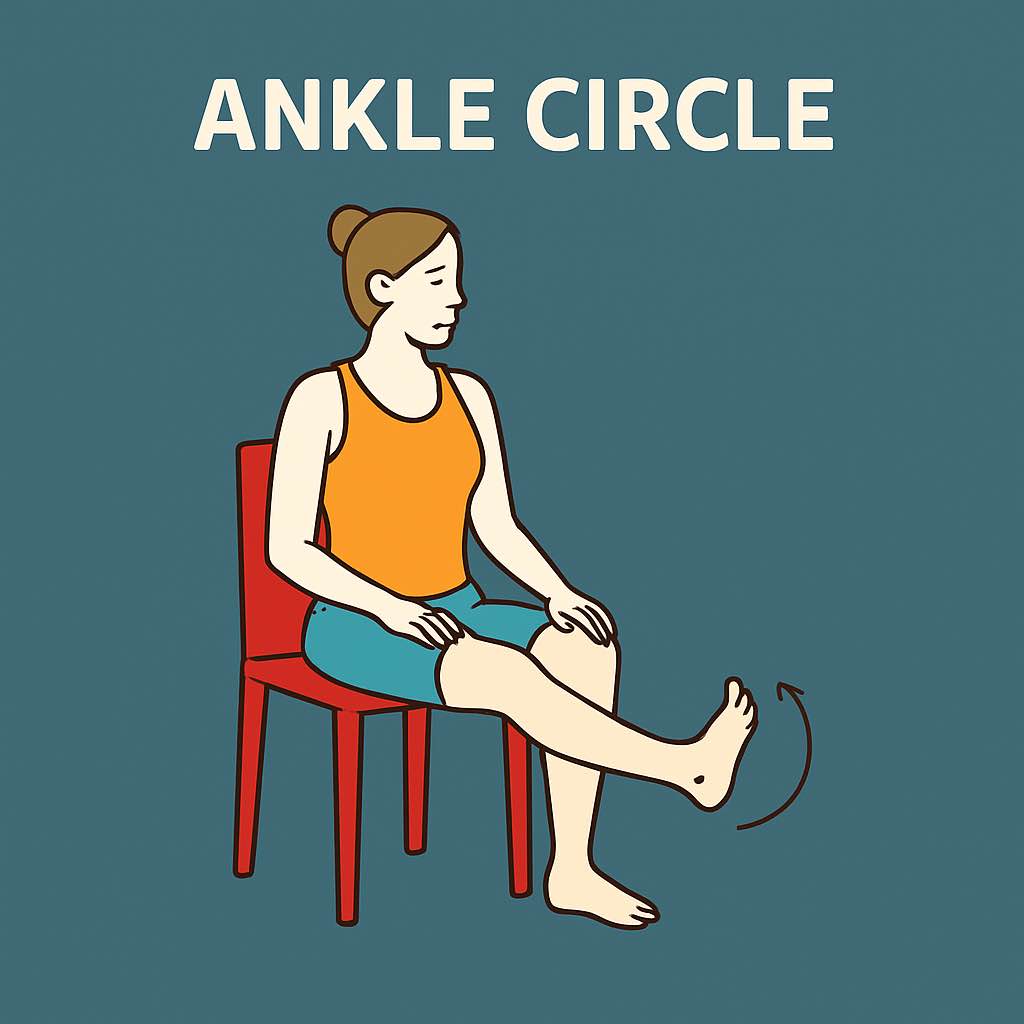
14. Ankle circles
Healthy ankles help with balance.
They also make walking feel smoother.
How to do it
- Lift one foot slightly.
- Slowly circle your ankle 10 times.
- Reverse the direction.
- Repeat with the other foot.
Benefits
- Improves ankle mobility
- Encourages circulation
- Helps maintain balance
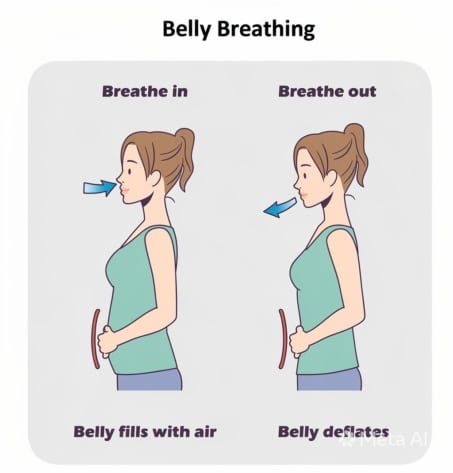
15. Seated breathing and relaxation
Every chair yoga session deserves a quiet ending.
Give yourself one minute.
Your body has earned it.
How to do it
- Sit comfortably.
- Rest your hands on your thighs.
- Close your eyes if you feel comfortable.
- Breathe in through your nose.
- Breathe out slowly.
- Continue for one minute.
Benefits
- Helps you relax
- Slows your breathing
- Leaves you feeling refreshed
A simple 15-minute yoga chair positions for seniors routine
Here’s an easy routine using all 15 yoga chair positions for seniors.
| Exercise | Time |
|---|---|
| Seated Mountain Pose | 1 minute |
| Overhead Reach | 1 minute |
| Side Stretch | 1 minute |
| Chair Cat-Cow | 2 minutes |
| Seated Twist | 1 minute |
| Forward Fold | 1 minute |
| Figure Four Stretch | 1 minute |
| Knee Extensions | 1 minute |
| Heel & Toe Raises | 1 minute |
| Shoulder Rolls | 1 minute |
| Neck Stretch | 1 minute |
| Hamstring Stretch | 1 minute |
| Warrior Arms | 1 minute |
| Ankle Circles | 1 minute |
| Relaxation | 1 minute |
If 15 minutes feels like too much, start with 5.
Tomorrow, do 6.
Your body doesn’t care where you begin. It responds to consistency.
Safety tips before every session
A few simple habits make chair yoga safer.
- Use a sturdy chair without wheels.
- Wear shoes if they help you feel stable.
- Keep water nearby.
- Avoid bouncing during stretches.
- Move slowly.
- Stop if you feel sharp pain or dizziness.
- Ask your healthcare provider before starting if you’ve had recent surgery or a serious medical condition.
FAQ’s for yoga chair positions for seniors
Is chair yoga safe for seniors?
For many older adults, yes. Chair yoga is gentle and keeps your body supported throughout most movements. If you have a medical condition or concerns about exercise, talk with your healthcare provider before you begin.
How often should seniors do chair yoga?
Three to five sessions each week is a good place to start. Even 10 minutes can make a difference when you practice regularly.
Can chair yoga help improve balance?
Many chair yoga movements strengthen your legs, hips, and core while encouraging better posture. Those muscles all play a part in helping you stay steady during daily activities.
Will chair yoga help arthritis?
Gentle movement often helps reduce stiffness and improve joint mobility for many people living with arthritis. Always work within a comfortable range of motion and stop if a movement causes pain.
Can beginners do these yoga chair positions?
Absolutely.
These exercises were chosen because they’re simple, gentle, and easy to learn. There’s no need for previous yoga experience.
Do I need special equipment?
No.
A sturdy chair is enough. Some people like using a yoga mat under the chair to keep it from sliding, but it isn’t required.
My Final thoughts on yoga chair positions for seniors
Getting older doesn’t mean you have to stop moving.
Your body still responds to regular exercise, even if that exercise looks different than it did 20 years ago. These yoga chair positions for seniors are simple enough to fit into almost any day. You can do them before breakfast, while watching television, or during a break from reading.
The biggest change usually comes from showing up consistently.
- Five minutes today.
- Ten tomorrow.
A few weeks later, you might notice you’re standing a little taller, reaching a little farther, or walking with more confidence. That’s progress worth celebrating.
Download your printable guide
Want these exercises beside you while you practice?
Download our free printable yoga chair positions for seniors guide with step-by-step illustrations and keep it near your favorite chair. It’s an easy way to remember each position without opening your phone every time.
Related articles
If you enjoyed this guide, you might also like:
- Chair Yoga for Beginners
- 10-Minute Chair Yoga Routine for Seniors
- Chair Yoga for Balance
- Chair Yoga for Arthritis
- Best Chair Yoga Stretches for Seniors
- Printable Chair Yoga Exercises PDF
Disclaimer
This article is for educational purposes only and shouldn’t replace medical advice. If you have a medical condition, recent injury, or concerns about starting an exercise program, speak with your healthcare provider before practicing chair yoga.