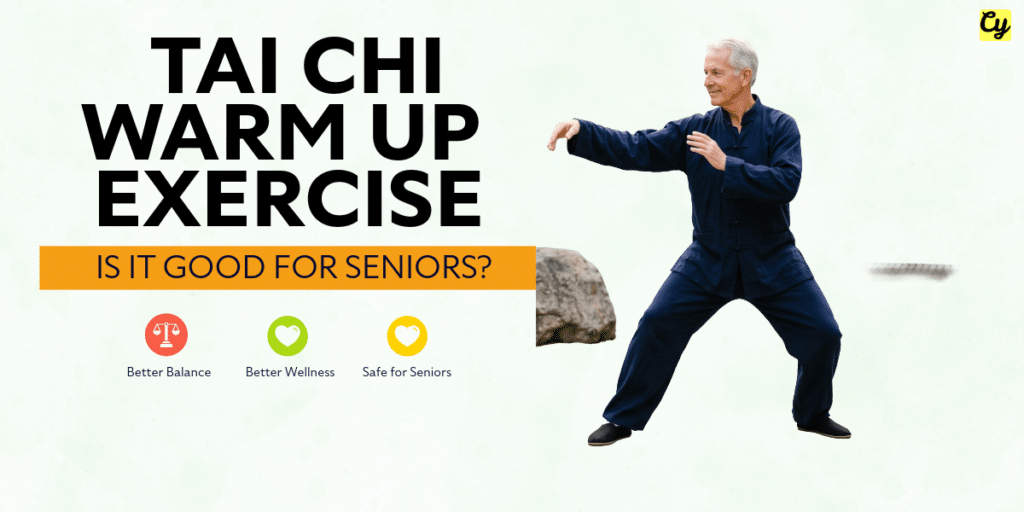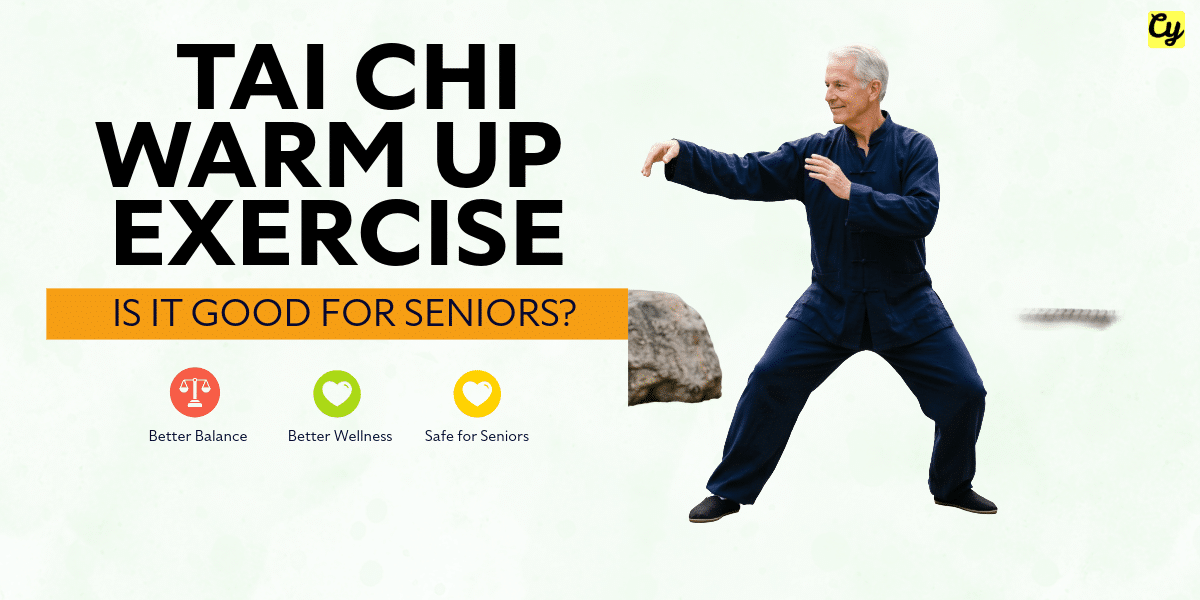
A Tai Chi warm up exercise is a gentle movement performed before the main Tai Chi practice. It usually combines slow joint movements, comfortable stretching, weight shifting, relaxed breathing, and simple arm movements.
The purpose isn’t to tire yourself out.
It’s to gradually get your body moving, loosen stiff areas, and prepare your attention and breathing for the slower Tai Chi movements that follow.
Research studies of Tai Chi programs have used different warm-up routines. Some have included weight shifting, arm swinging, gentle stretches for the neck, shoulders, spine, arms, and legs, breathing exercises, and relaxation.
That makes a warm-up especially useful if you’re a beginner, an older adult, or someone who feels stiff after sitting for a long time.
And you don’t need a complicated routine.
A few minutes of controlled movement can be enough to get started.
Table of Contents
Why Should You Warm Up Before Tai Chi?
Tai Chi itself is gentle, but the body still benefits from gradually moving through different ranges of motion.
A warm-up can help you:
- Move your neck and shoulders more comfortably
- Wake up your ankles, knees and hips
- Practice controlled weight shifting
- Coordinate breathing with movement
- Reduce the temptation to rush into Tai Chi forms
- Prepare mentally for the session
- Make the first few Tai Chi movements feel easier
Warm-ups are also common in research-based Tai Chi programs. For example, one clinical Tai Chi program for people with heart failure used warm-up exercises before five simplified Tai Chi movements. The warm-up included weight shifting, arm swinging, gentle stretches and breathing methods.
Another study of a Yang-style Tai Chi program used a 5-to-10-minute warm-up before the Tai Chi forms and relaxation afterward.
So the warm-up isn’t something you have to invent from scratch. There are several simple movement patterns that fit naturally with Tai Chi.
10 Tai Chi Warm-Up Exercises for Beginners
You can use the following routine before a beginner Tai Chi session.
If you’re new to exercise, start with smaller movements and don’t try to copy the deepest range of motion you see in a video.
1. Tai Chi Breathing
Start by getting comfortable.
If you’re standing, keep your feet about hip-width apart. If standing isn’t comfortable, sit on a sturdy chair with both feet flat on the floor.
- Relax your shoulders.
- Keep your hands comfortably in front of your body or resting by your sides.
- Breathe in slowly.
- Breathe out slowly.
- Continue for 5 to 10 comfortable breaths.
Don’t force a deep breath.
The goal is to settle into the movement and avoid holding your breath.
2. Shoulder Rolls
Shoulder rolls are an easy way to begin moving the upper body.
- Sit or stand tall.
- Lift your shoulders gently toward your ears.
- Move them backward.
- Let them drop down.
- Repeat slowly 5 times.
- Reverse the direction for another 5 repetitions.
Keep the movement comfortable.
If your shoulders feel stiff, make the circles smaller rather than forcing them.
3. Gentle Neck Movements
Your neck doesn’t need large circles.
In fact, slow directional movements are usually easier to control.
Try this:
- Look gently to the right.
- Return to the center.
- Look gently to the left.
- Return to the center.
- Bring your chin slightly toward your chest.
- Return to neutral.
Repeat each movement 3 to 5 times.
Don’t force your head backward or push into pain.
4. Arm Swings
Arm swinging appears in some traditional Tai Chi warm-up protocols used in research settings.
For a simple version:
- Stand with your feet comfortable and stable.
- Let your arms hang naturally.
- Swing both arms gently forward and backward.
- Keep your elbows relaxed.
- Continue for 20 to 30 seconds.
The movement should feel loose rather than powerful.
If standing is difficult, you can perform a smaller version while seated.
5. Seated or Standing Weight Shifts
Weight shifting is one of the most useful movements to include in a Tai Chi warm-up.
Traditional Tai Chi involves controlled transfers of body weight, and research programs have used weight shifting as part of their warm-up routines.
For beginners:
- Stand near a sturdy chair or wall for support.
- Keep both feet comfortably on the floor.
- Slowly shift your weight toward the right.
- Return to the center.
- Shift toward the left.
- Return to the center.
Repeat 5 times per side.
Keep the movement small.
If you’re practicing seated Tai Chi, you can shift your upper body gently from side to side instead.
6. Gentle Knee Bends
You don’t need to squat deeply for a Tai Chi warm-up.
- Stand with your feet comfortable.
- Keep your knees soft.
- Bend your knees slightly.
- Return to your normal standing position.
- Repeat 5 to 8 times.
Think “small and controlled.”
If you have knee pain or balance problems, use a sturdy chair for support or perform the movement seated.
7. Ankle and Heel Raises
Your ankles help with balance and movement, so they’re worth including.
Hold a sturdy chair if necessary.
- Keep your feet about hip-width apart.
- Slowly lift your heels.
- Lower them.
- Then gently lift your toes while keeping your heels down.
- Lower your toes.
Repeat 5 to 10 times.
This is also an easy movement to include in a Tai Chi warm up for seniors because you can control the range of motion.
8. Gentle Side Reaches
Side reaches warm up the shoulders and sides of the torso.
- Stand or sit tall.
- Raise your right arm comfortably.
- Reach slightly toward the left.
- Return to the center.
- Repeat on the other side.
Don’t force a deep side bend.
The movement should feel like a gentle lengthening rather than a hard stretch.
9. Slow Arm Opening
This movement resembles the calm opening actions often found in Tai Chi routines.
- Start with your hands near your thighs.
- Slowly raise both arms toward chest height.
- Open the arms slightly.
- Bring them back toward the center.
- Lower them slowly.
Repeat 5 to 10 times.
Coordinate the movement with relaxed breathing.
10. Gentle Tai Chi Walking
If you’re comfortable standing and walking safely, finish your warm-up with a few slow steps.
Take short steps.
Pay attention to where your weight is moving.
You can practice:
- Step forward slowly
- Transfer your weight
- Bring the other foot through
- Pause
- Repeat
Tai Chi walking is especially useful because weight transfer and balance are central parts of many Tai Chi practices.
Our guide to Tai Chi for seniors covers Tai Chi walking and beginner-friendly practice in more detail.
A Simple 10-Minute Tai Chi Warm-Up Routine
You don’t need to perform all 10 exercises every time.
Here’s an easy routine:
| Time | Exercise |
|---|---|
| 1 minute | Tai Chi breathing |
| 1 minute | Shoulder rolls |
| 1 minute | Gentle neck movements |
| 1 minute | Arm swings |
| 2 minutes | Weight shifting |
| 1 minute | Knee bends |
| 1 minute | Heel and toe raises |
| 1 minute | Side reaches |
| 1 minute | Slow arm opening |
If you’re feeling good, finish with 1 to 2 minutes of slow Tai Chi walking.
If 10 minutes is too long, start with 5 minutes.
Tai Chi Warm Up Exercises for Beginners
If you’ve never done Tai Chi before, don’t start by trying to memorize a complete form.
That’s one of the easiest ways to make a gentle exercise feel complicated.
Start with:
- Breathing
- Shoulder movement
- Arm movements
- Weight shifting
- Small knee bends
- Gentle stepping
Then learn individual Tai Chi movements.
Our Tai Chi in a Chair guide is another option if you prefer to begin while seated. It includes 7 simple seated Tai Chi movements and a 10-minute routine.
Tai Chi Warm-Up Exercises in Yang Style
Yang-style Tai Chi is one of the styles you’ll commonly encounter in beginner Tai Chi programs.
Research studies have used Yang-style forms in programs for older adults and people with health conditions. One study, for example, used a simplified Yang-style Tai Chi program with a warm-up that included joint movements, balance activities and breathing.
A Yang-style warm-up doesn’t need to be complicated.
A practical sequence could be:
Breathing → shoulder rolls → arm swings → weight shifting → gentle knee bends → slow stepping → first Tai Chi form
The important thing is to keep the movements controlled.
Don’t worry about making every movement look exactly like an instructor’s movement during your first few sessions.
Tai Chi Warm Up for Seniors
A good Tai Chi warm up for seniors should prioritize stability and comfort.
Use a sturdy chair or wall nearby if you need support.
The National Institute on Aging includes Tai Chi among balance activities for older adults, while research reviews have found evidence that Tai Chi can improve balance and reduce falls in older populations.
A 2023 systematic review and meta-analysis included 24 randomized controlled trials and found that Tai Chi was associated with fewer falls and improvements in several balance measures among older adults.
That doesn’t mean every warm-up exercise prevents falls by itself.
The research is mainly about Tai Chi programs as a whole, not one particular shoulder roll or ankle movement.
That’s an important distinction.
Senior-friendly warm-up rules
- Keep both feet stable.
- Use a chair for support when needed.
- Start with small movements.
- Don’t rush weight transfers.
- Keep breathing normally.
- Avoid movements that cause sharp pain.
- Stop if you feel dizzy or unusually unwell.
If you have recently had surgery, have a significant medical condition, or have serious balance problems, speak with your healthcare professional before beginning a new exercise program.
Can a Tai Chi Warm Up Exercise Help With Weight Loss?
This is where it’s worth being realistic.
A Tai Chi warm-up exercise isn’t a weight-loss workout by itself.
The warm-up is meant to prepare you for exercise. It isn’t designed to burn a large number of calories.
Tai Chi as a regular physical activity may contribute to healthy weight management, but the evidence isn’t strong enough to say that a short warm-up will cause weight loss.
Research on Tai Chi and body composition has produced mixed results. A systematic review of Tai Chi and Qigong studies found improvements in body composition in some trials, but the researchers also noted substantial variation between studies.
A randomized controlled trial involving 543 adults aged 50 and older with central obesity found that 12 weeks of Tai Chi was associated with a reduction in waist circumference and body weight compared with a no-exercise control group.
More recent research also continues to examine Tai Chi’s effects on cardiometabolic measures and body composition.
So if your goal is Tai Chi warm up exercise for weight loss, think of the warm-up as the beginning of a larger activity routine.
A sensible combination could include:
- Tai Chi
- Walking
- Strength exercises
- Regular daily movement
- A balanced eating pattern
The warm-up gets you moving. The overall routine matters much more.
Tai Chi Warm Up Exercise at Home
You don’t need a studio to warm up for Tai Chi.
A small, clear area at home is enough.
Before starting:
- Remove loose rugs or objects from your immediate exercise area.
- Use a sturdy chair if you need support.
- Wear comfortable clothing.
- Keep enough space around you to move your arms.
- Keep water nearby.
- Avoid practicing on a slippery surface.
If standing Tai Chi doesn’t feel safe, start with seated movements.
Our Tai Chi in a Chair routine provides a seated alternative with breathing, cloud hands, arm circles, weight shifts and other gentle movements.
You can also combine your warm-up with our daily 15-minute chair yoga routine for seniors on days when you want a seated movement session.
Tai Chi Warm Up Exercises PDF
A printable tai chi warm up exercises PDF can be useful because you don’t have to keep remembering the sequence.
A simple printable should include:
- Exercise name
- Small illustration or photo
- Number of repetitions
- Short instructions
- Safety reminder
- Space to mark completed sessions
If you prefer printable chair-based movement, you can also use our free printable chair yoga exercises. It includes beginner-friendly warm-up movements and other seated exercises.
For someone who is new to Tai Chi, I’d keep the printable short.
One page is easier to use than a 20-page document filled with instructions.
What About Tai Chi Warm Up Exercises on YouTube?
Searching for “tai chi warm up exercises – YouTube” will give you plenty of options, but don’t choose a video just because it has millions of views.
Look for an instructor who:
- Demonstrates movements slowly
- Explains modifications
- Gives clear safety instructions
- Doesn’t pressure you to stretch farther
- Provides seated options when appropriate
- Explains how to use support for balance
A good beginner video should feel almost boringly slow.
That’s not a bad thing.
Tai Chi isn’t supposed to be a race.
How Long Should a Tai Chi Warm-Up Last?
There’s no single warm-up length that applies to everyone.
Research-based Tai Chi programs have used different approaches. One clinical program used a 10-minute warm-up before the main session, while another protocol allocated considerably more time to warm-up activities.
For a home beginner routine, 5 to 10 minutes is a reasonable starting point.
You can adjust it according to how your body feels.
If you’ve been sitting for several hours, you may want a little longer.
If you’re already warm and mobile, a few minutes may be enough.
Does Tai Chi Really Improve Balance?
There is fairly good research behind Tai Chi and balance, particularly in older adults.
A systematic review and meta-analysis of randomized controlled trials found that Tai Chi reduced fall risk and improved measures such as the Timed Up and Go and functional reach tests in older adults.
Another systematic review found that Tai Chi was associated with a lower chance of falling and a lower rate of falls among older adults.
The research doesn’t mean that Tai Chi makes someone immune to falls.
But balance, controlled weight shifting, coordinated movement and regular practice are all relevant parts of the exercise.
That’s one reason a good warm-up should include gentle weight shifting and controlled stepping, not only stretching.
Tai Chi Warm-Up vs. Regular Stretching
These aren’t exactly the same thing.
Traditional stretching often focuses on holding a particular position.
Tai Chi warm-ups usually involve more movement.
For example:
Traditional stretch:
Hold a comfortable calf stretch.
Tai Chi-style warm-up:
Shift your weight slowly while coordinating your feet, legs, posture and breathing.
Both can have a place in an exercise routine.
You don’t have to choose one forever.
A Beginner’s 5-Minute Version
If you don’t have 10 minutes, try this:
Minute 1: Slow breathing and shoulder relaxation
Minute 2: Shoulder rolls and gentle neck movements
Minute 3: Arm swings
Minute 4: Gentle weight shifting
Minute 5: Slow stepping or heel raises
Then move into your Tai Chi practice.
That’s it.
Five minutes is enough to create a simple starting habit.
Safety Tips Before You Start
Tai Chi is generally considered a gentle form of exercise, but gentle doesn’t mean that every movement is appropriate for every person.
Keep these points in mind:
- Use a stable chair if you need seated support.
- Keep your exercise area clear.
- Don’t force a stretch.
- Don’t lock your knees.
- Keep your breathing comfortable.
- Make movements smaller if you’re stiff.
- Stop if you experience sharp or worsening pain.
- Stop if you feel dizzy, faint or unusually short of breath.
- Ask a healthcare professional about exercise modifications if you have a significant health condition.
Older adults with serious balance limitations may need an individualized exercise plan rather than following a general internet routine.
Frequently Asked Questions
What is the best Tai Chi warm up exercise for beginners?
Start with breathing, shoulder rolls, gentle arm movements, weight shifting and small knee or ankle movements. These are easier to control than trying to learn a complete Tai Chi form immediately.
How long should a Tai Chi warm-up be?
For a beginner practicing at home, 5 to 10 minutes is a practical starting point. Research programs have used different warm-up lengths, so there isn’t one universal number.
Can seniors do Tai Chi warm-ups?
Many older adults can use gentle Tai Chi movements, and Tai Chi has been studied extensively in older populations. If standing balance is a concern, use a sturdy chair or begin with seated movements.
Can Tai Chi help with weight loss?
Regular Tai Chi may support changes in body weight or waist circumference in some people, but a short warm-up shouldn’t be treated as a weight-loss workout. Research on Tai Chi and body composition is mixed, although some trials have reported improvements.
Can I do a Tai Chi warm-up at home?
Yes. You can practice simple warm-up movements in a small, clear area. Beginners should prioritize stability and have a sturdy chair nearby if needed.
Should I stretch before Tai Chi?
Gentle mobility and stretching can be part of a Tai Chi warm-up. Avoid forcing a stretch or trying to achieve a large range of motion before your body is ready.
Is Yang-style Tai Chi good for beginners?
Yang-style Tai Chi is widely used in beginner and research programs. Some research on older adults has examined Yang-style Tai Chi specifically, including programs using simplified forms.
Final Thoughts
A Tai Chi warm up exercise doesn’t need to be complicated.
Start with your breathing.
Move your shoulders.
Swing your arms gently.
Shift your weight.
Then take a few slow steps.
The point isn’t to finish the warm-up exhausted. It’s to arrive at your Tai Chi practice feeling more prepared to move.
And if standing isn’t comfortable, that’s not the end of the story. Seated Tai Chi can give you another way to practice controlled movement.
For more beginner-friendly routines, see our Tai Chi in a Chair guide and Tai Chi for seniors guide.
Research used for this article
- Tai Chi for fall prevention and balance improvement in older adults: systematic review and meta-analysis
- Systematic review and meta-analysis: Tai Chi for preventing falls in older adults
- Body Composition Outcomes of Tai Chi and Qigong Practice: systematic review and meta-analysis
- Effects of Tai Chi or Conventional Exercise on Central Obesity: randomized controlled trial
- The Effect of Tai Chi on Cardiometabolic Risk Factors: systematic review and meta-analysis
- Tai Chi Exercise in Patients With Chronic Heart Failure: randomized clinical trial
Editorial note: The research above supports statements about Tai Chi programs, balance, falls, body composition and the use of warm-up components. It does not establish that any single warm-up movement, by itself, prevents falls or causes weight loss.