How to Use a Yoga Chair: A Simple Guide for Beginners and Seniors
A yoga chair can make seated yoga much easier to practice at home. You can use it for support, posture, balance, seated stretches, and gentle strength work without getting down on the floor.
If you’re new to chair yoga, the chair itself is part of the practice. You need the right chair, the right position, and enough room to move your arms and legs without bumping into anything.
I’ll walk you through how to use a yoga chair, how to set it up, which movements to try first, and the mistakes that can make a simple exercise feel awkward.
Senior Tip
Start with 5 to 10 minutes. You don’t need a long session to get comfortable with the chair or learn the basic movements.
How to Use a Yoga Chair
Jump to the section you need.
- What Is a Yoga Chair?
- How to Choose the Right Chair
- How to Set Up Your Yoga Chair
- How to Use a Yoga Chair for the First Time
- 7 Easy Ways to Use a Yoga Chair
- A Simple 10-Minute Yoga Chair Routine
- Can You Use a Yoga Chair for Standing Poses?
- Using a Yoga Chair With Limited Mobility
- Common Mistakes to Avoid
- How Often Should You Use a Yoga Chair?
- Frequently Asked Questions

What is a yoga chair?
A yoga chair is usually a sturdy chair that helps you perform yoga movements with support. Some yoga chairs are made specifically for yoga and have a simple metal frame without arms. Others are regular sturdy chairs that work well for seated practice.
For most beginner chair yoga exercises, you don’t need a special piece of equipment. A solid chair without wheels is usually enough.
The goal is to have something stable underneath you while you move. That can make seated stretches easier to control and gives you a place to return to when a movement feels challenging.
If you’re interested in a wider collection of movements, see our guide to chair yoga poses.
How to choose the right chair
Before you start, check the chair. This takes about 30 seconds and can save you a lot of trouble.
Avoid rolling office chairs or anything that can move while you’re exercising.
You want a seat that doesn’t sink deeply when you sit down.
Push the chair lightly from different sides. It shouldn’t wobble or slide easily.
Your feet should be able to rest on the floor without you reaching or sitting on your toes.
Armrests aren’t always a problem, but they can get in the way during arm movements and side bends. A simple chair with an open area around your upper body often works better.
Before You Begin
Don’t use a chair that rocks, rolls, folds unexpectedly, or has damaged legs. If you have a medical condition, recent surgery, significant balance problems, or an injury, ask your healthcare professional how you should modify exercise.
How to set up your yoga chair
Put the chair on a flat, non-slippery surface. Clear enough space around it that your arms can reach out to the sides without hitting a table, wall, lamp, or another person.
Sit toward the front half of the seat rather than leaning against the backrest. Place both feet on the floor about hip-width apart.
Let your shoulders drop. Keep your head over your shoulders instead of pushing your chin forward.
You don’t need to force a perfectly straight posture. Think tall and comfortable. Your breathing should stay easy.

How to use a yoga chair for the first time
Start seated. There’s no need to jump into complicated poses.
- Sit near the front of the chair with both feet supported.
- Take 3 slow, comfortable breaths.
- Roll your shoulders gently backward and down.
- Move your neck slowly from side to side without forcing the range.
- Try a few seated marches.
- Add gentle arm movements once your body feels ready.
Those first few minutes help you learn how the chair feels under you. You also get a chance to notice whether the seat is too high, too low, too soft, or unstable.
7 easy ways to use a yoga chair
1. Seated breathing
Sit comfortably with your feet flat. Rest your hands on your thighs and breathe slowly through your nose if that feels comfortable.
Try 5 slow breaths. Keep your shoulders relaxed instead of lifting them toward your ears.
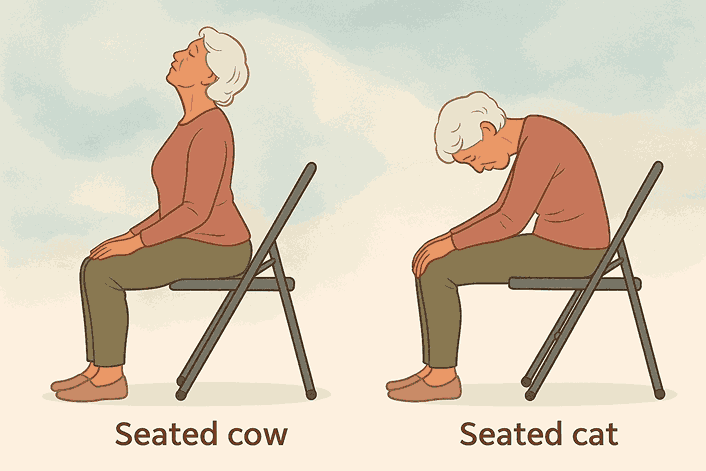
2. Seated cat-cow
Place your hands on your thighs. As you inhale, gently lift your chest and look slightly forward. As you exhale, round your upper back and let your chin move slightly toward your chest.
Move slowly. The point is comfortable movement through your spine, not a big stretch.
3. Seated side stretch
Place one hand on the chair and reach the opposite arm upward. Lean gently to the side while keeping both sitting bones supported.
Come back to the center and switch sides. Take 2 to 4 slow breaths on each side.
4. Seated march
Sit tall and lift one foot a few inches from the floor. Lower it, then lift the other foot.
Alternate for 8 to 12 repetitions. If your knees or hips don’t like the movement, make the lift smaller.
5. Seated leg extension
Extend one leg forward until the knee is comfortably straight, then lower the foot. Switch sides.
Keep your movement controlled. You don’t need to lock the knee or lift the leg high.
6. Seated overhead reach
Reach both arms toward the ceiling if your shoulders allow it. Keep your ribs relaxed rather than pushing your lower back forward.
Lower your arms slowly and repeat 5 times.
7. Seated twist
Place your hands on your thighs. Turn your chest gently to one side, then return to center and repeat on the other side.
Keep your hips facing forward. The movement should be comfortable, especially around your lower back.
A simple 10-minute yoga chair routine
Once you know the basic movements, put them together. This routine keeps things simple and gives you time to settle into each movement.
| Time | Movement | What to focus on |
|---|---|---|
| 1 minute | Seated breathing | Relax shoulders and breathe slowly |
| 1 minute | Shoulder rolls | Small, controlled circles |
| 2 minutes | Seated cat-cow | Move with your breath |
| 2 minutes | Seated march | Keep your trunk steady |
| 2 minutes | Side stretches | Stay tall and avoid forcing the stretch |
| 1 minute | Seated twists | Turn gently from your upper body |
| 1 minute | Quiet breathing | Let your body settle |
Can you use a yoga chair for standing poses?
Yes, a sturdy chair can also provide support during some standing movements. But standing work changes the safety setup, so don’t treat the chair like a piece of furniture you can casually grab.
Keep the chair on a stable surface and use it for light support. If you need to pull hard on the chair to stay upright, choose a simpler seated movement instead.
For balance work, it’s also useful to have a wall or another stable support nearby. The National Institute on Aging recommends going slowly, staying aware of unsteadiness, and having a sturdy chair, person, or wall nearby when needed.
How a yoga chair can help with limited mobility
One reason chair yoga works well for beginners is that you can stay seated while working through a range of movements. That can be useful if getting down to a floor mat is uncomfortable or difficult.
NCCIH describes chair yoga as a gentler option for seniors with limited mobility. It also recommends that older adults with medical issues discuss their needs with a healthcare provider and yoga instructor before starting or changing a yoga practice.
Chair yoga can fit alongside other physical activity. For adults 65 and older, the CDC recommends a weekly mix of aerobic activity, muscle-strengthening activity, and balance work. Yoga can contribute to more than one category depending on the movements and intensity.
Read our chair exercises for seniors guide if you want more seated movements.
Common mistakes when using a yoga chair
Using a chair that moves
This is the big one. A rolling chair can turn a gentle movement into a balance problem.
Sitting too far back
If you’re pressed against the backrest, some movements become harder to perform. For many seated exercises, sitting toward the front half of the seat gives your legs and arms more room.
Forcing the range of motion
You don’t get extra credit for reaching farther. Stay within a range that feels controlled and comfortable.
Holding your breath
Keep breathing naturally. If a movement makes you tense up and hold your breath, make the movement smaller or slow it down.
Trying too much on day one
Start with a few movements. Your first session is mostly about learning the setup and finding movements your body accepts easily.

How often should you use a yoga chair?
There’s no need to make every session long. A short routine you actually repeat is more useful than a 45-minute session you avoid for the next 2 weeks.
Try 5 to 10 minutes on days when you have less time. On days when you feel good and want more movement, build toward 15 or 20 minutes.
And keep walking, strength work, and balance practice in your week when those activities are appropriate for you. Chair yoga works well as one part of a larger movement routine.
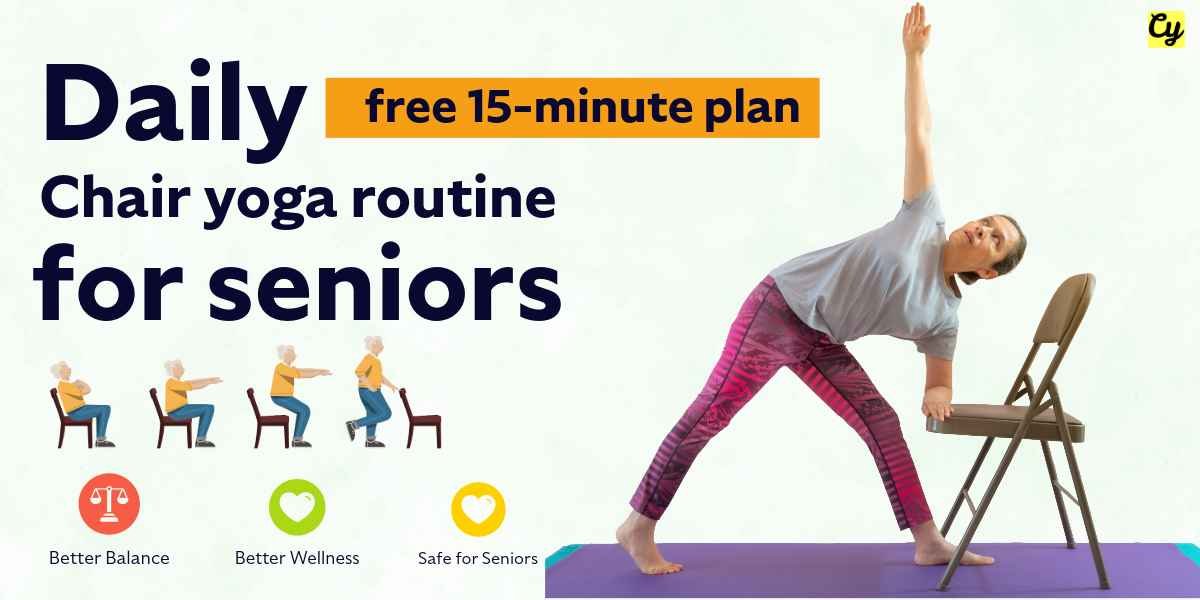
If you want a more structured plan, you can use our daily chair yoga routine for seniors or try the 21-day chair yoga challenge.
Frequently asked questions
Do I need a special yoga chair?
No. A sturdy, non-rolling chair can work for many seated yoga exercises. A dedicated yoga chair can be useful, but it’s not required for getting started.
Can beginners use a yoga chair?
Yes. Chair yoga is often a good starting point if you want supported movements or aren’t comfortable getting onto the floor.
Can I use a chair with arms?
You can, as long as the armrests don’t block the movements you’re trying to do. An open-sided chair is often easier for arm reaches and side stretches.
Is chair yoga good for seniors?
Chair yoga can be a gentle way to practice movement while seated. NCCIH specifically describes chair yoga as an even gentler option for seniors with limited mobility, while also recommending appropriate modifications and professional advice when health conditions are involved.
How long should a chair yoga session be?
Start with 5 to 10 minutes if you’re new. You can add time gradually as the movements become familiar.
Can chair yoga replace walking or strength training?
Not necessarily. Chair yoga can be one part of your activity routine, but older adults are advised to include aerobic, muscle-strengthening, and balance activities each week.
Sources and further reading
NCCIH: Yoga, Effectiveness and Safety
NCCIH: Yoga for Health, What the Science Says
Safety note: This guide is for general education and isn’t medical advice. Stop if you feel pain, dizziness, chest pain, unusual shortness of breath, or feel unsafe. If you have a health condition, recent surgery, significant balance problems, or an injury, talk with your healthcare professional before starting or changing an exercise routine.