Most seniors who try chair yoga do it once or twice a week when they remember.
The ones who actually feel a difference do it every day.
That’s not a character trait. It’s biology.
The body adapts to what you do repeatedly, not what you do occasionally. A 2019 study published in PMC tracked older women doing a twice-weekly chair yoga program for 12 weeks. The experimental group showed significant improvements in upper limb strength, lower limb strength, static balance, agility, and dynamic balance. The control group, who changed nothing, showed none of those improvements.
12 weeks. Twice a week. That’s the floor. Daily practice compounds those results further.
This is your complete daily chair yoga routine for seniors: 15 minutes, morning or evening, no equipment, and no floor work.
Table of Contents
Why daily practice works better than 3x a week
The research on habit formation is consistent on one point: frequency matters more than duration.
A 2024 case series from PMC reviewing physical and mental benefits of chair yoga in older adults found that consistency of practice, rather than session length, was the strongest predictor of sustained improvement. Even twice-weekly sessions showed improvements that didn’t last 3 months post-intervention, suggesting the body needs ongoing stimulation to maintain gains.
Daily practice keeps the adaptation signal running. 15 minutes every morning beats 45 minutes on Saturdays by a significant margin for joint mobility, balance, and mood.
A Journal of Applied Gerontology study from 2024 found reduced anxiety, depression, and improved mood in older adults living in care homes after participating in chair yoga. These effects were tied to regular practice, not one-off sessions.
The goal isn’t a workout. It’s a daily signal to your body that it’s still moving, still flexible, still capable.
Before you start
You need a sturdy chair with no wheels, ideally armless so your torso can rotate freely. Sit near the front edge for most poses. Keep both feet flat on the floor.
Do this before eating breakfast, or at least 30 minutes after a meal. First thing in the morning is ideal because the body is stiffest then and responds most to gentle movement.
Wear comfortable clothes. No shoes or non-slip socks on hard floors.
The whole routine takes 15 minutes. The sequence matters: it moves from breathing to warming up to mobilizing to strengthening to cooling down.
Your 15-minute daily chair yoga routine for seniors
Minutes 1–2: Seated belly breathing
Sit tall, one hand on your chest, one on your belly. Inhale through the nose for 4 counts. Your belly should rise, your chest should stay still.
Exhale slowly through the mouth for 6 counts. 8 rounds.
Diaphragmatic breathing activates the parasympathetic nervous system before movement. It also counteracts the shallow chest breathing most people default to with age. A 2022 PMC randomised clinical trial found that diaphragmatic breathing significantly improved pulmonary function and oxygen saturation in older adults after 8 weeks of practice. Starting the routine here means your nervous system is calm before your joints start moving.

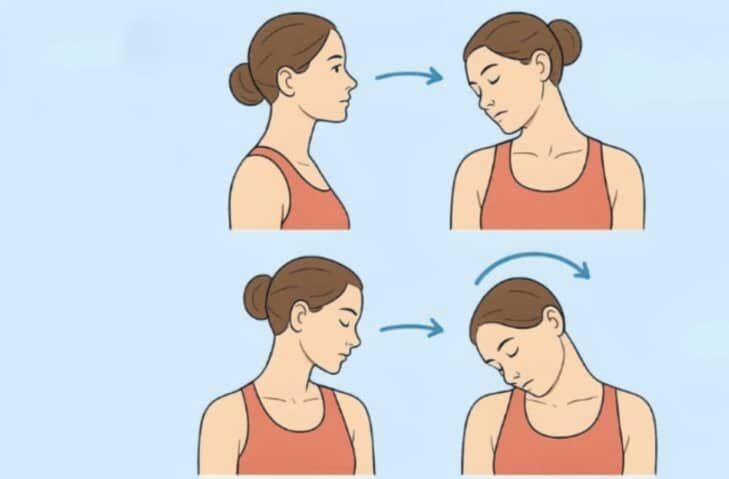
Minutes 2–4: Neck rolls and shoulder warm-up
Slowly drop the right ear toward the right shoulder. Hold 5 seconds. Return to centre. Left side. Then: roll both shoulders up toward the ears, hold 2 seconds, drop them completely. 5 rounds.
Follow with wrist circles: extend both arms in front, circle the wrists 10 times each direction.
Most seniors carry chronic tension in the neck and upper trapezius from years of sitting, driving, and sleeping on unsupportive pillows. This releases that tension before any spinal movement starts.
Minutes 4–6: Seated cat-cow
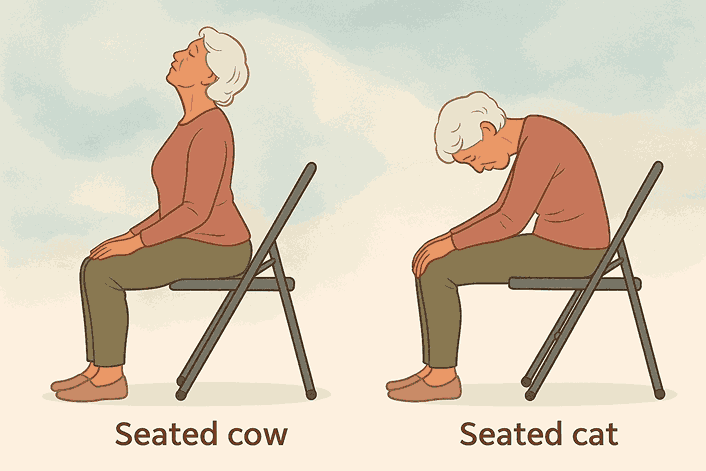
Hands on knees. Inhale and arch the spine: chest forward, tailbone back (Cow). Exhale and round the spine: chin to chest, back rounding (Cat). 10 slow rounds.
This is the most important single move in the daily chair yoga routine for seniors. It pumps fluid into the spinal discs, maintains range of motion in both flexion and extension, and directly counters the compression that builds overnight from sleeping in a static position.
Do it slowly. The slower the movement, the more the deep spinal muscles engage.
Minutes 6–8: Seated spinal twist
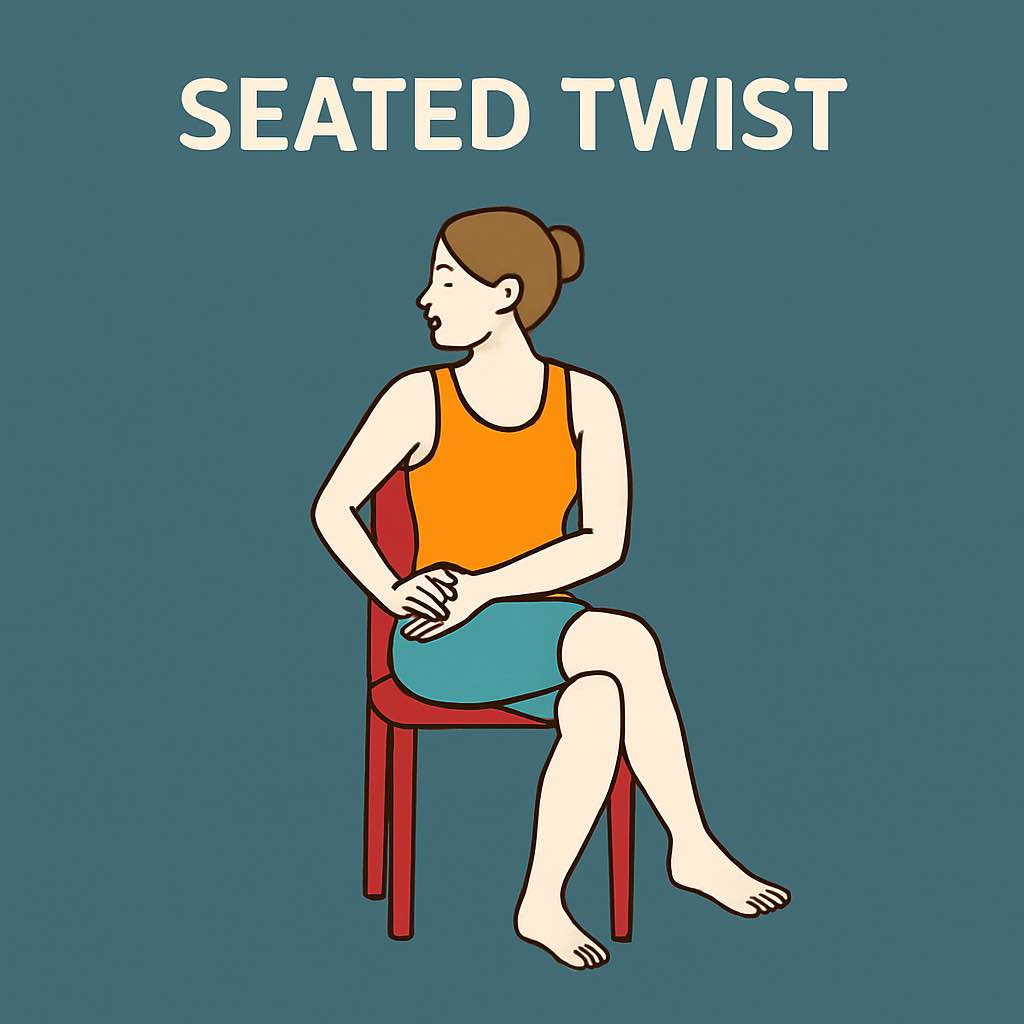
Sit tall, feet flat. Right hand on left knee, left hand on the back of the chair. Inhale to lengthen. Exhale and gently rotate left. Hold 20 seconds. Switch sides.
The spine is designed to rotate. Most seniors lose 30–40% of their rotational range by 70 without regular practice.
Every degree lost gets compensated for by extra stress on the lower back joints. This pose maintains it.
Move with the breath. On each exhale, feel the rotation open slightly. Never force it.
Minutes 8–10: Figure-four hip release
Cross one ankle over the opposite knee. Flex the foot. Sit tall and lean forward slightly from the hips until you feel a stretch deep in the outer hip. Hold 30 seconds. Switch sides.
Tight hip flexors from prolonged sitting are the most common underlying cause of lower back pain in seniors. This stretches the piriformis directly, which sits right next to the sciatic nerve. Most people feel it immediately.
If the stretch feels too intense, just rest the ankle on the knee without leaning forward.
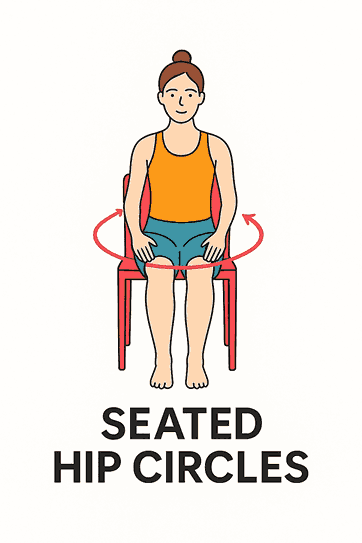
Minutes 10–11: Seated leg raises (core activation)
Sit tall, hands resting lightly on the chair sides. Slowly lift one knee, hold 3 seconds at the top, lower slowly. Alternate legs. 10 reps each side.
This targets the deep core muscles that support the spine. After the hip release, activating the hip flexors strengthens them at the range you just opened. That’s the progression: stretch, then strengthen.
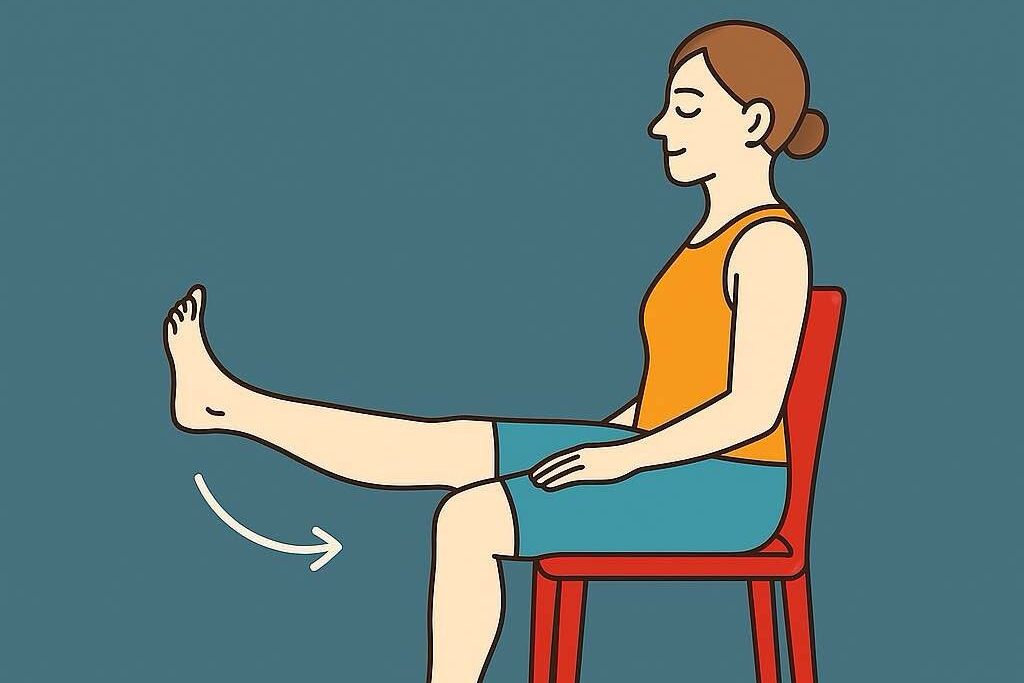
Minutes 11–13: Heel raises and ankle circles
Feet flat on the floor. Rise up onto your toes, hold 2 seconds, lower slowly. 15 reps. Then: lift one foot slightly and circle the ankle 10 times each direction. Switch feet.
Balance starts at the ankles. The proprioceptive nerves in the feet that tell the brain where the body is in space decline with age.
This directly retrains them. For fall prevention, ankle work matters more than almost any other exercise in this routine.
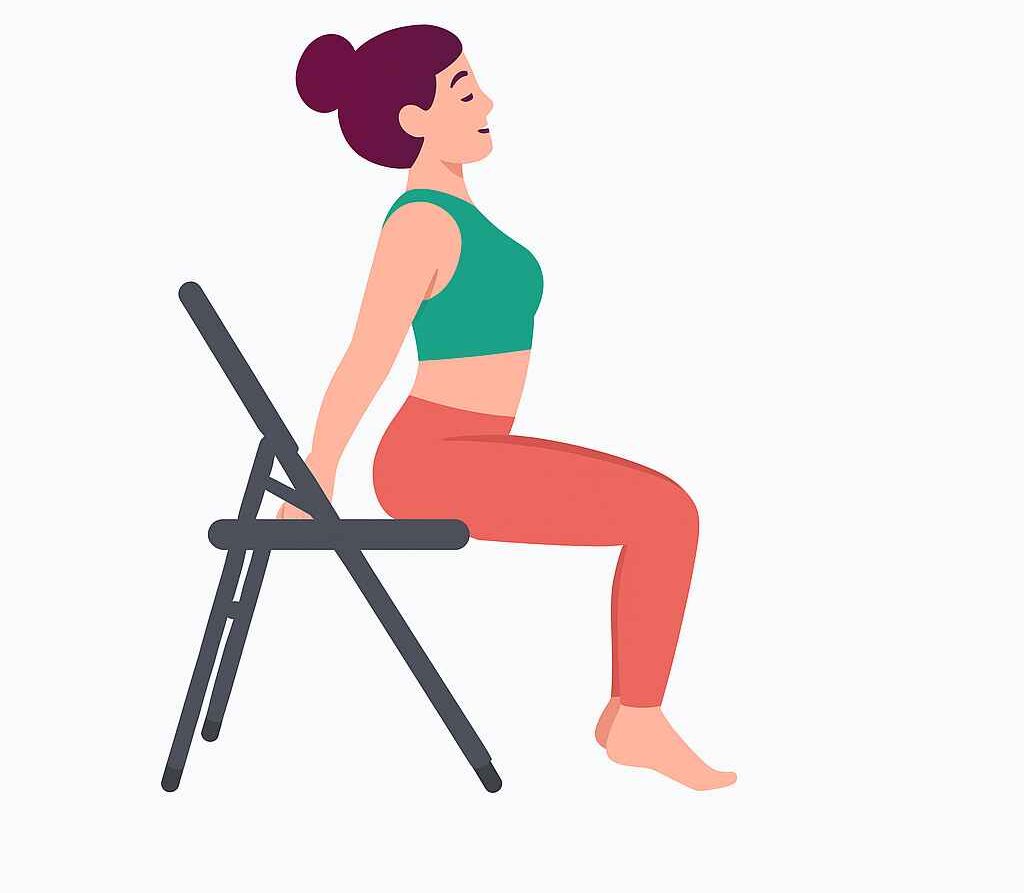
Minutes 13–14: Chair-supported balance hold
Stand behind the chair, hold the back lightly. Lift one foot just off the ground. Hold 10–20 seconds. Switch sides.
Progress over weeks: from 2 hands to 1 hand to fingertips to arms crossed at chest.
The CDC’s STEADI fall prevention programme includes this as a core assessment tool for older adults.
Skip this step if you feel unwell, dizzy, or if your balance is severely compromised. Start seated and come back to it.
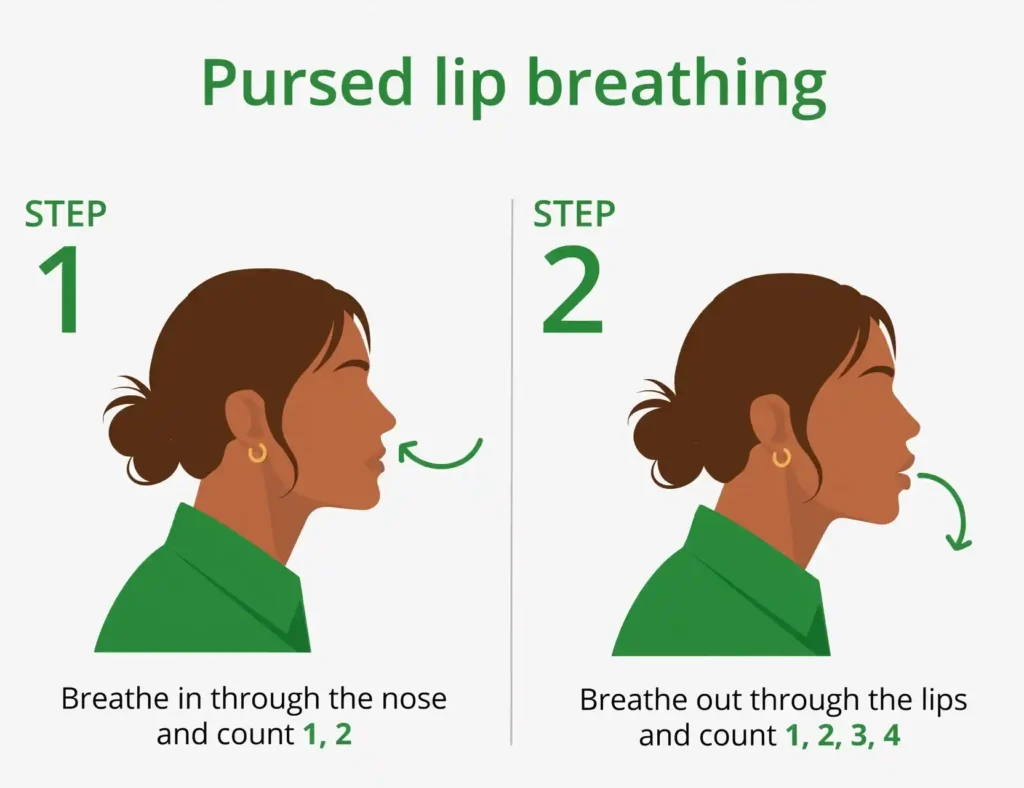
Minute 15: Closing breath
Sit back down. Eyes closed. Breathe in for 4 counts, out for 6. 5 rounds.
Ending with stillness trains the nervous system to shift back to rest after movement. It also gives you a moment to notice how your body feels compared to when you started. That awareness is what makes a routine sustainable.
Morning vs evening: which is better?
Morning is better for most seniors.
The body is stiffest after sleep. Joints have less synovial fluid in the morning. Moving through the daily chair yoga routine for seniors within 30 minutes of waking lubricates those joints before the day’s activity loads them.
It also anchors the habit more reliably. Morning routines are protected from the unpredictability of the day. Evening routines get crowded out by tiredness, visitors, and TV.
That said, if evening works better for you personally, do it then. Consistency at the time you’ll actually do it beats the theoretically optimal time you’ll skip.
A few seniors find combining both useful: the full 15-minute morning routine, plus just the breathing and cat-cow (3 minutes) before bed. That approach covers both the mobility benefits of morning movement and the parasympathetic wind-down before sleep.
How to build the habit
The research on habit formation points to one consistent finding: behaviour that follows an existing anchor sticks better than behaviour you try to add in isolation.
Pick an existing morning anchor. The kettle boiling. The coffee brewing. Brushing your teeth. Do your daily chair yoga routine for seniors immediately after that anchor, every day.
Keep the chair in a visible, accessible place. Not stored in a back room. In the kitchen or living room where you’ll see it.
Start with just the first 5 minutes of the routine for the first week. That’s breathing, neck rolls, and cat-cow. Build from there. A 5-minute routine done every day for 2 weeks is worth more than a 15-minute routine done twice.
Our free 28-day chair yoga challenge is a structured way to build this habit progressively. It takes the guesswork out of what to do each day and gradually adds complexity as your body adapts.
Adapting the routine for specific conditions
Back pain: Add the seated forward fold (hinge from hips, hold 45 seconds) between the spinal twist and the hip release. Remove it if any movement causes sharp pain. Our full chair yoga for lower back pain guide covers targeted modifications.
Arthritis: Move every joint through its range slowly at the start. Don’t skip the wrist circles or ankle rotations. Arthritis affects these joints first. Our chair yoga for health conditions page has specific arthritis adaptations.
Balance concerns: Skip the standing balance hold initially. Do all exercises seated. Add the standing hold once you’ve done the seated routine daily for 2 weeks. Our balance exercises for seniors guide covers progressive balance training in detail.
Very limited mobility: Start with just breathing and cat-cow. That’s 4 minutes. Do it for a week. Add one pose per week from the top of the list. The full routine can take a month to build up to. That’s fine.
How long before you feel a difference?
Most seniors notice reduced morning stiffness within 1–2 weeks of daily practice. Joint mobility improvements become measurable at 4–6 weeks. Meaningful balance improvements in research studies typically appear at 8–12 weeks.
The Journal of American Geriatrics Society study on chair yoga and older adults found significant reduction in pain interference and fatigue after 8 weeks, with improvements in gait speed. These are real-world functional outcomes, not just flexibility scores.
The catch: those benefits reversed within 3 months when participants stopped. This is why the daily habit matters more than the intensity of any single session.
FAQs for a daily chair yoga routine for seniors
How long should seniors do chair yoga each day?
15 minutes daily is the target in this guide. Research shows even 10 minutes daily produces measurable benefits in joint mobility, mood, and balance for seniors. More than 30 minutes is fine if you’re comfortable, but consistency at 15 minutes beats occasional longer sessions.
Is it safe to do chair yoga every day for seniors?
Yes. Chair yoga is gentle enough for daily practice. Unlike resistance training, which requires rest days for muscle recovery, gentle mobility and stretching work benefits from daily repetition. The nervous system and connective tissue respond to consistent gentle stimulation, not intermittent intense effort.
What is the best time of day for seniors to do chair yoga?
Morning, within 30 minutes of waking. The body is stiffest then and responds best to gentle movement. It also anchors the habit more reliably than evening sessions. If morning isn’t possible, any consistent time works.
Can this routine replace other exercise?
No. Chair yoga covers mobility, flexibility, balance, and gentle core strength.
It doesn’t replace cardiovascular exercise or resistance training if your doctor has recommended those. It complements them. Pair this routine with our tai chi walking guide for cardiovascular benefit on the same days.
What if I miss a day?
Start again the next day.
Missing one day doesn’t break a habit. Missing a week makes it harder to restart. When you break it, restart the same day you notice.
A printable version to keep visible
The best way to make this routine stick is to keep it somewhere you can see it.
Download our free printable chair yoga for seniors and tape it to the kitchen wall or the fridge. Having it on paper, at eye level, removes the friction of remembering what comes next.
Paper beats apps for most seniors in our audience. It’s there when your phone isn’t, doesn’t need charging, and doesn’t vibrate with notifications halfway through the cat-cow pose.
The daily chair yoga routine for seniors works because it’s designed to be done every day: short enough to actually do it, complete enough to cover what matters, and sequenced so each pose prepares you for the next.
15 minutes. Every morning. Start tomorrow.