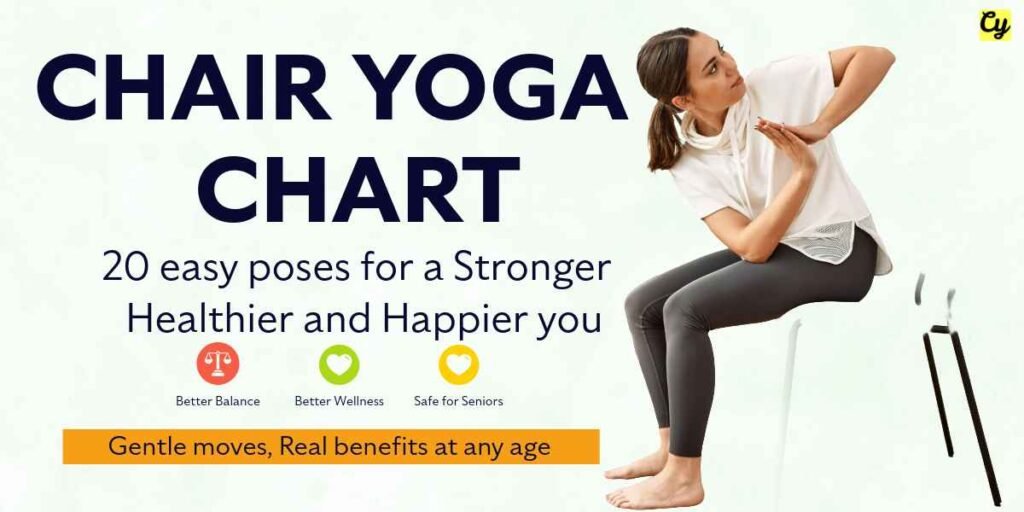
Chair yoga chart for seniors: 20 easy poses and what each one helps
You don’t need to remember 20 yoga poses. You need to know which movement to pick when your body asks for it. This chart puts the basics in one place, so you can look at your goal, choose a movement, and get started.
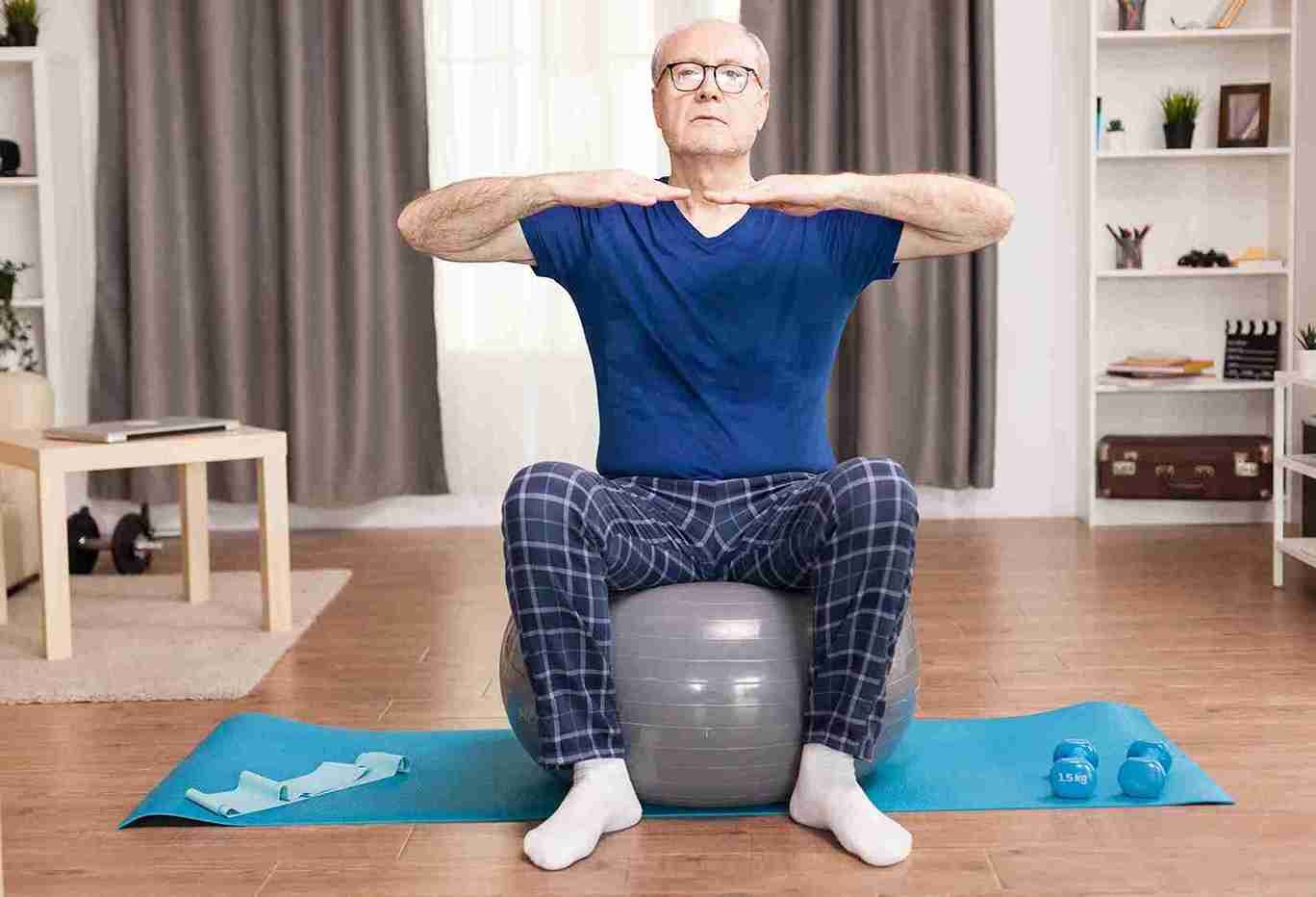
Chair yoga is seated yoga or yoga adapted with a chair for support. For older adults with limited mobility, people who feel unsteady standing, or anyone who prefers a gentler starting point, that matters. The National Center for Complementary and Integrative Health describes chair yoga as an especially gentle option for seniors with limited mobility.
The chair yoga chart
Save this section as your quick reference. The “helps with” column is a practical way to choose a movement, not a promise that one pose will treat a medical condition.
| Pose | Time / reps | Main focus | What it can help you practice | Easy cue |
|---|---|---|---|---|
| Seated mountain | 5 breaths | Posture | Upright sitting, breathing awareness | Feet flat, crown tall |
| Shoulder rolls | 6–10 | Shoulders | Upper-body mobility | Up, back, down |
| Neck turns | 3/side | Neck | Comfortable head turning | Look gently |
| Seated cat-cow | 6–10 | Spine | Spinal movement and posture | Arch gently, then round |
| Side stretch | 3 breaths/side | Side body | Trunk flexibility | Reach up, lean softly |
| Seated twist | 3 breaths/side | Trunk | Gentle rotation | Grow tall first |
| Forward hinge | 3 breaths | Hips/back | Hip movement and reach | Hinge from hips |
| Knee lift | 6–10/side | Hips/core | Leg movement and control | Lift, pause, lower |
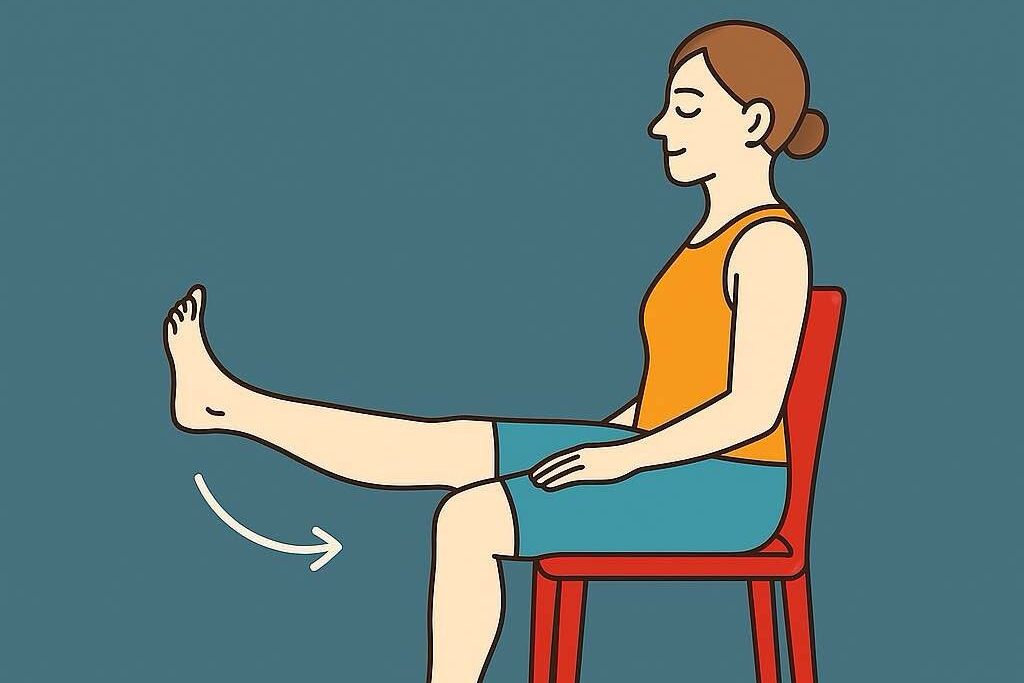
| Leg extension | 8–10/side | Thighs | Leg strength | Slow out, slow back |
| Heel raises | 10–15 | Calves | Lower-leg strength and ankle movement | Lift heels slowly |
| Toe raises | 10–15 | Shins/ankles | Ankle control | Heels stay down |
| Ankle circles | 5/side | Ankles | Ankle mobility | Small circles |
| Seated marching | 30–60 sec | Legs | Rhythm and hip movement | Alternate knees |
| Arm reach | 5/side | Upper body | Reach and shoulder mobility | Stay comfortable |
| Chest opener | 5 breaths | Chest/shoulders | Posture awareness | Open gently |
| Wrist circles | 5/side | Wrists | Hand and wrist mobility | Small circles |
| Weight shift | 5/side | Balance | Controlled weight transfer | Shift, return center |
| Seated figure-four | 20–30 sec/side | Hips | Hip flexibility | Keep foot comfortable |
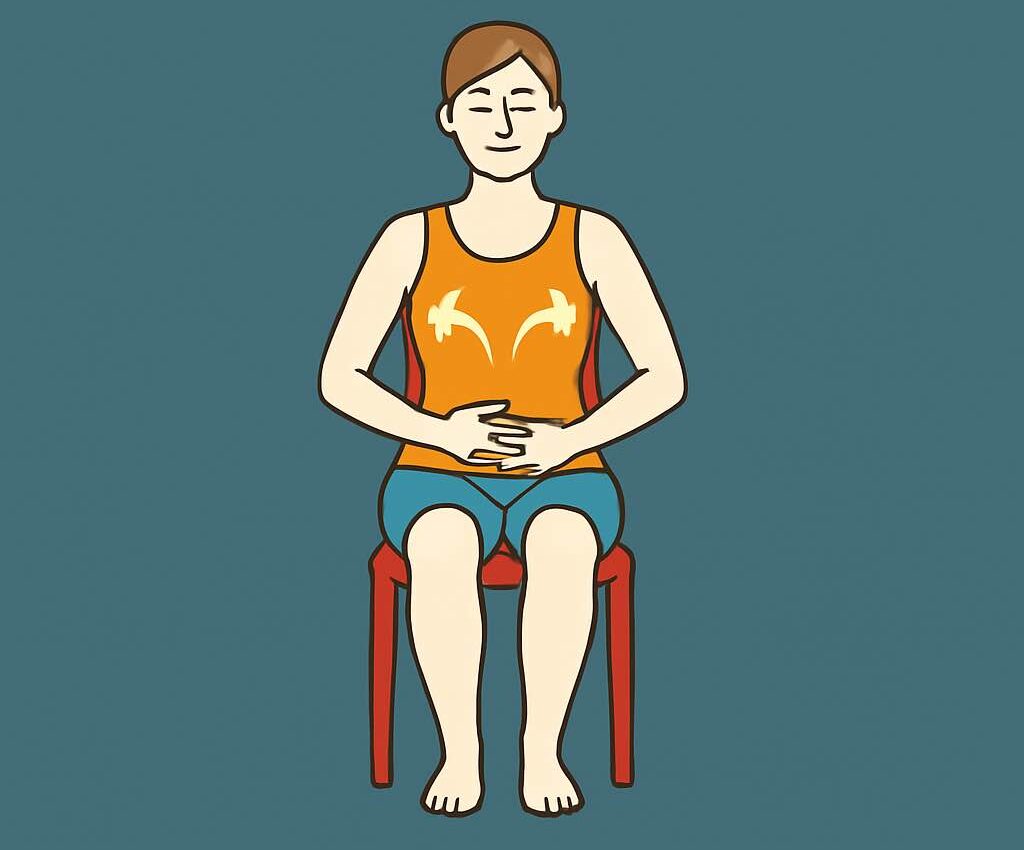
| Seated relaxation | 1–2 min | Recovery | Slow breathing and awareness | Soften shoulders |
| Chair-supported stand | 3–8 reps | Function | Getting up and sitting down | Control the descent |
These are chair-yoga adaptations and practical movement drills, not a medical prescription.
What can chair yoga help seniors work on?
Chair yoga isn’t a magic fix for aging. It is a way to keep moving when getting onto a floor, standing for a long time, or doing a fast workout doesn’t make sense.
The research on yoga in older adults is encouraging. A 2023 systematic review and meta-analysis of 15 studies found significant improvements in balance, flexibility, muscle strength, and depressive symptoms among older adults participating in yoga programs, although the studies varied in design. Read the PubMed review.
Another systematic review of randomized trials found benefits for balance, lower-body flexibility, lower-limb strength, sleep quality, vitality, and some measures of perceived physical and mental health when yoga was compared with control conditions in older adults. See the full PubMed review.
Chair yoga has also been studied directly. A randomized trial involving 131 community-dwelling older adults with lower-extremity osteoarthritis who could not participate in standing exercise studied a twice-weekly chair-yoga program for 8 weeks. Read the chair-yoga trial on PubMed.
Flexibility
Joints tend to feel better when you keep moving them through comfortable ranges. Chair yoga gives you chances to rotate the spine gently, move the shoulders, open the hips, point and flex the ankles, and stretch the sides of the body. See our 10-pose chair yoga sequence for seniors.
Balance and body control
Sitting removes much of the fall risk that comes with standing exercise, while movements such as seated weight shifts, marching, reaching, and controlled leg lifts still ask you to manage your body position. The CDC recommends that adults 65 and older include balance activities each week. See CDC guidance for older adults.
Leg strength
Chair yoga can include knee extensions, marching, heel raises, and controlled stand-and-sit practice. These movements let you practice muscles used for walking, stairs, and getting up from a chair. See our chair exercises for seniors.
Posture
Sitting for long periods can leave you folded forward. Seated mountain, chest opening, cat-cow, gentle twists, and shoulder rolls give you repeated practice finding a comfortable upright position.
Mobility for everyday tasks
Think about what you actually do during the day: reaching into a cupboard, turning to look behind you, lifting a foot over a doorstep, getting dressed, or standing up. Those tasks need movement, not a perfect yoga pose.
Relaxation and stress management
Slow breathing and deliberate movement can give you a few quiet minutes. Evidence for yoga and psychological outcomes varies, so relaxation is best treated as one part of a routine rather than a promise to treat anxiety or depression. Read NCCIH’s research summary.
Confidence with movement
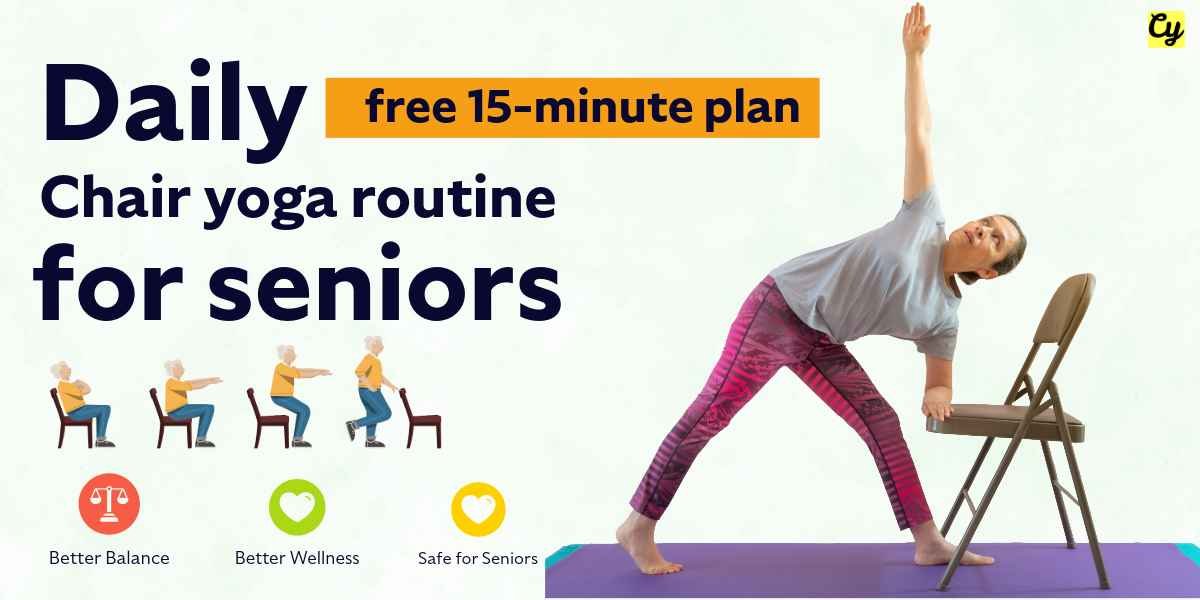
Confidence grows when a movement becomes familiar. Five controlled knee extensions every morning can be more useful than trying to remember 20 exercises once a month. Our 15-minute daily chair yoga routine is built around that repeatable approach.
20 chair yoga poses, explained simply
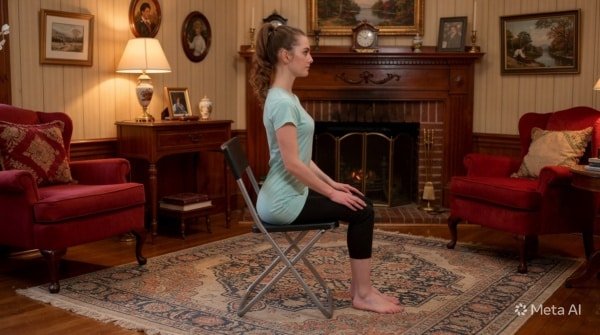
1. Seated mountain
Sit tall with both feet supported. Hands rest on your thighs. Take 5 slow breaths and notice whether your shoulders can soften while your spine stays upright.
2. Shoulder rolls
Lift the shoulders gently, move them back, then lower them. Repeat 6–10 times. Reverse direction if comfortable.
3. Gentle neck turns
Look slowly right, return to center, then left. Keep the movement small. Skip neck circles if they make you dizzy.
4. Seated cat-cow
Hands on thighs. Inhale and gently lift the chest. Exhale and round the spine. Move through a comfortable range.
5. Seated side stretch
Place one hand on the chair. Reach the opposite arm upward and lean gently to the side. Take 2–3 comfortable breaths, then switch.
6. Seated spinal twist
Sit tall before turning. Rotate gently toward one side without forcing the movement. Return to center and switch.
7. Seated forward hinge
Keep your feet planted. Hinge from the hips and lean forward only as far as comfortable. Come back up slowly.
8. Seated knee lift
Lift one knee a few inches, pause, then lower it. Alternate for 6–10 repetitions.
9. Seated leg extension
Straighten one knee without locking it hard. Hold briefly and lower slowly. Repeat 8–10 times per side.
10. Heel raises
Keep toes on the floor and lift your heels. Lower them slowly. Try 10–15 repetitions.
11. Toe raises
Keep heels down and lift the front of your feet. Lower with control. Repeat 10–15 times.
12. Ankle circles
Lift one foot slightly if comfortable and make 5 small circles in each direction. Switch sides.
13. Seated marching
Alternate knee lifts at a comfortable pace for 30–60 seconds. Keep your torso steady.
14. Arm reach
Reach one arm forward and slightly upward. Bring it back and switch sides. Stay within a comfortable shoulder range.
15. Chest opener
Draw the shoulders gently back and take 3–5 breaths. Don’t force your lower back into an arch.
16. Wrist circles
Hold your hands in front and make small wrist circles. Change direction after 5 repetitions.
17. Seated weight shift
With both feet supported, shift your trunk slightly to one side and return to center. Repeat on the other side.
18. Seated figure-four
If your hips allow it, place one ankle over the opposite thigh. Sit tall and keep the position gentle. Skip it if it irritates your hip or knee.
19. Seated relaxation
Rest your hands on your thighs. Let your shoulders settle and take 5–10 slow breaths.
20. Chair-supported stand practice
Use a stable chair only as appropriate and clear the floor. Practice standing and sitting with control rather than speed. Get professional guidance first if you have significant balance problems.
Small chair yoga routine picker
Pick what you want to work on and how much time you have. The tool gives you a simple starting routine. It doesn’t diagnose problems or replace a personalized exercise plan.
A simple 15-minute chair yoga chart routine
If you don’t want to use the picker, use this routine. Keep the pace comfortable and rest whenever you need it.
For printable resources, see our chair yoga PDF guide and free printable chair yoga exercises.
How to use the chart through the week
You don’t have to do every pose every day. A simple weekly pattern is easier to remember.
- Monday: mobility and posture
- Tuesday: legs and functional strength
- Wednesday: mobility and breathing
- Thursday: balance-focused seated work
- Friday: full 15-minute routine
- Saturday: gentle stretching and relaxation
- Sunday: favorite short routine or rest
The CDC recommends that adults 65 and older include aerobic activity, muscle-strengthening activity on at least 2 days each week, and balance activities. Chair yoga can cover some movement needs, but a chair routine alone shouldn’t be treated as a complete replacement for all forms of physical activity. Read the CDC recommendations.
For a structured habit, use our 21-day chair yoga challenge.
Chair yoga safety for seniors
- Use a sturdy chair on a firm, level surface.
- Keep the area around your feet clear.
- Use footwear that feels secure for you.
- Keep the range of motion small when trying a new pose.
- Don’t hold your breath.
- Stop a movement that causes sharp or worsening pain.
- If you feel dizzy or faint, stop and sit quietly.
- Ask a healthcare professional about exercise changes after surgery or with a significant medical condition.
NCCIH recommends safety-first yoga for older adults and says people with medical issues should talk with their healthcare providers and yoga teachers before beginning yoga. Read NCCIH’s safety guidance.
If your chair itself is unstable, fix that before exercising. A wobbly chair has no place in a senior exercise routine.
What if you have back pain, arthritis, or limited mobility?
This is where the chart becomes useful. You can shrink the movement instead of abandoning the whole routine.
With back discomfort, start with breathing, posture, small cat-cow movements, and gentle leg or ankle work. Skip any movement that increases pain. Our printable chair yoga resources give you a simpler routine to follow.
With arthritis, warm up slowly. Move affected joints through a comfortable range rather than forcing a full stretch. A systematic review examined yoga for pain, physical function and quality of life in older adults with chronic musculoskeletal conditions, with results varying by condition and study. Read the review on PubMed.
With limited mobility, start with 5 minutes. Seated breathing, shoulder rolls, ankle circles, and a few comfortable leg movements are enough for a first session. Our 7-minute chair yoga routine is another starting point.
Chair yoga chart FAQs
What is the best chair yoga exercise for seniors?
There isn’t one best pose for everyone. Seated mountain is a simple starting point because it teaches posture and breathing. Then add movements for your goal, such as leg extensions for leg strength or side stretches for mobility.
How long should seniors do chair yoga?
Start with 5–10 minutes if you’re new. If that feels comfortable, work toward a longer routine such as 15 minutes. Your ability and health matter more than hitting a fixed number.
Can chair yoga improve balance?
Chair yoga gives you seated practice with posture, weight shifting, coordination and controlled movement. Research on yoga in older adults has found balance improvements, but many studies use broader yoga programs rather than this exact chart.
Can I do chair yoga every day?
Many people can fit gentle chair-based movement into a daily routine. Keep sessions comfortable, vary the intensity, and rest when needed. If you have a medical condition or injury, ask your healthcare professional about frequency.
Is chair yoga good for flexibility?
It can help you practice comfortable joint movement and stretching. A 2023 systematic review found significant improvements in flexibility across the included yoga studies in older adults, though the programs varied.
Does chair yoga count as exercise?
Yes. Chair yoga is physical activity. For overall health, older adults still need a mix of aerobic, muscle-strengthening and balance activities each week.
Keep the chart somewhere you’ll see it
A chair yoga chart works best when you actually use it.
Print it. Save it on your tablet. Put a copy near the chair you use every morning.
Then make the first session small.
Five minutes. Feet supported. A few slow movements.
Tomorrow, do it again.
When you’re ready for a complete routine, visit ChairYoga.blog or start with our 15-minute daily chair yoga routine for seniors.
Research and medical sources
- NCCIH: Yoga for Health
- CDC: What Counts as Physical Activity for Older Adults
- CDC: Older Adult Activity Guidelines
- PubMed: Yoga and physical/psychological health in community-dwelling older adults
- PubMed: Yoga, physical function and quality of life in older adults
- PubMed: Chair yoga trial in older adults with osteoarthritis
- PubMed: Yoga for chronic musculoskeletal conditions in older adults
Medical disclaimer: ChairYoga.blog provides general educational information. It isn’t medical advice, diagnosis, or treatment. Always consult a qualified healthcare professional before starting a new exercise routine, especially after surgery or when you have a medical condition, significant balance problems, or new pain.