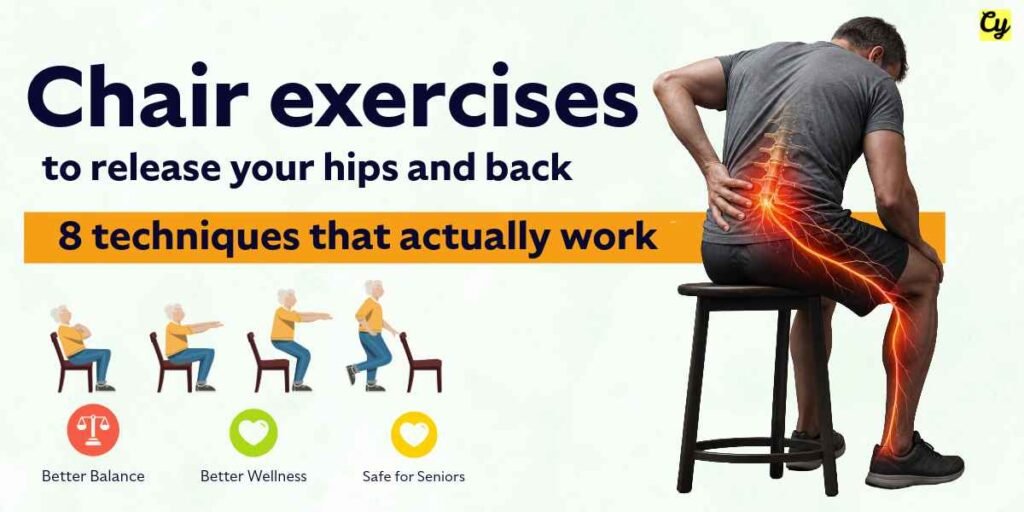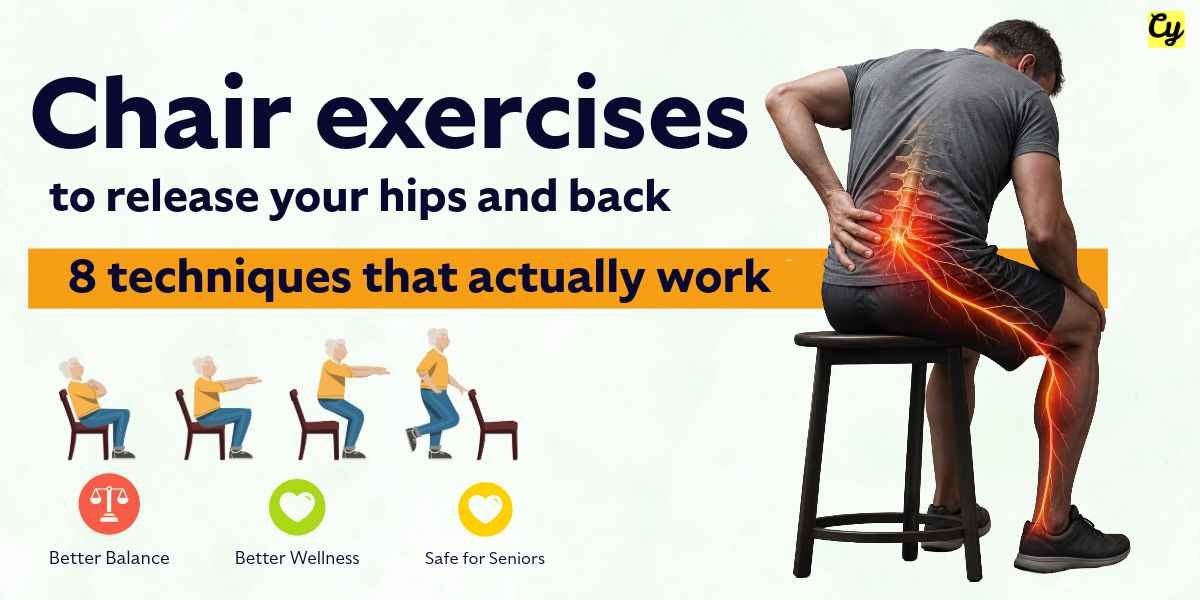
Most lower back pain in seniors doesn’t start in the back. It starts in the hips. Here’s the chain. You sit for several hours a day: watching TV, reading, driving, and eating. The hip flexor muscles stay shortened the entire time.
These chair exercises to release your hips and back take 12 minutes and need nothing but a sturdy chair.
After months and years of this, they stop returning to their full length. When you stand, they pull the front of the pelvis downward. That tips the pelvis forward and compresses the lumbar vertebrae, and that compression becomes pain.
A 2024 study published in BMC Public Health tracked 33,402 adults over nearly 8 years. People who sat more than 6 hours a day were 33% more likely to develop chronic back pain. Six hours is easy to hit before dinner.
You can reverse most of this from a chair. The 10 exercises below release the hip flexors, strengthen the glutes that tend to switch off with prolonged sitting, and restore the spinal movement your back needs.
Table of Contents
Why hips and back pain are connected
Harvard Health puts it plainly: sitting for long periods causes the hip flexors to tighten and shorten. Because these muscles attach to the pelvis and lower back, that tightness makes it harder to rotate the pelvis and contributes directly to back pain.
The Cooper Institute adds the mechanical detail: tight hip flexors create an anterior pull on the pelvis (anterior pelvic tilt), which alters posture and switches off the gluteus maximus. Tight hips turn off your glutes. Weak glutes make your lower back carry work it shouldn’t. That’s the cycle.
Chair exercises to release your hips and back break it from both ends: stretching what’s tight and activating what’s switched off.
Before you start chair exercises to release your hips and back
All the chair exercises to release your hips and back in this guide follow the same setup.
Use a sturdy chair with no wheels. Sit toward the front edge of the seat for most of these. It gives your hips more room to move. Move slowly. These are releases, not workouts.
Hold each stretch for at least 20 seconds. That’s the minimum time for the nervous system to release muscle tension. Under 10 seconds doesn’t do much.
10 chair exercises to release your hips and back
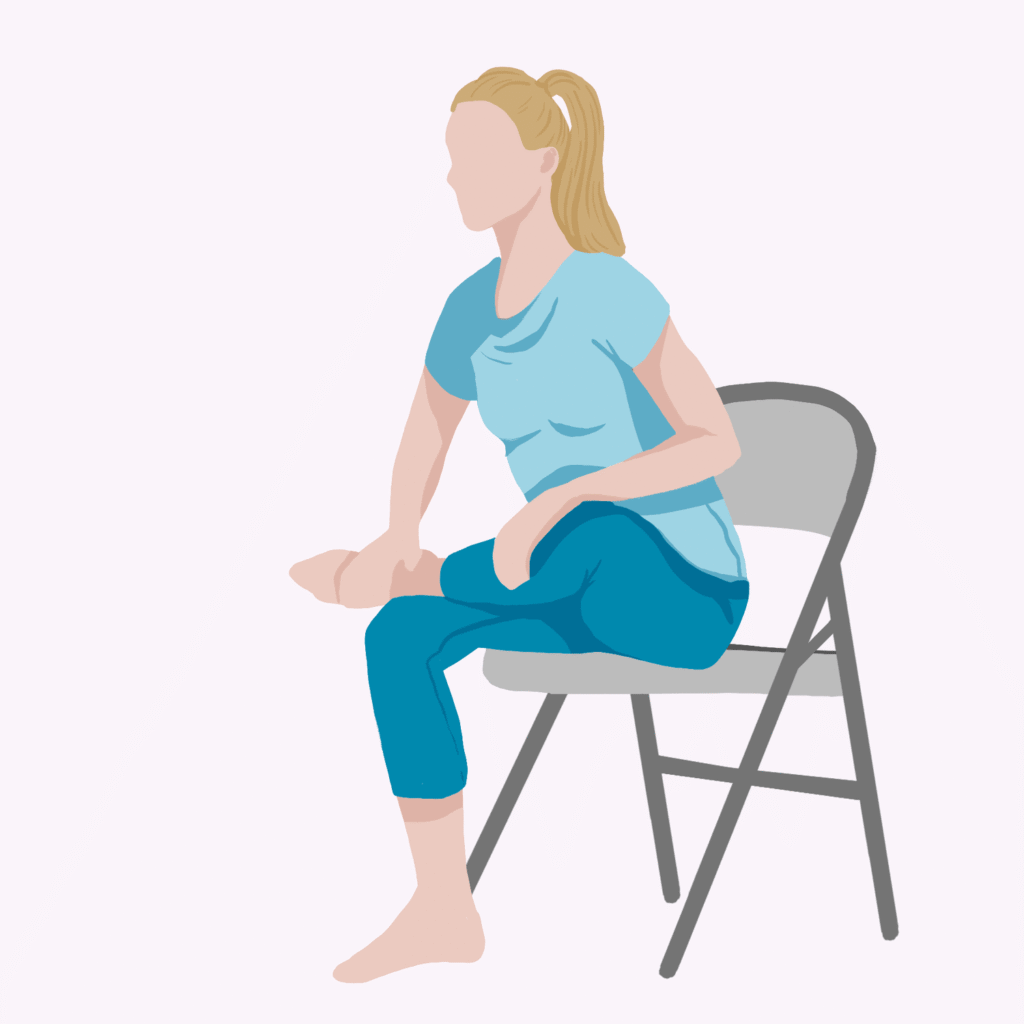
1. Figure-four hip release (Chair Pigeon)
Cross one ankle over the opposite knee. Flex the foot (pull toes toward your shin). Sit tall and slowly lean forward from the hips until you feel a stretch deep in the outer hip and glute. Hold 30 seconds. Switch sides.
This targets the piriformis directly. The piriformis sits right next to the sciatic nerve and is the most common driver of hip-related back pain in seniors. Most people feel it within 5 seconds of sinking into the stretch.
Progression: Press gently down on the bent knee to deepen it. Hold and breathe; don’t force.
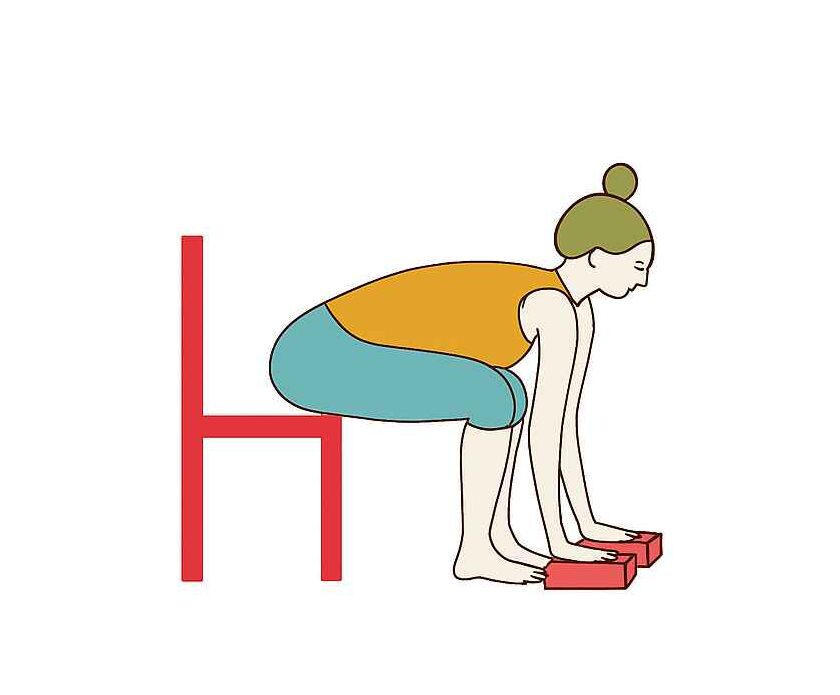
2. Seated forward fold
Sit at the edge of the chair, feet hip-width apart. Hinge forward from the hips and let your hands slide toward the floor. Let the head drop. Hold 30 seconds.
This decompresses the lumbar spine. The discs get slightly more space when you fold forward. If your back feels locked after hours of sitting, start here.
Don’t round from the mid-back. The movement comes from the hips hinging, not the spine curling.
3. Seated spinal twist
Sit tall, feet flat. Place your right hand on your left knee and your left hand on the back of the chair. Inhale to lengthen. Exhale and gently rotate left. Hold 20 seconds. Switch sides.
The lumbar spine has very limited natural rotation, only about 5 degrees per level. The thoracic spine (mid-back) is built for it, and most seniors have lost most of that range. This twist restores it without stressing the lumbar joints.
The exhale does most of the work. Breathe out a little deeper each rep and feel the rotation open up naturally.
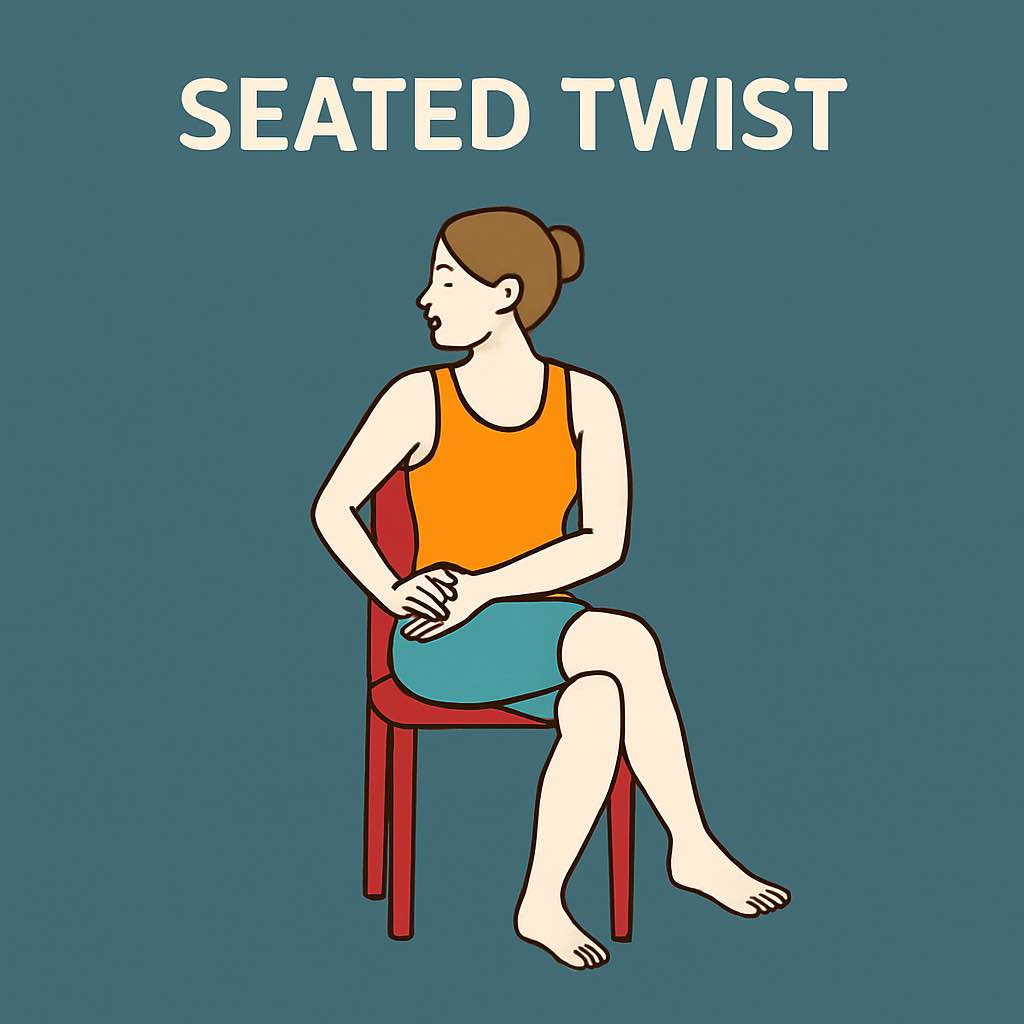
4. Hip circles
Sit at the edge of the chair, hands on knees. Slowly circle the hips in a smooth Rotation: forward, right, back, and left. 10 circles each direction.
The hip joint is a ball-and-socket designed for full circular movement. Most people only move it forward and back (walking) and never in circles. Hip circles lubricate the joint, mobilize the hip capsule, and reduce the stiffness that builds up over hours of sitting.
Start small. The circles get bigger as the joint loosens.
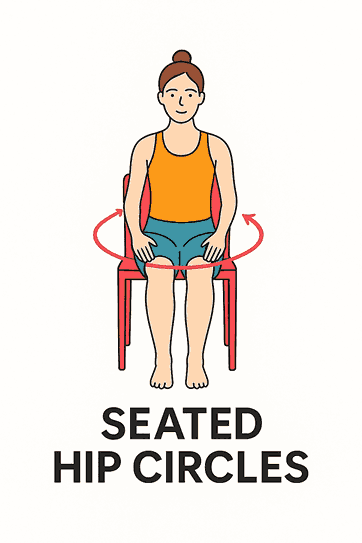
5. Seated butterfly stretch
Sit at the edge of the chair, bring the soles of your feet together, and let your knees fall out to the sides. Hold your feet or ankles. Sit tall and gently lean forward. Hold 30 seconds.
This works both the hip flexors and adductors simultaneously. It loosens the groin, hips, and inner thighs, which all tighten together with prolonged sitting.
For very tight inner thighs, just letting the knees fall open without leaning forward is enough to start. This is one of the most effective chair exercises to release your hips and back for seniors with tight inner thighs.
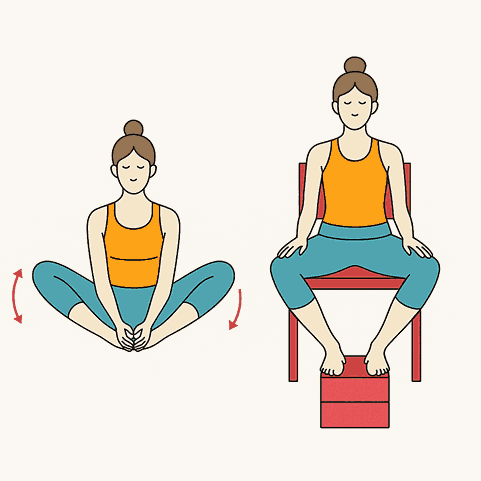
6. Knee-to-chest pull
Sit tall, feet flat. Lift one knee and clasp both hands under the shin. Gently pull the knee toward your chest. Hold 20 seconds. Switch sides.
This stretches the gluteus maximus and releases the sacroiliac joint, which is the joint between the lower spine and the pelvis. It causes a surprising amount of back pain in older adults and responds well to this kind of direct release.
Variation: Rock the knee gently side to side while holding it for a small rotational release.
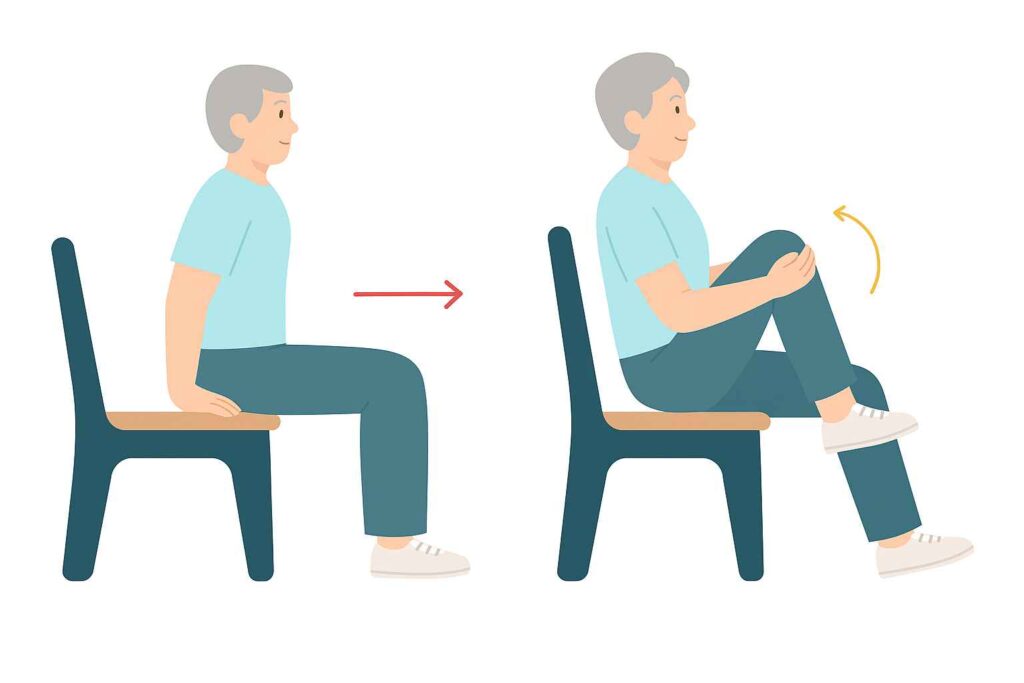
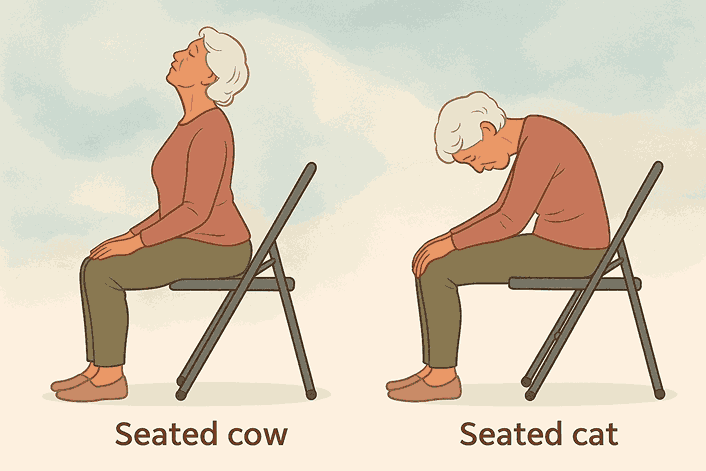
7. Seated cat-cow
Sit tall, hands on knees. Inhale and arch the spine: chest forward, tailbone back, gaze slightly up (Cow). Exhale and round the spine: chin to chest, back rounding outward (Cat). 10 slow rounds.
This is the most evidence-backed movement for spinal health. It pumps nutrient-rich fluid into the spinal discs, maintains range of motion in both flexion and extension, and directly counters the static compression from prolonged sitting.
Do this every morning before standing. 10 rounds takes under 90 seconds.
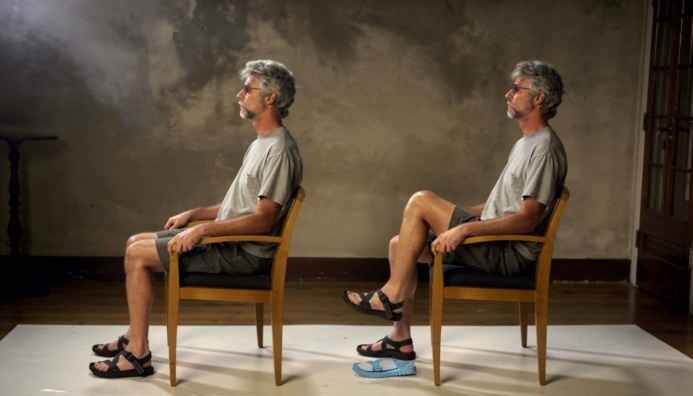
8. Seated marching (hip flexor activation)
Sit tall, hands resting lightly on the chair sides. Slowly lift one knee, hold for 2 seconds at the top, and lower slowly. Alternate 15 reps each side.
Hip flexors need length AND strength. This seems contradictory after stretching them, but More Life Health notes that the seated hip flexion exercise strengthens the hips and thighs, supports walking, and reduces fall risk by training safe stepping movements.
Go slow. The slower the movement, the more the deep stabilizing muscles engage.
9. Seated glute squeeze
Sit upright, feet flat, hands on thighs. Squeeze both glutes as hard as you can. Hold 10 seconds. Release completely. 15 reps.
Tight hip flexors directly inhibit the gluteus maximus. That means your glutes are almost certainly weaker than they should be if you sit a lot. Squeezing them reactivates the neural connection.
It looks like nothing from the outside. It’s one of the most important exercises on this list.
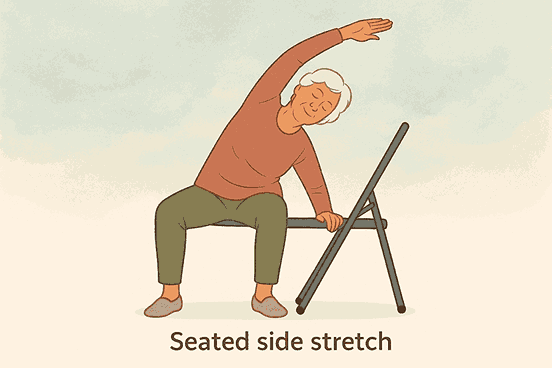
10. Seated side bend
Sit tall, feet flat. Raise the right arm overhead and slowly lean to the left, feeling a stretch down the right side of the torso and hip. Hold 20 seconds. Switch sides.
The quadratus lumborum is the deep muscle that runs along the side of the lower spine. It’s a major contributor to lower back pain and almost always tight on one side.
This stretch targets it directly. Most people notice they’re significantly tighter on one side. That asymmetry is usually the source of one-sided back pain.
Your daily routine: 12 minutes
Do this every morning before standing. The body is stiffest first thing. Done consistently, these chair exercises to release your hips and
back produces noticeable results within 2 weeks.
Minutes 1 to 3:
- Seated cat-cow: 10 slow rounds
- Hip circles: 10 each direction
Minutes 3 to 7:
- Figure-four hip release: 45 seconds each side
- Seated butterfly: 30 seconds
- Knee-to-chest pull: 30 seconds each side
Minutes 7 to 10:
- Seated forward fold: 45 seconds
- Seated spinal twist: 30 seconds each side
- Seated side bend: 20 seconds each side
Minutes 10 to 12:
- Seated marching: 15 reps each side
- Seated glute squeeze: 15 reps
How this fits into your chair yoga practice
These chair exercises to release your hips and back work as a natural warm-up before any chair yoga session. They open the hip joints and spine before you move into held poses.
If back pain is your main concern, our chair yoga for back pain guide covers 9 poses that target the structural causes of lower back pain in seniors specifically.
Tight hips also disrupt gait and increase fall risk. Our balance exercises for seniors guide build directly on the hip strength you’re developing here.
For a full structured program, the free 28-day chair yoga challenge incorporates hip-release work from week one.
FAQ’s for Chair exercises to release your hips and back
How long does it take for chair exercises to release tight hips?
Most people doing chair exercises to release their hips and back feel a reduction in tightness within 1 to 2 weeks.
Why do hips hurt after sitting for a long time?
Sitting keeps the iliopsoas muscle, the largest hip flexor, in a shortened position. Over time it adapts and stops returning to full length.
When you stand, it pulls on the pelvis and spine. Kettering Health describes it clearly: prolonged sitting contracts the iliopsoas, which then pulls on the spine and pelvis when you move.
Can chair exercises really help lower back pain?
For the most common type in seniors, the kind caused by prolonged sitting, tight hip flexors, and weak glutes: yes. The exercises here target all 3 causes directly. For structural issues like spinal stenosis or herniated discs, these exercises are still useful but should sit alongside medical treatment.
How often should seniors do hip release exercises?
Daily if possible. The hip flexors shorten every day you sit for hours, so daily release counteracts that daily shortening. 3 times a week produces measurable improvement. Twice a week is maintenance at best.
Which exercise is best for lower back pain from sitting?
Seated cat-cow for immediate relief. It decompresses the spine and moves the joints in both directions.
A figure four for hip tightness is driving most of the pain. Seated glute squeeze for the underlying weakness. All 3 together cover the full problem.
One thing to do today
Sit at the edge of your chair right now and do the figure-four stretch. Cross one ankle over the opposite knee. Flex the foot. Sit tall. Hold 30 seconds each side. That one stretch, done daily, addresses the most common source of hip-driven back pain in seniors.
Do it every time you sit down to watch TV. You’ll feel the difference within a week. Download our free printable chair yoga for seniors to keep the full routine somewhere visible. Paper on the fridge beats a bookmark you never open.