
A wheelchair is a chair, and chairs are our specialty. If you or someone you care about rolls rather than walks, the exercise advice online gets thin fast: “try some stretches” from blogs written by moving companies, or gym-equipment pages pitching machines that cost thousands. Meanwhile the bodies in those wheelchairs are quietly losing the strength that transfers, pressure relief, and independence depend on.
Here’s the fix: 10 wheelchair exercises for seniors with exact reps, a weekly plan, safety notes that take wheelchairs seriously, and a printable chart at the end. No equipment required to start. Nothing here needs a gym.
Table of Contents
Why seated strength training matters (and does work)
The CDC’s physical activity guidelines for older adults call for muscle-strengthening work at least 2 days a week. Wheelchair users are no exception; the research picture and the day-to-day payoffs agree. Strong arms make transfers safer. Strong posture makes breathing and digestion easier. Strong legs (yes, even when they don’t currently support standing) protect balance, keep circulation moving, and preserve the option of standing transfers later.
And the practice itself carries real flexibility benefits: seated training meets the body where it is. Severity, age, and years in the chair change the starting point, never the destination logic.
Safety setup (read before move number 1)
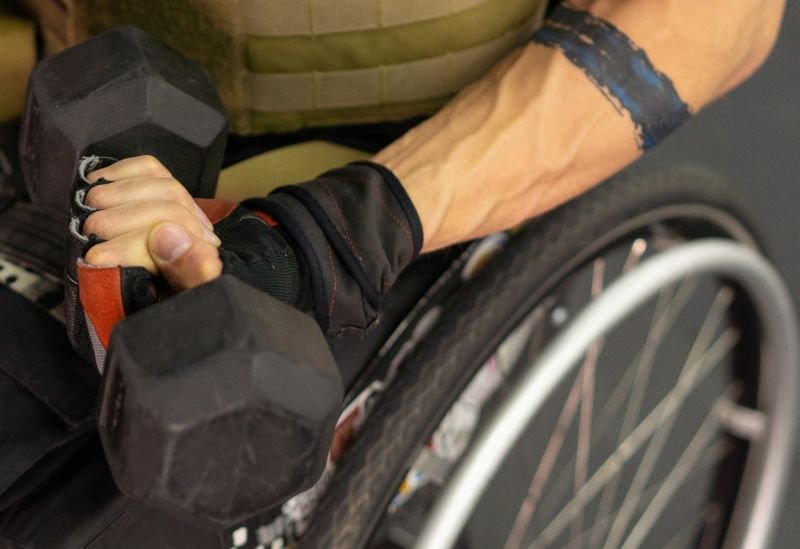
- Lock the brakes. Every session, every time. A rolling chair turns a simple exercise into an accident.
- Sit toward the front half of the seat, feet supported where possible, spine tall but not braced.
- Expect sensation to lead. Reduced feeling below the injury line (or below the stroke, or below the neuropathy) means hands and feet need visual checks during and after exercise. Skin care rules the wheelchair world; never trade it for a rep count.
- Doctor first for recent surgery, pressure wounds, heart conditions, osteoporosis, or a stroke within the last 6 months. Then start.
The moves: upper body (posture, transfers, pushing)
Do these slowly, with a pause at the effort peak. Speed adds nothing. Quiet focus adds plenty.
1. Shoulder blade squeezes (posture insurance)
Sit tall. Bend your elbows at your sides, forearms forward. Pull both elbows back and squeeze your shoulder blades together like you’re holding a pencil between them. Hold 2 seconds. Release. Reps: 10. Rest. Repeat once more. Why it earns the top slot: rounded posture is the default trap of wheelchair life, and it drags breathing and shoulder pain along with it.
2. Armrest push-ups (pressure relief + triceps)
Hands flat on the armrests (or the seat edge beside your hips). Press down through the palms and lift your hips a centimeter or two off the seat. Lower with control. Reps: 5 lifts per set, up to 3 sets a day. Bonus: this is the exact motion that relieves pressure at every repositioning reminder. It’s exercise and skincare in the same rep.
3. Bicep curls (anything works as a weight)
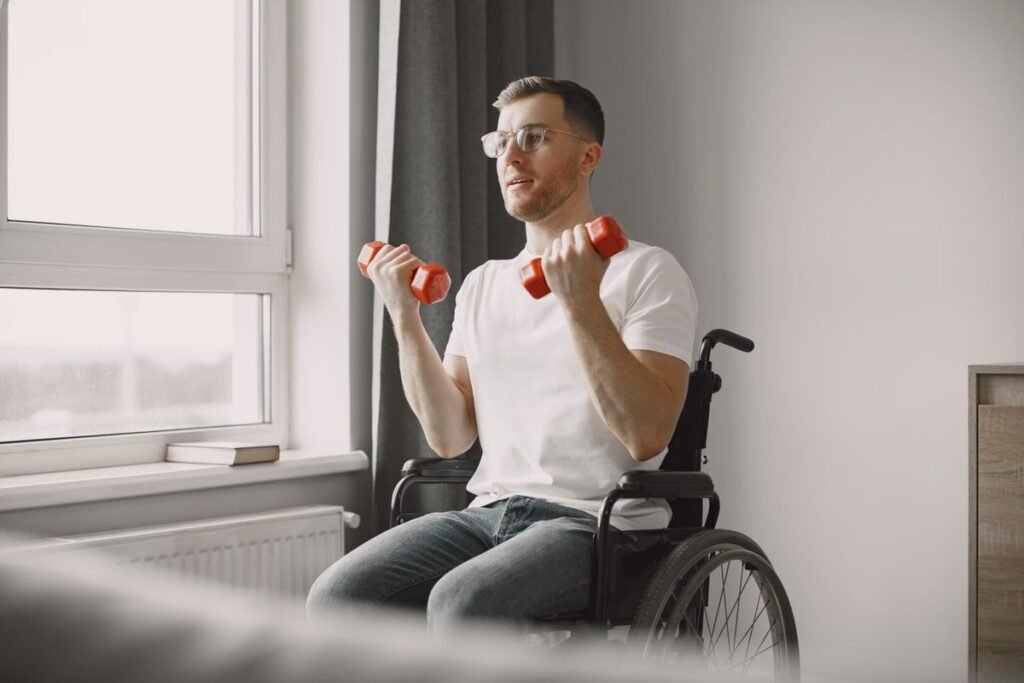
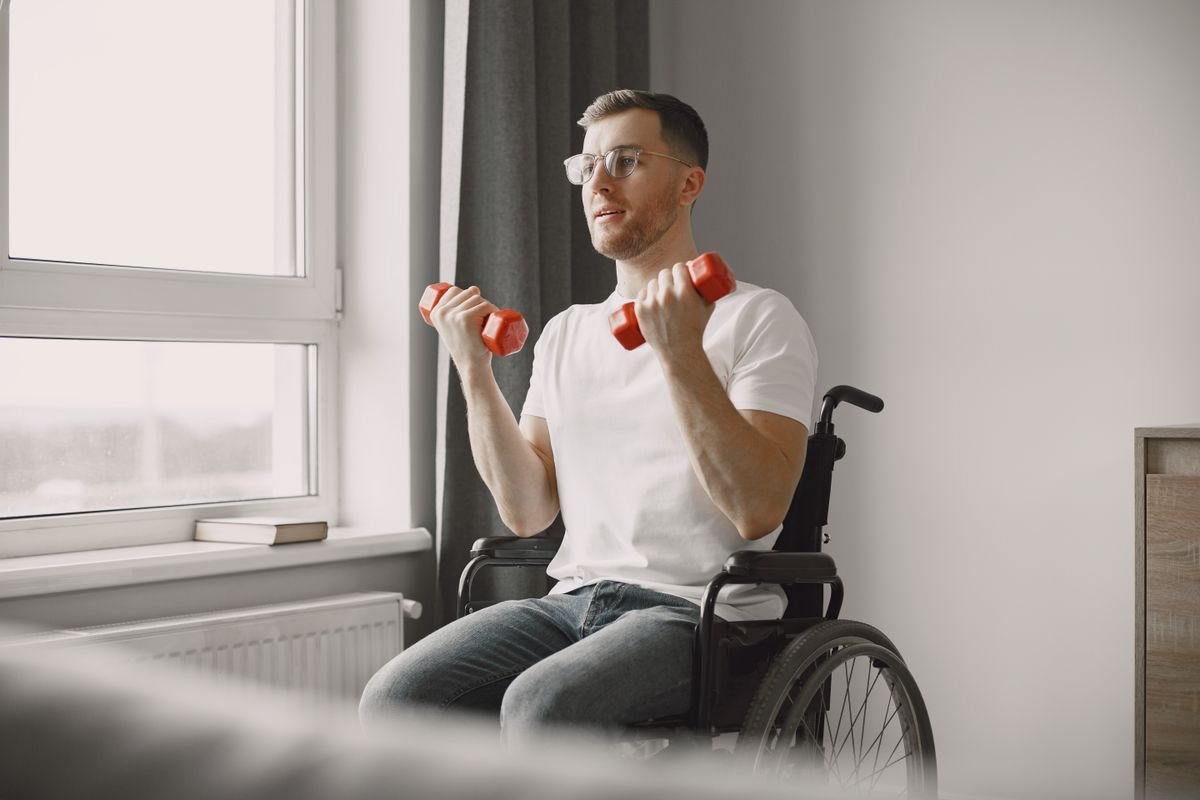
Water bottles, soup cans, or a light resistance band. Elbows pinned to your ribs, palms up, curl toward the shoulder and lower for a 3-second count. Reps: 8-12, twice. Progression tip: when the last 2 reps feel easy, add a little water to the bottles. That’s a real progressive overload plan for the price of a straw.

4. Chest press with a band (pushing power)
Wrap a resistance band around the back of the chair at shoulder height (or behind your shoulder blades). Hold both ends, hands at 90 degrees, extend straight ahead without locking the elbows. Return slow. Reps: 10, twice.
5. Seated punches (the cardio borrow)
Arms up in guard position, punch straight ahead left, right, left. Keep the pace conversational. Time: 30-60 seconds of punches between strength moves doubles as the aerobic dose, and it’s the base of “chair cardio” routines everywhere.
The moves: legs, core, and circulation
Even when legs don’t support standing work, loaded movement keeps them in the game: circulation, joint range, transfer strength, and the muscle that makes sit-to-stand possible if that’s in your future.
6. Seated marching (hips and core)
Grip the seat edges for balance. Lift your right knee as high as comfortable, lower. Left knee. Keep it marching. Reps: 10 per side. Make it harder: pause 2 seconds at the top of each lift.
7. Knee extensions (front-of-thigh strength)
Straighten one leg out in front of you until it’s level (or as far as comfortable), squeeze the thigh, hold 2 seconds, lower slowly. Reps: 8-10 per leg.
8. Heel and toe raises (circulation’s quiet hero)
Feet flat. Lift heels, hold 2 seconds. Then heels down and lift toes. Reps: 10 to 15 of each. This one fights calf-pump stagnation and the swelling that long seated hours invite.
9. Seated twists (core, reach range)
Arms bent at 90 degrees, forearms forward. Rotate your torso right as far as comfortable, keeping hips planted. Center. Twist left. Reps: 8 per side. Real-life translation: this is the exact rotation of turning to grab the laundry basket or the phone charger.
10. Side bends (spine mobility)
Left arm up alongside your ear. Bend right, making a gentle C with your torso, hold 5 seconds. Come back to center. Switch sides. Reps: 3 per side to finish any session.
The weekly plan (put the chart on the fridge)
Three short sessions beat one heroic one. The CDC’s older-adult guidance lands on strength work 2+ days weekly; this schedule doubles as that minimum with rest days built in.
| Day | Session | What to do | Time |
|---|---|---|---|
| Mon | Strength A | Moves 1-4, 2 rounds each | 12 min |
| Tue | Easy day | 1 min of seated punches + toe and heel raises | 5 min |
| Wed | Strength B | Moves 5-7, 2 rounds each | 12 min |
| Thu | Rest | Skin checks, hydration, nothing on the chart | 0 |
| Fri | Strength C | Moves 3, 6, 8, 9, then punches 3 x 30 sec | 15 min |
| Sat | Fun day | Anything that feels like play: chair yoga lanes, tai chi arms | 10 min |
| Sun | Rest | 0 |
The printable chart
Copy this table into any document app, set it to landscape, and print:
| Exercise | Reps per round | Rounds |
|---|---|---|
| Shoulder blade squeezes | 10 | 2 |
| Armrest push-ups | 5 | up to 3 per day |
| Bicep curls | 8-12 | 2 |
| Chest press | 10 | 2 |
| Seated punches | 30-60 sec | 1-3 |
| Seated marching | 10 per side | 1-2 |
| Knee extensions | 8-10 per leg | 1-2 |
| Heel and toe raises | 10-15 each | 2 |
| Seated twists | 8 per side | 1 |
| Side bends | 3 per side | 1 |
A word on dementia and care-home settings
Many of these searches come from family members or care staff, and the routine changes there: simpler cues, shorter sessions, fewer choices. What survives contact with dementia is repetition with a familiar shape: the same 3 or 4 moves, same order, same music, same time of day. Counting out loud helps most people stay engaged. Watch for mood over intensity; in this group, exercise is a energy and circulation tool as much as a strength tool, and 6 gentle minutes daily beats 20 minutes twice a week.
Equipment, honestly
- Nothing: the whole program above runs on body weight and water bottles.
- A resistance band ($5-10): opens up chest press, band pull-aparts, and progression lanes for every arm move. The single best equipment purchase here.
- Light dumbbells or ankle weights: nice, optional, later.
- Seated strength machines (care facilities): real and useful in professional settings, but no home senior needs a quote for pneumatic resistance equipment to get stronger. Start with soup cans.
A note for the chair yoga readers
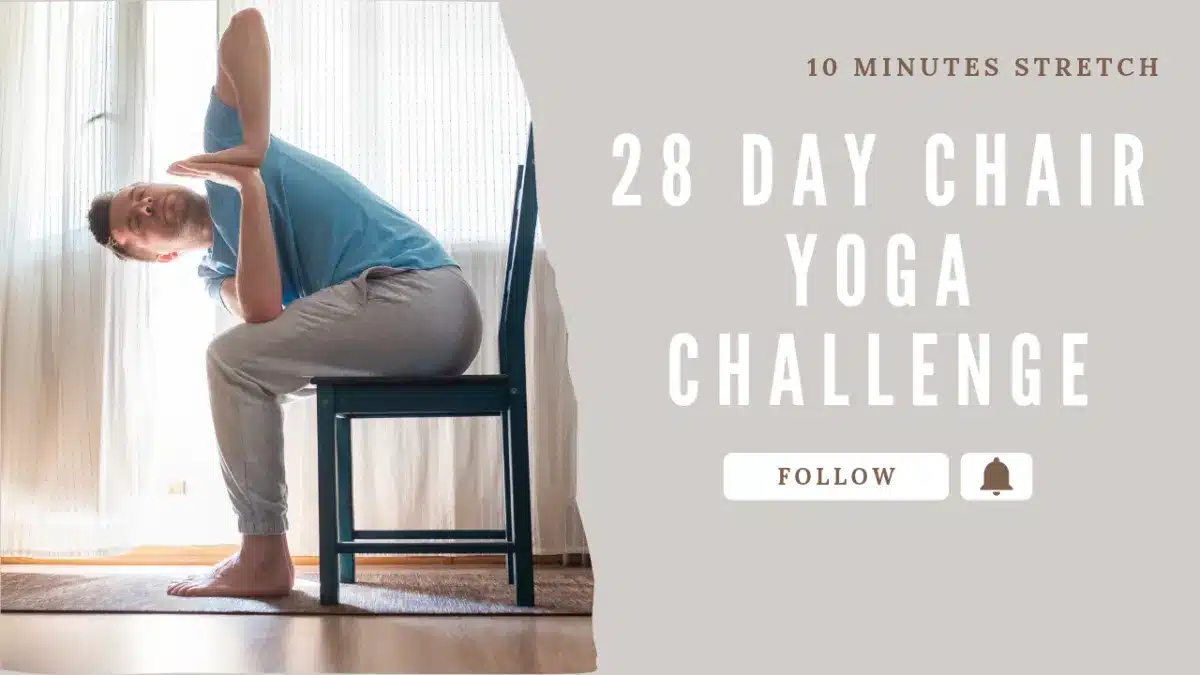
If standing transfers are in the future, everything above prepares the legs and arms for them. And for readers who already know our site: chair yoga and the tai chi chair program layer breathing, balance drills, and mindful movement on top of exactly this strength base. Strong first, flowing second. Our tai chi chair exercises and the seniors pillar chair yoga for seniors slot in once the weekly chart feels easy.
Frequently asked questions
Can seniors in wheelchairs build muscle with exercise? Yes. Muscles respond to loaded movement at any age and from any starting point, and seated bands, light weights, or armrest presses supply the load. Progress shows up first in daily tasks: easier transfers, easier reaching, less fatigue.
What exercises can a senior do in a wheelchair? The full menu above: shoulder blade squeezes, armrest push-ups, bicep curls, chest press, seated punches, seated marching, knee extensions, heel and toe raises, seated twists, and side bends. Ten covers arms, legs, core, and circulation with no equipment required to start.
How do you strengthen legs for wheelchair users? Loaded leg work done seated: knee extensions, seated marching with pauses, heel and toe raises, and sit-to-stand practice where a transfer surface is available and safe. Leg strength transfers directly into easier standing transfers and safer pivots, when standing is a goal.
How often should wheelchair exercises be done? Strength sessions 2-3 days a week with a rest day between, plus gentle daily movement (heel and toe raises, punches) makes the practical formula. The weekly plan above runs on that rhythm.
Are wheelchair exercises safe for someone with dementia? Yes, adapted. Shorten sessions, repeat a small set in a fixed order, use the same time and music daily, and count out loud together. The goal shifts toward circulation, mood, and engagement, and 6 gentle daily minutes does that job well.
Do you need equipment for wheelchair exercise? No. Body weight, armrests, water bottles, and soup cans cover all 10 moves. A 5-dollar resistance band is the one purchase worth making, and it powers the chest press plus progression on every arm exercise.
Wheelchair exercises or chair yoga: which should come first? Strength first if the person is brand new or recovering from a long sedentary stretch; the 10 moves build the base. Chair yoga layers breathing, balance, and mindfulness on top, and the two combine easily once the weekly chart feels light. Neither replaces medical clearance; both welcome it.
Key takeaways
- Wheelchair exercise is real strength training, and the evidence-backed minimum is 2 days a week of loaded movement.
- 10 moves cover everything: arms, legs, core, circulation, and pressure relief.
- Exact reps beat vague instructions. The chart removes all guessing.
- Dementia-friendly versions trade variety for repetition, and that’s a feature.
- Cost of entry: soup cans. Anything else is optional.
Final thought
Strength in a wheelchair isn’t a physiotherapy formality: it’s the difference between self-propelled days and dependent ones, between skin that survives and wounds that don’t. Ten moves, twelve minutes, three days a week. Start with just the shoulder blade squeezes tonight; that’s how every lasting routine begins.
This article shares general wellness information, not medical advice. Talk to your doctor or physiotherapist before starting wheelchair exercises, especially after surgery, with pressure wounds, heart conditions, osteoporosis, or a recent stroke.