
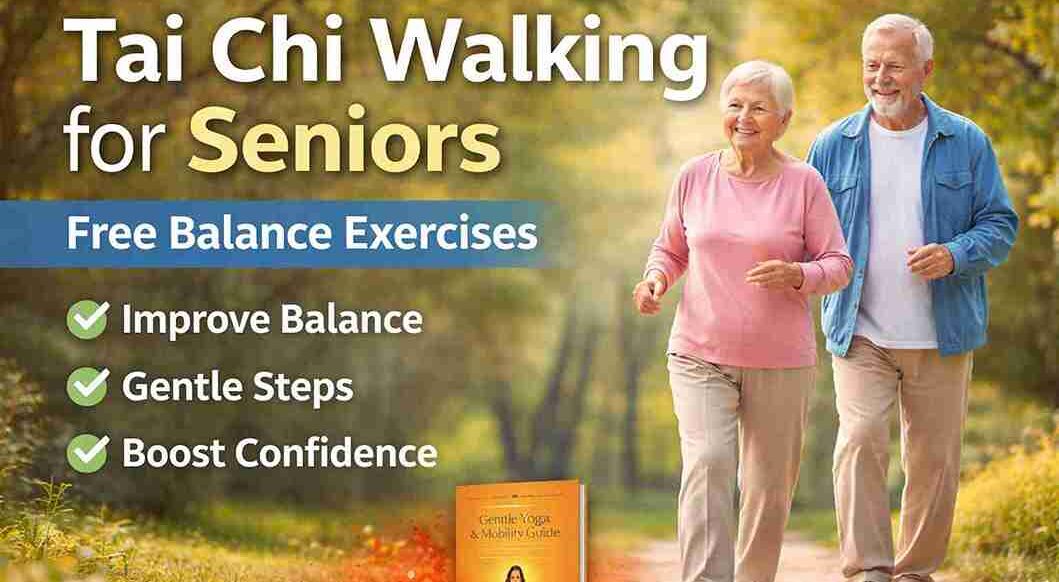
Tai Chi Walking for Seniors Free: 7 Gentle Steps + Avoid These Balance Mistakes. Tai Chi Walking for Seniors (Free, Safe & Easy to Follow)
If you’re searching for tai chi walking for seniors free, you’re likely looking for something that is:
- Gentle on the joints
- Safe for balance
- Easy to learn
- Possible to do at home
- Not stressful or exhausting
Tai chi walking is one of the best low-impact movement practices for seniors.
It’s slow, controlled, and designed to improve balance, confidence, and daily mobility.
This guide explains how to do tai chi walking for seniors, completely free, with simple steps anyone can follow.
Table of Contents
What Is Tai Chi Walking?
Tai chi walking is a slow, mindful way of walking that comes from traditional Tai Chi practice.
Unlike regular walking:
- Steps are slow and controlled
- Weight shifts are deliberate
- Movements are smooth
- Breathing stays calm
It’s not about distance or speed; it’s about control and balance.
Tai Chi Walking for Seniors: Step-by-Step (Free Guide)
⚠️ Always practice near a wall or chair if balance is a concern.
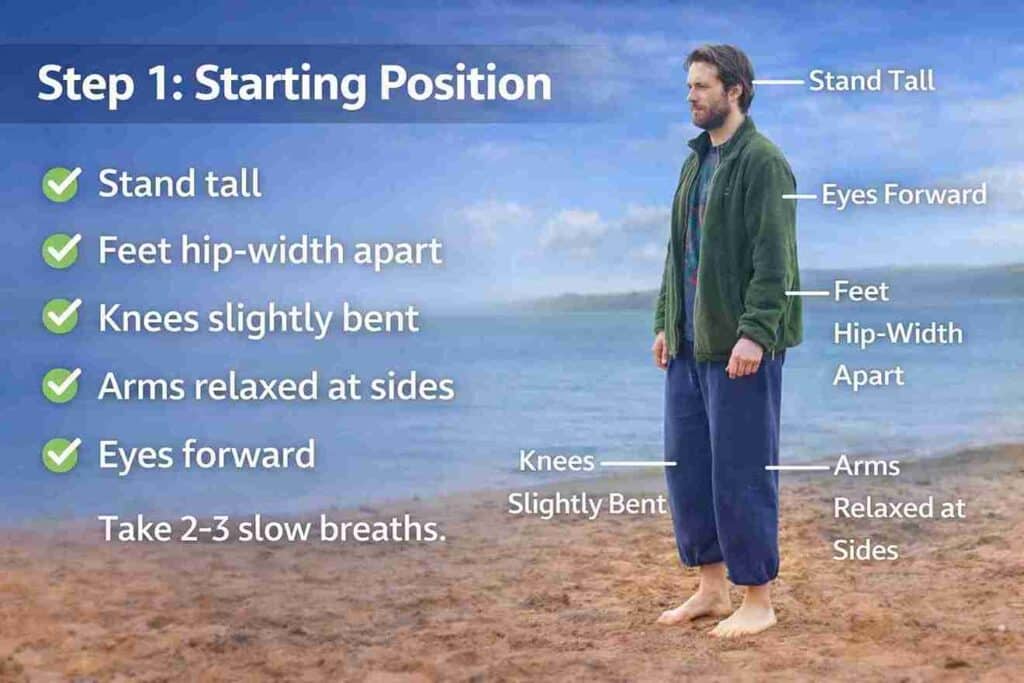
Step 1: Starting Position
- Stand tall
- Feet hip-width apart
- Knees slightly bent
- Arms relaxed at sides
- Eyes forward
Take 2–3 slow breaths.
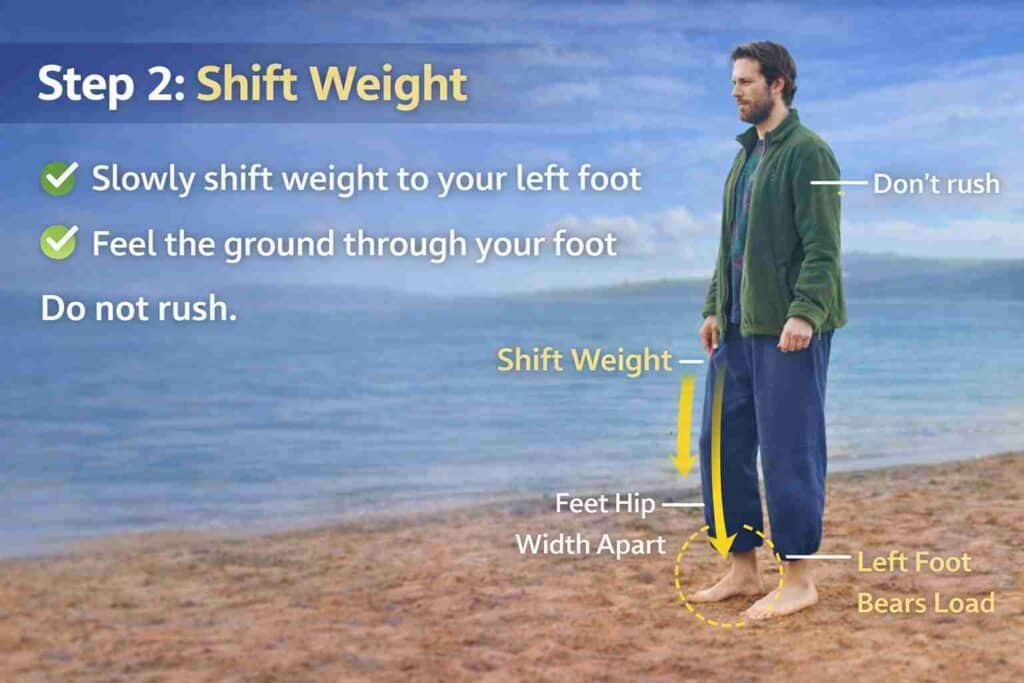
Step 2: Shift Weight
- Slowly shift weight to your left foot
- Feel the ground through your foot
Do not rush.
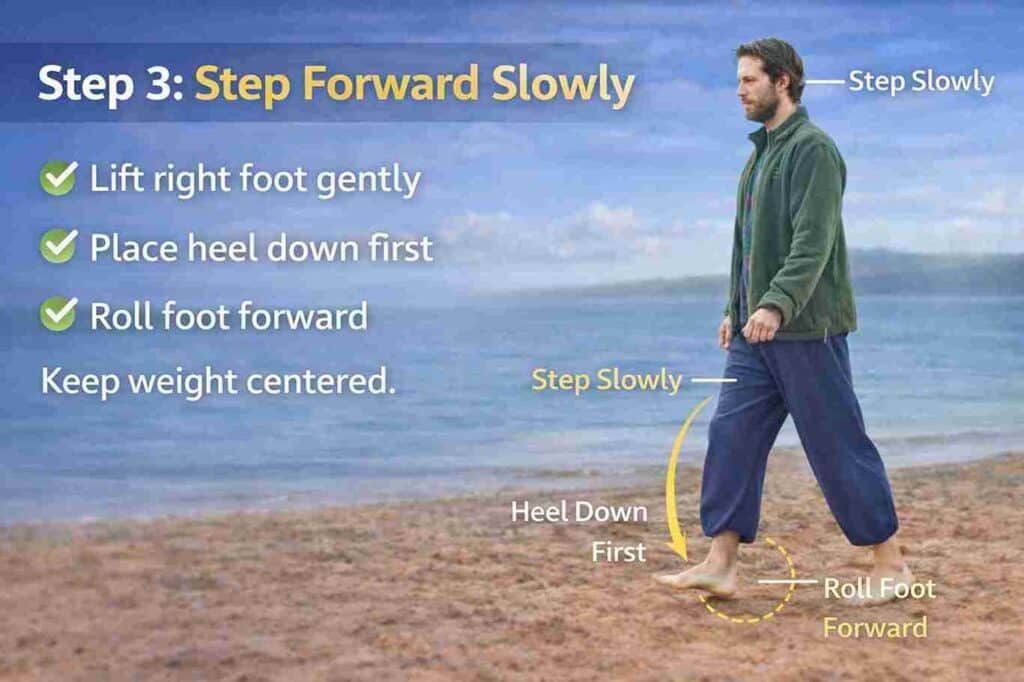
Step 3: Step Forward Slowly
- Lift right foot gently
- Place heel down first
- Roll foot forward
- Keep weight centered
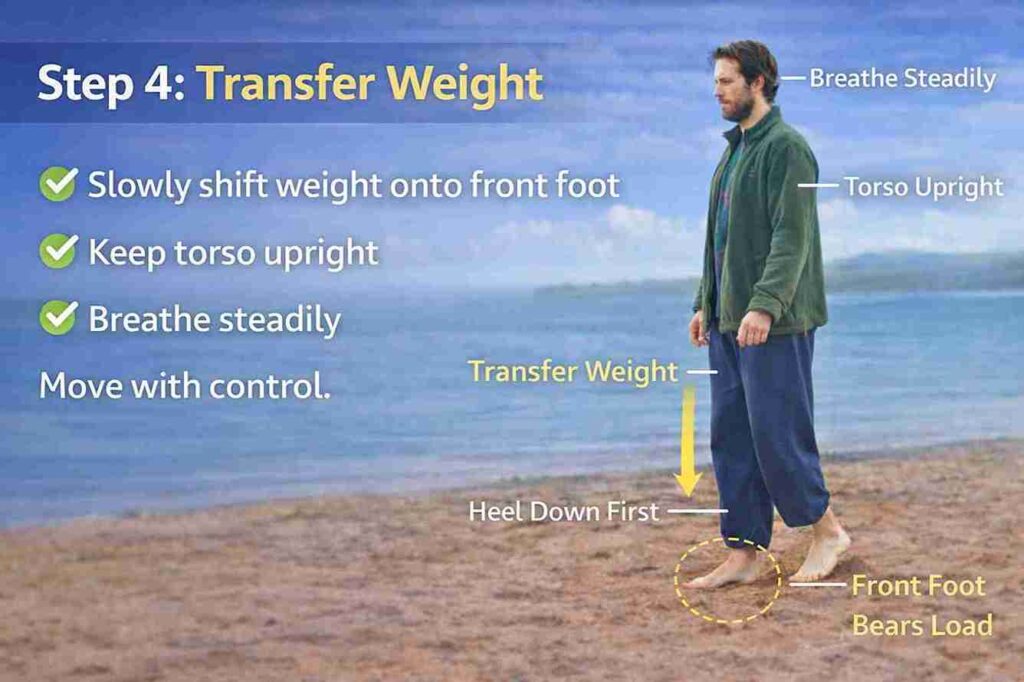
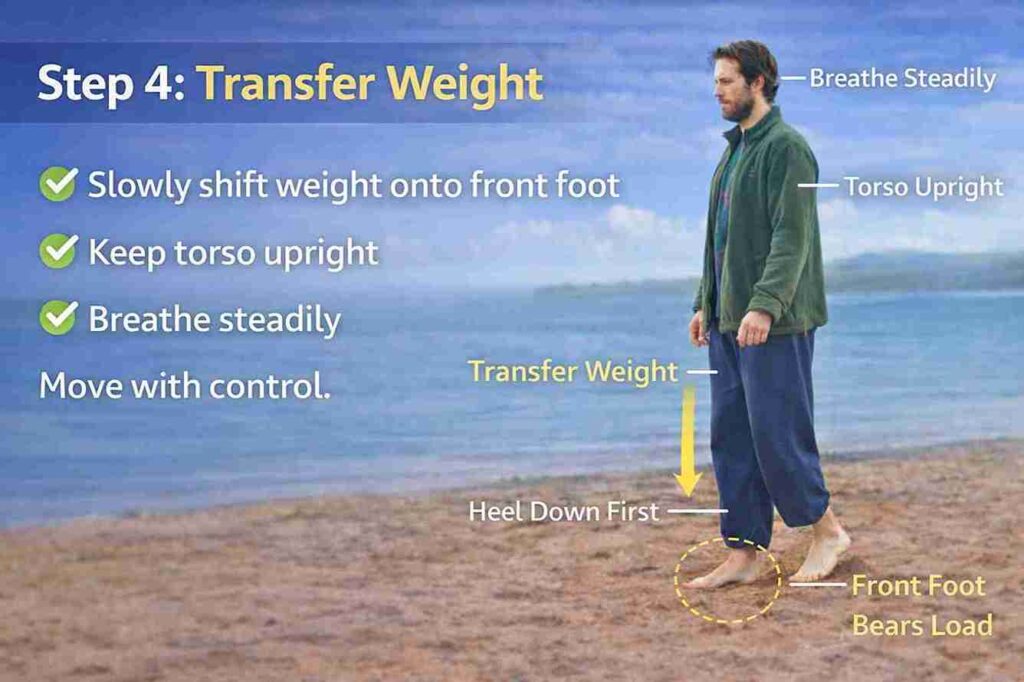
Step 4: Transfer Weight
- Slowly shift weight onto front foot
- Keep torso upright
- Breathe steadily
Step 5: Repeat on Other Side
- Shift weight
- Step slowly
- Maintain balance
Continue for 5–10 minutes.
Why Tai Chi Walking Is Ideal for Seniors
As we age:
- Balance can decrease
- Muscles weaken
- Fear of falling increases
Tai chi walking helps by:
✔ Improving balance
✔ Strengthening leg muscles
✔ Training coordination
✔ Reducing fall risk
✔ Calming the nervous system
That’s why tai chi is often recommended for older adults.
Free Tai Chi walking Pdf for seniors
Why Some Seniors Get Better Results Indoors Than Outdoors
This sounds backward.
People assume:
Fresh air = better exercise.
Sometimes yes.
Sometimes absolutely not.
I’ve watched seniors move beautifully indoors and struggle outside.
Not because they got weaker.
Because the environment changed.
That matters more after 60.
Outdoor walking adds invisible variables
Outside introduces:
- uneven ground
- wind
- visual distractions
- changing temperatures
- surface uncertainty
Tai Chi works partly because movement stays controlled.
Those variables reduce control.
Especially for beginners.
Fear changes movement quality
You can see this immediately.
Someone moves smoothly indoors.
Then outside:
- steps shorten
- shoulders tense
- breathing changes
- posture stiffens
The body starts protecting itself.
That changes exercise quality.
Indoor practice removes decision fatigue
Indoors:
- same chair
- same surface
- same distance
- same routine
Older adults often improve faster in predictable environments.
Especially early.
Outdoors becomes useful later
Once movement confidence improves:
Outdoor practice starts adding:
- adaptability
- balance
- confidence
That progression works surprisingly well.
Neither environment is automatically better
The best environment is usually:
The one people repeat consistently.
That’s the hidden answer.
The Hidden Reason Some Seniors Love Tai Chi Walking but Quit After Week 3
Week 1 feels exciting.
Week 2 feels interesting.
Week 3 suddenly feels repetitive.
This happens constantly.
Usually not because Tai Chi stopped working.
Because novelty disappeared.
Early improvements become invisible
The body quietly adapts.
People stop noticing:
- easier standing
- smoother walking
- calmer posture
Then motivation drops.
Repetition feels boring before results feel obvious
Tai Chi rewards patience.
That’s difficult in modern life.
Especially if people expect:
- weight loss
- dramatic flexibility
- visible transformation
Small upgrades create new progress
Instead of changing everything:
Try:
- slower movement
- longer breathing
- cleaner transitions
Tiny upgrades work.
Tracking function works better than motivation
Better questions:
Can I:
- stand easier?
- walk smoother?
- recover faster?
Those changes matter.
Plateaus are often adaptation
Plateaus usually mean:
The body is reorganizing.
Not failing.
Why Balance Training Feels Easier on Good Days and Impossible on Bad Days
This confuses seniors constantly.
Yesterday:
movement felt easy.
Today:
everything feels unstable.
That’s normal.
Sleep changes movement more than people expect
Bad sleep affects:
- reaction speed
- confidence
- balance
- fatigue
Older adults feel this more strongly.
Pain changes coordination
Pain doesn’t only hurt.
Pain changes:
- stepping
- posture
- timing
The body becomes cautious.
Hydration affects stability
Mild dehydration can increase:
- fatigue
- dizziness
- concentration problems
Especially after 70.
Emotional stress changes movement
Stress creates:
- tighter muscles
- shorter breathing
- stiffer movement
You can sometimes see stress physically.
Bad days don’t erase progress
This realization helps people stay consistent.
Fluctuation isn’t failure.
Myth vs Reality: What Tai Chi Walking Actually Improves First
People expect dramatic changes.
Usually something quieter happens first.
| Myth | Reality |
|---|---|
| Balance improves first | Confidence often improves first |
| Slow means easy | Slow movement can feel harder |
| More practice means faster results | Recovery changes outcomes |
| Standing lower improves results | Comfortable movement often works better |
| Results appear suddenly | Small improvements stack quietly |
Early wins are usually functional
People notice:
- smoother turning
- easier standing
- less hesitation
- calmer movement
Before dramatic changes.
That still counts.
Advanced Layer — Why Experienced Seniors Stop Counting Minutes
This is where experienced people think differently.
Beginners ask:
“How long should I practice?”
Experienced people ask:
“How well did I move?”
That shift changes everything.
Quality starts replacing duration
Questions become:
- Was breathing calm?
- Did movement feel smooth?
- Did posture stay relaxed?
Movement categories start rotating
Experienced seniors often alternate:
Day 1:
Tai Chi
Day 2:
Chair mobility
Day 3:
Walking
That variety helps.
Daily life becomes the measurement
Progress becomes:
- easier stairs
- easier shopping
- better confidence
Not exercise minutes.
Structured sessions become optional
Movement slowly becomes normal life.
That’s usually the real goal.
Not perfect workouts.
Just easier living.
Long-term progress becomes quieter
Less pain.
Less hesitation.
More confidence.
That’s usually what people notice after months.
Not dramatic transformation.
Benefits of Tai Chi Walking for Seniors
1. Improves Balance and Stability
Slow weight shifting trains balance safely.
2. Strengthens Legs and Ankles
Controlled steps engage muscles without stress.
3. Reduces Fall Risk
Improved awareness and coordination help prevent falls.
4. Supports Joint Health
Gentle movement lubricates joints without impact.
5. Calms the Mind
Slow breathing and focus reduce anxiety and stress.
6. Improves Posture
Upright walking encourages spinal alignment.
7. Builds Confidence in Movement
Feeling steady reduces fear of daily activities.
How Often Should Seniors Practice Tai Chi Walking?
For best results:
- 5–15 minutes daily
- Or 10 minutes, 3–4 times a week
Consistency matters more than duration.
Tai Chi Walking Indoors vs Outdoors
Indoors:
✔ Safer
✔ Controlled environment
✔ No weather issues
Outdoors:
✔ Fresh air
✔ Natural grounding
✔ Use flat, even surfaces
Choose what feels safest.
Common Mistakes to Avoid (Very Important)
❌ Walking too fast
❌ Locking knees
❌ Holding breath
❌ Leaning forward
❌ Looking down constantly
Tai chi walking should feel smooth and relaxed.
Is Tai Chi Walking Safe for Seniors with Joint Pain?
Yes. Tai chi walking is:
- Low-impact
- Joint-friendly
- Adjustable
If pain appears:
✔ Reduce step length
✔ Slow down
✔ Rest when needed
Free Tai Chi Walking vs Classes
| Free Practice | Classes |
|---|---|
| Learn at home | Instructor guidance |
| No cost | Paid sessions |
| Flexible | Fixed schedule |
Free tai chi walking is a great place to start.
Scientific Support for Tai Chi Walking in Seniors
📚 Scientific Research on Tai Chi Walking for Seniors Free.
Here are credible scientific sources showing how tai chi and tai chi–based walking benefit older adults, especially for balance, mobility, fall risk, and overall movement quality:
1. Tai Chi Improves Balance and Reduces Fall Risk
A major systematic review concluded that tai chi training helps reduce fall risk and improves balance in older adults, one of the key reasons why tai chi walking is effective for seniors.
🔗 https://academic.oup.com/ageing/article/45/1/21/2195366
2. Tai Chi Enhances Physical Function & Mobility
This study showed that tai chi interventions significantly improved functional mobility, strength, and physical performance in older adults.
🔗 https://www.ncbi.nlm.nih.gov/pmc/articles/PMC4484250
3. Tai Chi Reduces Fear of Falling
Fear of falling can reduce activity levels in seniors. Research shows tai chi helps improve confidence and reduce fear of falling, which encourages more movement.
🔗 https://www.ncbi.nlm.nih.gov/pmc/articles/PMC5615194
4. Tai Chi Supports Overall Well-Being in Older Adults
A review of multiple trials confirms that tai chi can enhance quality of life, balance, strength, and physical function in older adults — especially when tailored for slow and safe practice.
🔗 https://pubmed.ncbi.nlm.nih.gov/22514515
A Gentle Option Many Seniors Use Alongside Tai Chi Walking
Some seniors enjoy combining tai chi walking with chair-based movement on low-energy days.
A commonly used resource is:
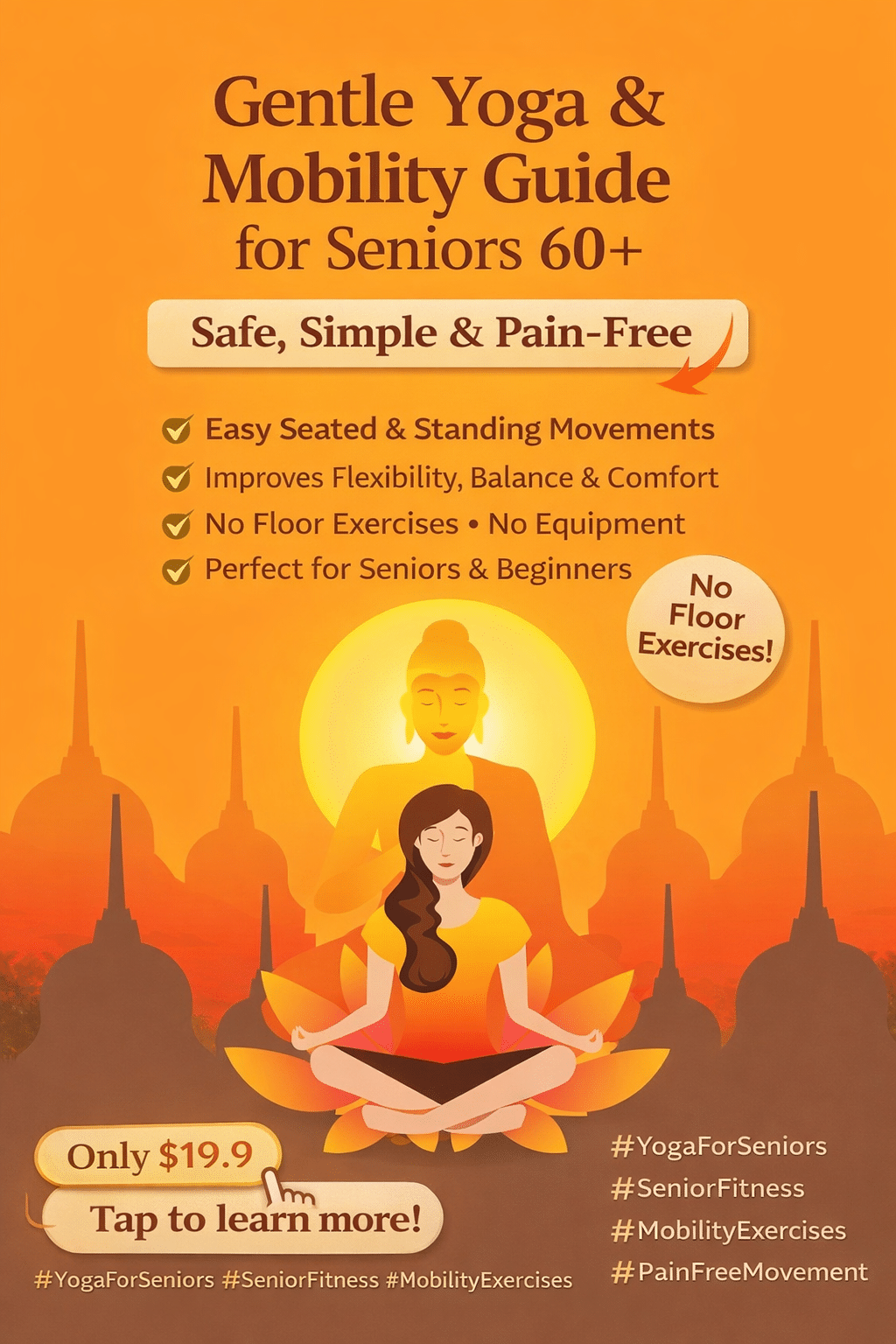
Gentle Yoga & Mobility Guide for Stiff Joints, Balance & Daily Comfort
💲 Price: $19.9
✔ No floor exercises
✔ No equipment
✔ Designed for adults 60+
Two Gentle Guides Trusted by Seniors
Simple, safe & pain-free movement, no floor exercises, no equipment.
Gentle Yoga & Mobility Guide (60+)
- No floor exercises
- Improves balance & flexibility
- Perfect for daily comfort
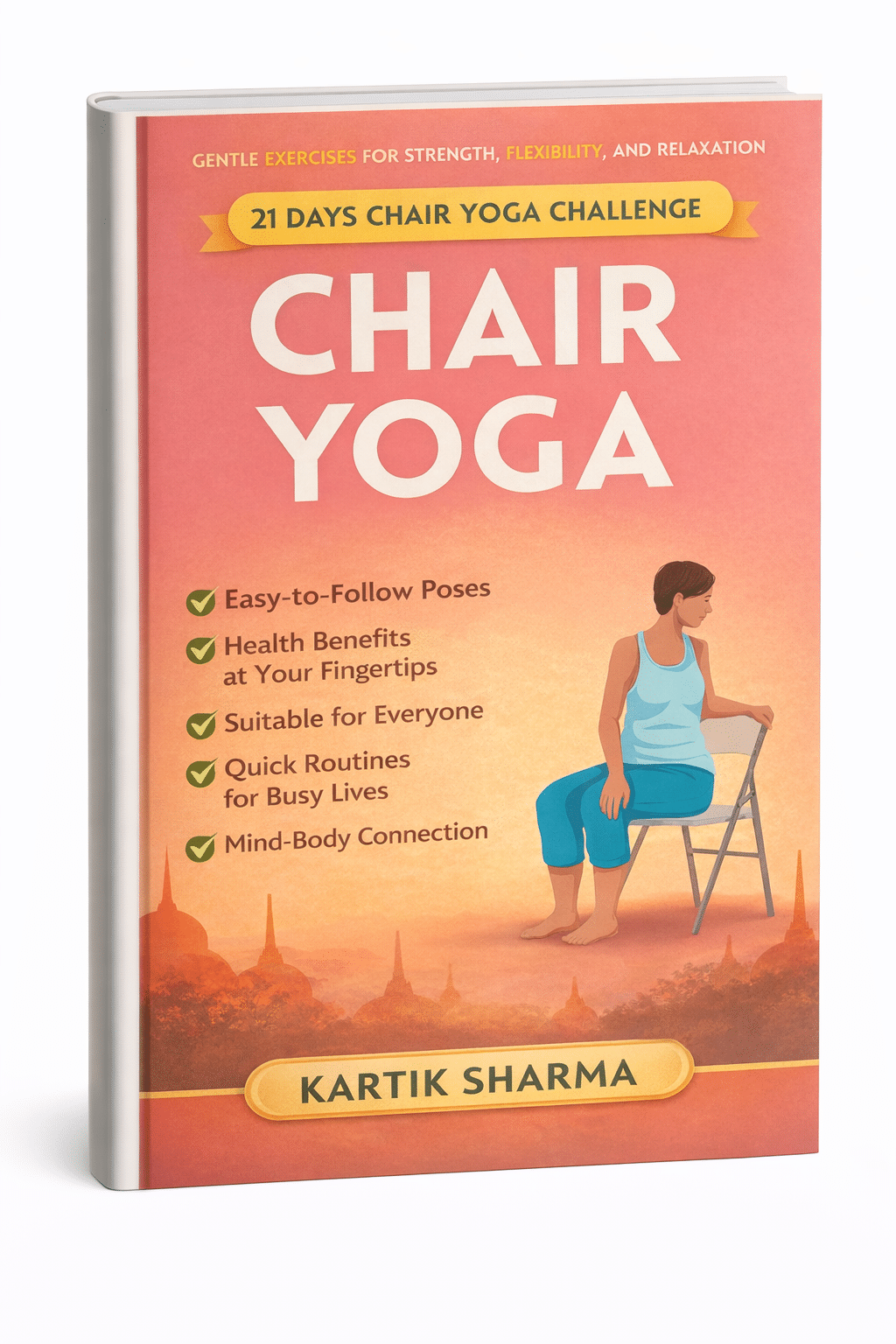
21-Day Chair Yoga Challenge
- Easy seated movements
- Quick routines for busy days
- Beginner & senior friendly
⭐ Often used as a daily reference — not a workout replacement
It complements tai chi walking by supporting joint comfort and daily movement.
FAQs: Tai Chi Walking for Seniors Free
Is tai chi walking good for seniors?
Yes, it improves balance, strength, and confidence safely.
Can seniors do tai chi walking every day?
Yes, gentle daily practice is safe for most seniors.
Do I need equipment?
No equipment is needed.
Is tai chi walking better than normal walking?
It’s slower and safer for balance-focused goals.
My Final Thoughts for Tai Chi Walking for Seniors Free
Tai chi walking for seniors free is one of the safest ways to stay active.
It’s not about speed.
It’s about control.
It’s about confidence.
Slow steps today lead to steadier days tomorrow.




10 thoughts on “Tai Chi Walking for Seniors Free: 7 Safe Steps Guide”
Is there a free printable chart
yes there is
I am very interested but can not afford a class. I just want a printable chart
Please send the printable chart
Hi Jean,
Thank you for reaching out. 😊
I’ve just sent the Tai Chi Walking printable chart to your email. Please check your inbox (and spam folder just in case).
If you’d like a larger-print version or need any help getting started, feel free to reply—I’m happy to help.
Wishing you a calm and enjoyable practice. 🧘♂️
I did not receive the email. Can you advise the name it was sent from?
I asked for FREE ONLINE tai chi walking programs. And got a credit card subscription and BUY MY PROGRAMS
Hi Odin,
Thank you for your feedback, and I’m sorry for the confusion.
We do offer free Tai Chi walking resources (including printable guides), and any paid programs are completely optional—not required.
I’ve sent you a free printable guide via email so you can get started right away.
If you need more free resources, feel free to let me know—I’m happy to help.
I’m 90 in a few weeks, never expected to be a long liver but here I am impoverished but content with my lot just started Tia Chi walking and it surprised me ho far balance had deteriorated.
What an inspiring perspective. Reaching 90 and still starting something new like Tai Chi walking is truly amazing. Balance changes can sneak up on all of us over time, but the fact that you’re taking steps to improve it says a lot about your strength and mindset. Wishing you many more peaceful walks, steady steps, and moments of contentment ahead. 💛