Most fitness content aimed at men over 60 falls into one of two traps. Either it’s too intensely built for someone 20 years younger or it’s so watered down it produces nothing useful.
Chair tai chi for men over 60 sits in neither camp.
It’s genuinely low-impact. You do it seated or using a chair for support. No floor work, no jumping, no equipment. And the research behind it is some of the strongest in senior fitness, covering balance, muscle strength, cognitive function, blood pressure, and fall prevention simultaneously.
This guide covers 12 chair tai chi moves for men over 60, what the science says specifically about men, and how to build a weekly program that takes 20 minutes.
Table of Contents
Why tai chi is particularly good for older men
Men lose muscle mass faster than women after 60. Testosterone decline accelerates sarcopenia, the age-related loss of muscle at roughly 3–8% per decade after 30, with the rate increasing after 60.
A 2023 study in the Journal of Orthopaedic Surgery and Research found that tai chi exercise resembles resistance training closely enough to potentially increase serum testosterone levels in older men, which in turn slows bone mineral density loss. That’s a meaningful finding for men managing osteoporosis or muscle weakness.
A 2024 meta-analysis in Frontiers in Public Health analyzed 28 trials covering 2,000 participants and found tai chi significantly improves balance performance in older adults across every major balance test: the Timed Up and Go, the Functional Reach Test, and the Berg Balance Scale.
And a comprehensive review of 241 clinical trials published in 2023 confirmed consistent positive effects of tai chi on balance, cognitive function, mood, sleep quality, pain relief, and cardiovascular function in older adults.
For men over 60 specifically, chair tai chi addresses the muscle loss, balance decline, cardiovascular risk, and cognitive changes that come with aging in one 20-minute daily practice.
Before you start
You need a sturdy chair with no wheels. A dining chair works perfectly. Place it on a non-slip surface.
Wear comfortable clothing with room to move your arms freely. Flat shoes or bare feet, no thick soles.
Move at half the speed you think you should. Tai chi’s benefit comes from slow, controlled movement. Fast is wrong.
The 12 moves: chair tai chi for men over 60
Each move is held or repeated for the count specified. Work through them in order; the sequence flows from calming to activating to strengthening.
1. Seated belly breathing
Sit tall, one hand on chest, one on belly. Inhale slowly through the nose for 4 counts, feeling the belly rise. Exhale through the mouth for 6 counts. 8 rounds.
This activates the parasympathetic nervous system before movement. It also trains diaphragmatic breathing, which men tend to lose with age, shifting to shallow chest breathing that increases stress hormones.

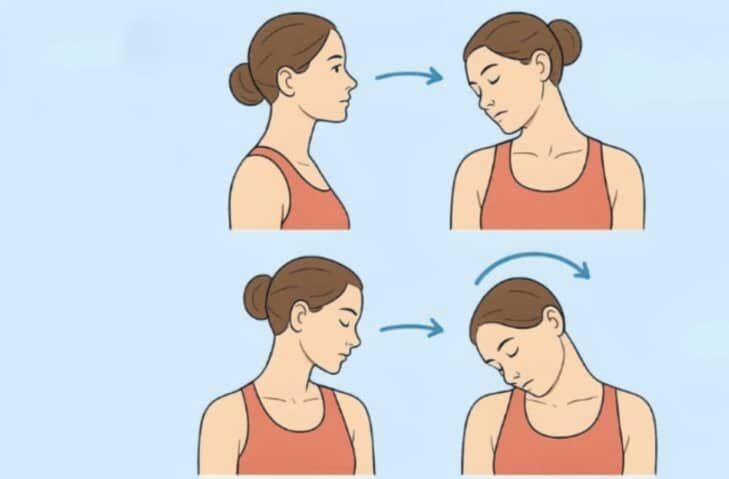
2. Neck rolls and shoulder drops
Slowly lower the right ear toward the right shoulder. Hold for 5 seconds and turn to the center. Left side. Then roll both shoulders up toward the ears, hold 2 seconds, drop them down hard. 5 rounds.
The upper trapezius, the muscle running from neck to shoulder, holds chronic tension in most men who’ve spent decades at a desk or doing physical work. This releases it before the main practice.
3. Wrist circles and hand opening
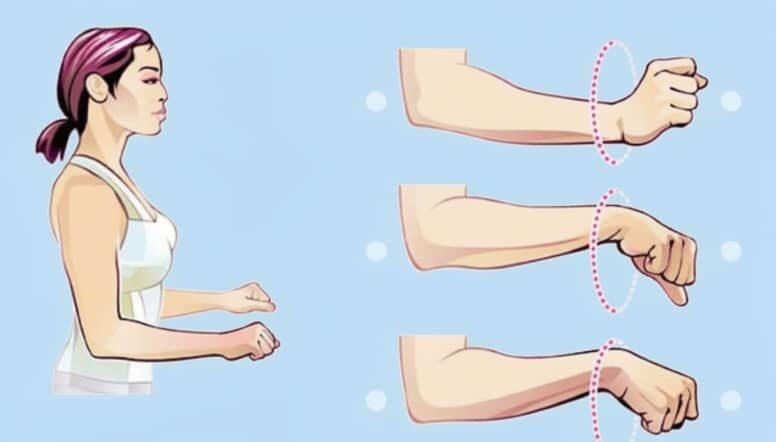
Extend both arms in front, parallel to the floor. Circle the wrists 10 times clockwise, 10 anticlockwise. Then spread all fingers wide, hold 3 seconds, make a loose fist, hold 3 seconds. 10 reps.
Grip strength is one of the most reliable predictors of overall health and longevity in men. A 2015 study in The Lancet found grip strength was a stronger predictor of cardiovascular mortality than systolic blood pressure. This move maintains that strength.
4. Seated cloud hands
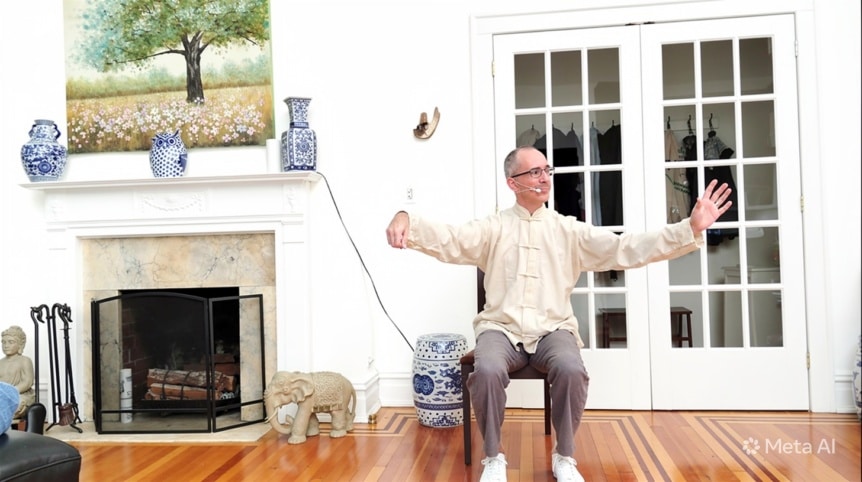
Sit tall, arms relaxed at sides. Raise the right arm in a slow arc out to the side and up to shoulder height, palm facing down, while the left hand drops. Then reverse left arm rises, right drops in a continuous flowing motion. 20 reps each side.
This is one of the most fundamental tai chi movements. It trains shoulder mobility, coordination between left and right hemispheres of the brain, and the slow controlled movement that distinguishes tai chi from regular exercise.
5. Ward off (seated)
Sit at the edge of the chair, feet flat. Raise the right arm in front of you, elbow slightly bent, palm facing your chest as if holding a large ball. Hold for 10 seconds, feeling the shoulder and upper back engage. Switch arms. 8 reps each side.
Ward Off is the first movement in most traditional tai chi forms. It builds isometric strength in the shoulders and upper back — the muscles most responsible for posture in older men.
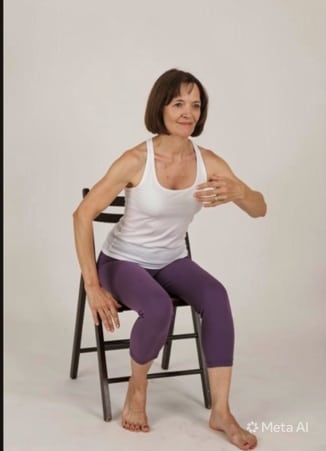
6. Push hands
Bring both hands in front of your chest, palms facing forward. Slowly push both arms forward until they’re nearly straight, then draw them back to the chest. Move like you’re pushing through water resistance in both directions. 15 reps.
This builds the chest, shoulder, and tricep strength that men need for pushing movements in daily life (getting up from a chair, pushing open heavy doors) without any joint compression.
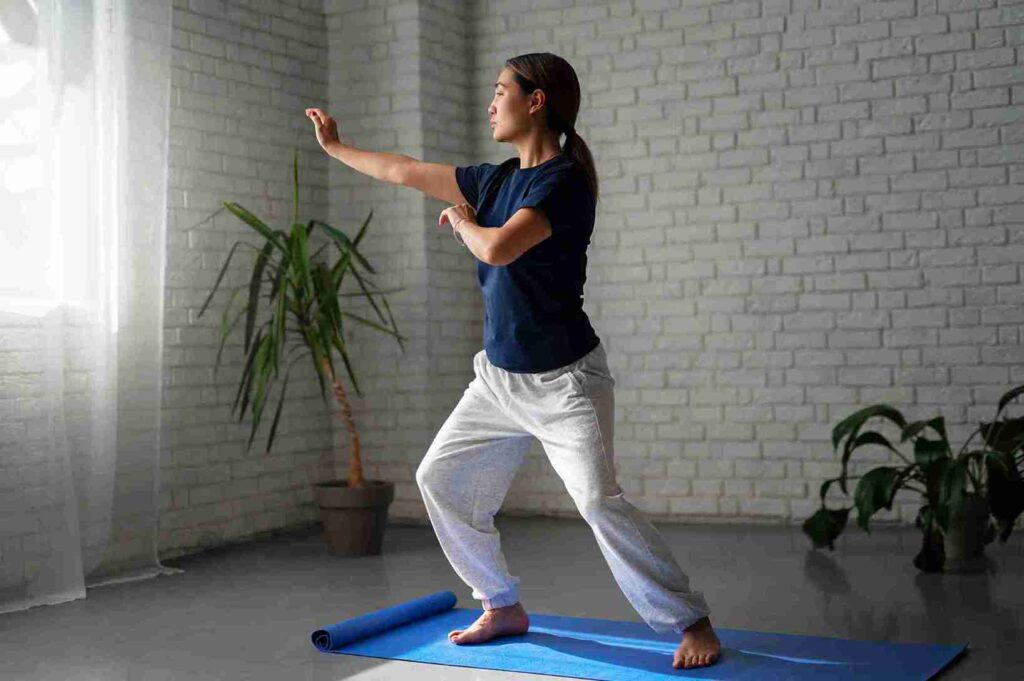
7. Seated single whip
Sit tall. Extend the right arm out to the right side at shoulder height, palm forward. At the same time, bring the left hand to the centre of the chest, fingers pointing right. Hold 5 seconds. Switch sides. 10 reps each side.
This stretch opens the pectoral muscles across the chest chronically tight in men who’ve done years of bench pressing or desk work. Tight pectorals pull the shoulders forward, causing the rounded posture common in older men.
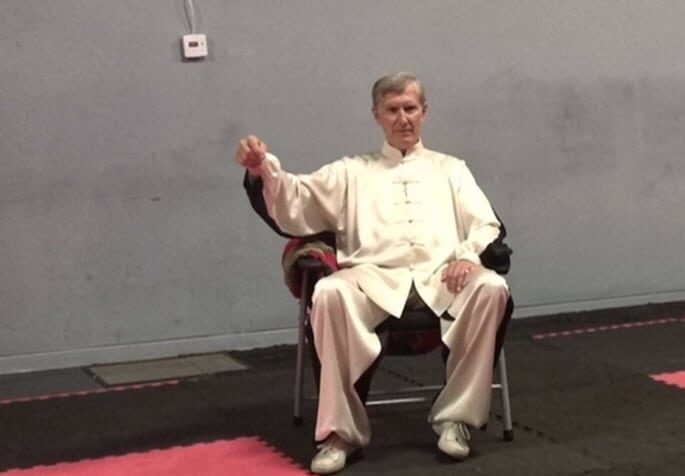
8. Knee raises with arm opposition
Sit tall, arms at sides. Lift the right knee slowly toward the chechest whilemultaneously raising the left arm forward to shoulder height. Lower both. Alternate. 15 reps each side.
Coordination between opposite limbs called contralateral movement directly activates both hemispheres of the brain simultaneously. This is the mechanism behind tai chi’s cognitive benefits. A 2019 randomised controlled trial found significant improvements in cognitive ability in adults over 60 after 12 weeks of tai chi.
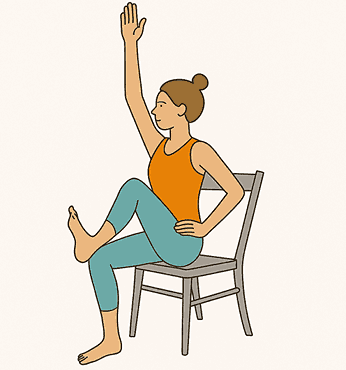
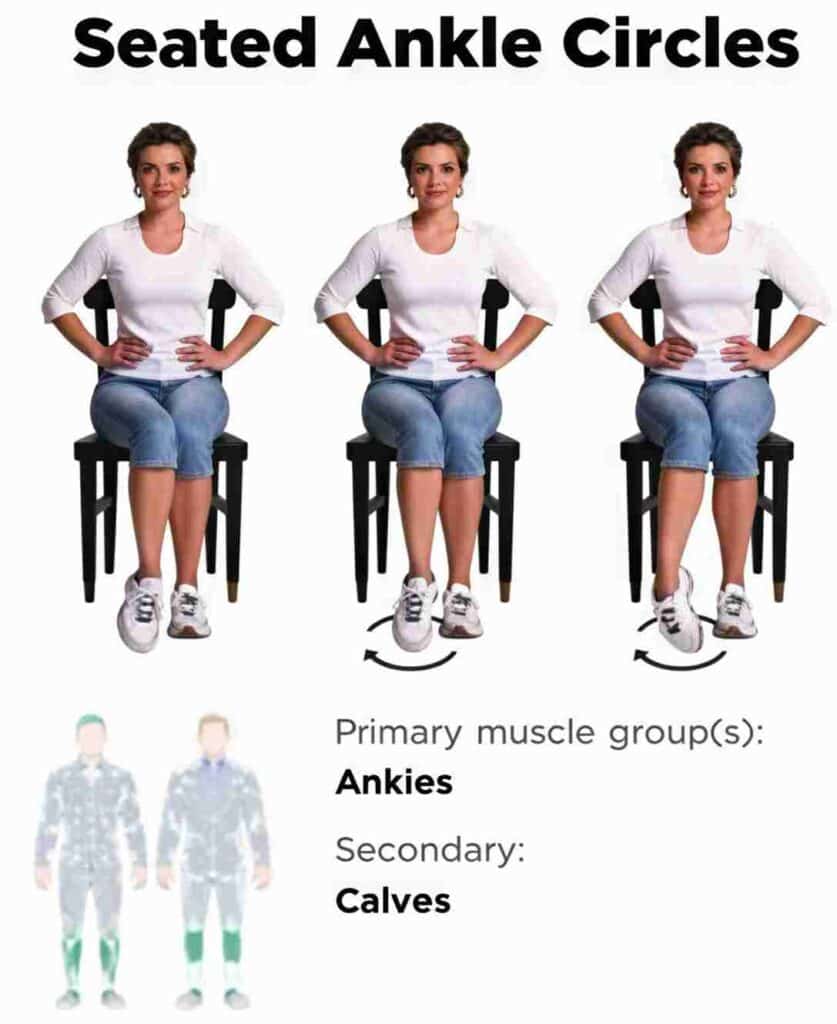
9. Ankle rotations and heel digs
Lift one foot slightly off the floor. Rotate the ankle 10 times in each direction. Lower. Switch feet. Then: feet flat, dig the right heel into the floor and hold 5 seconds. Switch. 10 reps.
Ankle strength and mobility are the first line of defence in fall prevention. Most men over 60 have significantly reduced ankle proprioception — the nerve signals that tell the brain where the foot is. This move retrains it directly.
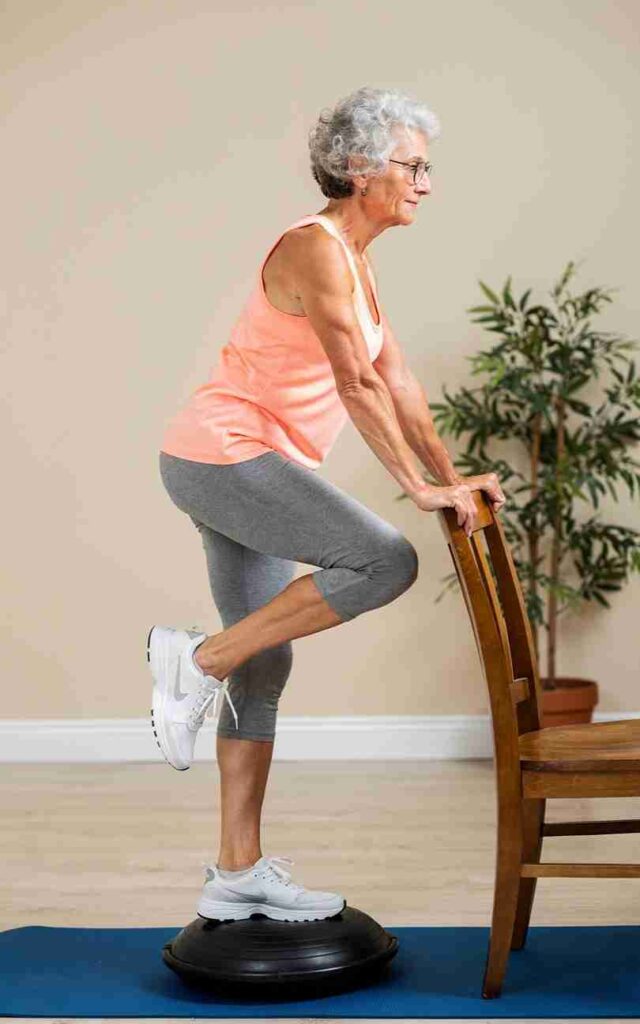
10. Chair-supported single-leg
Stand behind the chair, hold the back lightly. Lift one foot just off the ground. Hold 10–30 seconds. Switch sides.
The 2024 meta-analysis found tai chi produced a 40% reduction in fall risk across trials. Single-leg standing is one of the primary mechanisms it retrains the balance system under a controlled challenge. Progress from 2 hands to 1 hand to fingertips over weeks.
11. Standing tai chi steps (chair-supported)
Stand beside the chair, one hand on the back. Step the right foot slowly forward, transferring weight gradually from heel to toe. Lift the left foot and bring it forward. Continue for 10 steps forward, 10 back.
This is walking done as tai chi slow, deliberate, with full attention to weight transfer. It directly trains the gait mechanics that prevent shuffling and falling in older men.
12. Closing: seated return to breath
Sit comfortably, hands resting on thighs, palms up. Close your eyes. Breathe in for 4 counts, out for 6. Stay here for 2 minutes.
Ending with stillness trains the nervous system to shift back to rest after movement which improves heart rate recovery, reduces cortisol, and makes the practice feel complete rather than abrupt.
Your weekly programme
Daily (10 minutes, every morning):
- Seated belly breathing: 8 rounds
- Neck rolls and shoulder drops: 5 rounds
- Wrist circles and hand opening: 10 reps
- Closing breath: 2 minutes
3x a week (full 20-minute session): All 12 moves in sequence, in the order listed above.
That’s the whole programme. Consistency matters more than duration. 20 minutes 3 times a week beats an hour once a week in every study that’s compared the two.
For a full structured progressive programme, our free 28-day chair yoga challenge combines chair yoga and tai chi movements across 4 weeks.
Chair tai chi for men over 60 vs regular tai chi
The difference is simple. Regular tai chi requires standing balance for most movements. For men with knee pain, hip replacements, vertigo, or significant balance issues, that’s a barrier.
Chair tai chi for men over 60 removes the barrier without removing the benefit. The slow, controlled movement, the breath coordination, the bilateral arm patterns — all present. The fall risk of standing balance work removed.
Our tai chi for seniors guide covers the standing progression if and when you’re ready for it. Most men start here and add standing moves over 6–8 weeks as confidence builds.
What chair tai chi won’t do
Honest caveat: chair tai chi for men over 60 won’t replace cardiovascular exercise if your doctor has told you to raise your heart rate regularly. It’s low-intensity by design.
And it won’t reverse severe sarcopenia on its own. If muscle loss is significant, resistance training even light resistance bands alongside this programme will produce better results.
For men dealing with specific health conditions alongside general fitness, our chair yoga for health conditions guide covers modifications for arthritis, diabetes, and cardiovascular conditions specifically.
Frequently asked questions
How long before chair tai chi for men over 60 produces results?
Balance improvements show up within 4–6 weeks of consistent practice. The 2024 meta-analysis found significant balance gains across trials ranging from 8 to 24 weeks. Most men notice improved steadiness and reduced morning stiffness within 2–3 weeks.
Is chair tai chi for men over 60 safe after a hip or knee replacement?
Generally yes, with medical clearance. The seated movements place minimal load on replaced joints. The standing moves (10 and 11) should be introduced gradually and only after your surgeon or physiotherapist has cleared you for balance work.
How many times a week should men over 60 do chair tai chi?
3 times a week is the evidence-based minimum. Daily practice produces faster results. The daily 10-minute routine above gives you something every day without overloading recovery.
Can chair tai chi help with blood pressure in older men?
Yes. A 2019 randomized controlled trial found significant improvements in arterial stiffness markers in adults over 60 after 12 weeks of tai chi. The slow, rhythmic breathing specifically activates the vagus nerve, which directly reduces blood pressure. Talk to your doctor before reducing any medication.
What’s the difference between chair tai chi and chair yoga?
Chair yoga focuses on held poses and stretching. Chair tai chi for men over 60 focuses on flowing movement patterns and breath coordination. Both build balance and flexibility. Tai chi adds a stronger cardiovascular and cognitive component. Our chair yoga for senior men page covers the yoga side if you want to combine both.
Start with move 1 tomorrow morning
Pick the daily 10-minute routine. Do it tomorrow before breakfast.
Seated belly breathing, neck rolls, wrist circles, closing breath. 10 minutes. That’s your starting point.
Add the full 20-minute session on Monday, Wednesday, and Friday of the following week.
By week 3, chair tai chi for men over 60 will feel like a natural part of your morning. That’s when the benefits start compounding.
Download our free printable chair yoga and tai chi guide and keep it somewhere visible. Having it on paper beats having it on your phone every time.