Educational guidance, not medical advice. Check with a doctor before starting any new exercise routine.
Chair yoga for caregivers comes down to how you guide someone, more than which pose you pick. You already know “just go for a walk” doesn’t work for everyone. Mobility limits, balance concerns, or just not knowing where to start can make exercise feel out of reach, both for the person you’re caring for and for you.
Chair yoga sidesteps most of that. No getting up and down off the floor. Sessions can run 10 minutes. And it works right at home, with a chair you already own.
But leading someone else through it is a different skill than doing it yourself. You’re watching their body, not just yours. That’s the real work of chair yoga for caregivers: staying tuned to someone else’s breath and limits, not just your own. Here’s how to do it well.
Table of Contents
Before you begin
A few things to check before the first session:
- Get medical clearance. Heart conditions, recent surgery, severe osteoporosis: if their doctor should weigh in, ask first. The National Institute on Aging recommends this step for older adults starting any new activity, chair yoga included.
- Pick a sturdy chair. Straight back, no wheels, no arms (arms get in the way during side stretches). Push on it before the first session. If it rocks or slides, use a different one.
- Clear the space. Rugs, cords, anything underfoot near the chair.
- Check footwear. Bare feet or non-slip shoes. Never socks alone on a hard floor.
- Keep water nearby. And don’t rush into pose one. A minute of just sitting and breathing is a perfectly good way to start.
Falls are the thing to actively guard against here. The CDC’s STEADI initiative puts the older-adult fall rate at roughly 1 in 4 each year, and a stable chair plus a clear floor does more to prevent that than almost anything else in this guide.

How to actually guide the session
Let them set the pace, not the clock. It’s tempting to move through a routine like a checklist. Watch their breathing instead. Held breath, white-knuckle grip on the chair: that’s your signal to back off, not push through.
Break instructions into one step at a time. “Raise your right arm. Now lean gently to the left. Good, hold there.” Not “reach up and over while twisting toward me.” One instruction lands. Three stacked together get lost.
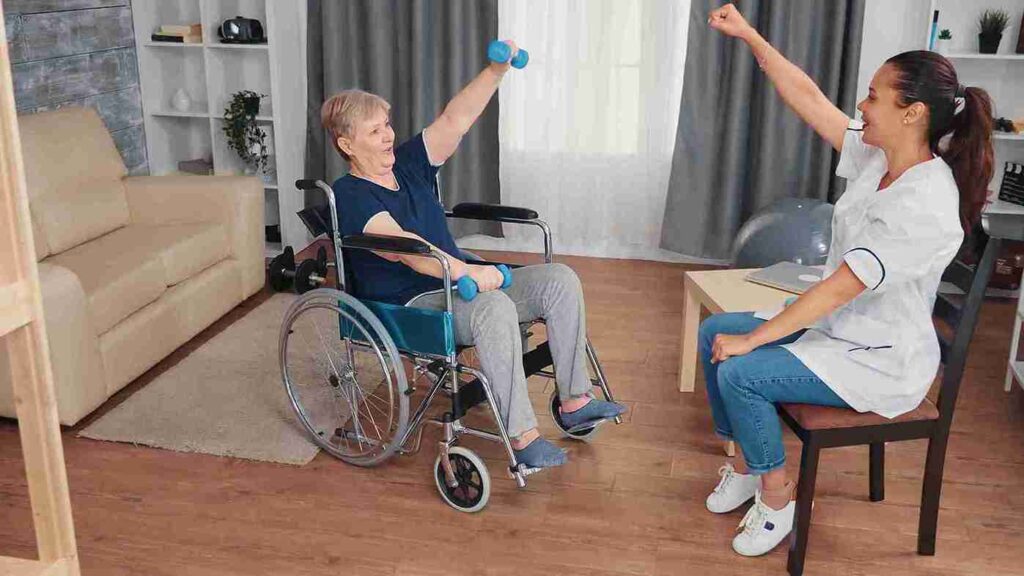
Sit next to them and do it too. This does two things. It shows them exactly what you mean, and it turns the session into something you’re doing together instead of something you’re doing to them. A lot of caregivers tell me this becomes the best ten minutes of their day, not the obligation they expected.
Keep early sessions short. Ten minutes is a real session. Twenty minutes that ends in exhaustion just makes tomorrow’s session harder to start.
Explain the why, briefly. “This one helps the stiffness in your shoulders.” “This is good for balance, which helps on the stairs.” One sentence, not a lecture.
Watch for these and stop if you see them: dizziness, sharp or new pain, breathlessness that doesn’t settle, visible frustration. Some days the right move is to stop and try again tomorrow.
A simple first routine
Five poses, about 10 minutes, nothing that requires standing.
- Seated mountain pose. Sit tall, feet flat, hands on knees. Five slow breaths before you move on. This alone can calm a tense start to the day.
- Shoulder rolls. Up toward the ears, then back and down. Five times.
- Seated cat-cow. Hands on knees. Arch gently on the inhale, round on the exhale. Five slow reps.
- Seated side stretch. One arm overhead, lean gently to the opposite side. Three breaths, switch sides.
- Final rest. Hands in the lap, eyes closed if that’s comfortable. A minute of quiet breathing closes the session well.
Want more variety once this feels easy? Our chair yoga routine builder puts together a routine based on time available, focus area, and mobility level, so you’re not starting from scratch every day. You can also pull from our printable chair exercises for seniors if a paper chart on the fridge works better than a screen.
Making it stick
- Anchor it to something that already happens. Right after breakfast. Before the afternoon show. A routine tied to an existing habit survives far longer than one you have to schedule fresh each day. Our morning vs. evening chair yoga piece breaks down which timing tends to work better and why.
- Track it simply. A checkmark on a wall calendar is enough. Seeing four checkmarks in a row does something for motivation that no app notification matches.
- Bring in another person when you can. A sibling, a spouse, a friend who visits weekly. Chair yoga done with more than one person tends to actually happen; solo plans are the ones that quietly stop.
- Consistency beats intensity. Three gentle 10-minute sessions a week, kept up for a month, does more than one hard session that never gets repeated.
When to bring in a professional
Home chair yoga works alongside professional care, not instead of it. Loop in a physical therapist or a certified chair yoga instructor if:
- There’s been a recent fall, stroke, or surgery
- You’re unsure how to modify a pose for a specific condition like arthritis or Parkinson’s
- They’d benefit from the social pull of a class at a senior center, on top of what you do at home
FAQ for chair yoga for caregivers
Common questions about chair yoga for caregivers, answered plainly.
1. How often should we practice together?
Two or three times a week is a solid start for most seniors. Daily works too, as long as sessions stay short. Consistency matters more than duration.
2. What if they don’t want to do it?
Don’t push. Shrink the session to two or three poses. Do it alongside them instead of instructing from the side. Try a different time of day. Resistance is usually about feeling put on the spot, not about the exercise itself.
3. Can I do this with someone who has dementia or Alzheimer’s?
Yes, and it can genuinely help. Gentle, repetitive movement paired with calm breathing tends to soothe rather than overstimulate. Keep it to fewer poses, lean on demonstrating over explaining, and read our full guide to chair yoga for dementia and Alzheimer’s for specifics.
4. Do I need training to lead this?
No, not for casual sessions at home with a loved one. If you want to lead a group at a senior center, a certification is worth looking into.
Related reading: Chair yoga for seniors: the complete guide · Chair yoga breathing techniques for seniors · Mobility training for seniors