High blood pressure is something many older adults live with. Alongside the treatment plan your healthcare provider recommends, staying active and managing everyday stress can play an important role in your overall well-being.
That’s where chair yoga comes in.
Chair yoga is a gentle form of exercise that lets you move comfortably while sitting on a sturdy chair or using it for support. You don’t need to get on the floor, and you don’t need any previous yoga experience. The movements are slow, beginner-friendly, and easy to adjust to your comfort level.
Many seniors enjoy chair yoga because it’s simple to fit into a daily routine. Whether you have 10 minutes in the morning or a few quiet moments before bed, these gentle exercises can help you stay active while encouraging relaxation.
In this guide, you’ll learn five easy chair yoga exercises, practical safety tips, and how to download a free printable routine for home use.
Table of Contents
Why chair yoga can be a good choice for seniors
Many traditional workouts involve standing for long periods, balancing, or getting down on the floor. That isn’t comfortable for everyone.
Chair yoga gives you another option.
Most exercises are performed while sitting, allowing you to move at a pace that feels comfortable. You can take breaks whenever you need to, and each movement can be adjusted to suit your mobility.
Many chair yoga routines also include slow breathing. Some people find that spending a few minutes focusing on their breath helps them feel calmer and more relaxed during the day.
The American Heart Association recommends regular physical activity as part of an overall heart-healthy lifestyle. Gentle activities can be a practical option for older adults who want to stay active within their comfort level.
https://www.heart.org/en/health-topics/high-blood-pressure
The National Institute on Aging also encourages older adults to include activities that support strength, flexibility, and balance as part of healthy aging.
https://www.nia.nih.gov/health/exercise-and-physical-activity
Benefits of chair yoga for seniors
Chair yoga isn’t meant to replace your prescribed treatment plan. Instead, it can become one part of an active lifestyle that supports your daily routine.
Many older adults enjoy chair yoga because it may help them:
- Stay physically active with low-impact movement
- Ease everyday muscle tightness after sitting for long periods
- Practice slow, mindful breathing
- Improve posture and body awareness
- Maintain flexibility with regular practice
- Feel more relaxed throughout the day
You don’t have to exercise for an hour to build a healthy habit. Even 10 to 15 minutes a few days each week can be a good place to start.
Before you begin
A few simple steps can make your practice more comfortable.
Choose a sturdy chair that doesn’t have wheels and won’t slide on the floor. Sit with both feet flat on the ground, leaving enough space around you to move your arms freely.
Wear comfortable clothing, keep a bottle of water nearby, and avoid rushing through the exercises.
If you feel dizzy, short of breath, experience chest pain, or notice anything that doesn’t feel right, stop exercising and contact your healthcare provider.

Source: PubMed Study on Yoga and Blood Pressure
5 Chair Yoga for Seniors with High Blood Pressure
These exercises are designed for beginners and should always feel comfortable. Move slowly, breathe naturally, and never force a stretch.
1. Seated Mountain Pose (Tadasana)
This is a simple way to begin your practice and settle into a comfortable posture.
How to do it
- Sit near the front of your chair.
- Place both feet flat on the floor.
- Rest your hands on your thighs.
- Lengthen your spine gently.
- Relax your shoulders.
- Take five slow, comfortable breaths.
Why try this pose?
Many people like starting with this position because it encourages good posture and provides a quiet moment to focus on slow, steady breathing before moving into the rest of the routine.
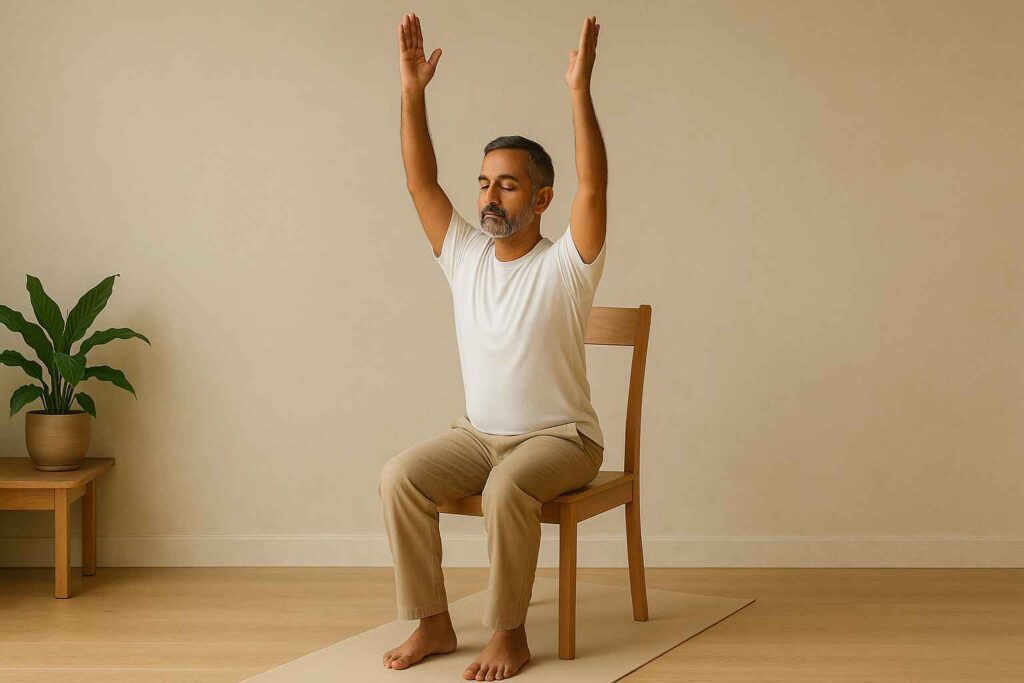
Benefits: Enhances posture, centers the mind, and starts the routine with calm awareness.
2. Seated Forward Bend
This gentle stretch helps you move your back and hips without putting unnecessary strain on your body.
How to do it
- Sit tall with both feet flat on the floor.
- Take a slow breath in.
- As you breathe out, hinge forward slightly from your hips.
- Rest your hands on your thighs or knees.
- Stay for three to five comfortable breaths.
- Slowly return to an upright position.
Helpful tip
You don’t need to bend very far. Even a small forward movement can feel comfortable. Listen to your body and stop wherever the stretch feels right.
Breathe naturally throughout your practice
Slow breathing is an important part of many chair yoga routines.
According to Harvard Health Publishing, breathing exercises can help people relax and are often included in wellness routines focused on stress management.
https://www.health.harvard.edu
As you practice, breathe in through your nose, breathe out slowly, and avoid holding your breath
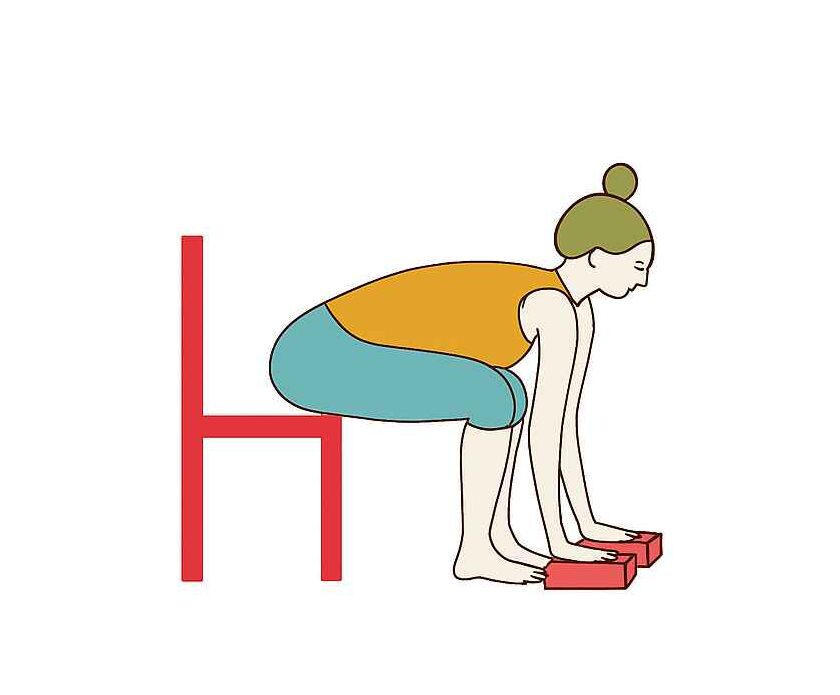
Benefits: Promotes relaxation, stretches the back, and helps lower heart rate.
3. Shoulder Rolls
Many of us carry tension in our shoulders without even realizing it. Sitting at a desk, reading, or watching television for long periods can leave the upper body feeling stiff.
Shoulder rolls are a gentle way to loosen those muscles and encourage comfortable movement.
How to do it
- Sit tall with your feet flat on the floor.
- Let your arms rest naturally by your sides.
- Slowly lift your shoulders toward your ears.
- Roll them back and down in a smooth circle.
- Repeat 5 to 8 times.
- Change direction and repeat.
Why try this pose?
Regular shoulder movement can help ease everyday stiffness and make the upper body feel more comfortable. Many people also find that relaxing the shoulders helps them breathe more naturally during their practice.
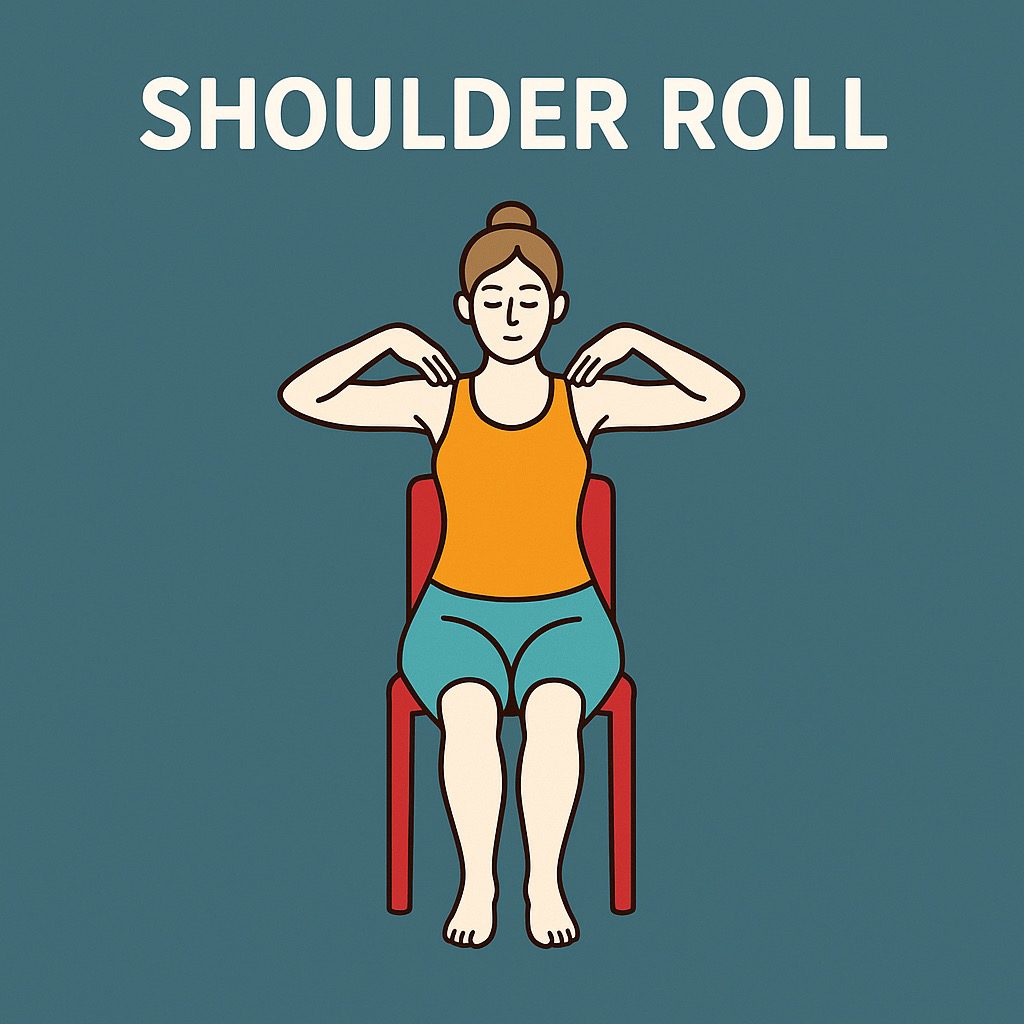
Benefits: Releases shoulder tension and improves circulation to the upper body.
4. Seated Side Stretch
This gentle stretch encourages comfortable movement through your sides and upper back while giving you a chance to focus on slow, steady breathing.
How to do it
- Sit upright with both feet on the floor.
- Rest one hand on the chair for support.
- Slowly raise your opposite arm overhead.
- Lean gently to the side until you feel a light stretch.
- Hold for 3 to 5 slow breaths.
- Return to the center and repeat on the other side.
Why try this pose?
Many older adults spend much of the day sitting. A gentle side stretch can help your body feel less stiff and encourage a fuller, more comfortable breathing pattern.
Move only as far as feels comfortable. There’s no need to force the stretch.
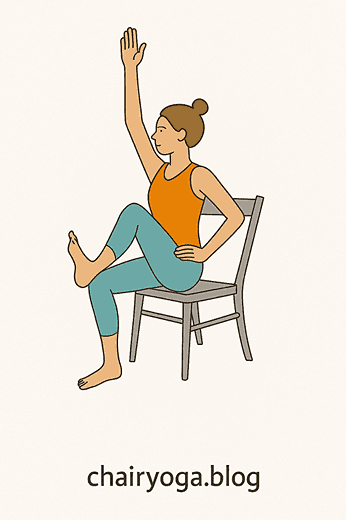
Benefits: Opens the side body, deepens breathing, and reduces mental stress.
5. Seated Belly Breathing (Diaphragmatic Breathing)
This exercise isn’t about stretching. It’s simply a chance to slow down and pay attention to your breathing.
Many chair yoga sessions begin or end with a few minutes of relaxed breathing because it helps create a calm, comfortable pace.
How to do it
- Sit comfortably with your back supported.
- Place one or both hands on your stomach.
- Slowly breathe in through your nose.
- Notice your stomach gently rise as you inhale.
- Breathe out slowly through your nose or mouth.
- Continue for 2 to 5 minutes at a pace that feels natural.
Why try this exercise?
Taking slow, comfortable breaths may help you feel more relaxed after a busy day. Many people enjoy adding breathing exercises to their daily wellness routine, even if they only have a few minutes.
Harvard Health Publishing explains that breathing exercises can be useful for relaxation and stress management.
https://www.health.harvard.edu/staying-healthy/learning-diaphragmatic-breathing
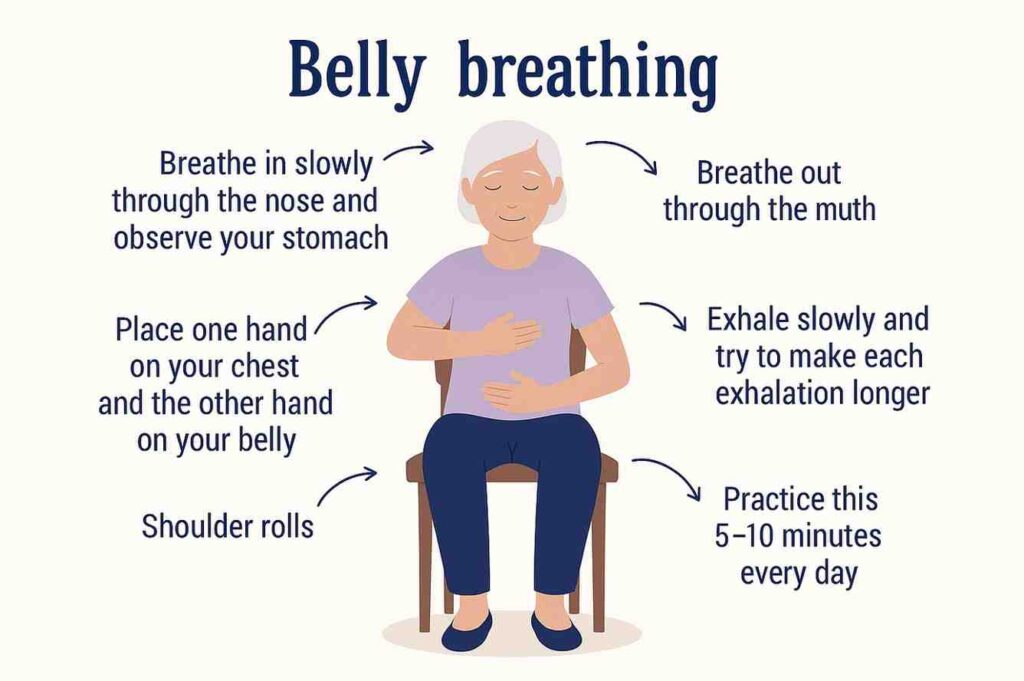
Benefits: Calms the nervous system, lowers stress hormones, and supports heart health.
👉 Research-backed: Harvard Health on Deep Breathing
A simple weekly chair yoga routine for beginners
If you’re new to chair yoga, there’s no need to do every exercise every day.
A simple routine is often easier to stick with.
| Day | Routine | Time |
|---|---|---|
| Monday | All 5 exercises | 10–15 minutes |
| Tuesday | Belly breathing + Shoulder Rolls | 10 minutes |
| Wednesday | All 5 exercises | 10–15 minutes |
| Thursday | Rest or gentle walk | — |
| Friday | All 5 exercises | 10–15 minutes |
| Saturday | Stretching + Belly Breathing | 10 minutes |
| Sunday | Choose your favorite exercises | 10–15 minutes |
Remember, consistency matters more than doing long sessions.
Common mistakes to avoid
If you’re just getting started, these simple tips can make your practice safer and more comfortable.
1. Holding your breath
- Many people don’t notice they’re holding their breath while stretching.
- Try to keep your breathing slow and natural throughout each exercise.
2. Moving too quickly
- Chair yoga isn’t a race.
- Slow, controlled movements are usually more comfortable than rushing from one pose to another.
3. Stretching too far
- You don’t need to reach your maximum range of motion.
- A gentle stretch is enough. If something feels painful, stop immediately.
4. Using an unstable chair
- Choose a sturdy chair without wheels.
- If the chair moves while you’re exercising, it can affect your balance.
5. Forgetting to stay hydrated
- Keep a glass or bottle of water nearby, especially if you’re exercising in a warm room.
When should you skip chair yoga?
Chair yoga isn’t the right choice every day.
Consider waiting until you’ve spoken with your healthcare provider if you have:
- Chest pain or pressure
- Severe dizziness
- Shortness of breath that doesn’t improve with rest
- A recent injury that limits movement
- Any symptoms your healthcare provider has asked you to monitor
If you feel unwell during your session, stop immediately and seek medical advice if needed.
The National Institute on Aging recommends choosing activities that match your current fitness level and discussing new exercise routines with your healthcare provider if you have ongoing medical conditions.
https://www.nia.nih.gov/health/exercise-and-physical-activity
Free Printable PDF: Chair Yoga for Seniors with High Blood Pressure
Keeping a printed copy of your routine nearby can make it easier to stay consistent. Whether you exercise in the living room, bedroom, or on the porch, a printable guide means you won’t need to search for the instructions each time.
Your printable PDF includes:
- Step-by-step instructions for all 5 chair yoga exercises
- Large, easy-to-read text
- Beginner-friendly illustrations (if available)
- Daily practice checklist
- Simple safety reminders
📥 Download your free printable PDF here
You may also enjoy these free resources from ChairYoga.blog:
- Free Printable Chair Yoga Exercises for Seniors
- 21-Day Chair Yoga Challenge
- Chair Yoga for Beginners
- Chair Yoga for Arthritis
- Chair Yoga for Seniors with Diabetes
Safety tips for chair yoga for seniors with high blood pressure
Chair yoga is designed to be gentle, but a few simple precautions can help make your practice more comfortable.
1. Choose the right chair
- Use a sturdy chair with four legs that won’t slide while you’re moving. Chairs with wheels or soft cushions may not provide enough support.
2. Wear comfortable clothing
- Loose, breathable clothing allows you to move freely without feeling restricted.
3. Keep your feet flat
- Whenever possible, keep both feet resting comfortably on the floor to help you stay balanced.
4. Don’t hold your breath
- Try to breathe naturally throughout each movement. If you notice yourself holding your breath, pause for a moment and return to slow, comfortable breathing.
5. Move at your own pace
- There’s no prize for stretching farther than someone else. Gentle, controlled movements are often the most comfortable.
Stop if something doesn’t feel right
End your session if you notice symptoms such as:
- Chest pain
- Severe dizziness
- Difficulty breathing
- Fainting
- Sudden weakness
- Pain that doesn’t improve after stopping
If you experience any of these symptoms, contact your healthcare provider or seek medical care.
The American Heart Association recommends talking with your healthcare provider before beginning a new exercise routine if you have heart disease, high blood pressure, or other ongoing medical conditions.
https://www.heart.org/en/healthy-living/fitness
Tips for building a healthy routine
Many people start with big goals and lose motivation after a week or two.
A smaller routine is often easier to keep.
Here are a few ideas that work well for beginners:
- Practice at the same time each day.
- Choose a quiet room with enough space around your chair.
- Keep your water bottle nearby.
- Wear supportive shoes if they make you feel more stable.
- Mark each completed session on a calendar.
Some days you’ll feel energetic.
Other days you might only have five minutes.
That’s perfectly okay. A short session is still time spent taking care of yourself.
Final thoughts
Chair yoga can be a comfortable way to include gentle movement in your day. It doesn’t require expensive equipment, a gym membership, or years of experience. All you need is a sturdy chair, a little space, and a willingness to move at your own pace.
If you’re living with high blood pressure, chair yoga can fit alongside the healthy habits your healthcare provider recommends, such as regular physical activity, nutritious eating, taking prescribed medications, and attending routine checkups.
Start with one or two exercises if you’re new to yoga. As the movements become familiar, you can gradually work through the full routine.
Progress isn’t measured by how deeply you stretch. It’s about building a habit you enjoy and can continue over time.
For more information about living with high blood pressure, visit the Centers for Disease Control and Prevention (CDC):
https://www.cdc.gov/high-blood-pressure
Or explore the MedlinePlus guide for reliable information about hypertension:
https://medlineplus.gov/highbloodpressure.html
Frequently Asked Questions
Is chair yoga safe for seniors with high blood pressure?
For many older adults, chair yoga is a gentle form of physical activity. Since everyone’s health needs are different, it’s a good idea to check with your healthcare provider before starting a new exercise routine, especially if you have heart disease or other ongoing medical conditions.
Can chair yoga lower blood pressure?
Chair yoga shouldn’t be viewed as a treatment for high blood pressure. Some research has explored yoga as part of a healthy lifestyle, but results vary from person to person. Continue following the care plan recommended by your healthcare provider.
How often should seniors practice chair yoga?
Many beginners start with 10 to 15 minutes, 3 to 5 days each week. The best schedule is one that feels comfortable and fits your daily routine.
What is the best time of day to do chair yoga?
Some people enjoy chair yoga in the morning to loosen up after waking, while others prefer the evening to unwind. Choose a time when you can move without feeling rushed.
Do I need special equipment?
No. A sturdy chair is enough for most chair yoga exercises. Comfortable clothing and supportive footwear can also help you feel more at ease.
Should I monitor my blood pressure before exercising?
If your healthcare provider has asked you to monitor your blood pressure regularly, continue following their instructions and ask if they recommend checking it before or after exercise.
Can beginners do these exercises?
Yes. The exercises in this guide are designed for beginners and can be adjusted to match your comfort level. Move slowly and stop if something feels uncomfortable.
Where can I learn more about healthy aging and physical activity?
These trusted resources provide reliable information for older adults:
- National Institute on Aging: https://www.nia.nih.gov/health/exercise-and-physical-activity
- American Heart Association: https://www.heart.org/
- CDC High Blood Pressure: https://www.cdc.gov/high-blood-pressure/
- MedlinePlus: https://medlineplus.gov/highbloodpressure.html
Next on ChairYoga.blog:
If you enjoyed this guide, you may also like:
- Free Printable Chair Yoga Exercises for Seniors
- Chair Yoga for Beginners: A Complete Guide
- Chair Yoga for Arthritis: Gentle Daily Movements
- Chair Yoga for Seniors with Diabetes
- 21-Day Chair Yoga Challenge
- Morning Chair Stretches for Seniors
- Chair Yoga for Balance and Stability
These guides are designed to help you stay active with simple, beginner-friendly routines you can do from the comfort of a chair.