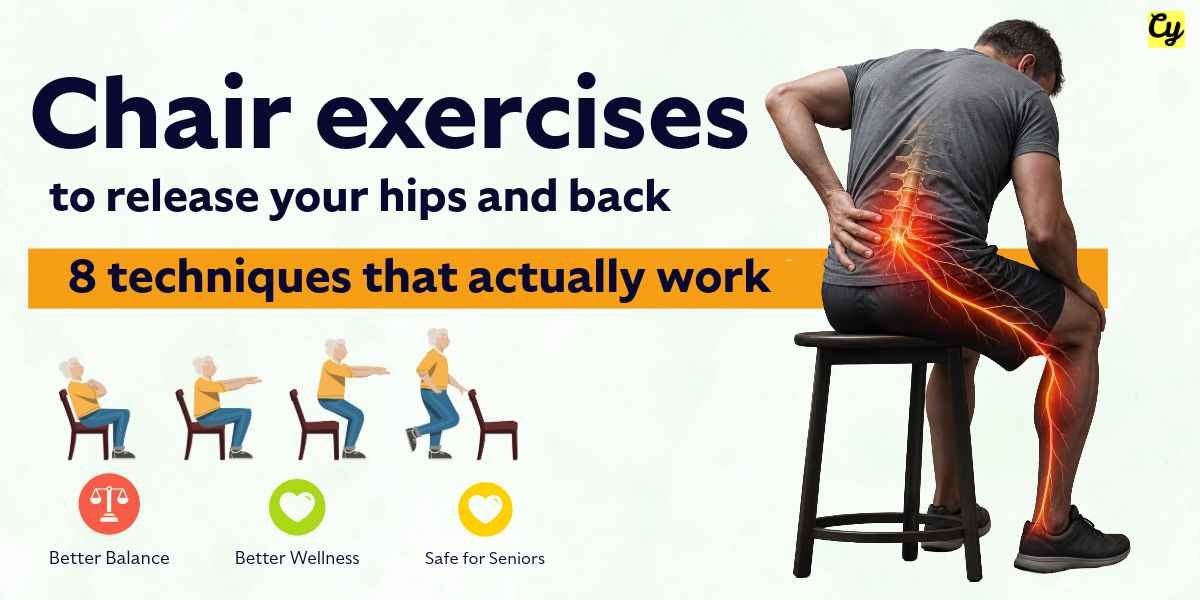
Safe: Discover gentle chair yoga for seniors with diabetes. These 5 safe, research-backed poses help manage blood sugar, boost circulation, and promote relaxation. Living with type 2 diabetes as a senior can come with challenges like joint stiffness, poor circulation, fatigue, and high blood sugar spikes. But regular, low-impact movement can help manage these symptoms—without straining the body.
That’s where chair yoga steps in.
Unlike traditional yoga, chair yoga is done while seated or holding onto a chair. It’s gentle on joints, helps lower blood sugar, and improves blood flow—all of which are crucial for seniors managing diabetes.
🧠 Fun Fact: A 2021 study published in Complementary Therapies in Medicine found that yoga significantly reduced HbA1c (long-term blood sugar) in type 2 diabetics.
🔗 Source - PubMed Study
Table of Contents
Benefits of Chair Yoga for Diabetic Seniors
- ✅ Improves insulin sensitivity
- ✅ Boosts blood circulation to feet, legs, and hands
- ✅ Reduces stress and cortisol (which spikes blood sugar)
- ✅ Supports healthy weight management
- ✅ Lowers risk of diabetic complications like neuropathy
Even 15 minutes a day can make a difference. Let’s explore some gentle poses tailored for diabetic seniors.
5 Gentle Chair Yoga for Seniors with Diabetes
💡 Before you start: Always check your blood sugar levels and consult your doctor before beginning any new exercise routine.
1. Seated Forward Bend (Paschimottanasana Variation)
Purpose: Stimulates pancreas and calms nervous system.
- Sit tall on the chair with legs extended straight (or slightly bent).
- Inhale, raise your arms.
- Exhale, hinge at the hips and reach toward your toes or knees.
- Hold for 5 breaths. Return slowly.
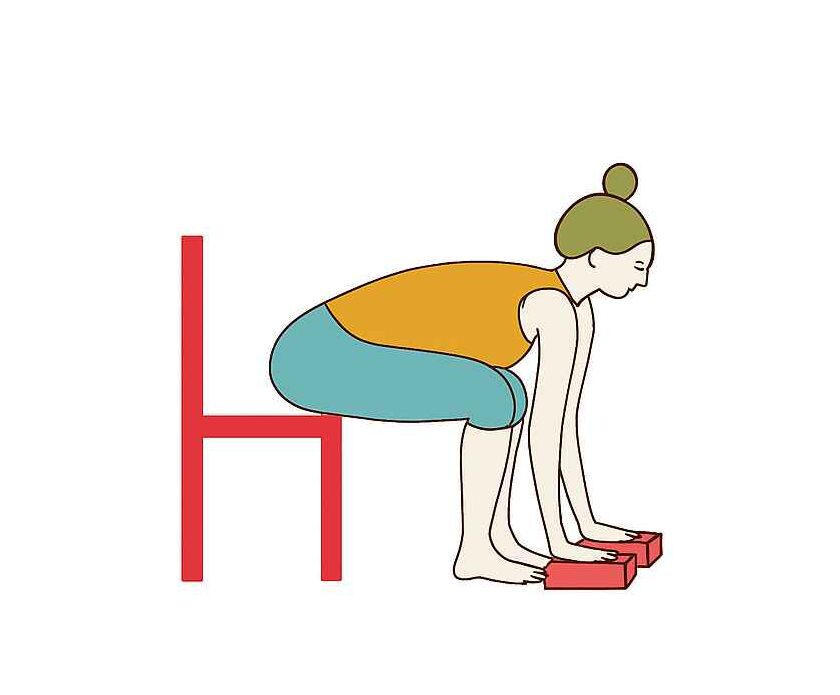
🧠 This helps massage abdominal organs and regulate digestion—a key part of blood sugar control.
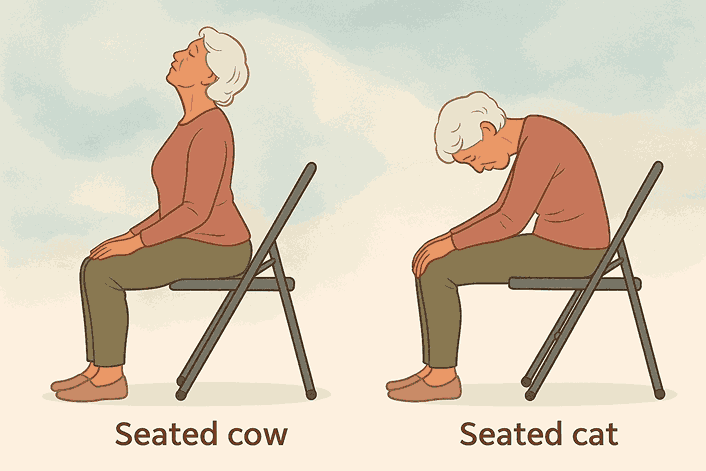
2. Chair Cat-Cow Stretch
Purpose: May Improves spinal flexibility and circulation.
- Sit with feet flat, hands on knees.
- Inhale: arch your back, lift your chest (Cow Pose).
- Exhale: round your back, tuck your chin (Cat Pose).
- Repeat 5–8 times with slow breathing.
🔗 Harvard Health also supports deep breathing to reduce stress and help manage diabetes.
3. Ankle Rolls + Toe Taps
Purpose: May Boosts blood circulation in feet and ankles, prevents neuropathy.
- Sit upright and slowly roll each ankle clockwise, then counterclockwise (10 times each).
- Tap your toes up and down 20–30 times to encourage circulation.
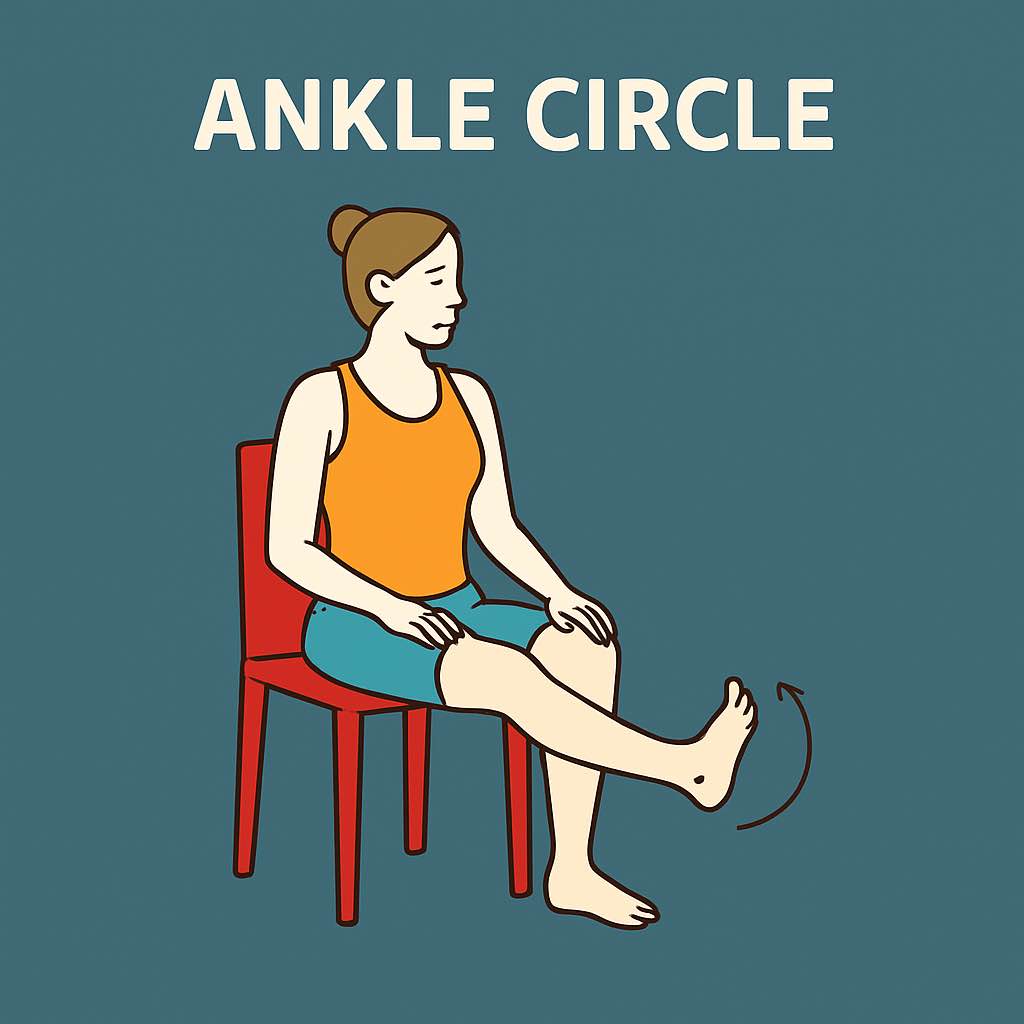
👣 Simple but powerful for nerve health.
4. Seated Side Stretch
Purpose: May Stimulates digestion, promotes waist flexibility.
- Sit tall, right arm on the seat for support.
- Inhale and lift your left arm up and over, leaning to the right.
- Hold for 3–5 breaths. Repeat on the other side.
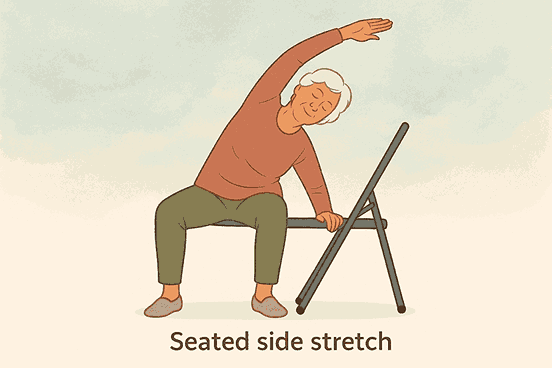
🌿 This may helps improve insulin absorption and core flexibility.
5. Seated Twist (Modified Ardha Matsyendrasana)
Purpose: May Supports digestive organs and improves metabolism.
- Sit tall with your back away from the chair.
- Inhale, place your right hand on your left knee.
- Exhale and gently twist to the left, keeping spine straight.
- Hold for 5 breaths. Switch sides.
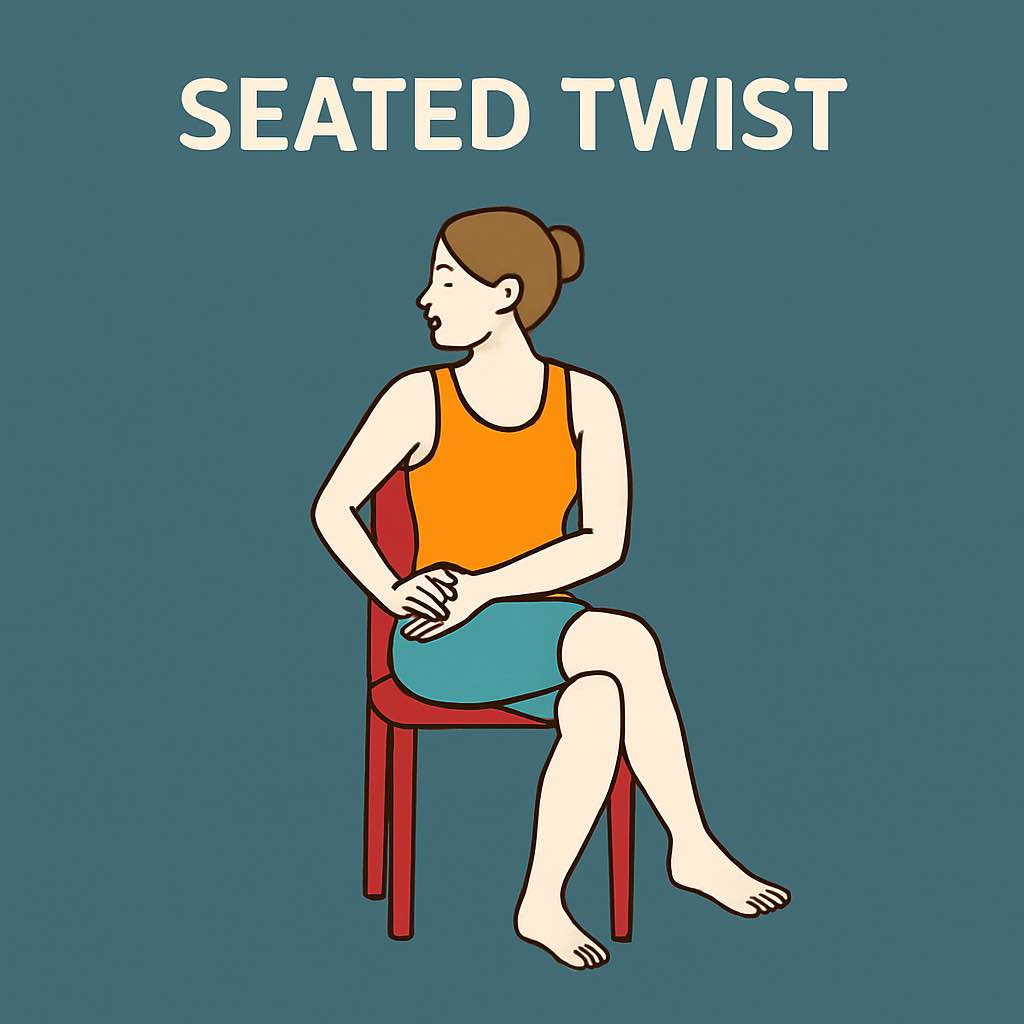
🎯 This pose gently compresses the pancreas and liver to support detox and blood sugar balance.
When chair yoga doesn’t lower blood sugar right away
A lot of people expect to check their glucose after chair yoga and see a lower number.
Sometimes that happens.
Sometimes it doesn’t.
And that can feel frustrating when you’re trying to “do everything right.”
One thing people rarely talk about is that blood sugar doesn’t react to movement in a perfectly clean line.
If you practice early in the morning, your body may already be running on natural hormones that push glucose upward. If you had poor sleep, stress, or changed medication timing, your numbers can look different even after the same routine.
That doesn’t automatically mean chair yoga failed.
Try noticing patterns instead of single readings.
Ask yourself:
□ Do I feel more energized?
□ Am I less stiff afterward?
□ Am I moving more consistently?
□ Are weekly numbers improving?
People who stick with gentle movement usually pay attention to trends, not one session.
The diabetes detail almost every chair yoga guide skips: start with your feet
- Before flexibility.
- Before breathing.
- Before trying deeper stretches.
- Look at your feet.
- That sounds simple, but circulation and sensation matter more than people think for diabetic seniors.
- Take 60 seconds before your session.
Check:
□ Any redness?
□ Dry cracking?
□ Pressure spots?
□ Swelling?
□ Areas that feel unusually warm?
Then check your setup. Your feet should stay flat. Your chair shouldn’t slide. And if barefoot makes you feel unstable, wear socks with grip.
A surprising number of people feel better after improving foot support than after changing poses. Small adjustment. Big difference.
Myth vs Reality: Chair yoga for seniors with diabetes
Some advice sounds good until you try living with it.
| Myth | Reality |
|---|---|
| Chair yoga lowers blood sugar immediately | Response changes day to day |
| You need long sessions | 10–15 consistent minutes adds up |
| Sweating means better exercise | Gentle movement still counts |
| Twisting activates the pancreas | Whole-body movement supports overall health |
| Chair yoga replaces walking | Different types of movement help differently |
One thing I’d keep in mind:
A routine you repeat 4 days a week usually beats the perfect routine you only do once.
Match your chair yoga routine to your blood sugar pattern
People often choose movement based on motivation.
Your body usually gives better clues.
If mornings feel sluggish
Try:
- Chair Cat-Cow
- Side Stretch
- Ankle Rolls
If afternoons feel heavy
Try:
- Toe Taps
- Gentle breathing
- Short twisting sequence
If you exercised after eating
- Keep the session shorter.
- Stay upright.
- Skip deep bends.
If energy feels low
- Cut the session in half.
- Keep the habit.
- Your routine doesn’t need to look identical every day.
Advanced: a 4-week progression for seniors who already do chair yoga
If the 5 poses already feel easy, progress slowly.
Week 1
- Focus on smoother movement.
- 10 minutes.
- No rushing.
Week 2
- Start extending exhalations.
- Longer breathing often makes movement feel easier.
Week 3
- Link poses together:
- Cat-Cow → Side Stretch → Twist → Toe Taps
- Move continuously.
Week 4
Track outcomes.
Write down:
□ Blood sugar pattern
□ Energy level
□ Recovery
□ Comfort while walking
One thing experienced instructors notice: Progress rarely looks like deeper stretches. Usually it looks like feeling steadier doing normal life.
Free Printable PDF – Chair Yoga for Seniors with Diabetes
Want a simple guide you can print or share with loved ones?
👉 Download Your Free PDF – “Chair Yoga for Seniors with Diabetes” (5 Poses with Instructions + Caution Tips)
✅ Large-font text
✅ Step-by-step instructions
✅ Ideal for daily practice
Safety Tips for Seniors with Diabetes
- 🚫 Avoid poses that compress the belly if you’ve eaten recently.
- ✅ Always have water nearby to avoid dehydration.
- 🩸 Monitor your blood sugar before and after exercise.
- 🧦 Wear socks with grip to prevent slipping.
My Final Thoughts for Chair Yoga for Seniors with Diabetes
Chair yoga offers a safe, calming, and effective way for seniors with diabetes to move their body, manage stress, and even improve glucose levels. You don’t have to do everything at once—start small and stay consistent.
And remember gentle movement beats no movement.
FAQs – Chair Yoga for Seniors with Diabetes
1. Is chair yoga safe for seniors with diabetes?
Yes, chair yoga is generally safe for seniors with type 2 diabetes. It’s low impact, helps improve circulation, and may aid in blood sugar regulation when practiced consistently.
2. Can chair yoga help lower blood sugar levels?
Studies suggest that gentle yoga, including chair yoga, may support lower blood glucose by reducing stress and improving insulin sensitivity. Always consult your doctor before starting.
3. What are the best chair yoga poses for diabetics?
Seated spinal twist, forward bend, ankle rolls, leg extensions, and seated sun salutation are great beginner-friendly poses that help with blood flow and energy balance.
4. How often should seniors with diabetes do chair yoga?
Practicing 3–5 times a week for 20–30 minutes can provide noticeable benefits. Consistency matters more than intensity.
5. Do I need to monitor my blood sugar before and after yoga?
Yes. If you’re on insulin or diabetes medication, check your blood sugar before and after yoga to prevent hypoglycemia or any fluctuations.