Chair yoga for frozen shoulder can be a comfortable way to include gentle shoulder movements in your daily routine. If reaching overhead, getting dressed, or lifting everyday items has become difficult, slow and supported exercises may help you stay active within a comfortable range of motion.
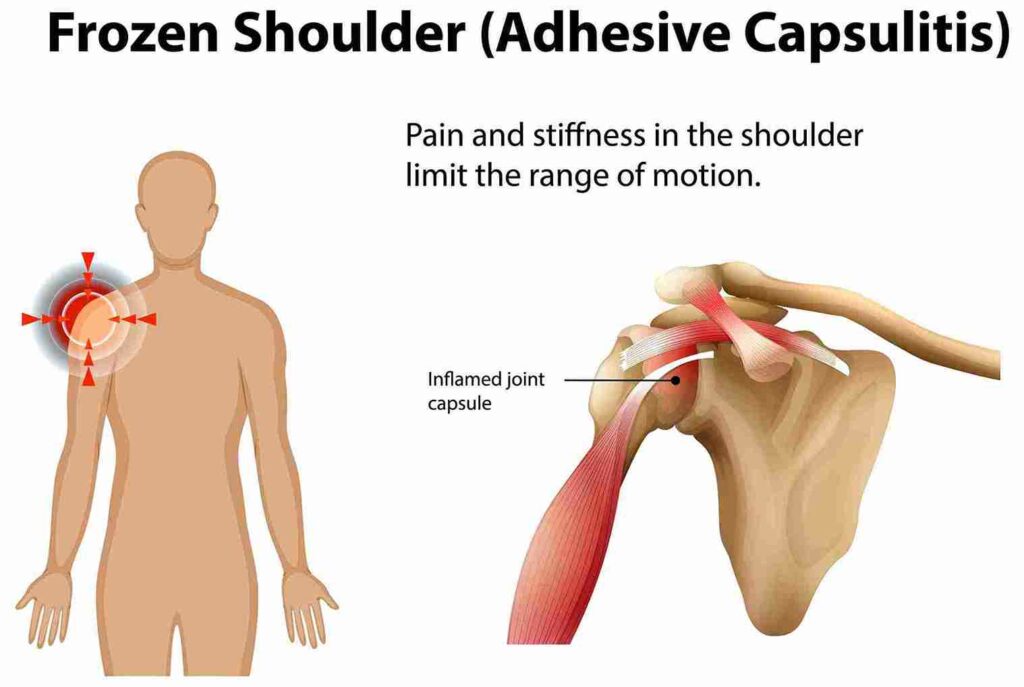
Frozen shoulder, also called adhesive capsulitis, affects everyone differently. Some people notice gradual stiffness, while others find that certain shoulder movements become more limited over time. Because of this, it’s important to move at your own pace and avoid forcing any stretch.
Chair yoga adapts familiar yoga movements so they can be performed while sitting or using a chair for support. You don’t need previous yoga experience, and most exercises require nothing more than a sturdy chair and a few minutes of your day.
In this guide, you’ll learn five beginner-friendly chair yoga exercises, practical safety tips, answers to common questions, and where to download a free printable routine.
Medical note: This article is for educational purposes only and isn’t a substitute for medical advice. If you have severe shoulder pain, a recent injury, surgery, or any condition affecting your shoulder, speak with your healthcare provider before beginning a new exercise routine.
Table of Contents
What is frozen shoulder?
Frozen shoulder is a condition that affects the shoulder joint and can make everyday movements feel more difficult. Some people notice stiffness when reaching overhead, fastening a seatbelt, putting on a jacket, or reaching behind their back.
According to the Mayo Clinic, frozen shoulder usually develops gradually and often changes over time. Symptoms and recovery vary from person to person, so it’s important to follow the guidance of your healthcare provider.
Learn more here:
If your shoulder movement has become more limited or painful without a clear reason, a healthcare professional can help determine the cause and recommend the most appropriate treatment plan.
Why some people choose chair yoga
Living with shoulder stiffness can make it tempting to avoid movement altogether.
Many people prefer chair yoga because the exercises are slow, supported, and easy to adjust. You decide how far your arm moves, and you can pause whenever you need to.
A chair also provides extra stability, allowing you to focus on comfortable movement instead of worrying about balance.
Many people include chair yoga in their weekly routine because it allows them to:
- Stay physically active with gentle movement.
- Practice moving the shoulder within a comfortable range.
- Slow down and focus on relaxed breathing.
- Build a simple routine they can follow at home.
- Adapt movements based on how they feel that day.
The American Academy of Orthopaedic Surgeons (AAOS) encourages people with shoulder conditions to follow the advice of their healthcare team and choose exercises that are appropriate for their individual situation.
Before you begin
Take a minute to prepare your space before starting.
Choose a sturdy chair without wheels and sit with both feet flat on the floor. Wear comfortable clothing that allows your shoulders to move freely, and keep a bottle of water nearby if you’d like.
Remember, every movement should feel controlled and comfortable.
There’s no need to lift your arm higher than it naturally wants to go.
If a movement causes sharp or increasing pain, stop the exercise and speak with your healthcare provider if symptoms continue.
5 Chair Yoga for Frozen Shoulder
These beginner-friendly exercises focus on slow, comfortable movement.
Move only within a range that feels right for your body.
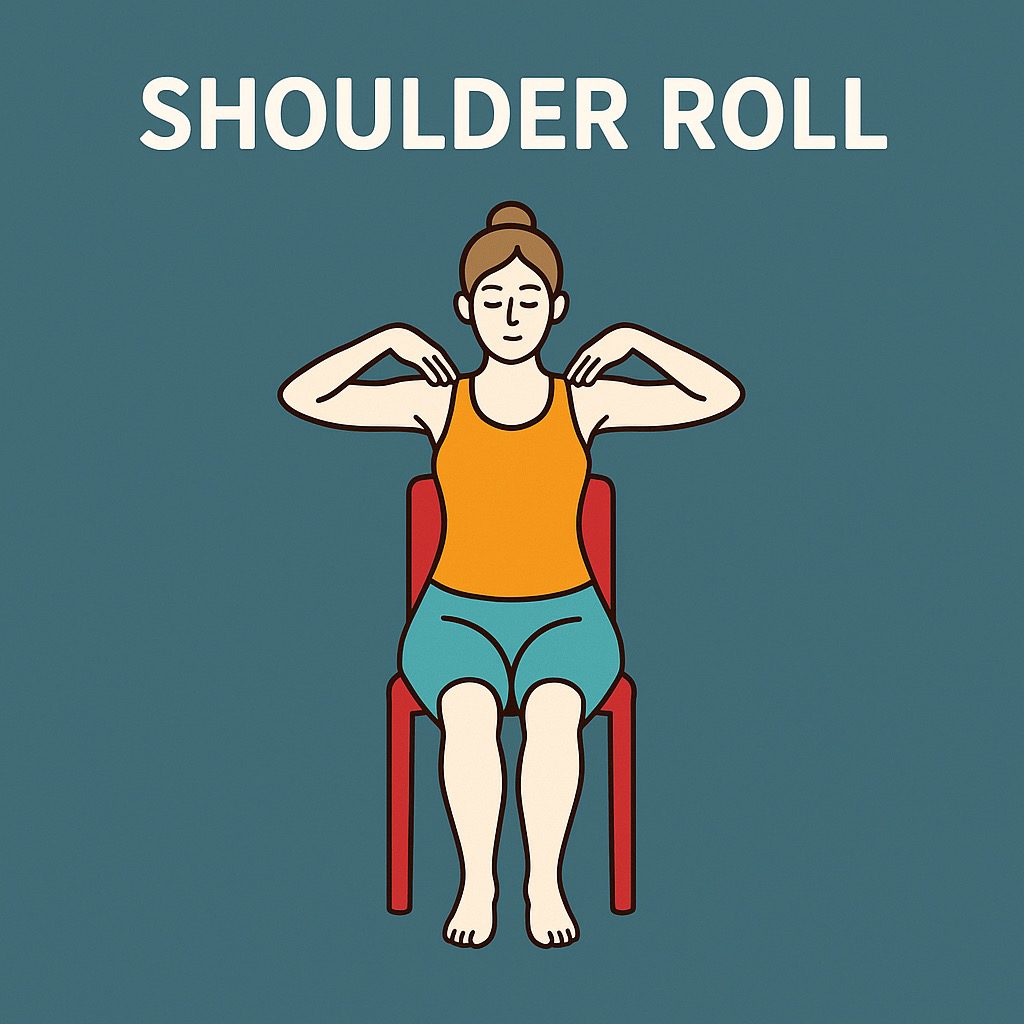
1. Shoulder Rolls
Shoulder rolls are a simple way to begin your session.
Many people like starting here because the movement is easy to control and helps prepare the shoulders for the exercises that follow.
How to do it
- Sit upright with your feet flat on the floor.
- Relax your arms by your sides.
- Slowly roll your shoulders forward five times.
- Reverse the direction and roll them backward five times.
- Keep your breathing slow and comfortable throughout.
Helpful tip
Avoid rushing.
Small circles are perfectly fine.
Why it helps:
It increases circulation and warms up the shoulder joint.
2. Seated Arm Reach
This exercise encourages gentle shoulder movement while allowing you to decide how high your arm feels comfortable moving.
How to do it
- Sit tall with your feet on the floor.
- Slowly raise one arm in front of you or overhead.
- Stop wherever the movement feels comfortable.
- Hold for one or two relaxed breaths.
- Lower your arm slowly.
- Repeat with the opposite arm.
Beginner tip
Some days your shoulder may move more freely than others.
That’s completely normal.
Your goal isn’t to lift your arm as high as possible. It’s simply to move comfortably.
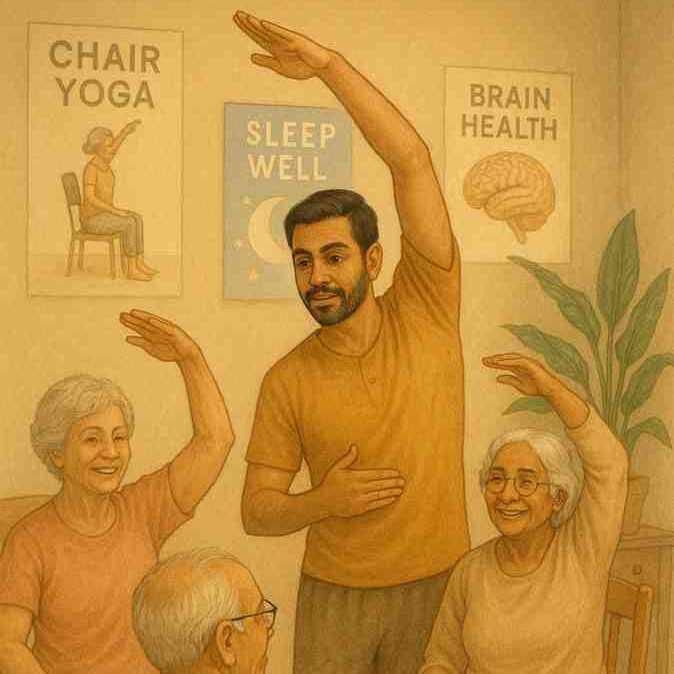
Tip: Only raise your arm to the pain-free range.
3. Cross-Body Arm Stretch
This gentle stretch is commonly included in shoulder mobility routines because it’s easy to adjust.
How to do it
- Sit comfortably in your chair.
- Bring your right arm across your chest.
- Support it gently with your left hand.
- Hold for a few comfortable breaths.
- Return to the starting position.
- Repeat on the other side.
Helpful tip
Use only light pressure.
The stretch should feel gentle, never forced.
Remember to breathe
Many people focus entirely on the shoulder movement.
Don’t forget your breathing.
Slow, natural breathing helps you stay relaxed and avoid tensing your shoulders during each exercise.
The Harvard Health Publishing website includes practical information about breathing exercises and relaxation techniques that many people incorporate into their wellness routines.
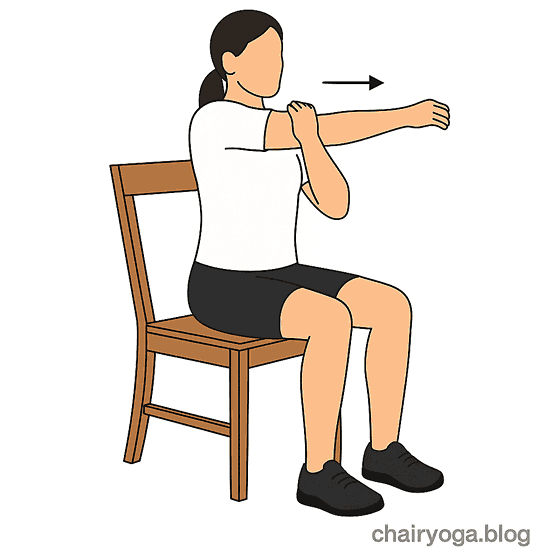
Why it helps:
This stretch targets the outer shoulder muscles and relieves tension.
4. Modified Eagle Arms
This seated variation encourages gentle shoulder and upper back movement. The position can be adjusted depending on what feels comfortable for your shoulders.
There’s no need to force your arms into the full pose.
How to do it
- Sit tall with both feet flat on the floor.
- Extend your arms in front of you.
- Cross your right arm over your left.
- If comfortable, bring the backs of your hands together or place your hands on opposite shoulders.
- Lift your elbows slightly until you feel a gentle stretch.
- Hold for 2 to 3 slow breaths.
- Return to the starting position and repeat on the opposite side.
Helpful tip
If crossing your arms feels uncomfortable, simply hug your shoulders with your hands instead.
The goal is comfortable movement, not achieving a perfect yoga pose.
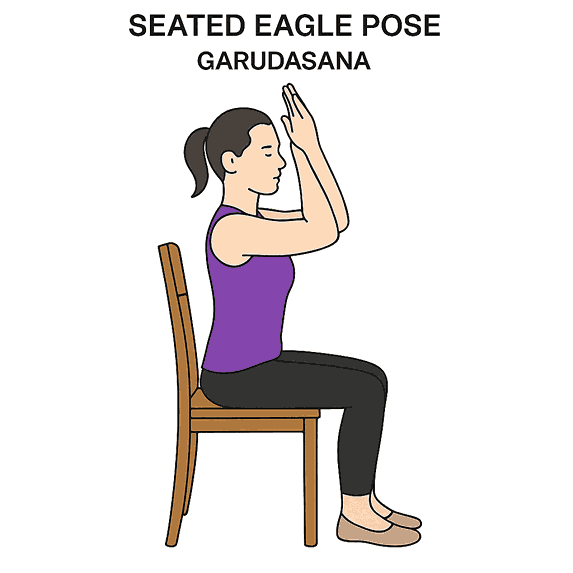
Benefit:
Improves flexibility and releases tight shoulder muscles.
5. Wall-Assisted Arm Walk
This optional exercise uses a wall to support slow shoulder movement. You can perform it while standing if you feel steady, or ask someone to stay nearby if you prefer extra support.
How to do it
- Stand facing a wall.
- Place your fingertips lightly against the wall.
- Slowly “walk” your fingers upward.
- Stop when your shoulder feels comfortably stretched.
- Pause for a few breaths.
- Slowly walk your fingers back down.
- Repeat 3 to 5 times.
Beginner tip
Only lift your arm within a comfortable range.
It’s perfectly fine if your hand doesn’t travel very far up the wall.
Common mistakes to avoid in chair yoga for Frozen Shoulder
A few simple habits can make your chair yoga routine more comfortable.
1. Trying to lift your arm too high
- Everyone’s range of motion is different.
- Move only as far as your shoulder feels comfortable.
2. Rushing through the exercises
- Chair yoga works best when movements are slow and controlled.
- Take your time between each exercise.
3. Holding your breath
- Many people don’t realize they’re holding their breath while stretching.
- Try to breathe naturally throughout every movement.
4. Practicing through sharp pain
- Gentle stretching should never become painful.
- If a movement causes sharp or increasing pain, stop the exercise and speak with your healthcare provider if symptoms continue.
5. Skipping rest days
- Some days your shoulder may feel more comfortable than others.
- It’s okay to take a break and return when you feel ready.
Safety tips for chair yoga for frozen shoulder
These reminders can help you practice more comfortably.
- Choose a sturdy chair without wheels.
- Wear loose clothing that allows easy shoulder movement.
- Keep your feet flat on the floor.
- Move slowly and avoid sudden movements.
- Stay hydrated during your session.
- Stop if you feel dizzy or experience increasing pain.
- Follow the exercise plan recommended by your healthcare provider if you’ve recently had surgery or another shoulder condition.
The NHS recommends speaking with a healthcare professional if shoulder pain is severe, doesn’t improve, or significantly limits your daily activities.
Free Printable PDF
Want an easy guide you can keep nearby while you practice?
Download our free chair yoga for frozen shoulder printable PDF.
Your printable guide includes:
- Step-by-step instructions for all 5 exercises
- Large, easy-to-read text
- Beginner-friendly illustrations (where available)
- Daily practice checklist
- Printable A4 layout
📥 Download Your Free Printable PDF
You may also enjoy these guides on ChairYoga.blog:
- Free Printable Chair Yoga Exercises for Seniors
- Chair Yoga for Beginners
- Chair Yoga for Arthritis
- Chair Yoga for Parkinson’s
- Chair Yoga for Seniors with High Blood Pressure
- Chair Yoga for Seniors with Diabetes
- Morning Chair Stretches for Seniors
Frequently Asked Questions
Is chair yoga suitable for people with frozen shoulders?
Many people choose chair yoga because the movements are gentle and can be adapted to different comfort levels. Before starting any new exercise routine, it’s a good idea to check with your healthcare provider, especially if you’ve recently had an injury or surgery.
How often can I practice these exercises?
Many beginners start with 10 to 15 minutes, 3 to 5 days each week. Choose a schedule that feels comfortable and adjust it based on advice from your healthcare provider.
Should I continue if my shoulder feels painful?
Mild stretching sensations can feel different from pain. If an exercise causes sharp or increasing pain, stop the movement and seek advice from your healthcare provider.
Do I need any special equipment?
No. A sturdy chair is enough for most of the exercises in this guide. For the optional wall walk, you’ll also need a clear wall space.
Can older adults do these exercises?
Many of these movements are suitable for older adults because they can be performed while sitting and adjusted to different mobility levels. Always move at your own pace.
Is the wall-assisted arm walk required?
No. It’s an optional exercise. If standing isn’t comfortable or doesn’t feel safe, you can skip it and continue with the seated exercises.
My final thoughts on chair yoga for Frozen Shoulder
Frozen shoulder can make everyday activities feel more challenging, but that doesn’t mean you have to stop moving altogether. Many people find that gentle, comfortable movement fits well into their daily routine, especially when the exercises can be adapted to their individual needs.
Chair yoga provides a simple way to practice slow, supported movements without needing advanced flexibility or special equipment. Start with one or two exercises, pay attention to how your shoulder feels, and build your routine gradually over time.
If you’re unsure whether a particular movement is right for you, speak with your healthcare provider or physiotherapist before continuing.
For reliable information about frozen shoulder, visit these trusted resources:
- Mayo Clinic: https://www.mayoclinic.org/diseases-conditions/frozen-shoulder
- NHS: https://www.nhs.uk/conditions/frozen-shoulder/
- MedlinePlus: https://medlineplus.gov/shoulderinjuriesanddisorders.html
- American Academy of Orthopaedic Surgeons (AAOS): https://orthoinfo.aaos.org/en/diseases–conditions/frozen-shoulder/
By choosing gentle movements, staying consistent, and listening to your body, you can create a routine that feels comfortable and easy to maintain.