Best yoga poses for back pain can be a helpful place to start if you’re looking for gentle ways to stay active and improve your flexibility. Whether your back feels stiff after sitting, sore from daily activities, or simply less mobile than it used to, choosing comfortable movements that match your ability is important.
Back discomfort is something many people experience at some point in life. It can develop after long hours at a desk, lifting heavy objects, sleeping in an awkward position, or becoming less active over time.
Many people include yoga in their weekly routine because it combines slow stretching with mindful breathing. The goal isn’t to push through discomfort or perform advanced poses. Instead, it’s about moving in a way that feels comfortable and sustainable for your body.
In this guide, you’ll discover 9 beginner-friendly yoga poses for back pain, along with practical safety tips, answers to common questions, and a free printable PDF that you can use at home.
Medical note: This article is for educational purposes only and isn’t a substitute for medical advice. If you have severe back pain, numbness, weakness, or a recent injury, speak with your healthcare provider before beginning a new exercise routine.
Quick Answer
If you’re looking for gentle yoga poses to include in your routine, these are among the most beginner-friendly options:
- Cat-Cow Pose
- Child’s Pose
- Seated Forward Bend
- Knees-to-Chest Pose
- Supported Bridge Pose
- Sphinx Pose
- Gentle Seated Spinal Twist
- Legs Up the Wall
- Supported Relaxation Pose
Each pose can be modified to match your flexibility and comfort level. Move slowly, avoid forcing any stretch, and stop if something doesn’t feel right.
Table of Contents
Why many people choose yoga for back discomfort
Back discomfort can make everyday tasks feel more challenging, whether you’re working at a desk, gardening, or simply getting out of bed in the morning.
Many people choose yoga because it encourages slow, controlled movement rather than fast or high-impact exercise.
A gentle yoga routine may help you:
- Stay physically active.
- Practice flexibility through comfortable stretching.
- Become more aware of your posture and movement.
- Slow your breathing and relax after a busy day.
- Build a routine that’s easy to practice at home.
Why the Best Yoga Poses for Back Pain Focus on Gentle Movement
For more information about back pain, visit MedlinePlus:
The National Institute of Arthritis and Musculoskeletal and Skin Diseases (NIAMS) also provides reliable information about common causes of back pain and when to seek medical advice:
Before you begin
Taking a few moments to prepare can make your practice more comfortable.
Choose a quiet space where you can move without rushing. Wear comfortable clothing, use a yoga mat if you’re practicing on the floor, and keep a chair nearby if you need extra support.
Move within a range that feels comfortable for your body.
A gentle stretch is enough.
Sharp or increasing pain is a sign to stop and speak with your healthcare provider if symptoms continue.
9 Best Yoga Poses for Back Pain
These beginner-friendly poses focus on slow, comfortable movement.
There’s no need to perform every pose perfectly. Small, controlled movements are often the most comfortable place to start.
The best yoga poses for back pain are usually the ones that feel comfortable for your body. These beginner-friendly stretches can be adjusted to match your flexibility and experience.
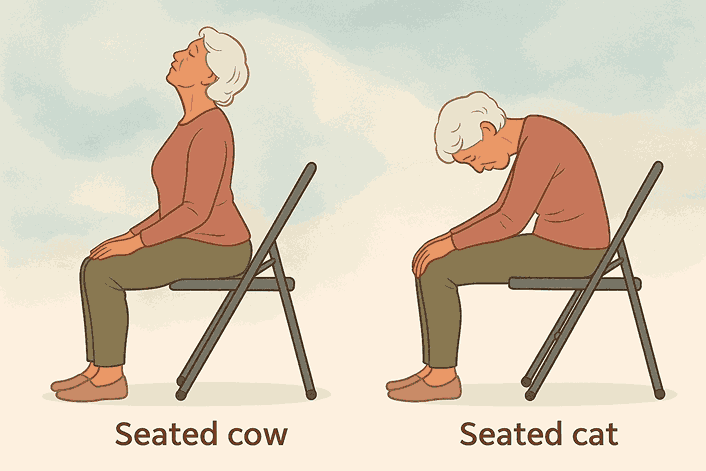
1. Cat-Cow Pose (Marjaryasana–Bitilasana)
Cat-Cow is often used at the beginning of a yoga session because it gently moves the spine through a comfortable range of motion.
How to do it
- Start on your hands and knees.
- Place your hands under your shoulders and your knees under your hips.
- Slowly lift your chest and look slightly forward.
- Then gently round your back while lowering your head.
- Continue moving between these positions with slow breathing for 5 to 8 repetitions.
Why people enjoy this pose
Many beginners find this movement helps them ease into the rest of their practice after sitting for long periods.
Supported by studies showing spinal mobility exercises may reduce lower back stiffness.
2. Child’s Pose (Balasana)
Child’s Pose is a quiet resting position that many yoga routines include between more active movements.
How to do it
- Kneel on your mat.
- Sit back toward your heels.
- Reach your arms forward or rest them alongside your body.
- Lower your forehead toward the mat or a cushion.
- Stay for several comfortable breaths before returning slowly.
Helpful tip
If kneeling isn’t comfortable, place a pillow between your hips and heels or skip this pose.
Research shows forward-folding poses may calm the nervous system, may reducing pain perception.
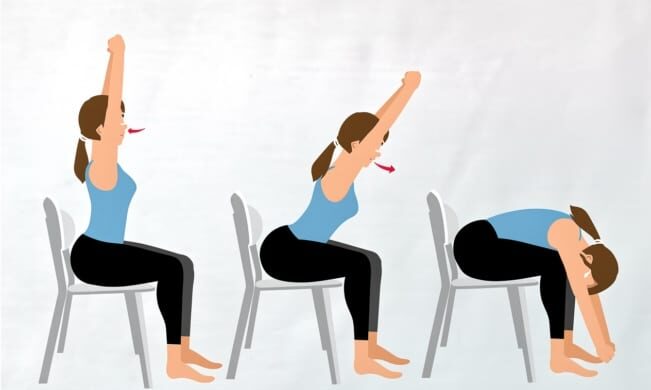
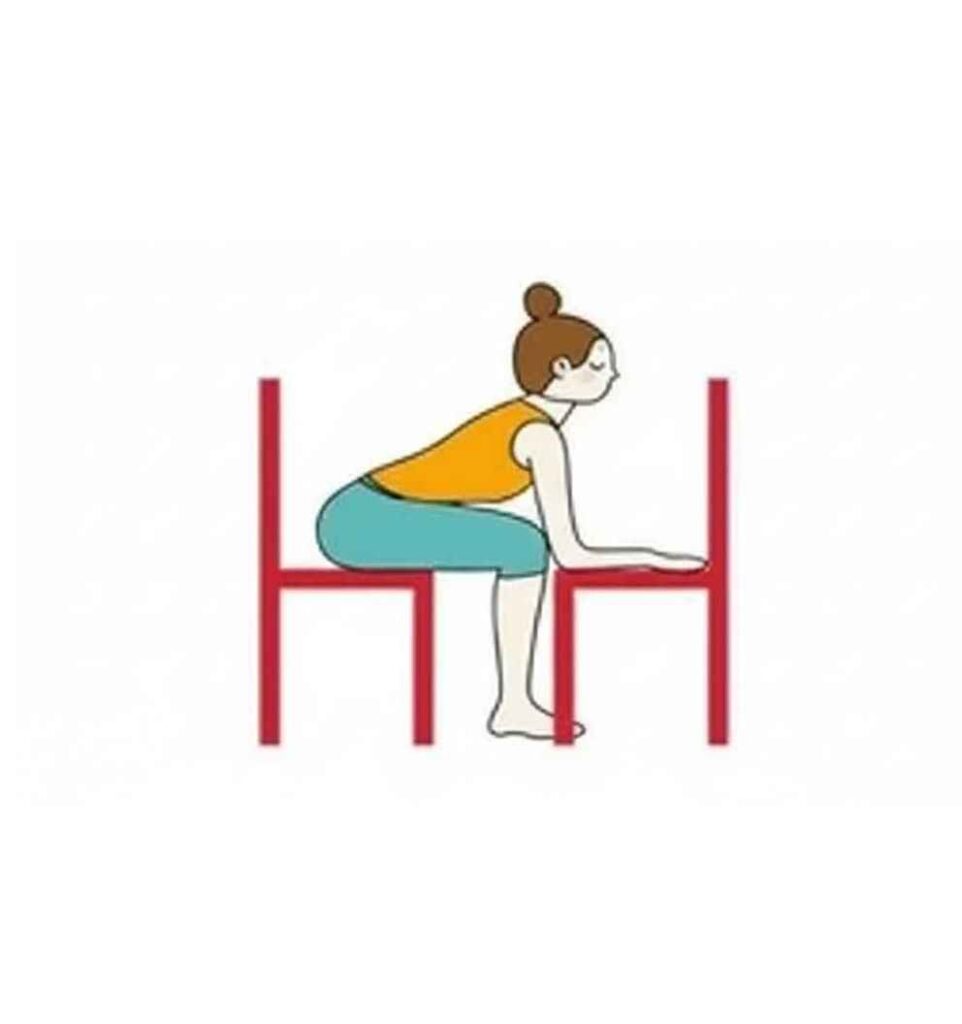
3. Seated Forward Bend (Chair-Friendly Option)
This version works well for beginners or anyone who prefers to stay seated.
How to do it
- Sit near the front of a sturdy chair.
- Keep both feet flat on the floor.
- Take a slow breath in.
- As you breathe out, lean forward slightly from your hips.
- Rest your hands on your thighs or knees.
- Return to sitting slowly.
Why try this variation?
A chair provides extra support and allows you to control how far you move.
Even a small stretch can feel comfortable.
Chair-based yoga has been may shown to reduce pain in older adults (Journal of Geriatric Physical Therapy).
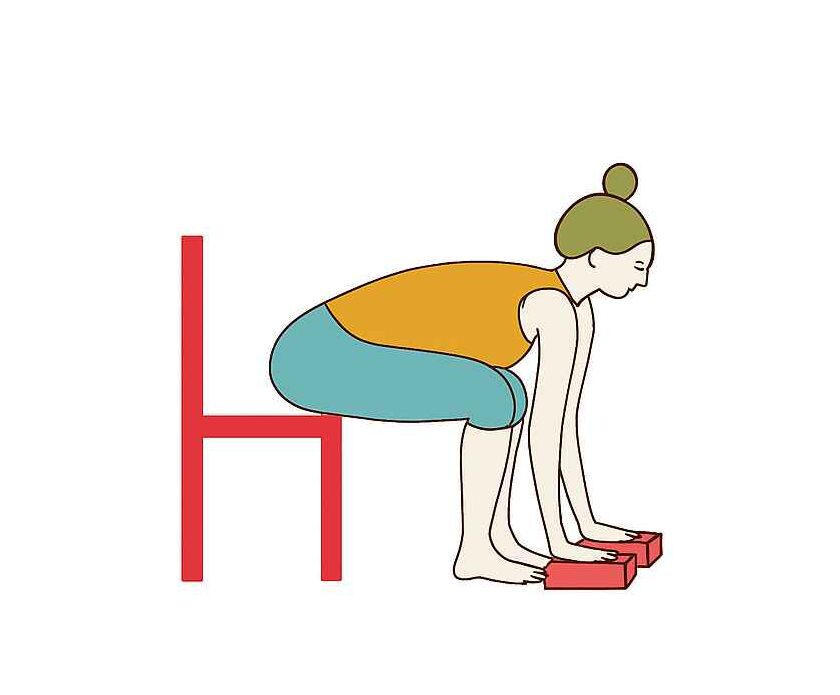
4. Knees-to-Chest Pose (Apanasana)
This gentle floor stretch is commonly included in beginner yoga routines.
How to do it
- Lie comfortably on your back.
- Slowly bring one knee toward your chest.
- Hold it gently with both hands.
- Stay for a few relaxed breaths.
- Repeat with the opposite leg.
- If comfortable, hug both knees toward your chest together.
Helpful tip
Avoid pulling your knees closer than feels comfortable.
Let your breathing stay slow and relaxed throughout the movement.
Lumbar decompression movements may reduce disc pressure (Spine Journal).
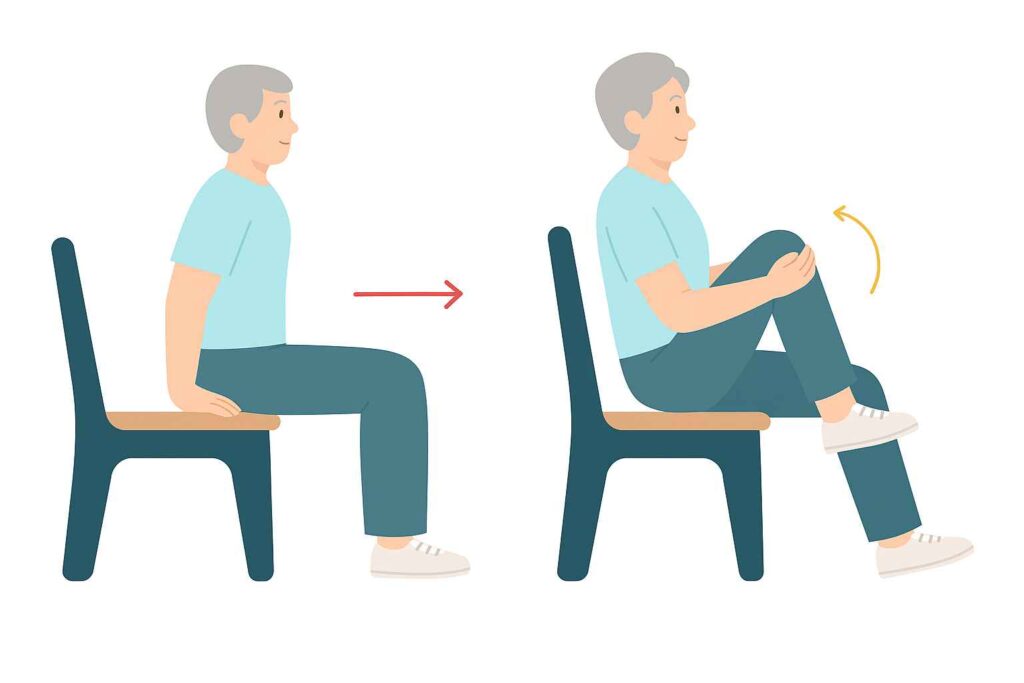
5. Supported Bridge Pose
This gentle backbend uses your legs and hips to lift your body slightly from the floor.
You don’t need to lift very high.
How to do it
- Lie on your back with your knees bent.
- Place your feet hip-width apart.
- Press gently through your feet.
- Lift your hips a small distance from the floor.
- Hold for two or three breaths.
- Lower slowly with control.
You can also place a yoga block or firm cushion beneath your hips for additional support if you’re familiar with supported yoga poses.
Beginner tip
If lifting your hips feels uncomfortable, simply practice the starting position and focus on slow breathing instead.
Keep your breathing comfortable
- Many people focus only on the stretches.
- Your breathing matters too.
Try breathing slowly through your nose and letting each movement match your breath. There’s no need to hold your breath or rush from one pose to the next.
The Harvard Health Publishing website has practical information about breathing exercises and relaxation techniques that many people include in their wellness routines:
May strengthening posterior chain muscles reduce chronic low back pain.
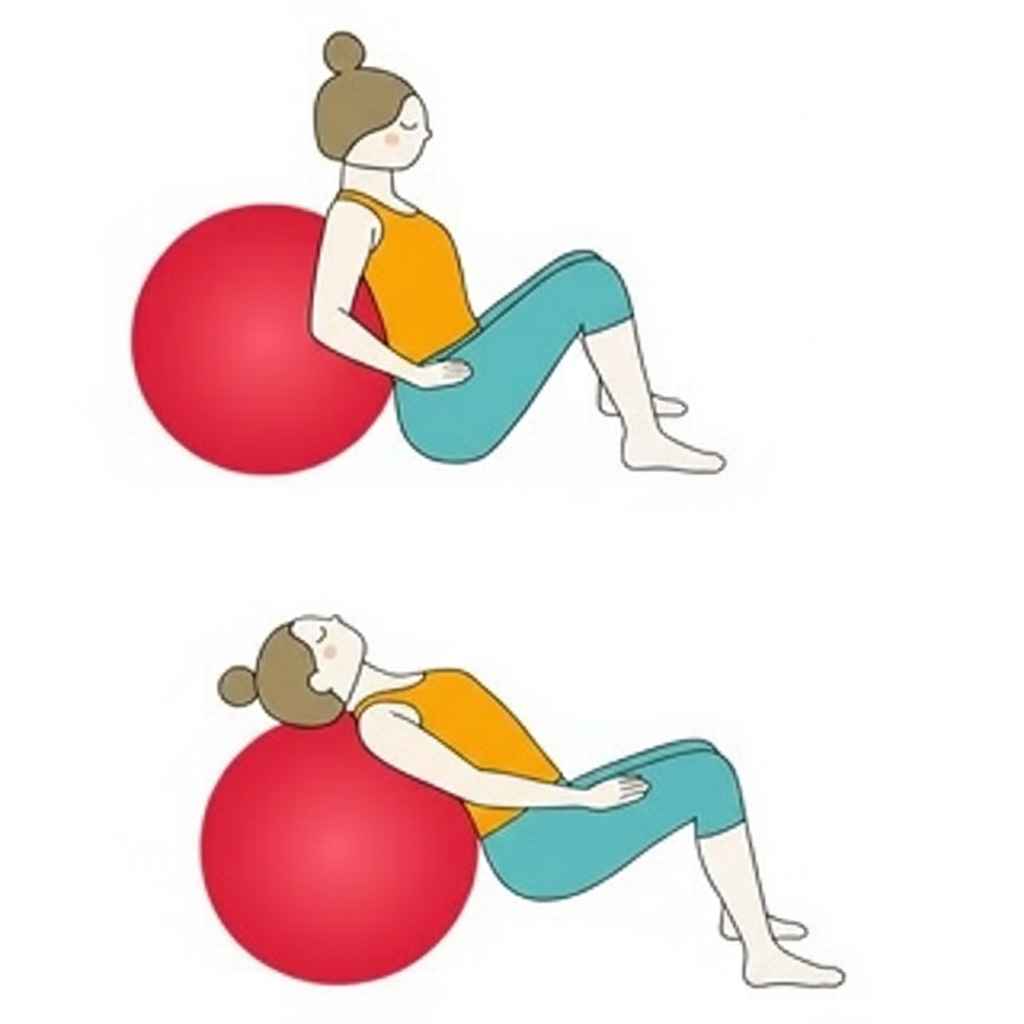
6. Sphinx Pose
Sphinx Pose is a gentle backbend that many beginners find more approachable than deeper backbends. The movement is small and should always feel comfortable.
How to do it
- Lie on your stomach with your legs extended behind you.
- Place your forearms on the floor with your elbows beneath your shoulders.
- Gently lift your chest while keeping your hips resting on the mat.
- Relax your shoulders away from your ears.
- Hold for 3 to 5 slow breaths before lowering back down.
Helpful tip
If lying on your stomach isn’t comfortable, skip this pose and continue with the next exercise.
May be used in physical therapy for disc health and spinal extension tolerance.
7. Gentle Seated Spinal Twist
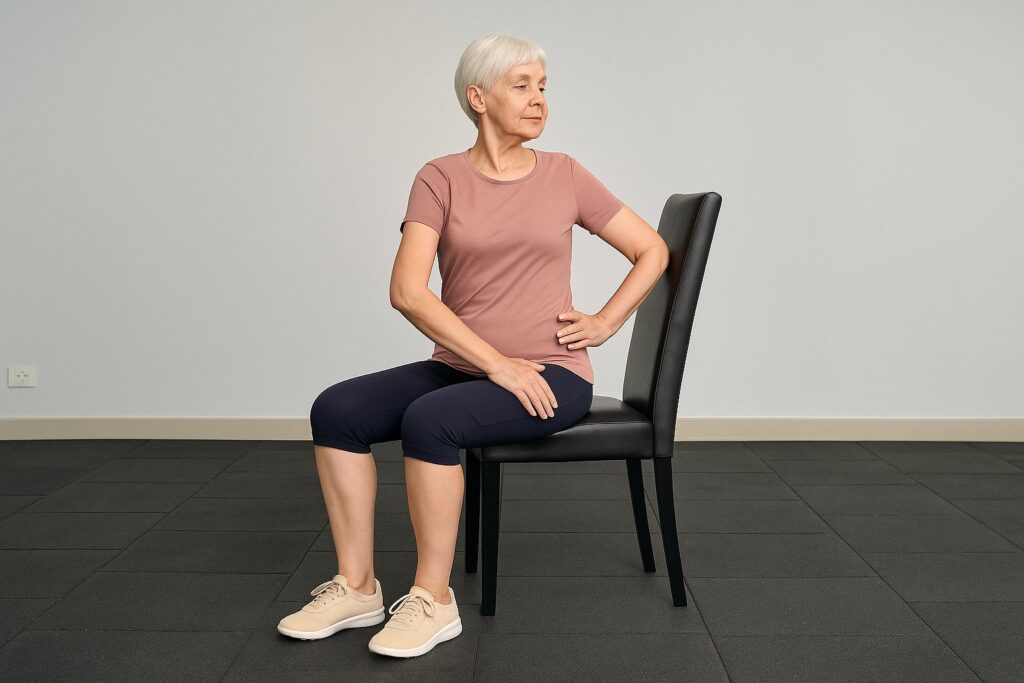
This seated twist encourages gentle movement through your upper back and waist.
The twist should stay slow and comfortable without forcing your body into a deeper position.
How to do it
- Sit tall on a sturdy chair.
- Place your right hand on the outside of your left knee.
- Rest your left hand behind you on the chair.
- Slowly turn your shoulders to the left.
- Hold for two or three comfortable breaths.
- Return to the center and repeat on the opposite side.
Why choose the seated version?
Using a chair gives you extra support and lets you control the movement throughout the exercise.
Maybe controlled spinal rotation improves functional movement without strain.
8. Legs Up the Wall
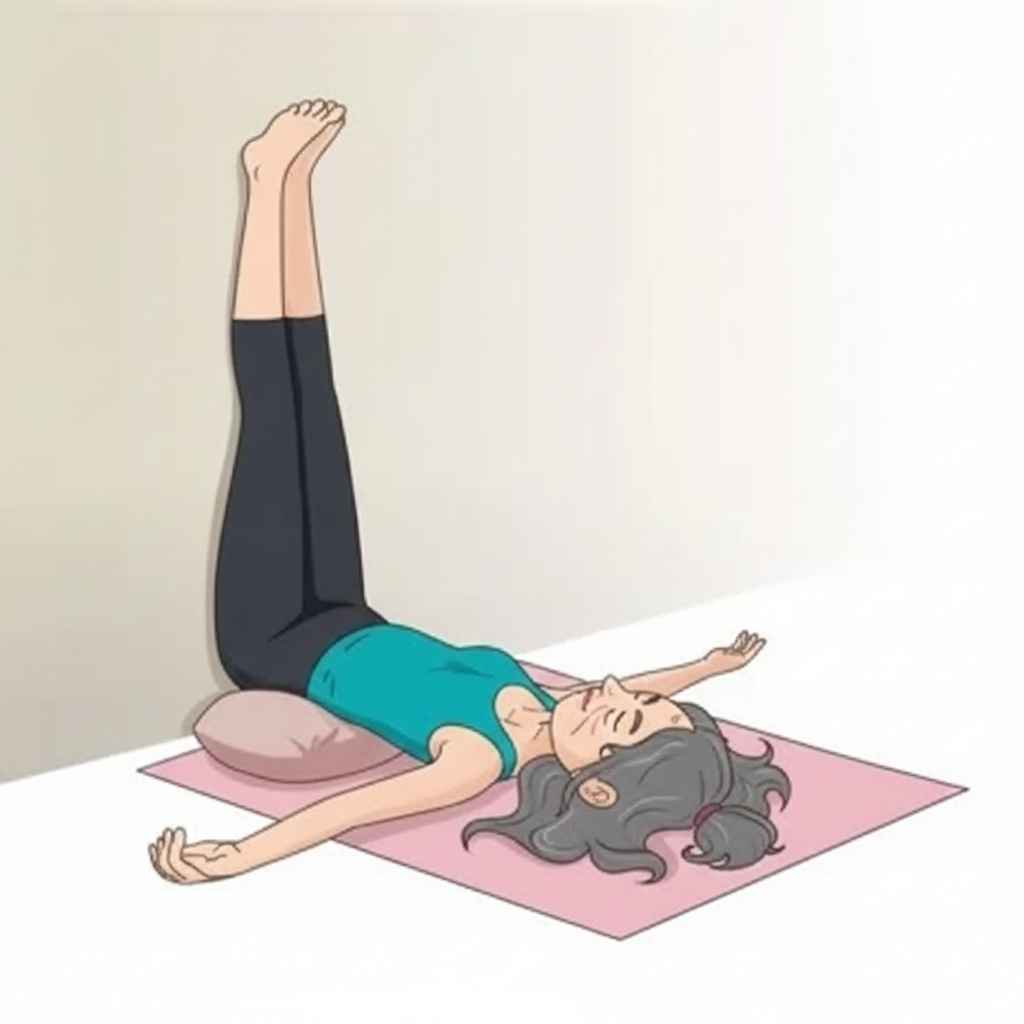
This restorative pose is often included near the end of a yoga session because it allows you to rest quietly for a few minutes.
How to do it
- Sit beside a clear wall.
- Carefully lie on your back while bringing your legs up against the wall.
- Adjust your position until it feels comfortable.
- Rest your arms by your sides.
- Stay for 2 to 5 minutes while breathing naturally.
Helpful tip
If getting down to the floor is difficult, you can skip this pose or speak with a qualified yoga instructor about alternative seated options.
May restorative yoga poses reduce pain sensitivity and muscle tension.
9. Supported Relaxation Pose
Ending your practice with a few quiet minutes gives your body time to settle after stretching.
How to do it
- Lie comfortably on your back.
- Place a pillow or rolled towel beneath your knees if it feels supportive.
- Let your arms rest comfortably by your sides.
- Close your eyes if you wish.
- Breathe naturally for 3 to 5 minutes.
There’s nothing you need to “do” during this pose.
Simply allow yourself to relax and breathe comfortably.
Mind-body relaxation lowers cortisol, reducing chronic pain intensity.
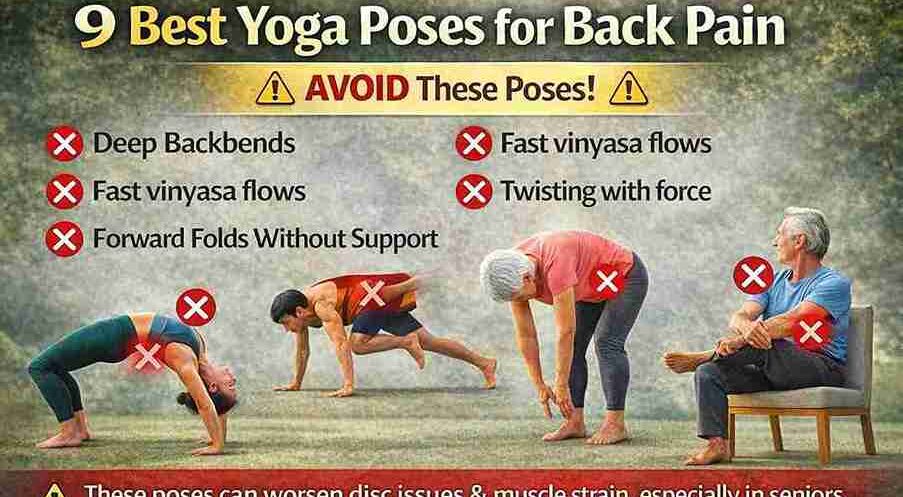
Yoga poses to avoid if your back feels uncomfortable
Not every yoga pose is suitable for every person.
If you’re dealing with back discomfort, it may be best to avoid movements that feel painful or require large ranges of motion.
Some people choose to skip:
- Deep backbends
- Fast-paced yoga flows
- Strong twisting movements
- Unsupported standing forward bends
- Any pose that causes sharp or increasing pain
If you’re unsure whether a movement is appropriate, speak with your healthcare provider or a qualified yoga instructor before trying it.
Safety tips before practicing yoga
Keeping your practice gentle can make it more enjoyable.
Here are a few simple reminders:
- Move slowly instead of rushing between poses.
- Never force a stretch.
- Keep your breathing relaxed throughout the session.
- Wear comfortable clothing that allows easy movement.
- Use a yoga mat or sturdy chair for support when needed.
- Keep water nearby.
- Stop if a movement feels painful or makes your symptoms worse.
If you have severe back pain, recent surgery, numbness, tingling, or weakness in your legs, seek medical advice before beginning a new exercise program.
The American Academy of Orthopaedic Surgeons (AAOS) provides helpful information about common causes of back pain and when to seek medical care.
Free Printable PDF
Want an easy version you can keep beside your yoga mat?
Download our Free Printable Yoga Poses for Back Pain guide.
It includes:
- Step-by-step instructions
- Large, easy-to-read text
- Beginner-friendly illustrations (where available)
- Daily practice checklist
- Printable A4 format
📥 Download Your Free Printable PDF
You might also enjoy these guides on ChairYoga.blog:
- Free Printable Chair Yoga Exercises for Seniors
- Chair Yoga for Beginners
- Chair Yoga for Arthritis
- Chair Yoga for Seniors with High Blood Pressure
- Chair Yoga for Seniors with Diabetes
- Morning Chair Stretches for Seniors
Frequently Asked Questions
Can yoga help with back discomfort?
Many people include yoga as part of their regular movement routine. Research has explored yoga for people with long-term back discomfort, but experiences vary from person to person. It’s best to choose exercises that feel comfortable and follow guidance from your healthcare provider.
Which yoga pose is best for beginners?
Cat-Cow, Child’s Pose, and the Chair Seated Forward Bend are popular beginner-friendly options because the movements are gentle and easy to adjust.
How often should I practice yoga?
Many beginners start with 10 to 20 minutes, 3 to 5 times each week. Building a routine that fits your schedule is often easier than trying long sessions.
Can older adults practice these poses?
Many of these exercises can be modified for older adults. If getting down to the floor is difficult, chair-supported variations may be a more comfortable option.
Should I exercise if my back hurts?
If you have severe pain, numbness, weakness, or a recent injury, speak with your healthcare provider before exercising. Stop any movement that increases your discomfort.
Do I need special equipment?
No. Most poses only require a yoga mat. A sturdy chair, yoga block, or cushion can provide extra support if needed.
Final thoughts
Back discomfort can have many different causes, and no single exercise works for everyone. The goal of yoga isn’t to push through pain or achieve perfect poses. It’s about moving in a way that feels comfortable and sustainable for your body.
If you’re new to yoga, begin with one or two poses and see how they feel. Over time, you can gradually build a routine that fits your daily life and comfort level.
For reliable information about back pain and staying active, these trusted resources are worth exploring:
- MedlinePlus: https://medlineplus.gov/backpain.html
- National Institute of Arthritis and Musculoskeletal and Skin Diseases (NIAMS): https://www.niams.nih.gov/health-topics/back-pain
- Harvard Health: https://www.health.harvard.edu/
- American Academy of Orthopaedic Surgeons (AAOS): https://orthoinfo.aaos.org/en/diseases–conditions/low-back-pain/
By keeping your movements gentle, listening to your body, and staying consistent, you can build a yoga routine that feels comfortable and fits naturally into your day.