Back pain is one of the most common health problems in adults over 60.
According to the National Institute on Aging, nearly 60–80% of older adults experience back pain, often caused by:
- Muscle weakness
- Poor posture
- Arthritis
- Spinal stiffness
- Reduced flexibility
Back pain can make simple activities like walking, sitting, or sleeping uncomfortable.
The good news is that the best yoga poses for back pain can reduce discomfort, improve mobility, and strengthen your spine safely—even for seniors.
Chair yoga and gentle yoga poses are especially effective because they reduce strain and improve muscle support.
Table of Contents
Expert Reality Check
| Myth | Reality |
|---|---|
| “More stretching always helps” | Too much stretching can irritate sensitive tissues |
| “Pain means damage” | Some discomfort may simply reflect deconditioning |
| “Morning is the best time for deep stretches” | Early-morning spinal stiffness can increase sensitivity |
| “The painful area is always the problem” | Weak hips/core often contribute more than the spine itself |
| “Flexibility is the main goal” | Stability and strength are usually more important |
What Most Seniors Realize Too Late
The goal of yoga for back pain is NOT:
- touching your toes
- becoming highly flexible
- forcing difficult poses
The real goal is:
- moving confidently
- reducing stiffness
- improving daily function
- protecting independence
- building a more resilient spine
That mindset shift is where long-term pain relief usually begins.
Why Yoga Works for Back Pain in Seniors
Yoga helps back pain by addressing root causes.
- Strengthens core muscles
- Improves posture
- Reduces muscle tension
- Improves spinal flexibility
- Improves blood circulation
This reduces strain on the spine.
Chair yoga is especially safe for seniors.
9 Best Yoga Poses for Back Pain (Senior-Safe)
These poses are gentle and safe.
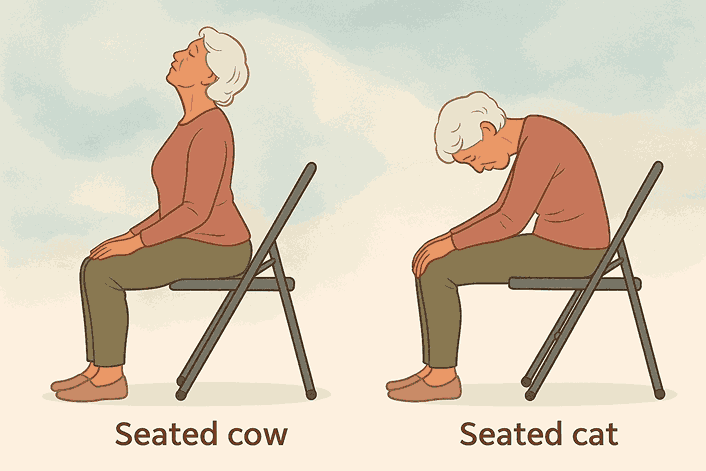
1. Seated Cat-Cow Pose
Benefits:
- Improves spinal flexibility
- Reduces stiffness
Steps:
- Sit upright
- Arch back slowly
- Round spine gently
- Repeat 10 times
Research confirms spinal mobility exercises reduce back pain.
Study link: https://pmc.ncbi.nlm.nih.gov/articles/PMC4878447/
2. Seated Forward Bend
Benefits:
- Stretches lower back
- Improves flexibility
Steps:
- Bend forward gently
- Hold 10 seconds
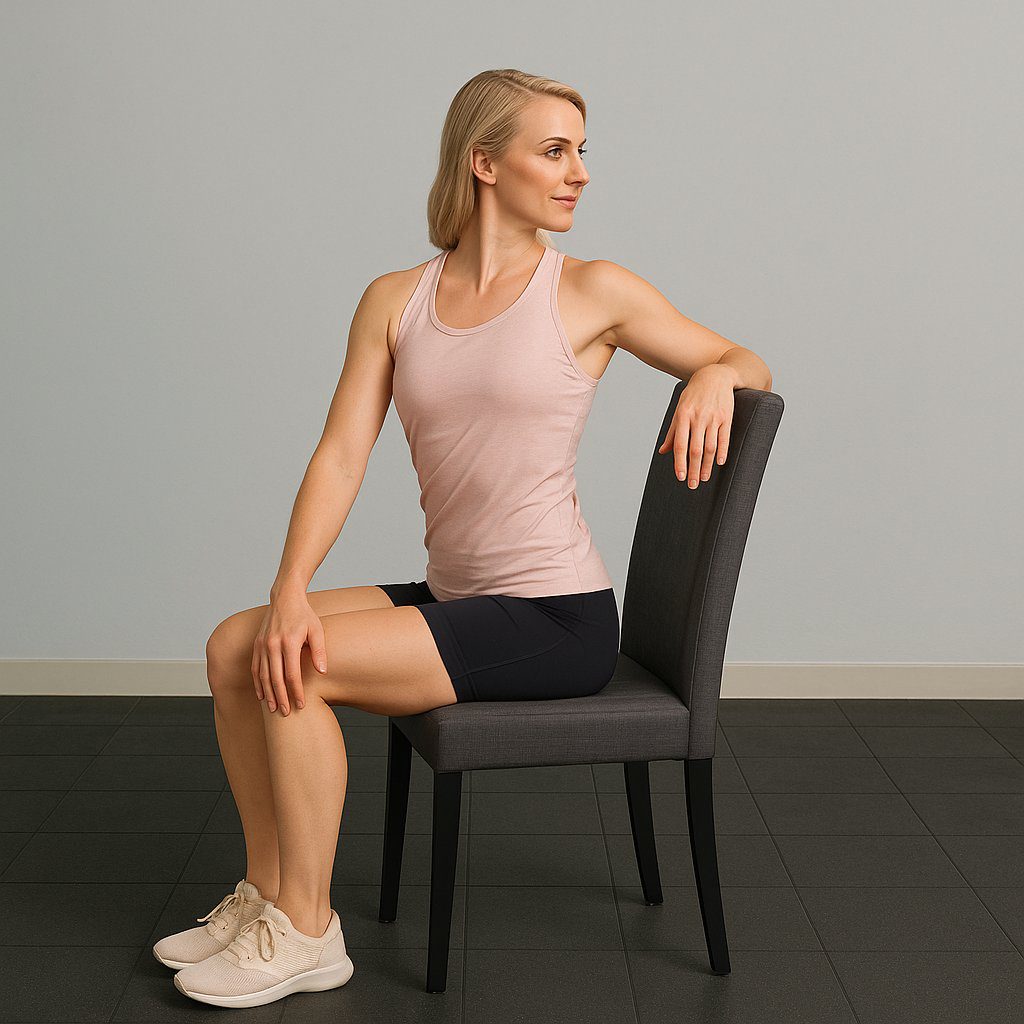
3. Seated Spinal Twist
Benefits:
- Improves spinal mobility
- Reduces stiffness
Steps:
- Twist gently
- Hold 10 seconds
4. Seated Pelvic Tilt
Benefits:
- Strengthens lower back
- Improves posture
Steps:
- Tilt pelvis. forward
- Return slowly
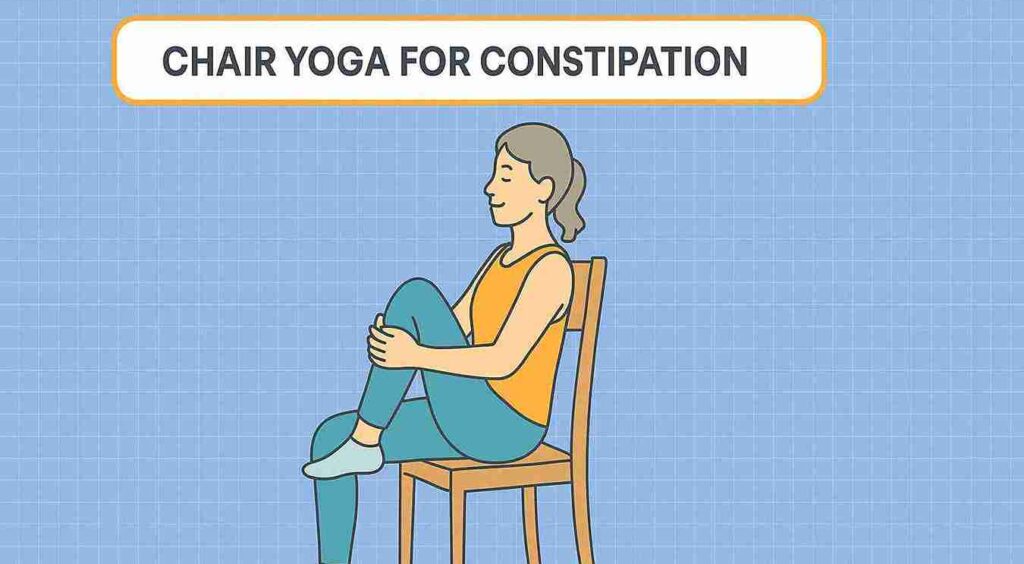
5. Seated Knee Lift
Benefits:
- Strengthens core
- Supports spine
Research confirms strengthening core muscles reduces back pain.
Study link: https://pubmed.ncbi.nlm.nih.gov/22926316/
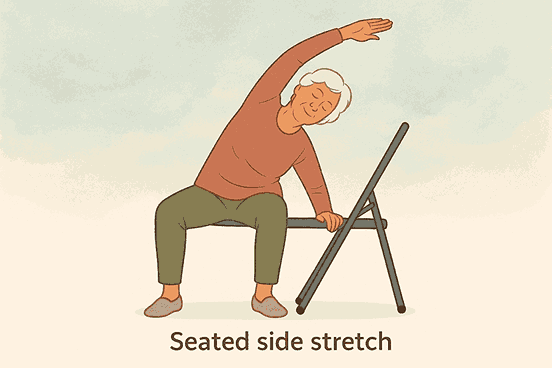
6. Seated Side Bend
Benefits:
- Stretches spine
- Improves flexibility
Steps:
- Lean sideways
- Hold 10 seconds
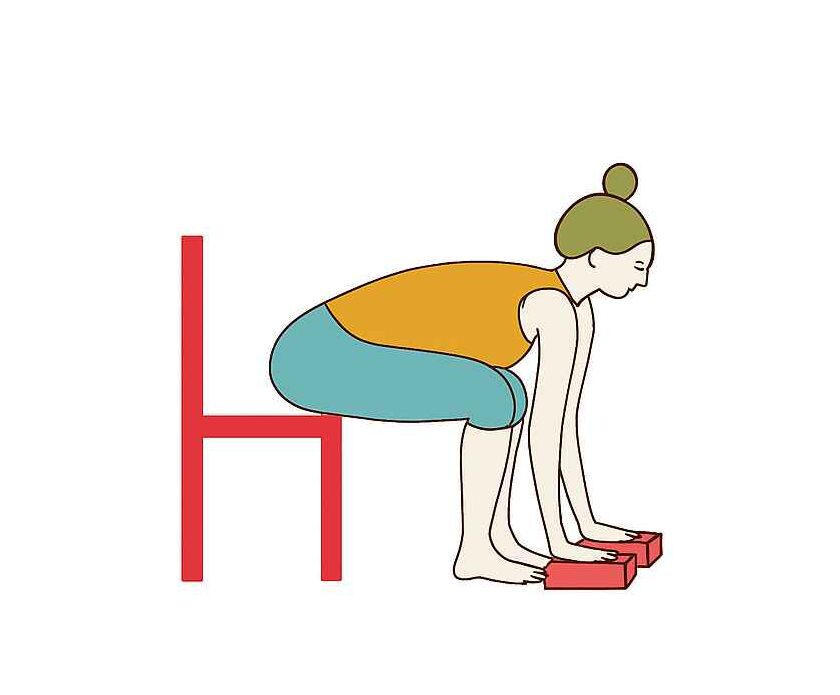
7. Child’s Pose (Modified with Chair)
Benefits:
- Relaxes spine
- Reduces tension
Research confirms stretching reduces back pain.
Study link: https://pmc.ncbi.nlm.nih.gov/articles/PMC4878447/
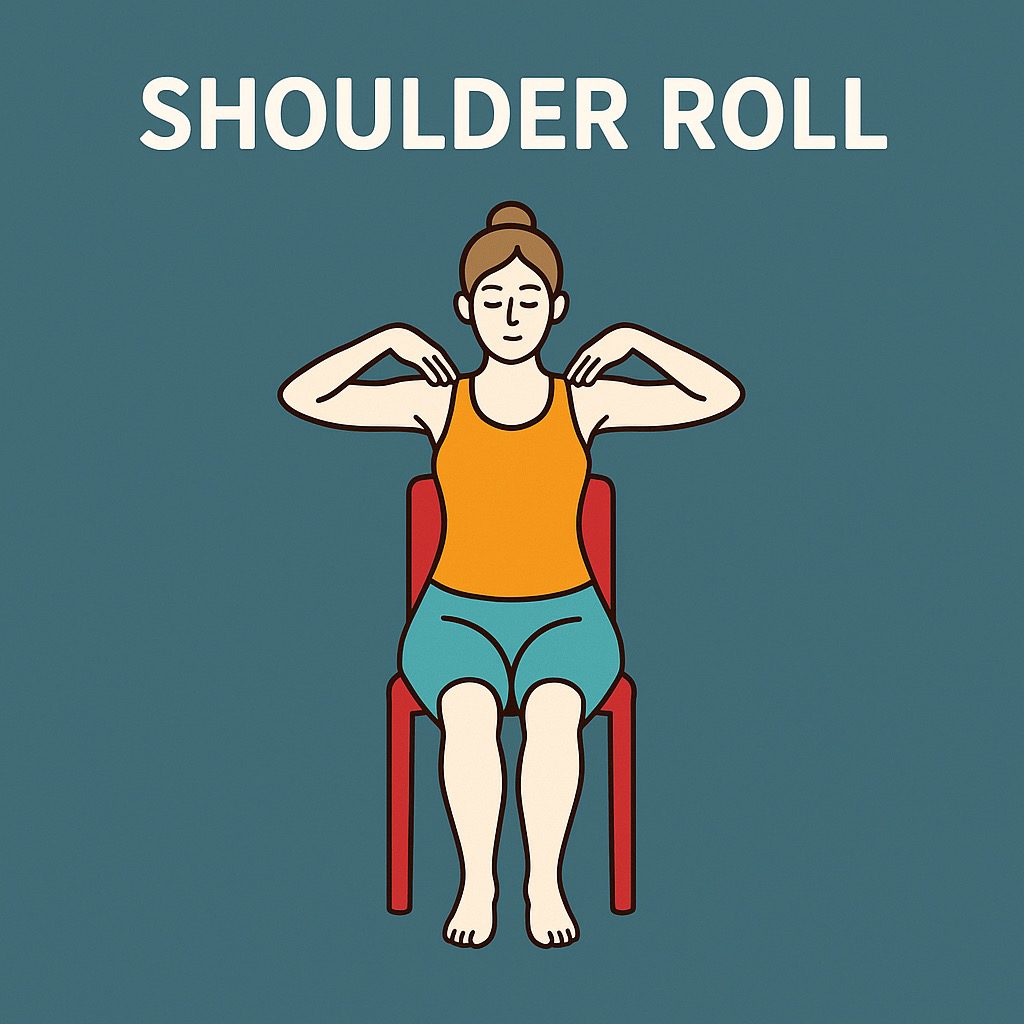
8. Seated Shoulder Rolls
Benefits:
- Relieves upper back tension
Steps:
- Roll shoulders slowly
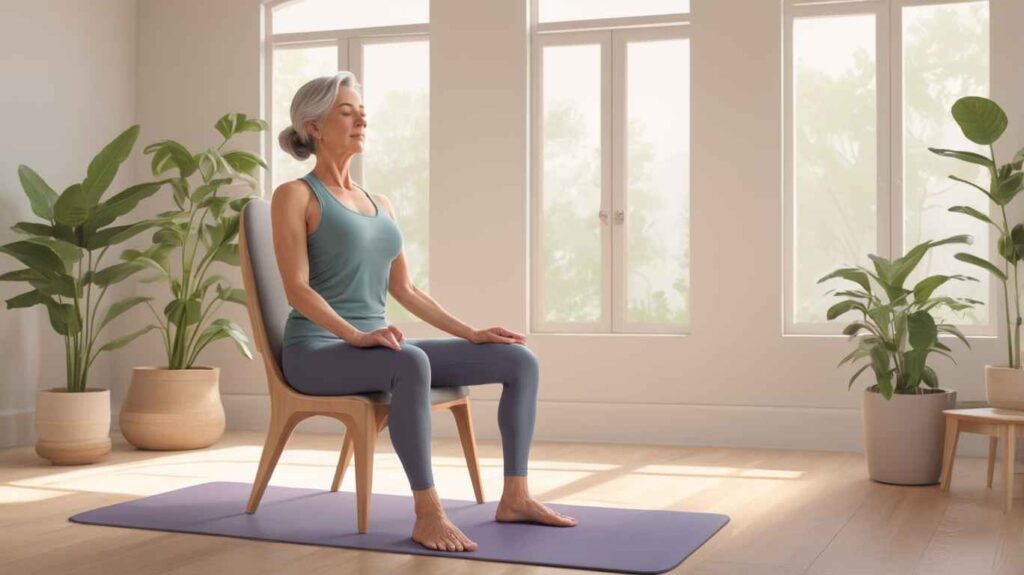
9. Seated Mountain Pose
Benefits:
- Improves posture
- Strengthens spine
Poor posture is a major cause of back pain.
Yoga improves posture.
Major Benefits of Yoga Poses for Back Pain
Reduces Chronic Pain
Research confirms yoga reduces back pain intensity.
Study link: https://pubmed.ncbi.nlm.nih.gov/28631003/
Improves Mobility
Yoga improves flexibility and movement.
Improves Strength
Stronger muscles support the spine.
Reduces Risk of Injury
Improved strength reduces injury risk.
Improves Sleep
Back pain often disrupts sleep.
Yoga improves sleep quality.
Why Some Seniors Feel MORE Back Pain After Yoga (And What Usually Causes It)
Most people assume yoga always reduces back pain immediately. In reality, many seniors temporarily feel worse after starting yoga — not because yoga is dangerous, but because the wrong type, timing, or intensity of movement can irritate sensitive tissues.
This is one of the biggest realities physical therapists and mobility specialists see in older adults.
According to the National Institute on Aging, age-related spinal stiffness, arthritis, reduced muscle strength, and decreased recovery capacity can all change how the body responds to exercise.
The “Stretching Too Aggressively” Mistake
One of the most common mistakes seniors make is treating yoga like flexibility training instead of therapeutic movement.
Many people believe:
“If a gentle stretch feels good, a deeper stretch must be better.”
That often backfires.
When muscles around the spine become tight, they are sometimes protecting irritated joints, inflamed discs, or weak stabilizing muscles. Forcing deeper stretches can increase inflammation instead of reducing it.
Research published by the National Library of Medicine (PubMed) found yoga helps chronic back pain most when movements remain gradual, controlled, and consistent.
Signs You’re Stretching Too Hard
- Pain increases later in the day
- Sharp pulling sensation in the lower back
- Tingling or nerve symptoms
- Muscle spasms after exercise
- Pain lasting more than 24 hours
Better Strategy
Instead of “maximum stretch,” focus on:
- Comfortable movement
- Slow breathing
- Small ranges of motion
- Repetition over intensity
Why Morning Yoga Can Feel Worse for Some Seniors
Many seniors notice:
“My back feels stiffest right after waking up.”
There’s a scientific reason.
During sleep, spinal discs absorb fluid and temporarily expand slightly. According to research from the Cleveland Clinic, the spine is often more pressure-sensitive in the morning.
That means:
- Deep forward bends immediately after waking may irritate the spine
- Twisting aggressively early in the day may increase stiffness
- Sudden stretching can trigger muscle guarding
Better Morning Routine
Before yoga:
- Walk around the house for 5–10 minutes
- Drink water
- Use gentle seated movements first
- Start with breathing exercises
This prepares spinal tissues for movement more safely.
Hidden Problem: Weak Glutes, Not Tight Back
Many seniors focus only on where the pain exists.
But experienced therapists know:
The lower back is often the victim, not the cause.
Weak hips and glute muscles force the lower spine to work harder during:
- Walking
- Standing
- Climbing stairs
- Getting out of chairs
Research from the American Academy of Orthopaedic Surgeons explains that poor muscular support increases spinal strain and instability.
Common Compensation Patterns
| Weak Area | What Happens |
|---|---|
| Weak glutes | Lower back overworks |
| Weak core | Spine loses support |
| Tight hips | Pelvis tilts improperly |
| Poor posture | Lumbar pressure increases |
This is why poses like:
- Seated knee lifts
- Pelvic tilts
- Chair-supported standing exercises
…often help more than aggressive stretching alone.
When Flexibility Work Makes Instability Worse
Not every senior has a “tight” spine.
Some older adults actually have excessive spinal mobility combined with poor muscular control.
This is especially common in:
- Older women with ligament laxity
- Seniors with osteoporosis-related posture changes
- People with long histories of flexibility training
For these individuals:
- Deep twists
- Large backbends
- Long forward folds
…may increase instability instead of helping.
The Arthritis Foundation recommends stability-focused exercise for many chronic pain conditions instead of extreme flexibility training.
Better Approach
Prioritize:
- Controlled movement
- Core endurance
- Postural strength
- Small-range mobility
Delayed-Onset Pain vs Dangerous Pain
Some soreness after movement is normal.
But seniors need to understand the difference between adaptation discomfort and warning signs.
Normal Adjustment Symptoms
✅ Mild muscle soreness
✅ Temporary stiffness
✅ Fatigue that improves within 24 hours
Dangerous Symptoms
❌ Sharp shooting pain
❌ Pain radiating down the leg
❌ Numbness or tingling
❌ Loss of balance
❌ Pain worsening daily
According to the Mayo Clinic, worsening nerve symptoms should always be evaluated by a medical professional.
Free Printable Yoga PDF for: Yoga Poses for Back Pain
Your free printable PDF includes:
- Step-by-step poses
- Printable checklist
- Easy senior-friendly instructions
PRINTABLE
Free Printable: Chair Yoga for Seniors (Step-by-Step Poses)
Get a beautiful A4 printable of 10 gentle chair yoga poses for seniors. Each pose includes clear instructions and breathing tips — perfect for daily use!
How Often Seniors Should Practice Yoga for Back Pain
Best schedule:
- 10–20 minutes daily
- Or 3–5 times weekly
Research confirms improvements within 8 weeks.
Study link: https://pubmed.ncbi.nlm.nih.gov/28631003/
Combine Chair Yoga With Yoga Nidra for Maximum Pain Relief
Chair yoga strengthens muscles.
Yoga nidra reduces nervous system pain signals.
Together they provide maximum relief.
Your ebook explains complete routines:
Gentle Yoga & Mobility Guide for Stiff Joints, Balance & Daily Comfort
Conclusion
The best yoga poses for back pain provide a safe, science-backed way for seniors to reduce pain, improve mobility, and stay independent.
Supported by medical research, yoga strengthens the spine, improves flexibility, and reduces discomfort.
Even 10 minutes daily can significantly reduce back pain.
FAQs for Best Yoga Poses for Back Pain
1. What yoga poses help back pain the most?
Seated cat-cow, spinal twist, and forward bend are the most effective.
2. Is yoga safe for seniors with back pain?
Yes. Research confirms yoga is safe and effective.
3. How often should seniors do yoga for back pain?
10–20 minutes daily is ideal.
4. Can yoga replace physical therapy?
Research shows yoga can be as effective as physical therapy.
5. How quickly does yoga reduce back pain?
Most seniors see improvement within 4–8 weeks.