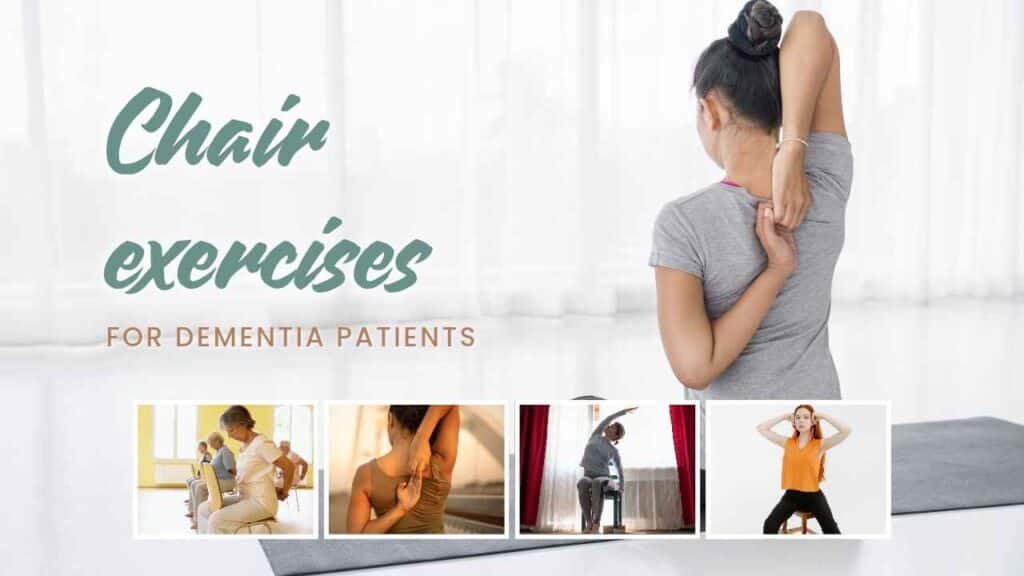

If you care for someone with dementia, you’ve watched two things happen at once: their world shrinking and their chair becoming the center of it. The doctor says, “Keep them active.” The internet hands you either an insurer’s bullet list or a research essay. Neither tells you what to actually do at 10:30 on a Tuesday morning.
This page does 10 chair exercises for dementia patients with exact reps, the words to say while you guide each move, a daily rhythm that survives bad days, stage-by-stage adjustments, and a printable chart for the fridge. No equipment. No gym. Ten minutes to start.
Why this works (the honest evidence)
Exercise doesn’t stop dementia. Nothing does yet. What the research shows is steadier than a cure and worth building a day around: multi-component programs (strength plus balance plus aerobic-style movement, together) slow cognitive decline and preserve daily function better than walking alone.
The Alzheimer’s Association lists regular exercise as a core part of a brain-healthy routine, alongside diet and social connection, and the National Institute on Aging builds its caregiver guidance around exactly this kind of adapted activity, soup cans included.
Even tai chi has trial support here: a 2023 randomized trial of cognitively enhanced tai chi improved working memory and executive function in older adults with mild cognitive impairment, tracked by the NIH’s NCCIH tai chi summary.
What that means at your kitchen table:
- Expect function, not memory, to improve first. Dressing, standing, eating with less help.
- Expect it on a 12-16 week clock, not a 2-week one. Consistency beats intensity every time it’s measured.
- Expect mood and sleep to move sooner than anything else. In practice, that’s the benefit caregivers notice first and value most.
One more honest line: seated-only routines skip some of the aerobic stimulus walking provides. If safe walks are still possible, keep them. Chair work adds to walking; it doesn’t need to replace it.
Before move one (two minutes of setup)
- Same chair, same spot, same time. Familiarity is the whole trick. The routine should feel like a habit the body recognizes before the mind does.
- Lock the brakes if it’s a wheelchair; sturdy, armless chair otherwise, feet flat where possible.
- Sit beside, not across. Mirroring works better when you’re on their right doing the move with them, not demonstrating from across the room.
- Doctor’s clearance first after recent surgery, cardiac events, uncontrolled blood pressure, or severe dizziness on standing.
The 10 moves for chair exercises for dementia patients (with reps and cue scripts)
Keep your voice low, short sentences, one instruction at a time. If a move gets refused, don’t push; move to the next and come back tomorrow. Refusal is information, not failure.
1. Hands to the sky (arm raises)
Both hands rest on the knees. Lift both arms up toward the ceiling, then lower them back to the knees.
Reps: 10.
Cue script: “Lift up high… and down we go.” Count aloud with them. Reaching overhead doubles as a shoulder-range saver.
2. Palm flips (alternate hand rotations)
Hands on the knees. Flip one palm up and one palm down, then switch, like turning two doorknobs.
Reps: 20 alternating.
Cue script: “Flip… flip… flip.” Fast to learn, impossible to do wrong, and it wakes up both sides of the body talking to each other.
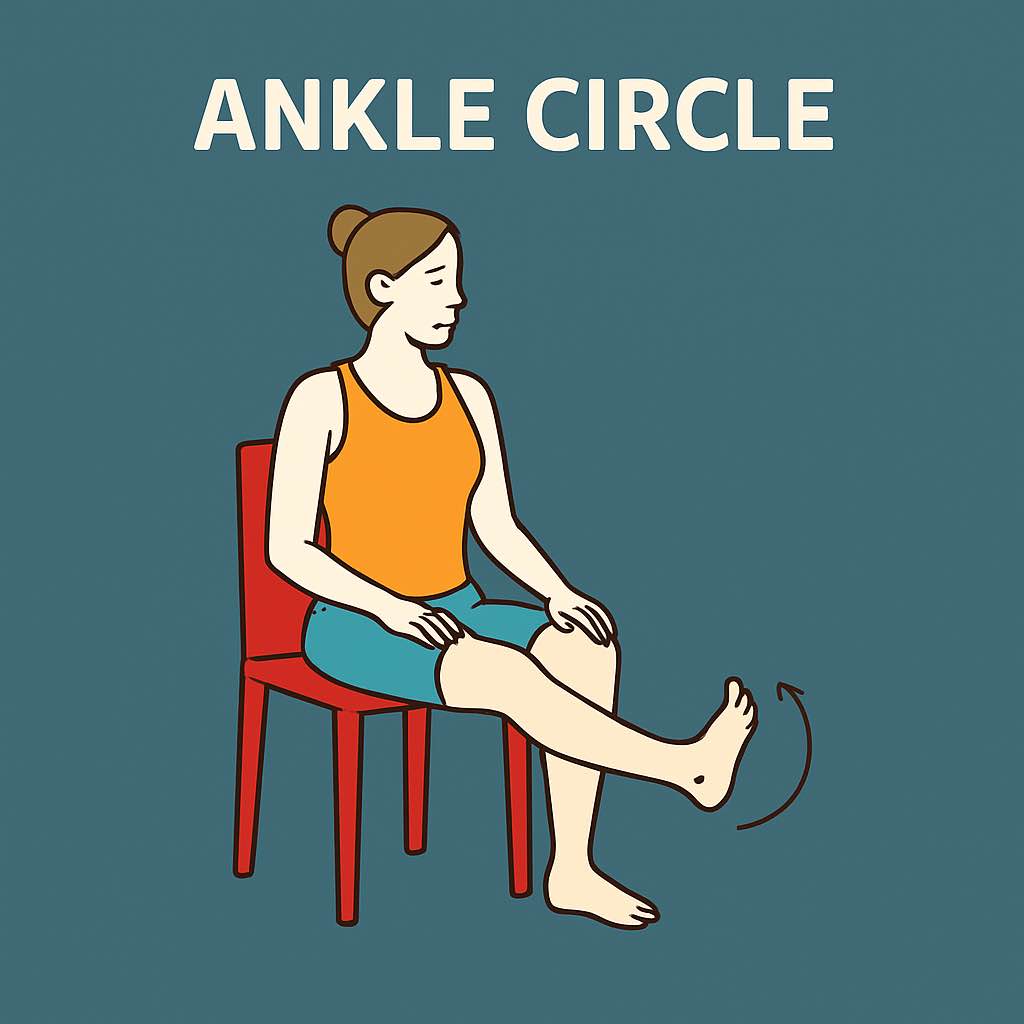
3. Ankle circles
One foot off the floor, draw a slow circle in the air with the toes. Ten one way, ten the other, then swap feet.
Cue script: “Draw a circle… round and round.”
Circulation bonus: this is the move for swollen ankles and long TV hours.
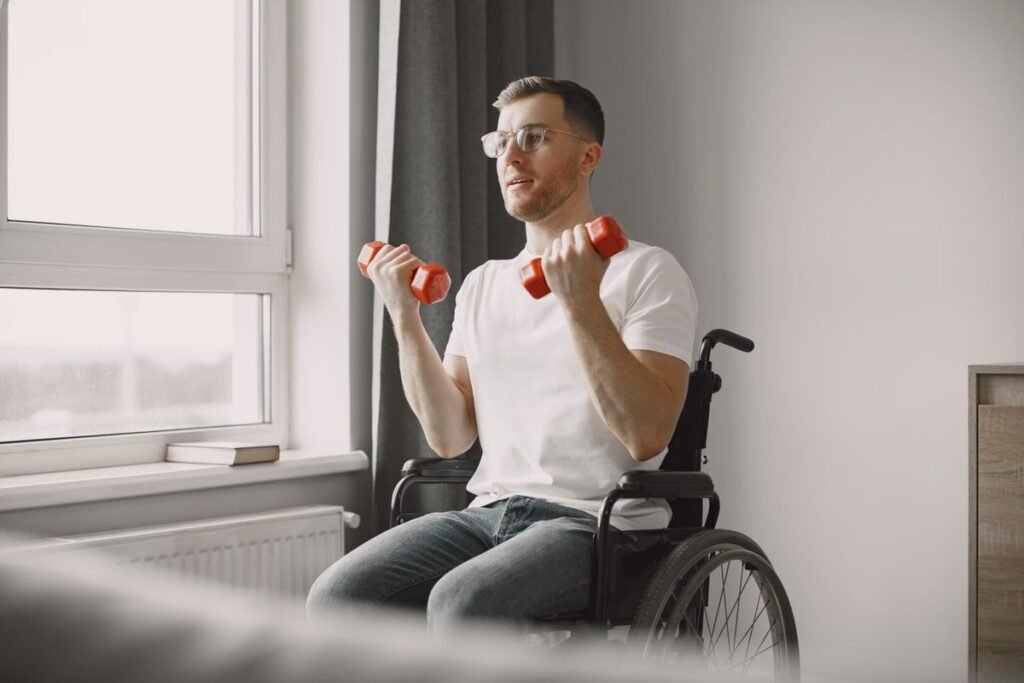
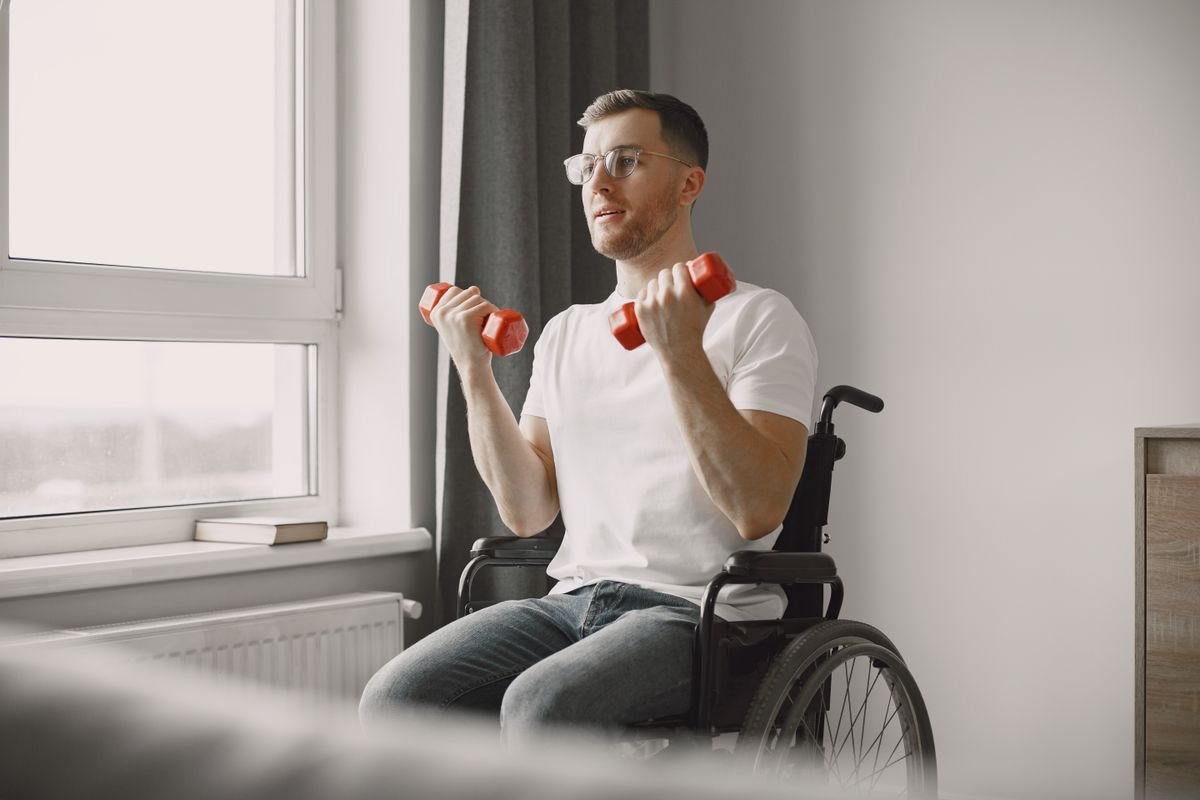
4. Soup can curls (bicep curls)
A soup can or water bottle in each hand (or nothing at all). Elbows at the ribs, lift the cans toward the shoulders, lower slow.
Reps: 10 per arm.
Cue script: “Bring the cans up… and down slow.” Strength work hidden inside a kitchen errand.
5. Knee straighteners (leg extensions)
Straighten one leg out in front, toes up. Hold 5 seconds. Lower slowly. Other leg.
Reps: 5 per leg.
Cue script: “Long leg… hold it… and relax.” This is the strength move that makes standing transfers easier.
6. Seated marching
Lift one knee, then the other, arms swinging naturally like a slow parade.
Reps: 20 total.
Cue script: “Left… right… left… right.” Marching to familiar music turns this from exercise into event; pick the song from their teenage years and watch what happens.
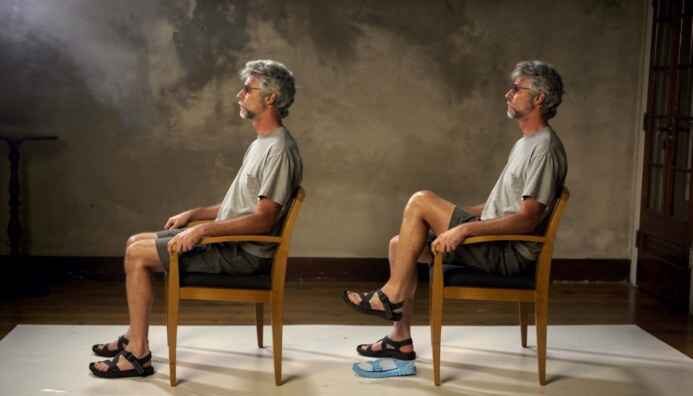
7. Heel raises
Both heels up onto the toes, hold, lower flat.
Reps: 10.
Cue script: “Tippy toes… and flat.” The quiet circulation hero; do these during TV ads if nothing else happens that day.
8. Chair grab twists (seated turns)
Hips face forward. Twist your upper body right and touch the side of the chair with both hands. Center. Twist left.
Reps: 10 per side.
Cue script: “Reach for the chair… now the other one.” Real-world translation: reaching a coat off a hook, grabbing a walker.
9. Seated rowing
Arms straight out in front, pull both elbows back past the ribs like rowing a boat, squeeze, return.
Reps: 10.
Cue script: “Row the boat… pull… and reach.” Posture, upper back, and the exact motion of putting on a jacket.
10. Clap and reach (the fun one)
Lift both arms overhead and clap. Reach down and touch the knees. Up and clap, down and touch.
Reps: 10.
Cue script: “Big clap up high!… touch your knees.” Ends every session on success. Applause after the last rep is optional and recommended.
The rhythm that survives dementia
This matters more than the exercise list. The craft of dementia exercise:
- Same time daily (mid-morning works best for most; it dodges morning grogginess and late-day sundowning).
- Same order, every time. The sequence becomes the memory. By week two, hands often start moving before the cue does.
- Same music if it lands. One playlist, never changing. Music from ages 15-30 sticks longest, and the tai chi chair exercises pattern fits this slot beautifully for people who once loved to dance.
- Six gentle minutes daily beats twenty minutes twice a week in this population. The daily-ness is the dose.
- Count out loud together. The counting is engagement, not bookkeeping.
- End on a success and applause. Every time.
Stage-by-stage adjustments
| Stage | What changes | What to keep |
|---|---|---|
| Early dementia | Full 10 moves, normal reps; add light hand weights when ready | Choice and variety matter here; let them pick the order some days |
| Middle stage | Cut to the 5 moves they like most (usually 1, 2, 6, 9, 10); shorter cues, more demonstration | Same time, same order, same music, counting together |
| Late stage | 3 moves, seated range-of-motion pace: palm flips, ankle circles, hands to sky | Touch, music, and your face at their side matter more than reps; 3 minutes counts |
The printable chart (for the pdf searches)
Copy this table into any document, print it big (14 pt minimum), and tape it where the routine happens: Or just download this PDF
| # | Move | Reps | Done ✓ |
|---|---|---|---|
| 1 | Hands to the sky | 10 | |
| 2 | Palm flips | 20 | |
| 3 | Ankle circles | 10 each way | |
| 4 | Soup can curls | 10 per arm | |
| 5 | Knee straighteners | 5 per leg | |
| 6 | Seated marching | 20 | |
| 7 | Heel raises | 10 | |
| 8 | Chair grab twists | 10 per side | |
| 9 | Seated rowing | 10 | |
| 10 | Clap and reach | 10 |
Checkboxes do double duty: they mark the day’s progress and give the person with dementia a satisfying task (placing the checkmark is often the favorite part).
What improvement actually looks like
Nobody improves their memory test score into remission, and anyone promising that is selling something. What 12 consistent weeks tends to buy:
- Standing from the chair with one hand-hold instead of two.
- A jacket managed with a verbal nudge instead of hands-on help.
- Better evenings: less agitation on the days the routine happened.
- A caregiver who gets ten predictable minutes of cooperation and connection daily, which is worth as much to you as the strength gains are to them.
Slow the functional decline. That’s the honest promise. It’s a good one.
Home routine or exercise class?
Classes designed for dementia (small groups, extra instructors) add social contact and expert form-checks, and they’re worth attending when available and when transitions don’t distress the person. Home routines win on consistency, comfort, and fitting real care schedules. Most families land on: home daily, class weekly if it exists nearby and the person enjoys it. If you build the home version, the chart above is the class. And once the routine is an established habit, the fuller program in our chair yoga for seniors pillar takes over as the natural next step.
Frequently asked questions
Can chair exercises slow down dementia?
They can’t stop or reverse it, and honest sources don’t claim they do. Multi-component exercise programs (strength, balance, and movement combined) are linked to slower cognitive decline and better preserved daily function, with the clearest gains measured over 12 to 16 weeks of consistent practice.
How often should someone with dementia exercise?
Brief daily sessions beat long weekly ones in this population: 6 to 10 gentle minutes every day, same time, same order, same music. The daily repetition is what makes the routine stick when memory wobbles.
What exercises are safe for dementia patients?
Seated moves with a clear start and finish: arm raises, palm flips, ankle circles, soup can curls, knee straighteners, seated marching, heel raises, seated twists, seated rowing, and clap-and-reach. All ten run on no equipment, from a sturdy chair with brakes locked if it’s a wheelchair.
How do you get someone with dementia to exercise?
Stop asking and start doing it beside them, at the same time daily, with counting out loud and music from their youth. Skip any day that meets refusal or agitation; come back tomorrow. Sessions that end in applause get repeated. That pattern does more than willpower ever will.
What stage of dementia is this routine for?
All three, adjusted: the full ten moves early, a five-move favorites version in the middle stage, and three gentle range-of-motion moves late, where touch, music, and your presence carry the session. The stage table above shows exactly what changes.
Chair yoga or chair exercises for someone with dementia?
Chair exercises first: simpler shapes, clearer starts and finishes, easier cueing. Chair yoga layers breathing and mindfulness once the routine is an established habit, and gentle tai chi arm patterns (our site’s specialty) slot in beautifully for people who once loved dance or music.
Is a printable chart actually useful?
Yes, twice over. It stops the caregiver from drifting or guessing at reps, and for the person with dementia, checking off each move becomes a satisfying game in itself. Print it at 14pt or larger and tape it where the routine happens.
Key takeaways
- Chair exercise slows functional decline in dementia; it doesn’t reverse the disease, and the honest framing matters.
- Ten moves cover it, all equipment-free, all with exact reps and cue scripts.
- Daily rhythm (same time, order, music) beats intensity; six minutes daily is the dose.
- Stage adjustments keep the routine alive from early to late dementia.
- The printable chart is both the caregiver’s anchor and the patient’s favorite game.
Final thought
Dementia takes plenty. It doesn’t get the last ten minutes of the morning if you don’t hand them over. Ten moves, one playlist, a chart on the fridge, applause at the end. Start tomorrow at the same time you did today, and let the routine do the remembering.
This article shares general wellness information, not medical advice. Talk to your doctor or physiotherapist before starting chair exercises for someone with dementia, especially after recent surgery, cardiac events, uncontrolled blood pressure, or severe dizziness on standing.