
If you search “tai chi poses,” most articles do one of 2 things.
They either show beautiful photos with almost no explanation.
Or they dump dozens of movement names and leave you wondering where to start.
So this guide does something simpler.
You’ll learn:
- what Tai Chi poses actually are
- the best Tai Chi poses with names
- beginner-friendly movements
- poses seniors usually tolerate well
- step-by-step practice ideas
- how to build a short daily routine
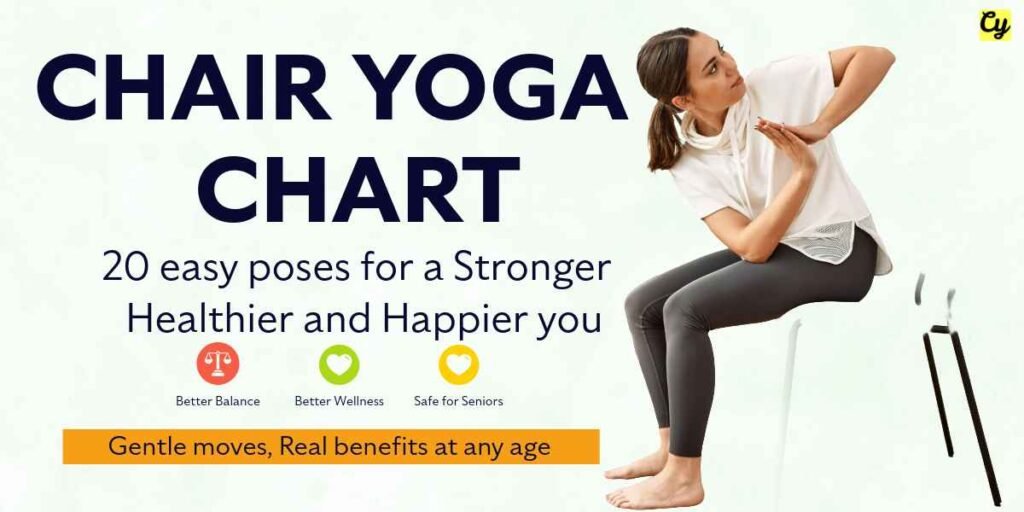
If standing movements feel tiring today, you can start with our Chair Yoga Exercises for Seniors routine.
And yes, there’s a printable PDF section later.
Table of Contents
What are Tai Chi poses?
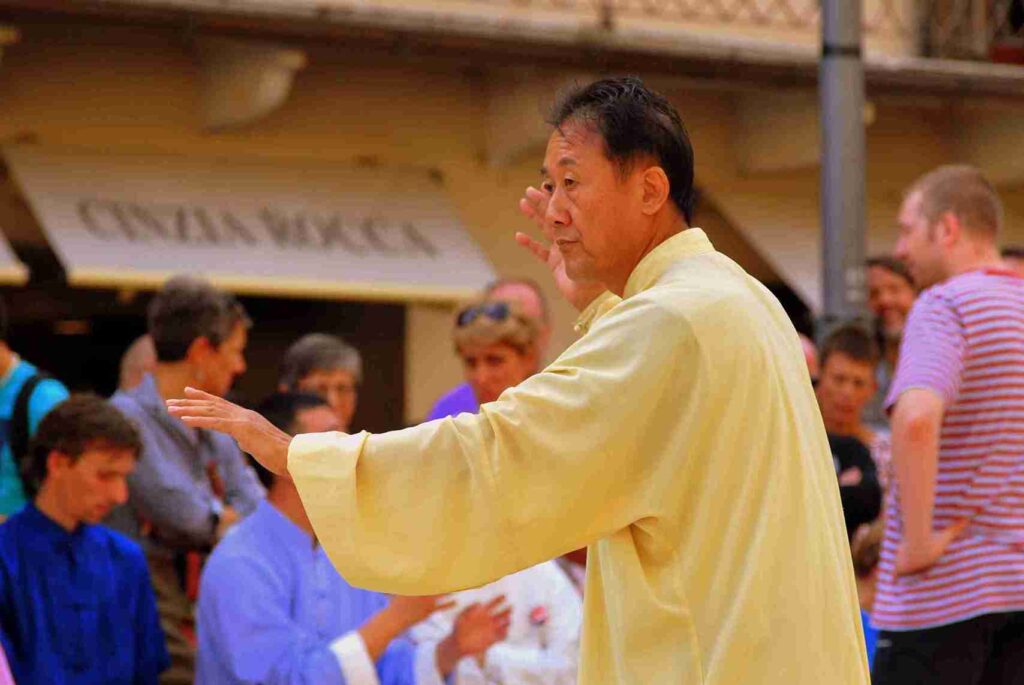
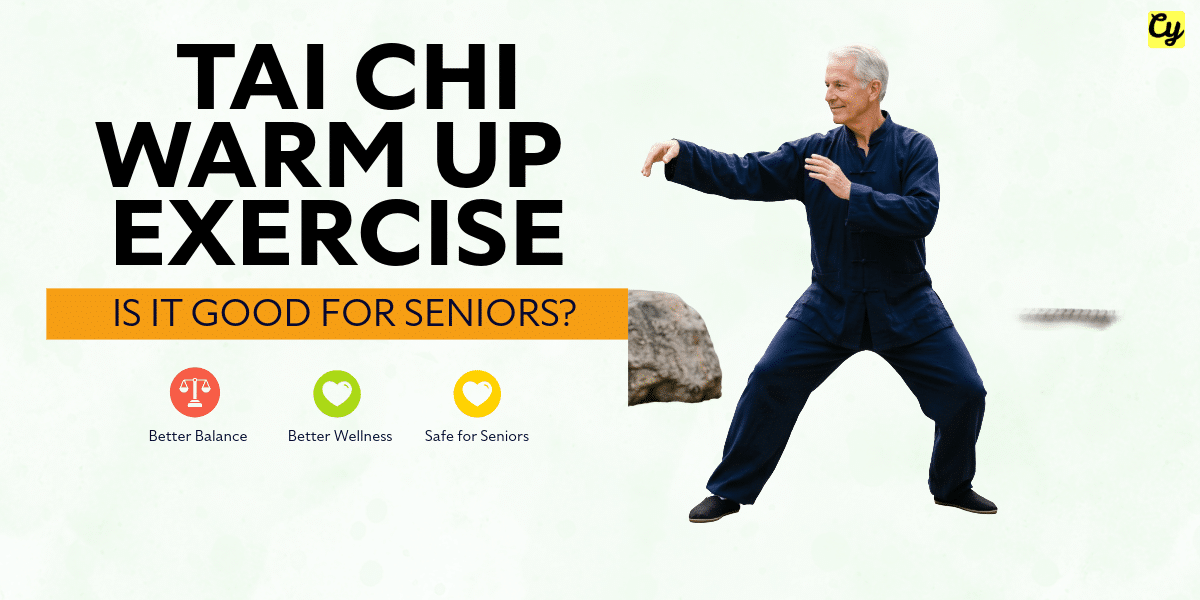
Tai Chi poses are controlled body positions connected through slow movement.
Each pose trains something slightly different.
Some improve balance.
Some improve posture.
Some improve coordination.
Some simply teach you how to shift body weight without rushing.
That last part matters more than people think.
People often expect Tai Chi to feel like stretching.
Good Tai Chi usually feels more like controlled movement with attention.
You aren’t trying to force flexibility.
You’re trying to move cleanly.
Best 20 Tai Chi exercises (with names)
These are beginner-friendly and work especially well for adults who want gentle movement.
1. Commencement Pose
Purpose:
Relax posture and prepare breathing.
How:
- Stand comfortably
- Arms relaxed
- Raise and lower arms slowly
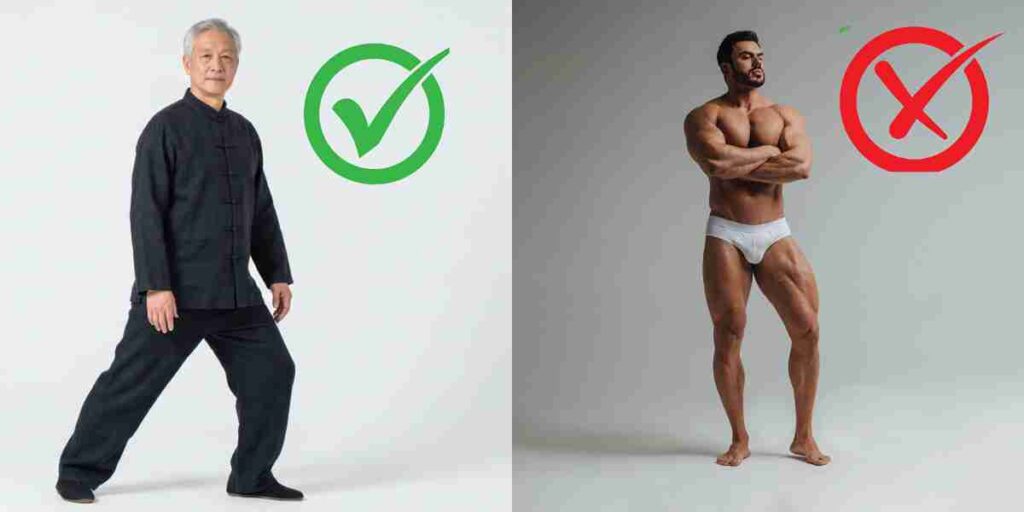
Research on Tai Chi has shown improvements in balance and movement confidence in older adults.
2. Opening the Chest
Purpose:
Improve posture and breathing.
How:
- Open arms outward
- Return slowly
- Keep shoulders relaxed
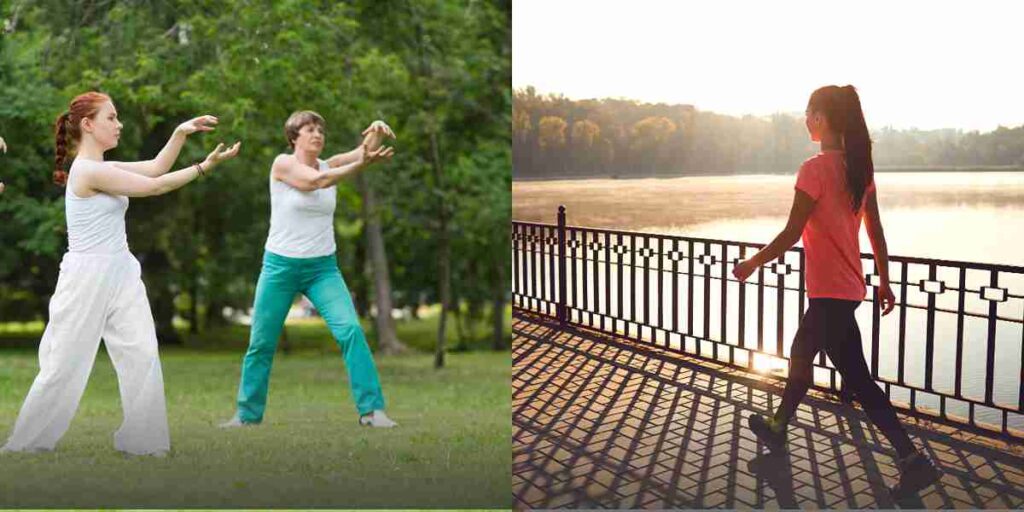
3. Ward Off
Purpose:
Build body awareness.
How:
- Shift weight
- Extend one arm
- Stay controlled
4. Roll Back
Purpose:
Improve coordination.
5. Press
Purpose:
Gentle upper-body engagement.
6. Push
Purpose:
Control and balance.
7. Brush Knee
Purpose:
Train stepping patterns.
8. Part the Horse’s Mane
Purpose:
Improve weight transfer.
9. White Crane Spreads Wings
Purpose:
Posture and balance.
10. Wave Hands Like Clouds
Purpose:
Full-body flow.
11. Golden Rooster Stands on One Leg
Purpose:
Single-leg balance.
12. Repulse Monkey
Purpose:
Backward stepping control.
13. Snake Creeps Down
Purpose:
Mobility.
14. Fair Lady Works Shuttles
Purpose:
Coordination.
15. Grasp Sparrow’s Tail
Purpose:
Classic flow sequence.
16. Cross Hands
Purpose:
Movement transition.
17. Closing Form
Purpose:
Finish practice calmly.
18. Tai Chi Walking
Purpose:
Balance and confidence.
19. Weight Shift Hold
Purpose:
Stability.
20. Standing Meditation Pose
Purpose:
Body awareness.
Tai chi poses with names (quick reference)
| Pose | Main Benefit |
|---|---|
| Commencement | Breathing |
| Ward Off | Stability |
| Brush Knee | Coordination |
| Cloud Hands | Flow |
| Golden Rooster | Balance |
| Push | Control |
| Tai Chi Walking | Confidence |
| Closing Form | Relaxation |
Save this table for your printable later.
If you want more structure after learning these poses, try our 21-Day Chair Yoga Challenge or the Chair Yoga Workout for Seniors.
Tai chi poses for beginners
Beginners usually improve faster when they stop trying to memorize everything.
Start with 5 poses.
That’s enough.
Try this:
Minute 1–2
Commencement
Minute 3–4
Cloud Hands
Minute 5–6
Brush Knee
Minute 7–8
Push
Minute 9–10
Closing Form
A small routine repeated consistently beats changing routines every week.
One thing beginners often miss:
Move slower than feels natural.
Then slow down slightly again.
That usually improves control.
Tai chi poses for seniors
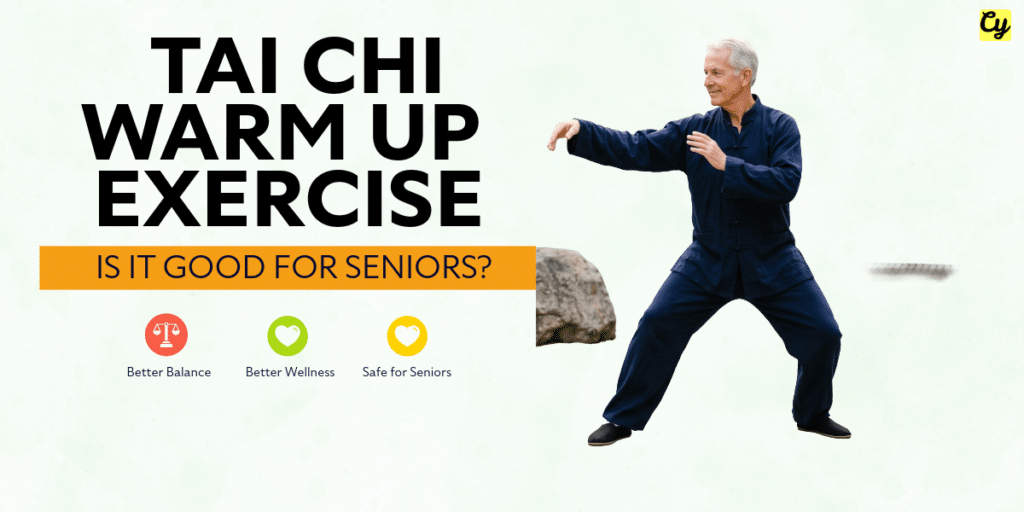
Tai Chi adapts surprisingly well for older adults because intensity stays adjustable.
These poses tend to work well:
Cloud Hands
Gentle.
Easy rhythm.
Tai Chi Walking
Useful for confidence.
Push
Simple movement pattern.
Weight Shift Hold
Good for balance practice.
Standing Meditation
Low complexity.
If balance feels uncertain:
Stand near a chair.
Touch support lightly.
Try not to lean.
Confidence grows gradually.
Tai chi poses with pictures
For your image section later, use this order:
- Commencement Pose
- Cloud Hands
- Brush Knee
- White Crane
- Tai Chi Walking
- Golden Rooster
- Push
- Closing Form
Keep image labels large and readable for seniors.
Simple 7-minute Tai Chi routine
Minute 1
Breathing
Minute 2
Opening pose
Minute 3–4
Cloud hands
Minute 5–6
Weight shifting
Minute 7
Closing form
That’s enough to start.
Tai chi moves step by step for beginners
Tai Chi looks smooth when experienced people do it.
Beginners quickly discover something.
The hard part isn’t remembering the moves.
It’s slowing down enough to feel them.
Try this simple sequence.
Step 1: Stand and settle
- Feet hip-width apart
- Knees soft
- Shoulders relaxed
- Look forward
Stay here for 3 breaths.
Step 2: Shift weight
Move slightly to one side.
Pause.
Move back.
Don’t rush.
Step 3: Add arm movement
Lift arms gently.
Lower slowly.
Keep breathing natural.
Step 4: Take one controlled step
Step slowly.
Transfer weight.
Pause.
Step 5: Finish with stillness
Stand quietly for 20–30 seconds.
Many beginners skip this.
It helps your body process the movement.
A useful rule:
If movement becomes shaky, smaller steps usually help.
Tai chi poses for weight loss: what people usually notice first
People often search Tai Chi hoping for dramatic calorie burn.
That’s usually not what makes it stick.
Tai Chi changes movement behavior.
Someone starts with 10 minutes.
Feels less stiff.
Walks more.
Sits less.
Moves more during the day.
That pattern matters.
Weight loss often appears later than people expect.
People commonly notice:
Week 1:
more energy
Week 2:
better posture
Week 3:
easier movement
Week 4+:
small body changes
Another thing surprises people.
Clothes sometimes feel different before body weight changes.
Posture improves.
Movement becomes smoother.
People carry themselves differently.
For a simple routine:
- 10 minutes Tai Chi
- 10–20 minutes walking
- normal meals
- repeat consistently
That tends to be easier to maintain.
Can I do Tai Chi if I have osteoporosis?
Many people with osteoporosis ask this because jumping, twisting, or high-impact exercise feels intimidating.
Tai Chi is often chosen because movements stay slower and controlled.
But technique matters.
Start with:
✔ smaller movements
✔ stable footing
✔ gradual weight transfer
✔ upright posture
Avoid:
✖ forcing deep bends
✖ aggressive twisting
✖ fast direction changes
Support nearby is completely fine.
Chair.
Counter.
Wall.
People sometimes assume support means failure.
Usually it means better practice quality.
If you’ve been told to avoid specific movement ranges, follow that advice first.
Is Tai Chi good for fibromyalgia?
People with fibromyalgia often describe movement as unpredictable.
Some days feel normal.
Some don’t.
Tai Chi tends to work better when intensity stays flexible.
A common mistake:
Feeling good.
Doing too much.
Paying for it tomorrow.
Try this instead.
Good day:
10–20 minutes.
Hard day:
5 minutes.
Very hard day:
breathing and gentle movement.
Progress often comes from staying consistent enough that movement doesn’t feel threatening.
Watch for these signals:
✔ energy stable afterward
✔ soreness manageable
✔ better movement confidence
Sessions should leave you feeling capable of normal daily activity.
Can Tai Chi help with scoliosis?
Tai Chi doesn’t straighten spinal curves.
But some people find movement becomes more comfortable.
Why?
Tai Chi slows movement enough that posture becomes easier to notice.
People often become more aware of:
- leaning patterns
- uneven weight distribution
- tension habits
- breathing patterns
Useful adjustments:
Move smaller.
Stay upright.
Avoid chasing perfect symmetry.
Comfort usually matters more.
Many people report that smoother movement matters more than bigger movement.
Free printable Tai Chi poses PDF
Want the routine in printable format?
Scroll to the bottom of this article and download the Free Printable Tai Chi Poses PDF.
Inside:
✔ 20 beginner-friendly poses
✔ quick daily routine
✔ pose names
✔ practice checklist
✔ easy print layout
Print it.
Keep it near your practice space.
That usually makes consistency easier.
FAQs
What are some Tai Chi poses?
Popular Tai Chi poses include Cloud Hands, Brush Knee, Push, White Crane Spreads Wings, Ward Off, Golden Rooster Stands on One Leg, and Tai Chi Walking.
Can beginners do Tai Chi?
Yes. Most beginners do better starting with 3–5 movements instead of learning full forms immediately.
Is 10 minutes of Tai Chi enough?
It can be. Short sessions repeated consistently usually work better than occasional long sessions.
How many Tai Chi poses are there?
Traditional systems contain many forms and variations, but beginners often start with 5–20 foundational movements.
Can seniors do Tai Chi every day?
Many can, especially with short sessions and controlled intensity. Recovery and comfort still matter.




1 thought on “20 Tai Chi Poses for Beginners & Seniors + Free PDF”
raffertylaurena06@outlook.com