If you search “tai chi walking,” most results make it sound either magical or confusing.
Slow steps.
Flowing movement.
Deep breathing.
People talking about energy.
And if you’re a beginner, it’s easy to wonder:
Does this actually do anything?
I think that’s the better question.
Because tai chi walking looks simple.
Until you try doing 10 controlled steps without rushing.
That’s when you realize something.
Slow movement is surprisingly difficult.
And that difficulty is part of why it works.
Tai chi walking has quietly become popular among:
- seniors
- beginners
- people returning to exercise
- adults with stiff joints
- people who hate traditional workouts
Because it asks for something different.
Control.
Not speed.
Table of Contents
What is tai chi walking and does it work?
Tai chi walking is a slower, more deliberate way of walking borrowed from Tai Chi movement practice.
Instead of moving automatically, every step becomes intentional.
You slow down.
Shift weight carefully.
Place the foot gently.
Move the body as one unit.
That sounds easy.
Most beginners realize quickly it isn’t.
Because normal walking hides a lot.
Tai chi walking exposes:
- uneven balance
- rushed movement
- stiff hips
- poor posture
- weak weight transfer
That’s partly why people feel so different after practicing it.
And yes.
For many people, it works.
Research reviews found Tai Chi practice improved balance performance and physical function in older adults when practiced consistently over multiple weeks.
External study:
PubMed Study on Tai Chi and Balance
If slow movement feels easier to stick with, read our article on What Is Somatic Yoga because both approaches build movement awareness.
Especially for:
- balance
- movement confidence
- body awareness
- light physical activity
- stress reduction
People expecting heavy cardio usually get disappointed.
People expecting smoother movement usually understand the appeal quickly.
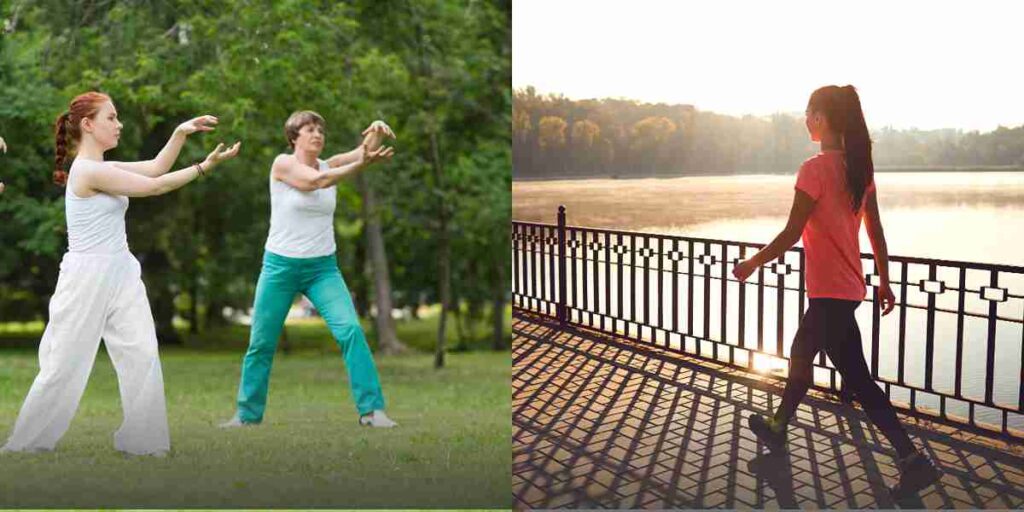
How does tai chi walking work?
Tai chi walking changes how movement happens.
Most walking looks like this:
step → step → step
Tai chi walking slows everything.
Now the body starts paying attention.
The process usually looks like:
breathe → shift → step → settle → repeat
That slower rhythm changes a few things.
Weight transfer becomes visible
A lot of adults move unevenly.
Especially after:
- previous injuries
- arthritis
- inactivity
- balance changes
Tai chi walking makes those patterns easier to notice.
Smaller muscles start participating
Fast movement lets momentum do the work.
Slow movement asks stabilizing muscles to wake up.
That’s why beginners sometimes say:
“My legs feel tired even though I barely moved.”
Makes sense.
Breathing slows movement
People naturally stop rushing.
Shoulders soften.
Steps become quieter.
The nervous system often settles down too.
That part gets overlooked.
Tai chi walking for beginners step by step
Beginners usually make one mistake.
They move too fast.
Tai chi walking works better when it feels almost slower than necessary.
Step 1: Stand naturally
Feet about hip width.
Knees soft.
Eyes forward.
Nothing dramatic.
Take 2 relaxed breaths.
Step 2: Shift weight
Move body weight gently into one foot.
Pause.
Actually feel the ground.
Most people rush this.
Step 3: Lift the opposite foot slowly
Small movement.
No giant steps.
Place heel first.
Step 4: Transfer weight gradually
Move into the front foot.
Stay upright.
Breathe.
Step 5: Repeat
Slowly.
Quietly.
5 minutes is enough initially.
That’s usually harder than people expect.
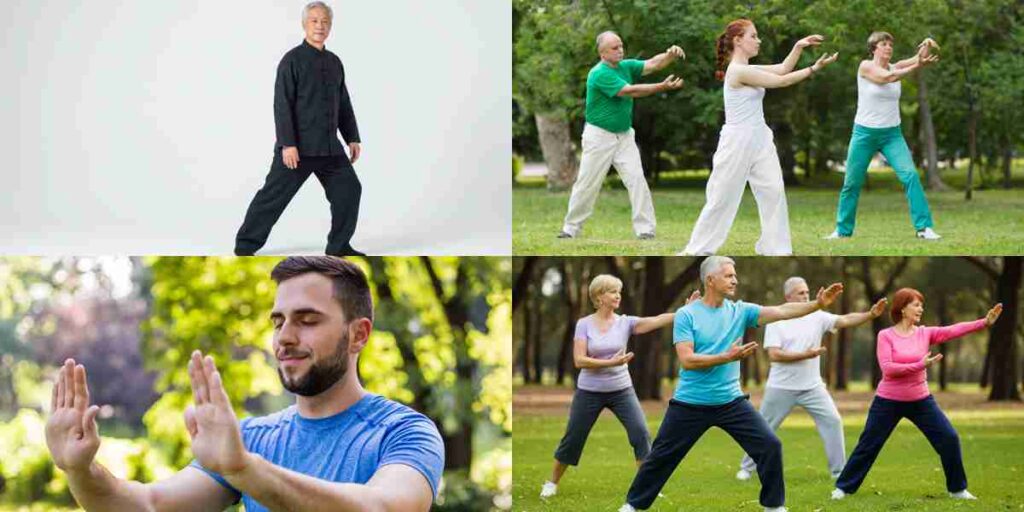
What is tai chi walking and does it work for beginners?
Beginners often do surprisingly well.
Mostly because there’s less impact.
No jumping.
No floor work.
No equipment.
The difficult part isn’t fitness.
It’s patience.
People expect exercise to feel intense.
Tai chi walking feels controlled.
That difference takes adjustment.
For beginners:
Week 1:
movement feels awkward
Week 2:
movement feels smoother
Week 3:
daily movement often starts feeling easier
That timeline isn’t universal.
But it’s common.
What is tai chi walking and does it work for seniors?
This is where tai chi walking becomes interesting.
Older adults often notice improvements in places they didn’t expect.
Not during exercise.
During normal life.
Things like:
- standing up easier
- turning more smoothly
- less hesitation walking
- feeling calmer moving around the house
That’s usually what keeps people doing it.
A large review also found Tai Chi practice was associated with better mobility and lower fall risk in older adults.
External study:
NIH Review on Tai Chi and Fall Prevention
If standing movement feels too much initially, start with free printable chair yoga exercises for Seniors and come back to walking later.
Tai chi walking stays popular among seniors because it doesn’t punish slower bodies.
People move at their own pace.
That matters after 60.
Free Tai Chi Walking PDF (Printable Guide)
If you’d rather follow along than remember every step, download the free Tai Chi Walking PDF.
Inside you’ll get:
✔ beginner step sequence
✔ daily walking tracker
✔ breathing reminders
✔ 5–10 minute routine
✔ printable format for seniors
[Download Free Tai Chi Walking PDF]
Free tai chi walking for seniors
You don’t need equipment.
You don’t need a studio.
You don’t need expensive classes.
Many seniors start with:
- hallway walking
- garden walking
- living room practice
- short guided sessions
Start with:
5 minutes.
Build gradually.
Consistency matters more than duration.
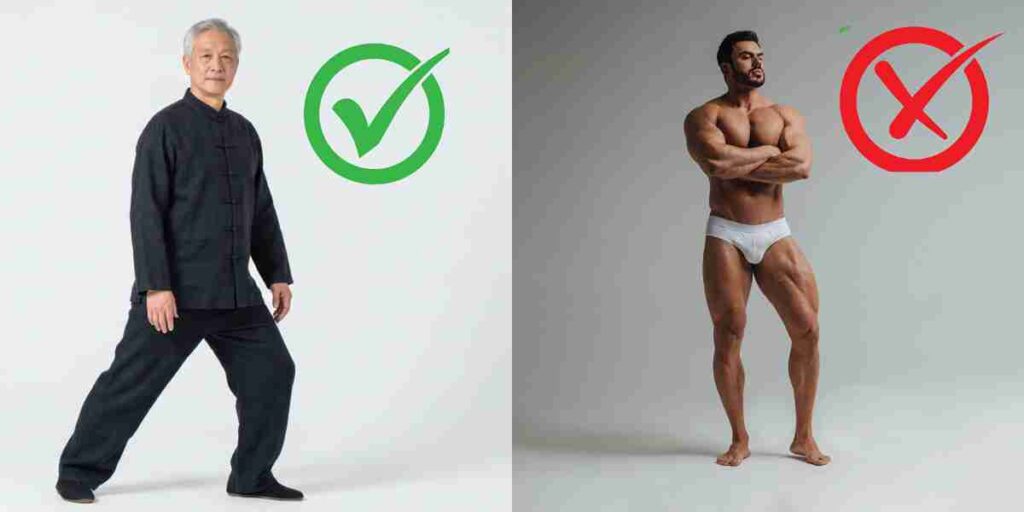
Can you really lose weight with tai chi walking?
Short answer:
Maybe.
But probably slower than people expect.
Tai chi walking burns energy.
Just not aggressively.
People who lose weight usually combine it with:
- eating habits
- regular movement
- consistency
- daily walking
Tai chi walking seems more useful for:
- keeping movement sustainable
- reducing inactivity
- building routine
Weight changes tend to follow behavior changes.
One controlled study comparing Tai Chi and walking found both approaches produced modest body-weight and body-fat improvements over time.
External study:
PubMed Tai Chi and Weight Study
If your goal is building a routine first, browse more beginner routines inside Chair Yoga Blog Library
People expecting dramatic fat loss from 10 minutes alone usually get frustrated.
What is tai chi walking, and does it work for weight loss?
I’d think about it differently.
Tai chi walking helps some people become more active consistently.
That matters.
Because many adults stop exercising entirely when routines feel exhausting.
Tai chi walking feels approachable.
Approachable routines survive longer.
That’s often where results start.
Free tai chi walking for weight loss
If weight loss is the goal:
Try combining:
- 10–15 min tai chi walking
- normal daily walking
- basic strength work
- consistent meals
Simple stacks beat complicated plans.
How long should you do tai chi walking daily?
People overcomplicate this.
Beginner:
5–10 minutes
Intermediate:
10–20 minutes
Experienced:
20–30 minutes
Long sessions aren’t automatically better.
A calm 10 minutes repeated daily usually wins.
Clinical Tai Chi programs usually rely on repeated weekly practice rather than extremely long sessions.
External source:
Tai Chi for Health Institute Walking Guide
If you enjoy structured plans, try pairing this with your existing 28-day routines inside Chair Yoga Blog Library
What is tai chi walking and does it work PDF
A lot of seniors prefer printable routines.
That makes sense.
Printed movement guides remove:
- screen fatigue
- distractions
- remembering sequences
Tai chi walking videos YouTube: what actually helps beginners
People usually make one mistake with tai chi videos.
They choose the most impressive instructor.
Big movements.
Fast flow.
Perfect posture.
Then quit 3 days later.
For beginners, especially seniors, slower videos usually work better.
Look for videos that:
- explain weight shifting
- pause between movements
- repeat instructions
- show side angles
- move slower than normal walking
If the instructor starts talking about 14 concepts before you’ve taken 3 steps, skip it.
Good beginner videos feel calm.
Not complicated.
And replaying the same routine for 2 weeks is completely normal.
Most people don’t need endless variation.
Does the 28 day indoor walking challenge really work?
This gets searched a lot.
And honestly:
sometimes.
Indoor walking works because it removes friction.
No weather.
No travel.
No complicated setup.
That’s useful.
But there’s something interesting.
Indoor walking and tai chi walking train different things.
Indoor walking usually improves:
- movement volume
- endurance
- daily activity
Tai chi walking usually trains:
- control
- balance
- coordination
- movement awareness
People often combine both.
Example:
Monday
10 minutes tai chi walking
Tuesday
20 minutes indoor walking
Wednesday
tai chi again
Simple combinations tend to last longer.
Why tai chi walking feels weird at first
This catches people off guard.
People expect walking.
Instead they feel:
- awkward
- mentally tired
- unusually slow
That reaction makes sense.
Normal walking becomes automatic over decades.
Tai chi walking interrupts autopilot.
Suddenly you notice:
- foot pressure
- shoulder tension
- uneven stepping
- breathing
Researchers suggest Tai Chi combines posture control, balance, and movement awareness at the same time, which may explain why beginners often feel mentally tired before physically tired.
External source:
Harvard Health Tai Chi Benefits
If you enjoy slower movement styles, continue with What Is Somatic Yoga
That attention feels strange initially.
Usually easier after 1–2 weeks.
Why some seniors feel less stable before they feel more stable
This sounds backward.
But it happens.
People begin moving slowly.
Then suddenly notice:
- wobbling
- leaning
- stiff hips
- weak balance
Usually nothing got worse.
Awareness improved.
Tai chi walking exposes movement habits.
That awareness often appears before improvement.
That’s why beginners sometimes feel frustrated early.
Stay patient.
The hidden reason tai chi walking feels mentally exhausting
People expect physical tiredness.
A lot of beginners feel mental tiredness first.
Because now you’re tracking:
- stepping
- posture
- breathing
- timing
That takes attention.
Especially if movement confidence dropped over time.
Short sessions work better early.
Try:
5 minutes.
Stop.
Come back tomorrow.
Myth vs reality: what tai chi walking actually improves
| Myth | Reality |
|---|---|
| Tai chi walking quickly fixes balance | Progress usually builds gradually |
| Slow movement means easy movement | Slow movement can feel surprisingly demanding |
| More minutes creates faster progress | Recovery still matters |
| Tai chi walking burns huge calories | Activity habits matter more |
| You need flexibility first | Most beginners start stiff |
| Results should feel obvious | Daily life improvements appear quietly |
People often notice:
- smoother turning
- calmer walking
- easier standing
- less hesitation
Before dramatic physical changes.
That still counts.
Advanced layer: how experienced people continue improving after month 2
Most articles stop here.
Real practice starts getting interesting later.
Experienced practitioners usually change small things.
Change speed slightly
Move slower than comfortable.
Then return to normal pace.
Change direction
Practice:
- forward
- backward
- side stepping
Carefully.
Reduce visual dependence
Walk while looking ahead.
Less at the feet.
Improve transitions
People usually improve more between steps than during steps.
Track movement quality
Ask:
- Did I breathe normally?
- Did movement feel smooth?
- Did I rush?
Those questions become more useful than session length.
What I’d do as a beginner
Week 1
5 minutes daily
Week 2
8–10 minutes
Week 3
10–15 minutes
Week 4
Add gentle walking on alternate days
Simple.
Repeatable.
Easy to return to.
Continue your movement journey:
• Free Printable Chair Yoga Exercises for Seniors
• What Is Somatic Yoga
• Browse All Chair Yoga Articles
Conclusion
Tai chi walking works differently than most exercise.
The changes usually arrive quietly.
People often notice movement confidence first.
Then smoother walking.
Then better tolerance for everyday movement.
And that’s probably why people stick with it.
Not because the sessions feel intense.
Because daily life starts feeling easier.
FAQs
Can beginners do tai chi walking?
Yes. Most people start with 5–10 minutes and progress slowly.
Can you really lose weight with tai chi walking?
Some people do, especially when paired with consistent activity and eating habits.
Is tai chi walking good for seniors?
Many seniors enjoy it because movement stays controlled and lower impact.
How long should you do tai chi walking daily?
Beginners usually do well with 5–10 minutes. Many experienced adults stay around 20–30 minutes.
Does the 28 day indoor walking challenge really work?
It can improve activity and consistency. Tai chi walking trains different skills like balance and movement control.
Should I use videos or printable guides?
Depends on preference. Many seniors like printable routines because they move at their own pace.