

Your body after 50 is not the same body you had at 35. And that’s not a complaint; it’s just biology.
Estrogen drops. Bone density follows. Muscle mass shrinks about 1–2% per year. Joints get stiffer. Balance gets shakier. Sleep gets harder.
Chair yoga for older women addresses all of these, specifically. Not in a vague “exercise is good for you” way, but in measurable, studied ways that matter to women in their 50s, 60s, and 70s.
This guide covers what chair yoga actually does for the female body after menopause, which poses work best, and how to build a routine you’ll actually stick to.
Table of Contents
Why chair yoga works differently for women over 50
The hormonal shift at menopause accelerates physical aging in ways that are specific to women. Estrogen has a direct effect on muscle, tendon, and ligament function. When it drops, those tissues lose elasticity faster.
A 2023 systematic review published in PMC analysed the effects of mind-body exercises, including yoga, on perimenopausal and postmenopausal women. The findings were consistent: yoga significantly improves bone mineral density, sleep quality, anxiety, depression, and fatigue in this group compared to controls.
That’s 5 separate outcomes. From one type of exercise.
And chair yoga for older women specifically has direct research behind it. A study published in IJCRT found that chair-based exercises performed 3 days a week over 2 weeks showed significant improvements in upper limb flexibility and menopausal quality of life scores in postmenopausal women.
2 weeks. Meaningful results.
The bone density issue (this one matters)
About 80% of Americans with osteoporosis are women. Half of women over 50 will break a bone because of the disease.

The good news: yoga builds bone density back up.
Dr. Loren Fishman’s 10-year study of 227 patients found that 12 minutes of daily yoga improved bone mineral density in the spine and femur. The mechanism is simple: holding yoga poses places stress on bones, which signals bone-forming proteins to synthesise. Fishman found this process begins after just 10 seconds of sustained pressure.
Chair yoga for older women applies the same principle with modifications that make it safe regardless of current mobility or balance. Weight-bearing through the arms, pressing down through the feet, and holding poses with muscular engagement—all of these stimulate bone remodelling.
You don’t need to get on the floor. A chair delivers the same stimulus.
Chair yoga for older women: the best poses by benefit
For bone density
Seated Warrior I
Sit sideways on the chair, one leg extended back with toes on the floor, other leg bent at 90°. Raise both arms overhead, press down through both feet. Hold 20–30 seconds. Switch sides.
The press through the feet and the reach through the arms loads the long bones of the legs and the shoulder girdle simultaneously.
Seated Chair Pose (Utkatasana)
Sit at the edge of the chair, feet flat, arms raised overhead. Hover slightly above the seat, hold for 10 seconds. Lower slowly. 8 reps.
This loads the quadriceps, glutes, and spine together, the 3 most common osteoporotic fracture sites.
Seated Mountain with Arm Press
Sit tall, press palms together at chest height. Push hands firmly against each other, hold 10 seconds. Release. 10 reps.
Simple. But the isometric pressure through the arms directly stimulates bone density in the wrists and forearms, where fractures from falls are most common in older women.
For flexibility and joint mobility
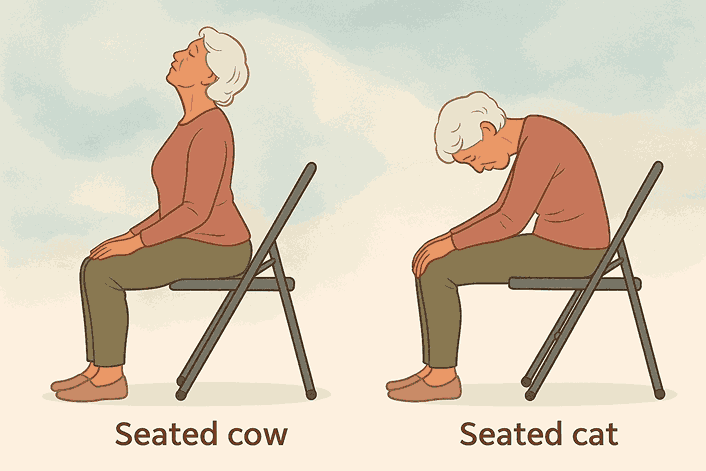
Cat-Cow in the Chair
Sit upright, hands on knees. Inhale and arch the spine, lifting the chest (Cow). Exhale and round the spine, dropping the chin (Cat). Repeat slowly for 10 rounds.
Estrogen loss accelerates spinal stiffness. This is the single best daily movement for keeping the spine mobile. 2 minutes every morning.
Seated Pigeon (Figure-Four Stretch)
Cross one ankle over the opposite knee, flex the foot. Gently press down on the bent knee. Lean forward slightly. Hold 30–45 seconds. Switch sides.
Hip tightness in postmenopausal women is extremely common. This pose opens the hip rotators directly and releases lower back tension that comes with it.
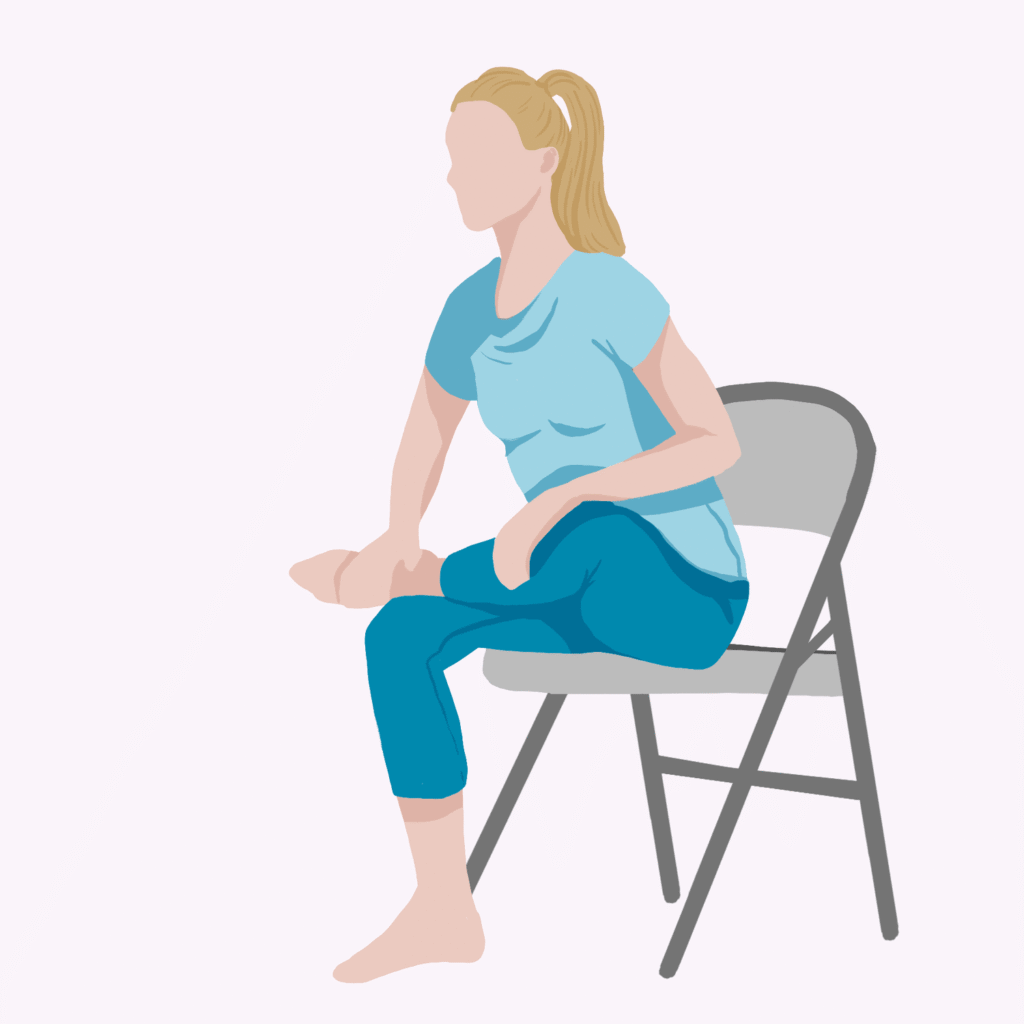
Seated Spinal Twist
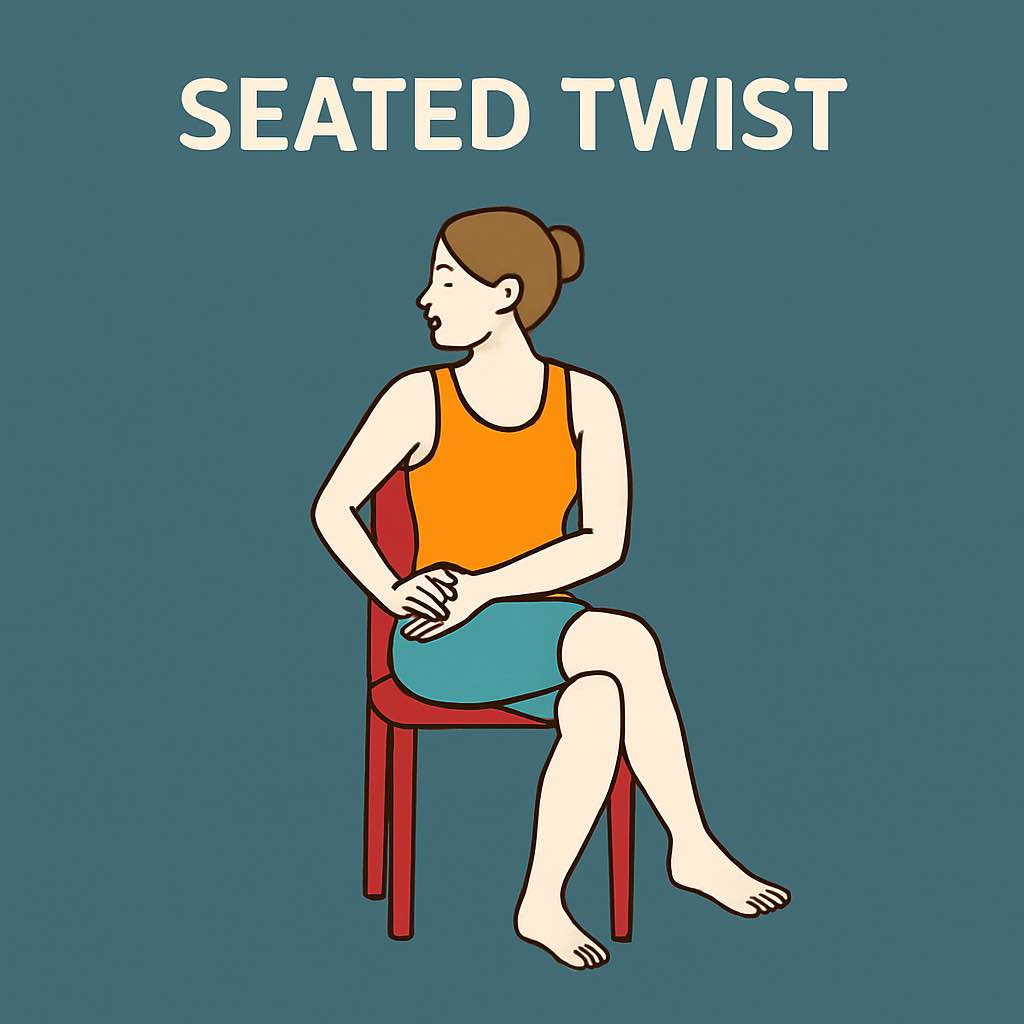
Sit tall, place your right hand on your left knee and your left hand on the back of the chair. Gently rotate left. Hold 20 seconds, breathing slowly. Switch sides.
The spine’s range of rotation decreases significantly after 50 without regular practice. This pose maintains that range of motion and doubles as a gentle massage for the digestive system (a common issue after menopause).
For balance and fall prevention
Seated Tree Pose
Sit tall, bring the sole of one foot to the inner calf of the other leg. Hands in prayer at the chest or arms raised. Hold 20 seconds. Switch sides.
Balance training from a seated position still activates the proprioceptive system, the nerves in the feet and ankles that control balance. Doing this daily retrains that system.
Chair-Supported Single-Leg Stand
Hold the back of the chair, stand on one foot. Hold 10–30 seconds. Progress from 2 hands to 1 hand to fingertip contact over weeks.
Falls are the leading cause of injury-related death in women over 65. This one exercise, done daily, is one of the most direct interventions for that risk.
Heel Raises
Stand behind the chair, light fingertip contact. Rise onto toes, hold 2 seconds, lower slowly. 15 reps.
The slow lowering is what builds ankle strength. Ankles are the first responders when balance is disrupted.
For sleep and stress
Seated Forward Fold
Sit at the edge of the chair, feet flat, fold forward and let arms hang. Hold 45–60 seconds. Breathe slowly.
This activates the parasympathetic nervous system, the “rest and digest” mode. Sleep disruption affects 75–85% of postmenopausal women. A 5-minute forward fold before bed is genuinely useful.
Alternate Nostril Breathing (Nadi Shodhana)
Sit comfortably, eyes closed. Close the right nostril with your thumb, inhale through the left. Close left with ring finger, exhale through right. Repeat for 5 minutes.
The PMC systematic review found mind-body practices including yoga breathing significantly reduced anxiety, depression, and fatigue in postmenopausal women. This is the most direct breathing technique for that.
Legs Up (Modified)
Sit in the chair, swing legs up onto a footstool or second chair. Recline slightly. Hold 3–5 minutes.
Gentle Chair Yoga Guides for Adults 50+
Two beginner-friendly guides designed to help support flexibility, balance, mobility, and everyday comfort with simple chair-based routines.
Elevating the legs reduces cortisol and slows the heart rate. After a difficult day, this is more effective than scrolling your phone for 20 minutes. And it’s easier on the body.
For strength and muscle mass
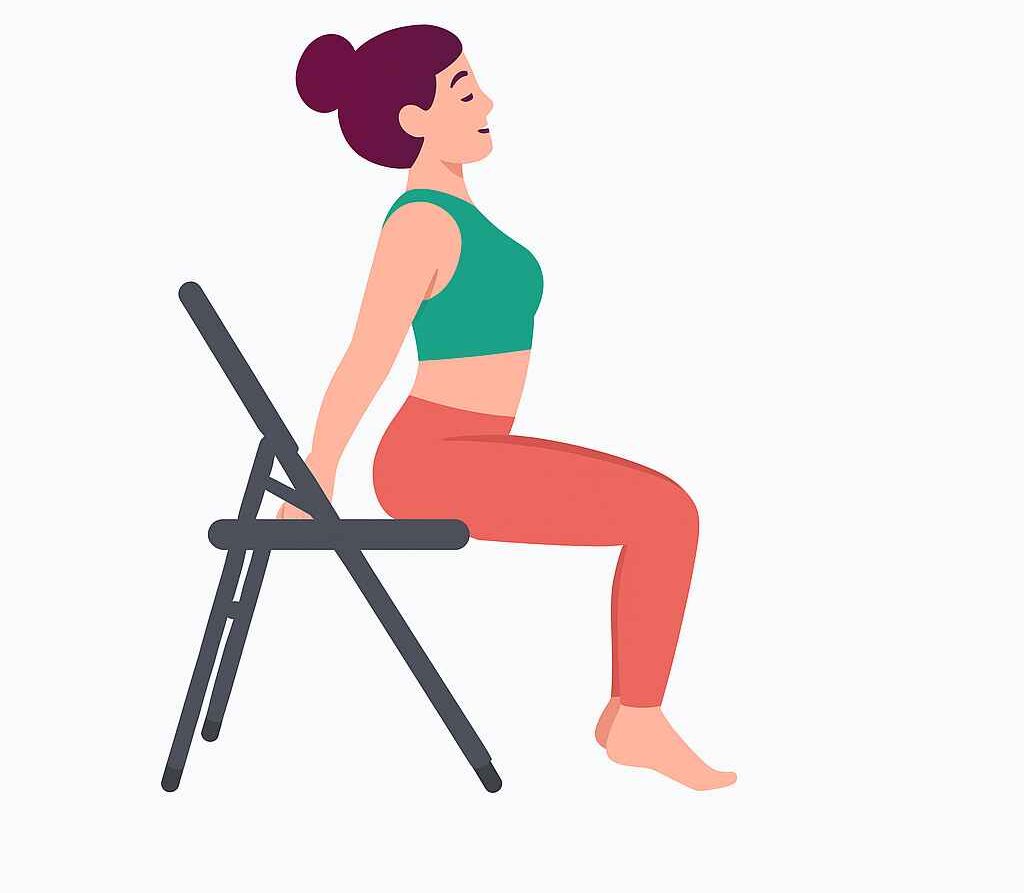
Seated Boat Pose
Sit at the edge of the chair, lean back slightly, lift both feet off the floor and hold. Arms reach forward. Hold 10–20 seconds. 5 reps.
Core strength declines sharply after menopause. This directly loads the deep abdominal muscles that support the spine and pelvis.
Seated Glute Squeeze
Sit upright, feet flat. Squeeze the glutes hard, hold 10 seconds, release. 15 reps.
Boring name, important exercise. Glute weakness is behind most lower back pain and poor balance in older women. You can do this anywhere, including at the dinner table.
Chair Push-Ups
Stand behind the chair, hands on the back, take 2 steps back. Lower your chest toward the chair back, push back up. 10 reps.
Upper body strength matters for getting up from falls, carrying groceries, and staying independent longer.
A realistic weekly routine for women over 50
You don’t need an hour a day. You need consistency more than volume.
Daily (10 minutes, every morning):
- Cat-Cow: 10 rounds
- Seated Spinal Twist: 20 seconds each side
- Seated Pigeon: 30 seconds each side
- Alternate Nostril Breathing: 5 minutes
3x a week (20 minutes):
- Seated Warrior I: 30 seconds each side
- Seated Chair Pose: 8 reps
- Seated Mountain with Arm Press: 10 reps
- Seated Boat Pose: 5 reps
- Chair-Supported Single Leg Stand: 30 seconds each side
- Heel Raises: 15 reps
- Seated Forward Fold: 60 seconds
That’s the whole programme. 10 minutes every day, 20 minutes 3 times a week.
For a structured guided version, try our free 28-day chair yoga challenge. It’s built specifically for this age group and covers all of the above in a progressive format.
What chair yoga for older women won’t do
Honest caveat: chair yoga alone won’t replace hormone therapy if your doctor has recommended it. It won’t reverse severe osteoporosis without also addressing calcium, vitamin D, and medical treatment.
And if you have a specific diagnosis like severe rheumatoid arthritis, our chair yoga for health conditions guide covers modifications for specific conditions.
Chair yoga for older women is a complement to good medical care. A powerful one, backed by solid research. But a complement.
How to start if you haven’t exercised in years
Start with 5 minutes. Seriously.
Pick 3 poses from this guide: Cat-Cow, Seated Spinal Twist, and Alternate Nostril Breathing. Do them every morning for 2 weeks before adding anything else.
The research on habit formation is clear: starting small and succeeding beats starting ambitious and stopping. Most women over 50 who quit exercise programmes quit in the first 3 weeks because the bar was set too high.
Our free printable chair yoga for seniors has a simple beginner routine you can print and keep on the kitchen counter. Paper beats apps for most of our readers (they’ve told us directly).
Frequently asked questions
Can chair yoga for older women help with menopause symptoms?
Yes. The 2023 systematic review cited above found yoga reduced anxiety, depression, fatigue, and sleep problems in perimenopausal and postmenopausal women. These are direct menopause symptoms. Chair yoga applies the same mechanisms with lower injury risk.
How often should women over 50 do chair yoga?
Daily practice of even 10 minutes outperforms 3x weekly sessions of 30 minutes in most research. The nervous system responds to repetition more than volume. Daily is the target. 3x weekly is the minimum for measurable benefit.
Is chair yoga safe for women with osteoporosis?
Yes, with modifications. Avoid deep forward bends that round the spine and any twists that feel compressive. The poses in this guide are specifically chosen for safety. If you have a recent fracture or severe osteoporosis, check with your doctor first.
Can chair yoga help with weight management after menopause?
Indirectly. Chair yoga builds muscle mass, and muscle burns more calories at rest than fat. It also reduces cortisol, which directly drives abdominal weight gain in postmenopausal women. It won’t replace a calorie deficit if that’s needed, but it changes the hormonal environment that makes weight loss harder after 50.
What’s the difference between chair yoga and regular yoga for older women?
No floor work. No risk of falling out of a pose. No need for a yoga mat. Chair yoga for older women delivers the same physiological benefits through modified poses that use the chair for support and stability. The bone density, flexibility, balance, and stress outcomes are the same. The barrier to entry is much lower.
The bottom line
Chair yoga for older women isn’t a watered-down version of real yoga. It’s yoga adapted for the body you have right now, with all the evidence behind it.
The bone density research. The menopause symptom data. The balance and fall prevention numbers. All of it applies.
Start with the daily 10-minute routine. Give it 2 weeks. Your body will tell you whether it’s working.
And if you want a complete structured programme, our chair yoga for seniors programme takes you through everything step by step, with no guesswork.