Parkinson’s disease can make everyday activities feel more challenging. Tasks like getting out of a chair, reaching for a shelf, or walking across a room may take more time than they once did.
While Parkinson’s affects everyone differently, staying physically active is often encouraged as part of an overall care plan. Gentle movement can help you stay engaged in daily activities and support your general well-being.
That’s where chair yoga comes in.
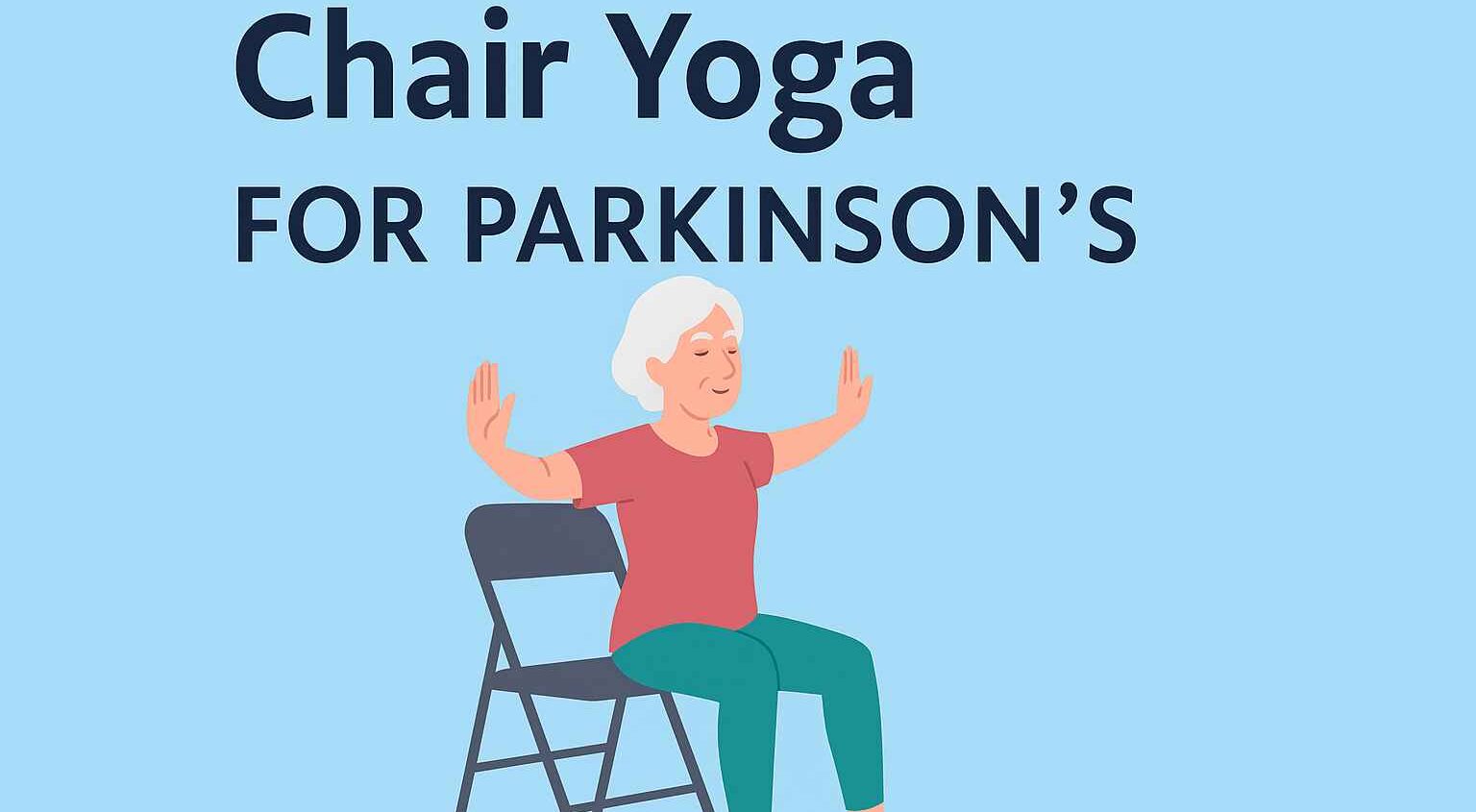
Chair yoga adapts traditional yoga movements so they can be performed while sitting or using a chair for support. You don’t need to get on the floor, and each exercise can be adjusted to match your comfort level.
Many people enjoy chair yoga because it’s slow, beginner-friendly, and easy to practice at home. Whether you’re newly diagnosed or looking for another way to stay active, these simple exercises can fit into your daily routine.
In this guide, you’ll learn seven gentle chair yoga exercises, practical safety tips, answers to common questions, and where to download a free printable routine.
Medical note: This article is for educational purposes only and shouldn’t replace medical advice. Parkinson’s disease affects everyone differently. Before beginning any new exercise program, speak with your neurologist, physiotherapist, or healthcare provider to make sure it’s appropriate for your needs.
Table of Contents
Why some people with Parkinson’s choose chair yoga
Exercise plays an important role in many Parkinson’s care plans. While chair yoga isn’t a treatment for Parkinson’s disease, it can be one way to include gentle movement in your weekly routine.
Unlike many traditional workouts, chair yoga doesn’t require fast movements or getting up and down from the floor. Most exercises are performed while sitting in a sturdy chair, making them easier to adapt for different mobility levels.
Many people also appreciate the slower pace. Moving with control and focusing on steady breathing can make exercise feel less overwhelming, especially on days when symptoms feel more noticeable.
The Parkinson’s Foundation encourages people living with Parkinson’s to stay physically active whenever possible, as regular exercise is considered an important part of maintaining overall health and daily function.
https://www.parkinson.org/living-with-parkinsons/exercise
The National Institute on Aging also recommends that older adults include activities that support flexibility, balance, and strength as part of healthy aging.
https://www.nia.nih.gov/health/exercise-and-physical-activity
Benefits of chair yoga for people living with Parkinson’s
Everyone’s experience with Parkinson’s is different.
Some days you may feel energetic. Other days your movements may feel slower or less comfortable.
Chair yoga gives you the flexibility to adjust your routine based on how you’re feeling.
Many people include chair yoga in their weekly routine because it may help them:
- Stay physically active with gentle, low-impact movement.
- Practice flexibility through comfortable stretching.
- Improve body awareness during everyday movement.
- Include breathing exercises that many people find relaxing.
- Build confidence with exercises that can be performed while seated.
- Create a regular movement routine without needing special equipment.
Small, consistent habits are often easier to maintain than long workout sessions.
Even 10 to 15 minutes a few times each week can become a meaningful part of your daily routine.
Before you begin
Taking a minute to prepare your space can make your chair yoga session safer and more comfortable.
Choose a sturdy chair with four legs and avoid chairs with wheels. Sit where both feet can rest flat on the floor, leaving enough room around you to move your arms comfortably.
Wear clothing that allows you to move freely, and keep a bottle of water nearby if needed.
Some people living with Parkinson’s notice that their energy levels change throughout the day. You may find it helpful to practice when you feel your most comfortable, whether that’s in the morning or later in the afternoon.
If you experience dizziness, chest pain, difficulty breathing, or feel unsteady during exercise, stop your session and contact your healthcare provider if symptoms continue.
7 poses for Chair Yoga for Parkinson’s
(Always consult your doctor before starting a new exercise routine.)
1. Seated Mountain Pose (Tadasana)
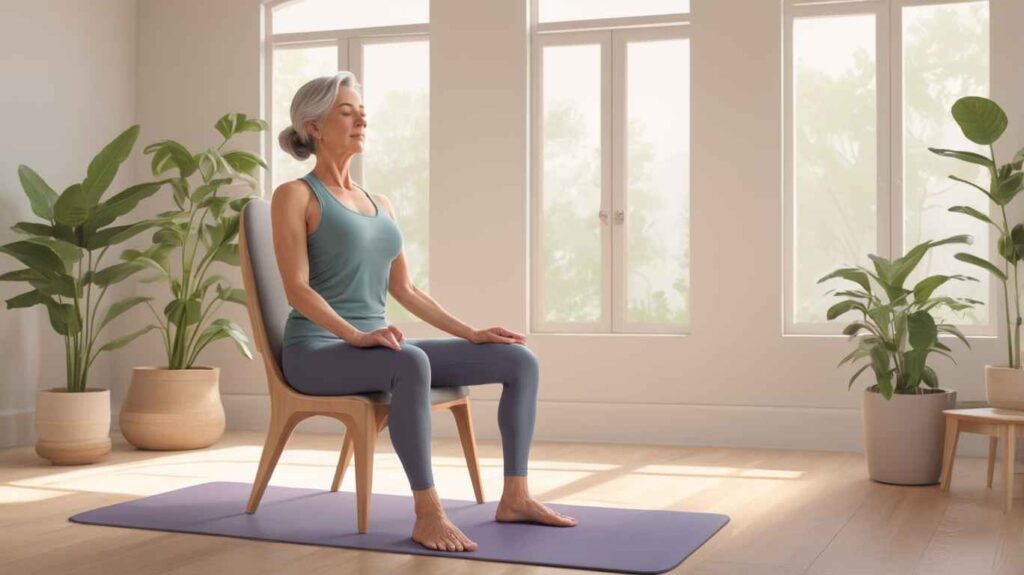
This simple posture is a comfortable way to begin your practice. It gives you a chance to settle into your chair, focus on your breathing, and prepare your body for gentle movement.
How to do it
- Sit near the front of your chair.
- Place both feet flat on the floor.
- Rest your hands comfortably on your thighs.
- Lengthen your spine without straining.
- Relax your shoulders.
- Take five slow, comfortable breaths.
Why people enjoy this pose
Starting with good posture helps you become more aware of how your body feels before moving into the rest of the routine.
Many beginners also appreciate having a quiet moment to slow their breathing.
2. Gentle Neck Stretch
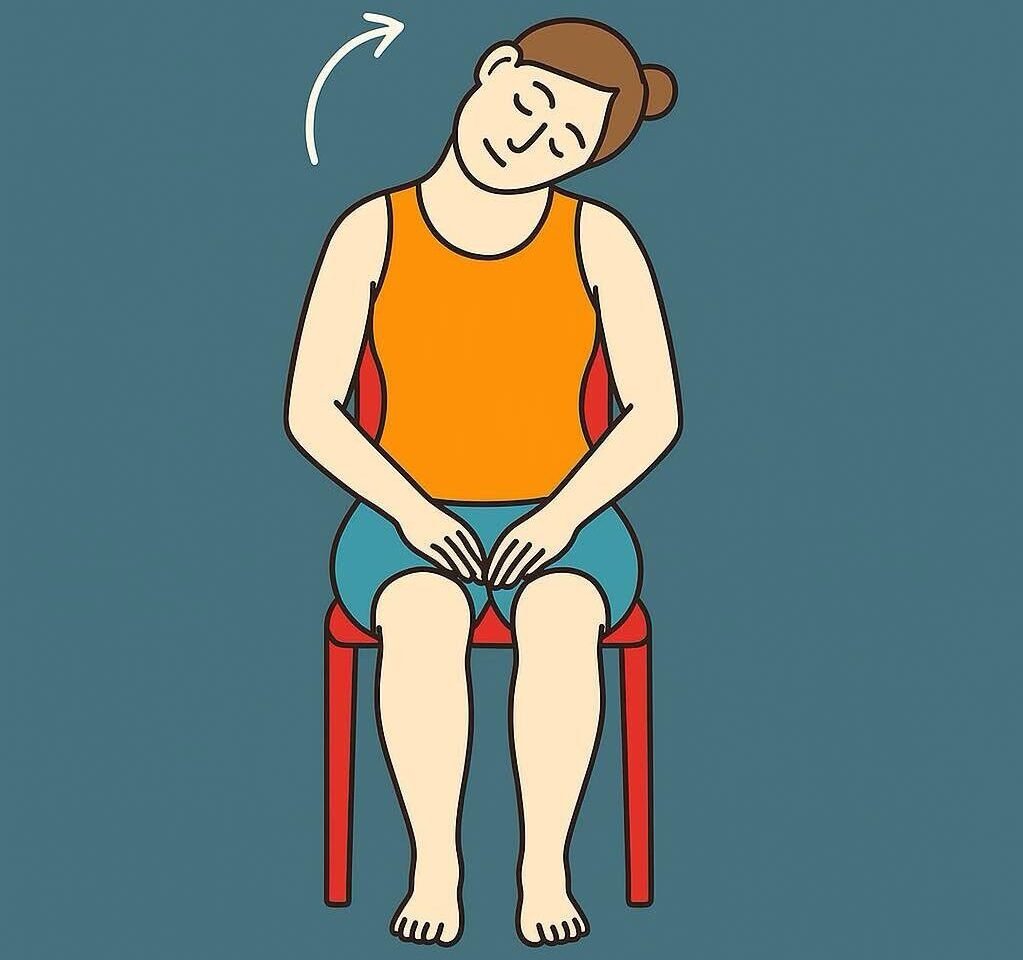
Neck stiffness is something many older adults experience, whether they have Parkinson’s or not.
This gentle stretch encourages comfortable movement through the neck and shoulders.
How to do it
- Sit upright with relaxed shoulders.
- Slowly tilt your head toward your right shoulder.
- Hold for a few comfortable breaths.
- Return to the center.
- Repeat on the opposite side.
Avoid pulling on your head with your hand. Let the movement stay slow and natural.
Helpful tip
Move only within a range that feels comfortable.
A gentle stretch is often enough.
Focus on your breathing
Many chair yoga exercises include slow, relaxed breathing.
The Harvard Health Publishing guide on breathing exercises explains that controlled breathing can help many people relax and is often included in wellness routines.
https://www.health.harvard.edu/staying-healthy/learning-diaphragmatic-breathing
Try to breathe naturally throughout each exercise.
There’s no need to rush or hold your breath.
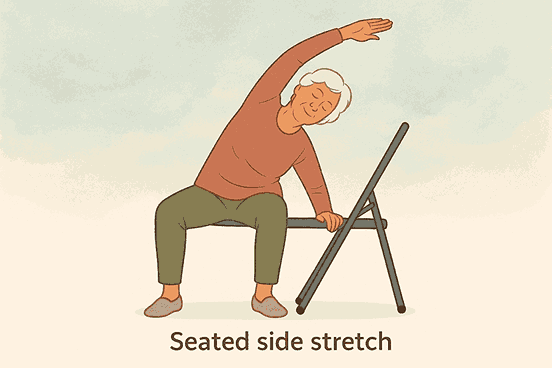
3. Seated Side Stretch
This gentle stretch helps you move through your sides, shoulders, and upper back. It also gives you a chance to slow your breathing and stay focused on each movement.
How to do it
- Sit comfortably with both feet flat on the floor.
- Rest your left hand on the chair for support.
- Slowly raise your right arm overhead.
- Lean gently toward your left side until you feel a light stretch.
- Hold for 3 to 5 slow breaths.
- Return to the center and repeat on the opposite side.
Why people like this exercise
Many older adults spend long periods sitting throughout the day. Gentle side stretches can help your upper body feel less stiff and encourage comfortable movement through your shoulders and ribs.
Keep the movement slow and avoid leaning farther than feels comfortable.
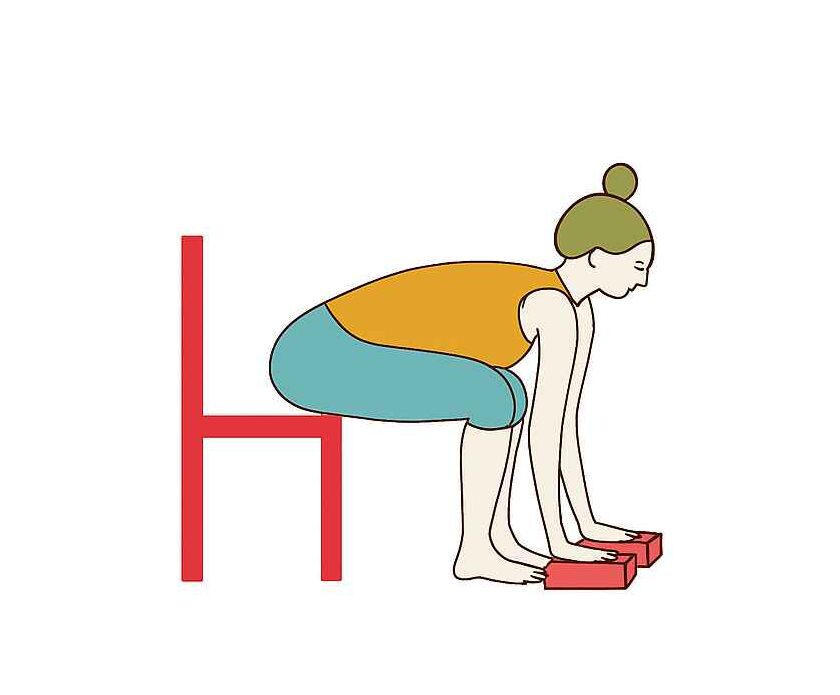
4. Seated Forward Bend
A forward bend is a simple way to stretch your back and the back of your legs while staying safely supported by your chair.
There’s no need to reach your toes. Move only as far as your body feels comfortable.
How to do it
- Sit near the front of your chair.
- Keep both feet flat on the floor.
- Take a slow breath in.
- As you breathe out, gently hinge forward from your hips.
- Rest your hands on your thighs, knees, or lower legs.
- Hold for a few relaxed breaths.
- Slowly return to an upright position.
Helpful tip
If bending forward feels uncomfortable, reduce the distance or skip the exercise. Every body moves differently, and that’s perfectly okay.
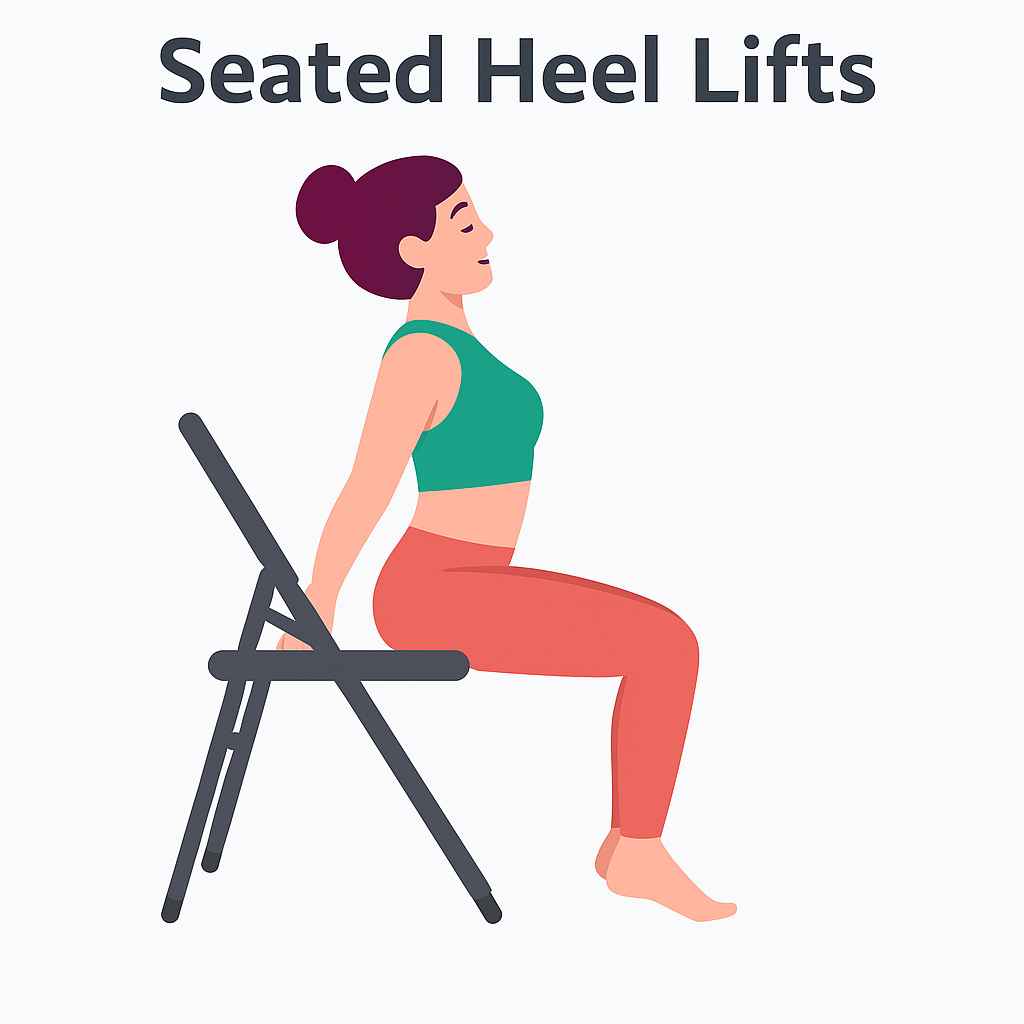
5. Heel Lifts
Strong lower legs are important for everyday activities like standing up, walking, and climbing stairs.
Heel lifts are a simple seated exercise that encourages movement through your ankles and calves.
How to do it
- Sit upright with both feet flat on the floor.
- Keep your toes on the ground.
- Slowly lift both heels as high as feels comfortable.
- Pause for a second.
- Lower your heels back down with control.
- Repeat 8 to 10 times.
Why try this exercise?
Gentle ankle and calf movements are often included in seated exercise programs for older adults because they help keep the lower legs moving during long periods of sitting.
If lifting both heels feels difficult, try one foot at a time.
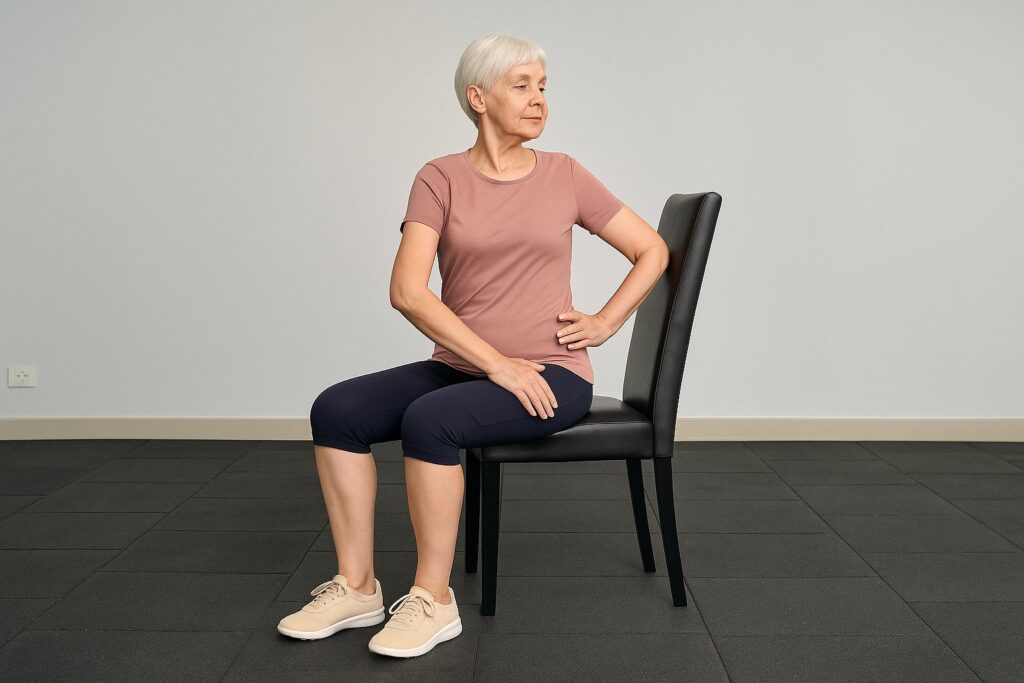
6. Seated Spinal Twist
This gentle twist encourages comfortable movement through your upper back and waist.
The movement should stay relaxed and pain-free.
How to do it
- Sit tall with both feet on the floor.
- Place your right hand on the outside of your left knee.
- Rest your left hand behind you on the chair.
- Slowly turn your shoulders to the left.
- Hold for 2 or 3 comfortable breaths.
- Return to the center and repeat on the other side.
Helpful tip
Turn only until you feel a gentle stretch.
Avoid forcing the twist or bouncing while holding the position.
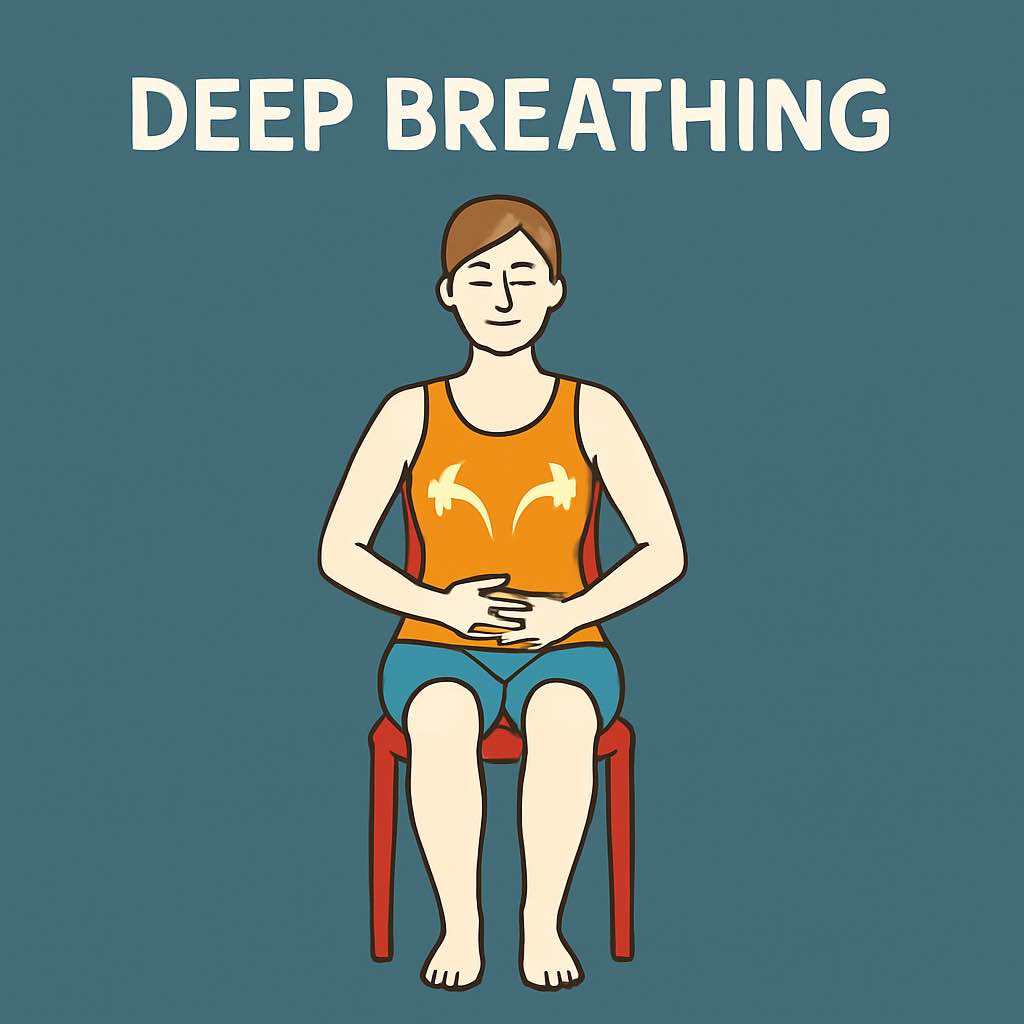
7. Guided Belly Breathing
Chair yoga isn’t only about stretching.
Many people enjoy ending their practice with a few minutes of slow breathing because it creates a calm finish to the session.
How to do it
- Sit comfortably with your back supported.
- Place one hand on your stomach.
- Slowly breathe in through your nose.
- Notice your stomach gently rise.
- Exhale slowly through your nose or mouth.
- Continue for 2 to 5 minutes.
Why include breathing exercises?
Many people find that slowing their breathing helps them feel more relaxed before or after gentle movement.
Harvard Health Publishing explains that diaphragmatic breathing is commonly used as a relaxation technique.
There’s no perfect breathing pattern.
Simply choose a pace that feels comfortable.
A simple weekly chair yoga routine
If you’re new to chair yoga, you don’t have to complete a long workout every day.
Starting small often makes it easier to build a routine you can stick with.
| Day | Suggested Routine | Time |
|---|---|---|
| Monday | All 7 exercises | 15 minutes |
| Tuesday | Breathing + Neck Stretch + Heel Lifts | 10 minutes |
| Wednesday | All 7 exercises | 15 minutes |
| Thursday | Rest or a gentle walk | — |
| Friday | All 7 exercises | 15 minutes |
| Saturday | Breathing + Side Stretch | 10 minutes |
| Sunday | Practice your favorite exercises | 10–15 minutes |
Choose a schedule that fits your energy level and daily routine.
Some days you may feel like doing every exercise.
Other days, even five minutes of gentle movement is enough.
Common mistakes to avoid
- Chair yoga should feel comfortable, not exhausting.
- These simple tips can help make your practice more enjoyable.
1. Moving too quickly
- Slow movements are easier to control and often feel more comfortable.
- There’s no reason to rush from one exercise to the next.
2. Holding your breath
- Many beginners don’t realize they’re holding their breath while stretching.
- Try to keep your breathing steady throughout each movement.
3. Using an unstable chair
- Choose a sturdy chair without wheels.
- If your chair slides or rocks, it may affect your balance.
4. Trying to stretch too far
- Every person’s flexibility is different.
- Stop when you feel a gentle stretch. Pain is a signal to ease off.
5. Skipping rest days
- Your body needs time to recover.
- Taking a day off between sessions is perfectly normal, especially if you’re just getting started.
When should you skip chair yoga?
Some days are better suited for rest.
Speak with your healthcare provider before exercising if you have:
- Chest pain or pressure
- Severe dizziness
- Shortness of breath that doesn’t improve with rest
- A recent injury
- A recent surgery
- Any symptoms your healthcare provider has advised you to monitor
The Parkinson’s Foundation encourages people living with Parkinson’s to work with their healthcare team when choosing an exercise program that matches their individual needs.
Tips for making chair yoga a regular habit
Starting a new routine doesn’t have to feel overwhelming.
Many people find it easier to stay consistent by keeping things simple.
Here are a few ideas that may help:
- Practice at the same time each day.
- Keep your chair in a quiet, comfortable space.
- Set a reminder on your phone or calendar.
- Play calming music if you enjoy it.
- Mark each completed session on a calendar.
Some days you might complete the full routine.
Other days, you may only have time for a few stretches and breathing exercises.
That’s completely normal. The goal is to keep moving in a way that feels comfortable for you.
Final thoughts
Living with Parkinson’s can bring new challenges, but many people continue to enjoy meaningful activities and regular movement as part of their daily lives.
Chair yoga is one option that can fit into a healthy routine because it’s gentle, adaptable, and easy to practice at home. The exercises in this guide are designed to encourage comfortable movement, help you stay active, and give you time to slow down and focus on your breathing.
Remember that progress looks different for everyone. Some days you’ll feel stronger than others, and that’s okay. The most important thing is finding a routine that feels manageable and enjoyable over time.
If you’re unsure whether chair yoga is right for you, talk with your neurologist, physiotherapist, or another member of your healthcare team. They can help you decide which activities best match your abilities and health goals.
For more information about Parkinson’s disease and staying active, these trusted organizations are excellent places to start:
- Parkinson’s Foundation: https://www.parkinson.org/
- National Institute on Aging: https://www.nia.nih.gov/health/exercise-and-physical-activity
- MedlinePlus: https://medlineplus.gov/parkinsonsdisease.html
- NHS Parkinson’s disease: https://www.nhs.uk/conditions/parkinsons-disease/
Frequently Asked Questions
Is chair yoga safe for people living with Parkinson’s?
For many people, chair yoga can be a gentle way to stay active. Because Parkinson’s affects everyone differently, it’s best to speak with your healthcare provider before starting a new exercise routine.
Can chair yoga cure Parkinson’s disease?
No. There is currently no cure for Parkinson’s disease. Chair yoga isn’t a treatment, but it can be one way to include gentle physical activity as part of your overall care plan.
How often should I practice chair yoga?
Many beginners start with 10 to 15 minutes, 3 to 5 days each week. Choose a schedule that feels comfortable and adjust it as needed.
Do I need any special equipment?
No. Most chair yoga exercises only require a sturdy chair. Comfortable clothing and supportive footwear can also help you feel more comfortable during practice.
Can I practice chair yoga if I have balance concerns?
Many chair yoga exercises are performed while sitting, which some people find more comfortable than standing exercises. If balance is a concern, talk with your healthcare provider or physiotherapist about the movements that are most appropriate for you.
What should I do if I feel tired during my session?
Take a break whenever you need one. It’s perfectly fine to shorten your session or continue another day if you’re feeling fatigued.
Is it okay to combine chair yoga with other exercises?
Many people enjoy combining chair yoga with activities such as walking or stretching. Your healthcare provider or physiotherapist can recommend an exercise plan based on your individual needs.
Where can I learn more about Parkinson’s disease?
These organizations provide reliable, up-to-date information:
- Parkinson’s Foundation: https://www.parkinson.org/
- National Institute on Aging: https://www.nia.nih.gov/health/exercise-and-physical-activity
- MedlinePlus: https://medlineplus.gov/parkinsonsdisease.html
- NHS: https://www.nhs.uk/conditions/parkinsons-disease/