
Sciatica pain has a strange way of changing everyday life.
One day you’re walking normally.
Then suddenly getting out of bed feels harder.
Sitting through dinner feels uncomfortable.
Standing for too long creates that burning, shooting feeling running through your lower back, hips, or down your leg.
For many seniors, the frustrating part isn’t only the pain.
It’s how quickly simple things become complicated.
- Tying shoes.
- Walking stairs.
- Getting into cars.
Even sitting comfortably sometimes feels difficult.
When pain keeps showing up, many people start searching for solutions.
And usually they find the same advice repeatedly.

- Stretch more.
- Exercise more.
- Move more.
But chair yoga for sciatica works a little differently.
Because sciatica isn’t always simple.
Sometimes movement helps.
Sometimes certain movements irritate already sensitive nerves.
And when pain already limits daily activities, experimenting with random exercises from the internet feels risky.
This is where chair yoga for sciatica becomes useful.
- You don’t need to get down onto the floor.
- You don’t need advanced flexibility.
- You don’t need long exercise sessions.
You mostly need a stable chair and a few minutes.
The goal of chair yoga for sciatica isn’t forcing painful stretches.
The goal is creating gentle movement around muscles, joints, hips, and lower back structures that may influence sciatic nerve irritation.
Many people are surprised how much easier movement feels when exercises become smaller.
Starting smaller usually works better.
Research and movement specialists often encourage gentle activity because long periods of inactivity may sometimes increase stiffness and make movement feel harder later.
Chair yoga also works well because it removes many barriers.
- Poor balance.
- Fear of falling.
- Difficulty getting off the floor.
- Limited mobility.
These things stop many seniors from exercising.
A chair changes that.
In this guide, you’ll learn simple chair yoga for sciatica poses, safety mistakes seniors often overlook, situations where stretching can backfire, practical movement strategies, and realistic ways to build a routine you can actually continue.
Because consistency matters.
And routines only work when people keep doing them.
Table of Contents
What Is Sciatica?
Sciatica is a condition where the sciatic nerve, which runs from your lower spine down your legs, becomes irritated or compressed. This often leads to:
- Lower back pain
- Hip discomfort
- Numbness or tingling in the legs
- Difficulty walking or sitting for long periods
For seniors, sciatica may be caused by conditions like arthritis, herniated discs, or poor posture over time.
📚 Research shows that gentle stretching can help reduce sciatic nerve pressure and improve comfort.
Why Chair Yoga for Sciatica help seniors?
Chair yoga allows you to stretch and strengthen the muscles around your spine and hips without lying down or standing for long periods — which is perfect if mobility is limited.
Key benefits:
- Eases pressure on the sciatic nerve
- Improves posture and alignment
- Gently strengthens your core and lower back
- Boosts blood flow to promote healing
And best of all, you can do it from the comfort of your chair.
5 Chair Yoga Poses for Sciatica Relief
1. Seated Spinal Twist
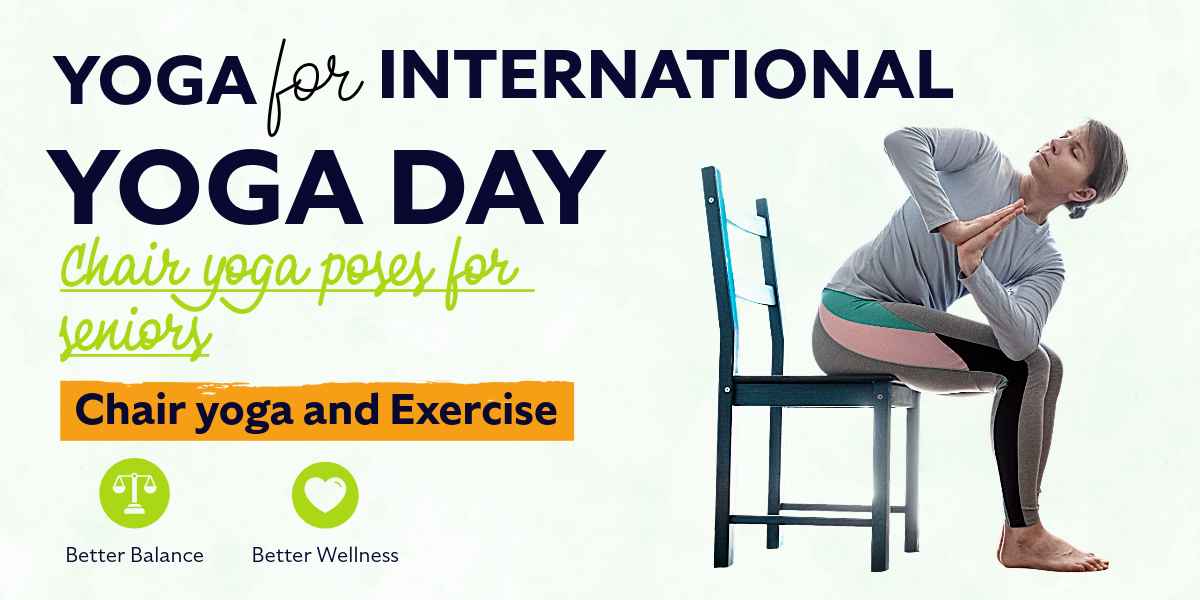
Sit tall with feet flat on the floor. Place your right hand on the back of the chair. Inhale, then gently twist to the right. Hold for 5 breaths, then switch sides.
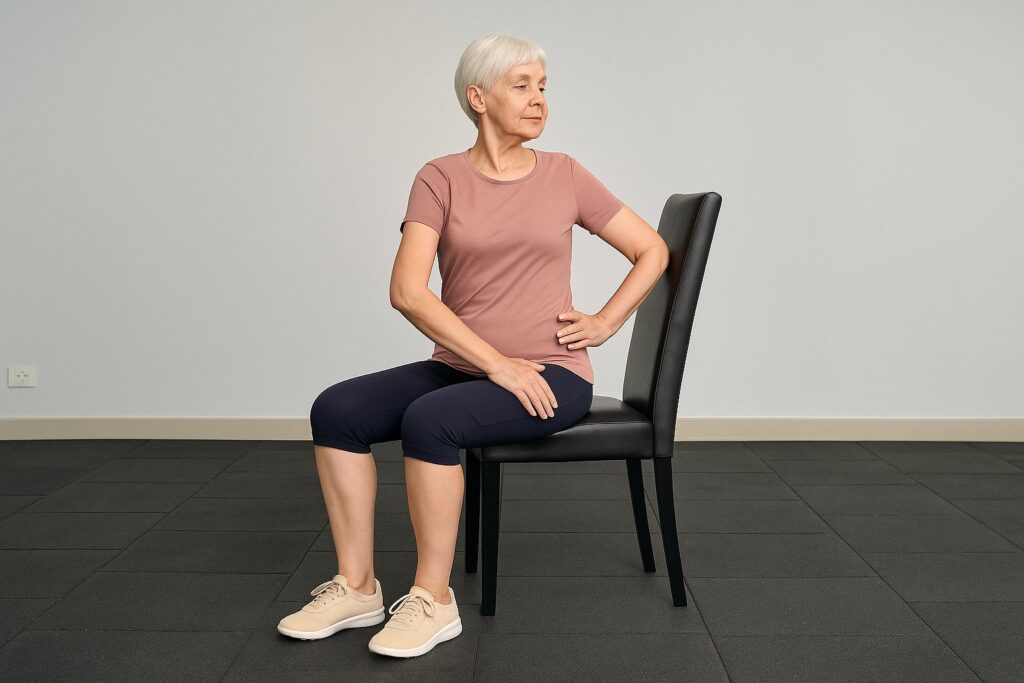
💡 Helps reduce lower back stiffness and nerve compression.
2. Figure-Four Stretch
Sit up straight, place your right ankle on your left thigh (like making a “4”). Gently lean forward until you feel a stretch in your right hip. Hold for 5–8 breaths, then switch legs.
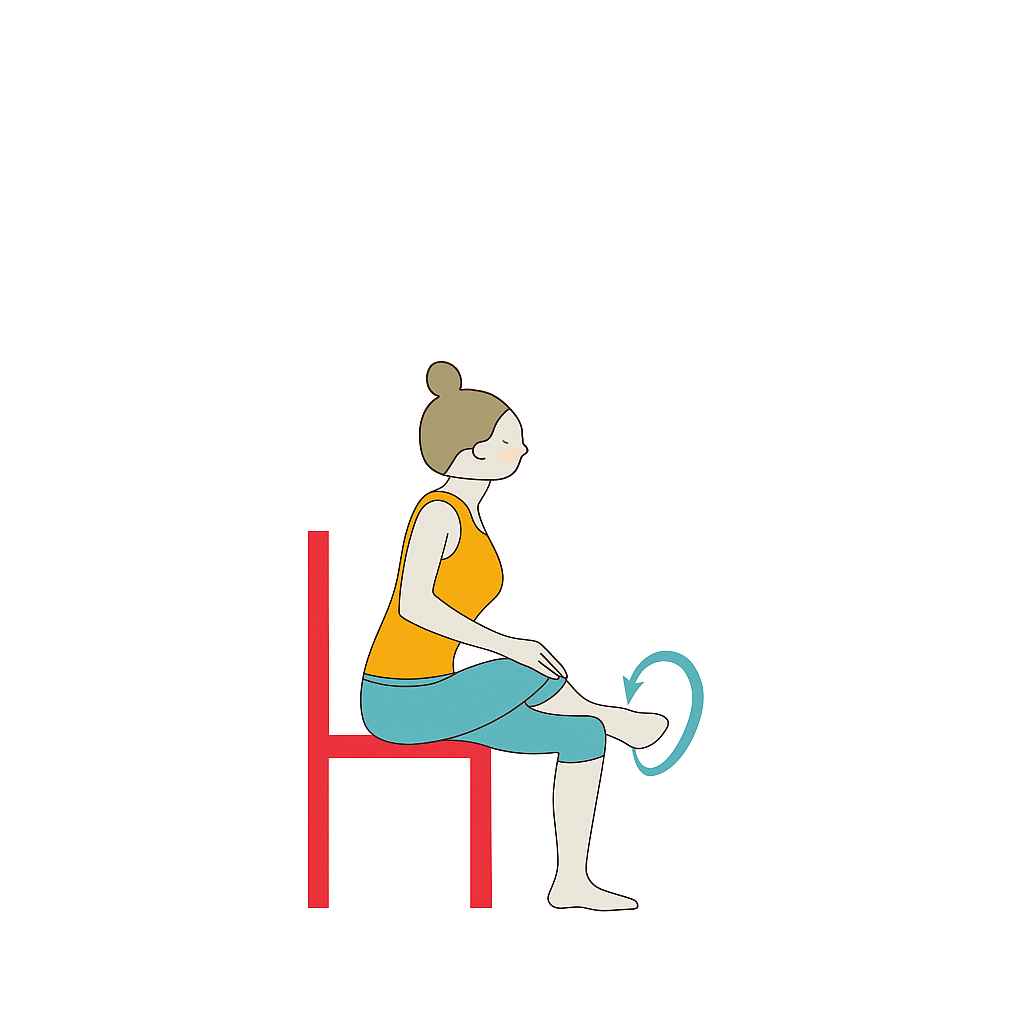
💡 Loosens tight hips and glutes — common sciatica culprits.
3. Seated Cat-Cow Stretch
Sit with hands on knees. Inhale: arch your back and lift your chest (Cow). Exhale: round your spine, tuck your chin (Cat). Repeat for 5 rounds.
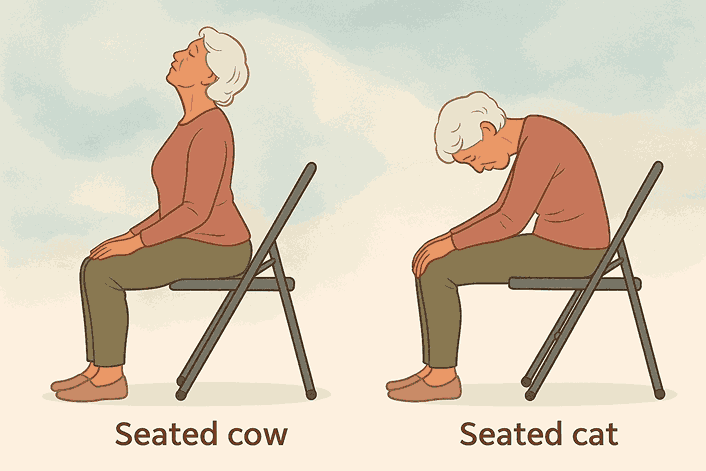
💡 Improves spinal flexibility and circulation around the nerve.
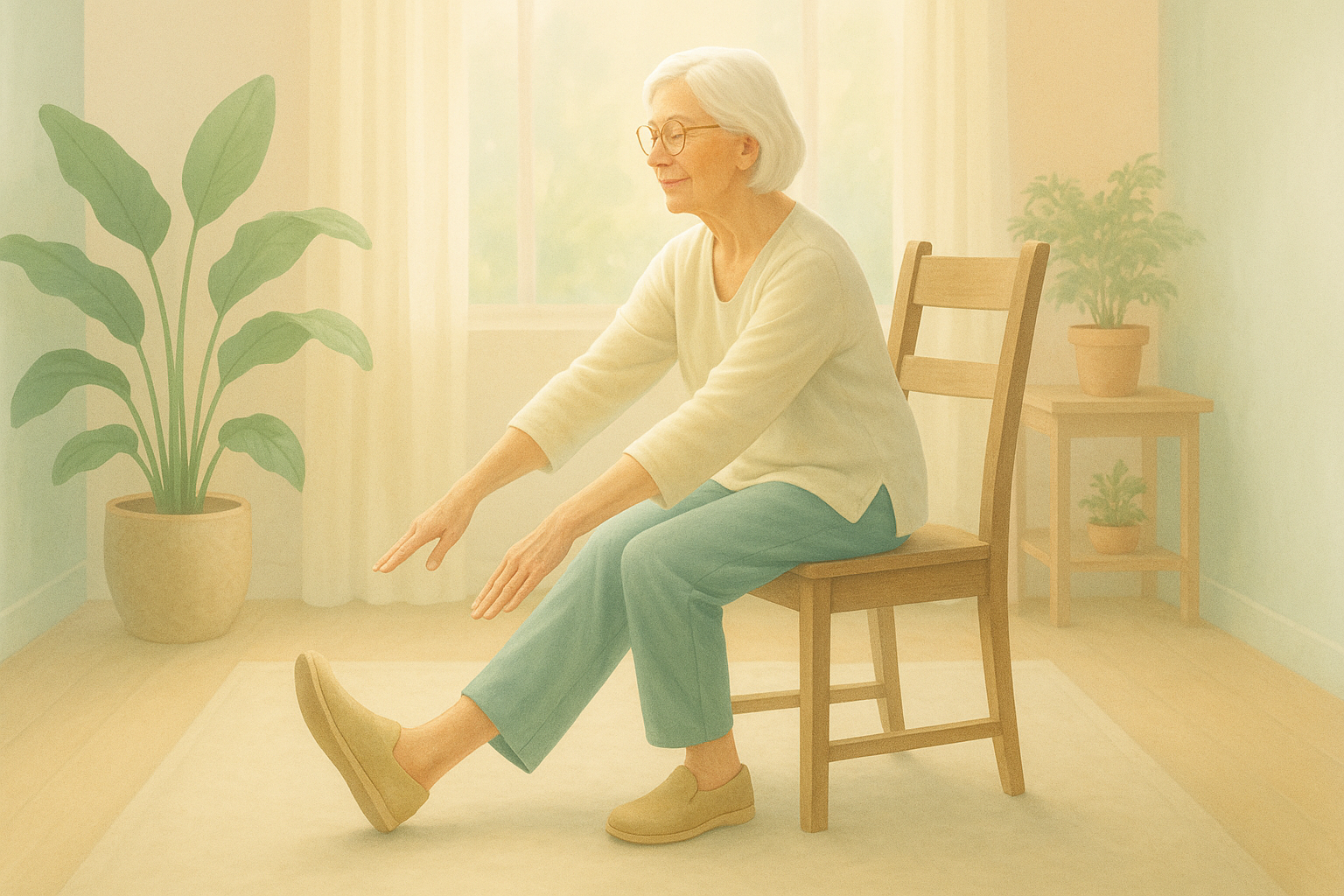
4. Hamstring Stretch with Chair
Sit forward slightly on the chair. Extend your right leg with the heel on the floor. Keep back straight, hinge forward gently. Feel the stretch in the back of your thigh. Hold 5 breaths.
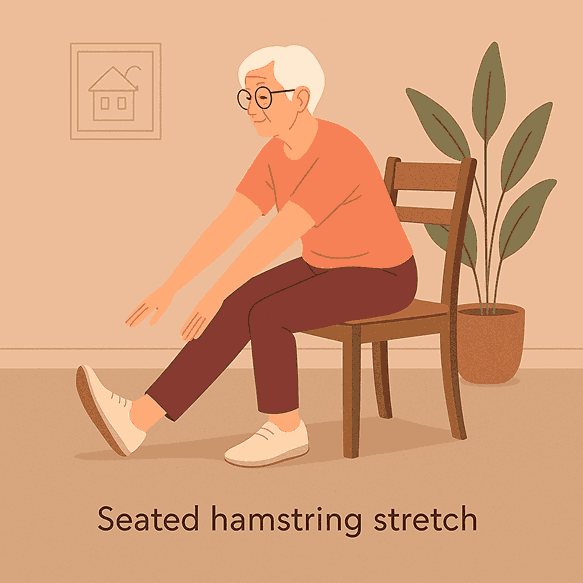
💡 Tight hamstrings often worsen sciatic pain this stretch helps.
5. Seated Side Stretch
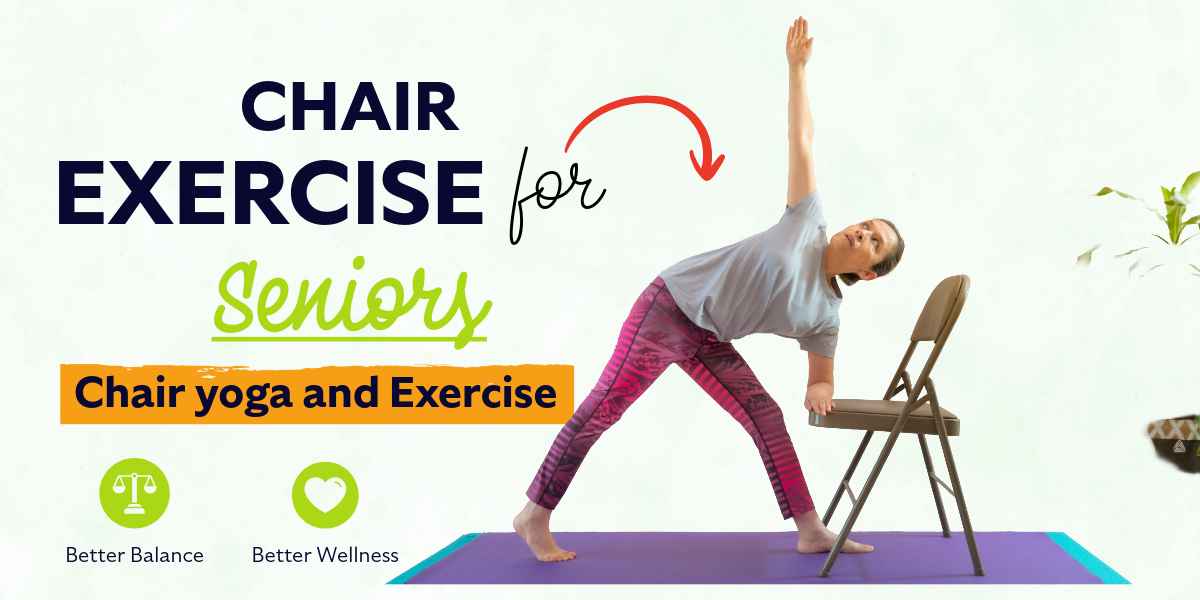
Raise your right arm overhead. Lean to the left, keeping your sit bones grounded. Breathe into your right side. Hold for 5 breaths, then switch.
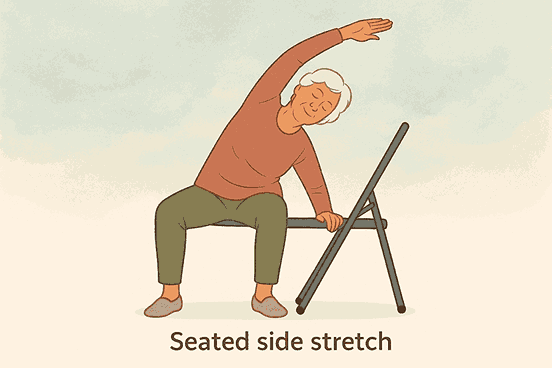
💡 Relieves pressure in the lower back and waist area.
Tools That May Help
- Yoga blocks for extra support under the legs
- Lumbar cushions for posture
- Non-slip socks or yoga shoes for safety
Why chair yoga sometimes makes sciatica worse before it feels better
People rarely talk about this.
Sometimes people try gentle stretching and think:
“Why do I actually feel worse?”
This can happen.
Understanding why matters.
Temporary soreness vs warning signs
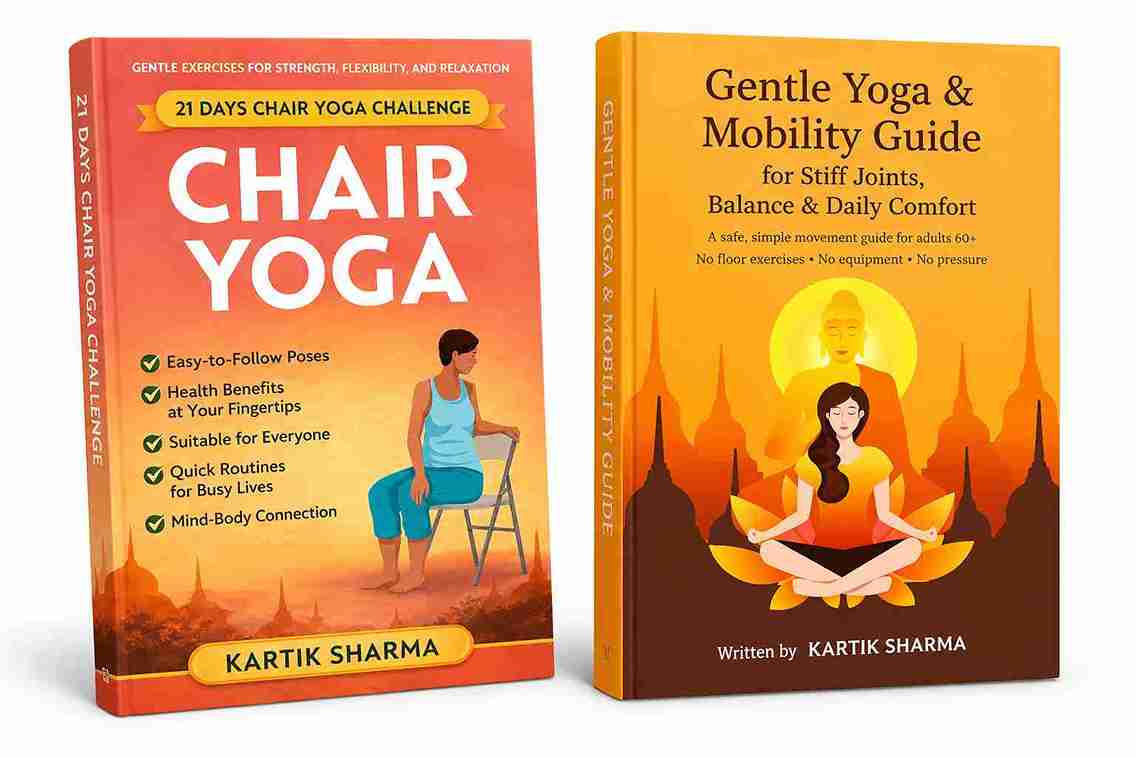
Gentle Chair Yoga Guides for Adults 50+
Two beginner-friendly guides designed to help support flexibility, balance, mobility, and everyday comfort with simple chair-based routines.
Some discomfort after movement can happen.
Examples:
Usually normal
- Mild soreness next day
- Muscles feeling worked
- Temporary tightness
More concerning
- Burning pain increasing
- Numbness spreading farther
- New weakness
- Pain becoming significantly worse
Pain quality matters.
Why irritated nerves sometimes dislike stretching
Tight muscles and irritated nerves behave differently.
Sometimes the sciatic nerve becomes sensitive.
Aggressive stretching can increase irritation.
People often assume:
“More stretch equals faster recovery.”
That assumption causes problems.
Smaller movements often work better initially.
Signs you should stop immediately
Stop exercises and reassess if you notice:
- Increasing numbness
- Sudden weakness
- Severe shooting pain
- Symptoms spreading farther down the leg
These signs deserve attention.
The 24 hour rule many practitioners use
A simple guideline:
If symptoms stay worse for more than 24 hours after exercise:
- Reduce repetitions
- Shorten sessions
- Remove movements that triggered symptoms
Sometimes smaller sessions create better progress.
Sciatica is not one condition: why the cause changes which poses work
Two people can both say:
“I have sciatica.”
They may need completely different routines.
Tight muscle driven symptoms
Common signs:
- Symptoms after long sitting
- Tight hips
- Glute tightness
- Relief after movement
Often responds well to:
- Hip mobility
- Gentle stretching
- Frequent movement
Disc related symptoms
Common patterns:
- Sitting worsens symptoms
- Forward bending feels harder
- Pain travels farther down the leg
These people sometimes need:
- Modified routines
- Smaller ranges
- Different movement selection
Arthritis related compression
Often includes:
- Morning stiffness
- Slower mobility
- Joint discomfort
Progress may feel slower.
That’s normal.
Why identical symptoms don’t always need identical exercises
Pain location alone doesn’t explain everything.
Movement tolerance matters.
Symptom triggers matter.
Underlying causes matter.
Understanding this prevents frustration.
| Cause | Often Helpful | May Need More Caution |
|---|---|---|
| Muscle tightness | Mobility work | Aggressive stretching |
| Disc irritation | Gentle movement | Deep forward bending |
| Arthritis | Short frequent movement | Long sessions |
Myth vs reality: chair yoga and sciatica misconceptions
People hear lots of advice.
Some helps.
Some creates problems.
| Myth | Reality |
|---|---|
| Stretch harder for faster relief | Aggressive stretching can increase irritation |
| Complete rest fixes sciatica faster | Too much inactivity often increases stiffness |
| Pain during stretching means progress | Pain type matters more |
| More exercise automatically works better | Recovery still matters |
| Everyone should stretch hamstrings | Some people worsen with hamstring stretching |
The frustrating truth:
Recovery rarely looks identical between people.
The hidden lifestyle triggers that keep irritating the sciatic nerve
Exercise sessions might last 10 minutes.
Daily habits last much longer.
Sitting posture problems
Common examples:
- Soft couches
- Slouched positions
- Deep chairs
- Long car rides
Sleep positions
Small adjustments sometimes help.
Examples:
- Pillow between knees when side sleeping
- Support under knees when back sleeping
Activity spikes
This catches many people.
Examples:
- Gardening all weekend
- Deep cleaning days
- Suddenly walking much farther
Symptoms often appear afterward.
Why recovery days sometimes hurt more
Some people move dramatically less on recovery days.
Stiffness increases.
Gentle movement often helps more than complete inactivity.
Quick checklist
✓ Stable sitting posture
✓ Frequent position changes
✓ Short walks when possible
✓ Avoid long sitting sessions
✓ Watch activity spikes
Advanced section: building a sciatica-friendly chair yoga progression plan
Exercises matter.
Progression matters more.
Phase 1: Calm symptoms
Goal:
- Reduce irritation
- Short sessions
- Gentle movement
Usually:
5 to 10 minutes
Phase 2: Restore movement
Add:
- More repetitions
- Longer holds
- Additional mobility work
Phase 3: Build tolerance
Increase:
- Frequency
- Session duration
- Movement variety
Phase 4: Maintenance
Focus on:
- Preventing flare ups
- Maintaining mobility
- Monitoring symptoms
Progression variables people forget
Track:
- Session length
- Symptom changes
- Recovery speed
- Pain patterns
Progression works better when changes stay gradual.
Jumping from 10 minutes to 45 minutes rarely feels good.
Safety Tips for Seniors with Sciatica
Use a sturdy chair without wheels. Never force a stretch stop if there’s sharp pain. Breathe slowly and deeply with each pose. Talk to your doctor or physiotherapist before starting.
Want a printable guide for these poses? Download Free Sciatica Chair Yoga Routine PDF
Final Thoughts for Chair Yoga for Sciatica
Living with sciatica pain isn’t easy, but you don’t have to give up movement. Chair yoga offers a gentle, proven way to stretch tight muscles, relieve nerve pressure, and feel better in your body right from your chair.
Start slow, be consistent, and trust the process.
FAQs for Chair Yoga for Sciatica
Q: Is chair yoga good for sciatica in seniors?
Yes, gentle chair yoga can ease sciatica pain by reducing pressure on the nerve and stretching tight muscles, especially in seniors with limited mobility.
Q: Can I do chair yoga every day for sciatica?
Yes. Start with 10–15 minutes a day. Consistency matters more than intensity.
Q: Do I need any equipment for chair yoga?
Just a sturdy chair. A yoga strap, blocks, or cushion can help but are optional.