
Getting older changes how your body feels.
You wake up a little stiffer than you used to. Your knees take a few extra seconds to cooperate. Reaching for something on a high shelf suddenly feels like a task instead of a routine movement.
That doesn’t mean you should stop exercising.
In fact, regular movement becomes more important with age.
Chair exercises for seniors give you a practical way to stay active without putting unnecessary stress on your joints. You don’t need a gym. You don’t need expensive equipment. And you definitely don’t need to spend an hour sweating through an intense workout.
A sturdy chair and 15 minutes can go a long way.
Many seniors start chair exercises because standing workouts feel uncomfortable or balance feels less reliable than it once did. Others simply want an easy way to move more throughout the day.
Whatever brought you here, you’re in the right place.
Table of Contents
Why chair exercises matter as you get older
Muscle loss happens naturally with age.
Researchers even have a name for it: sarcopenia.

After age 60, many adults gradually lose muscle strength unless they stay active. That loss can make everyday activities feel harder than they should.
- Standing up from a chair.
- Walking up stairs.
- Carrying groceries.
- Getting in and out of a car.
The good news is that movement helps.
Chair exercises keep muscles working, joints moving, and circulation flowing. They also give people a safe starting point when traditional workouts feel intimidating.
And let’s be honest.
Most people are more likely to stick with a workout they can actually do.
Researchers even have a name for age-related muscle loss: sarcopenia. The National Institute on Aging recommends regular physical activity to help older adults maintain strength, mobility, and independence.
Benefits of chair exercises for seniors
The benefits aren’t limited to exercise time.
You feel them throughout the day.
1. Better leg strength
- Strong legs make daily life easier.
- Every time you stand up, walk through your home, or climb stairs, your leg muscles do the heavy lifting.
- Chair exercises help keep those muscles active.
2. Improved balance
- Balance tends to fade gradually.
- Many chair exercises strengthen the muscles around the hips, core, and ankles, all of which play a role in staying steady.
3. More flexibility
- Stiff joints can make movement uncomfortable.
- Gentle stretching and mobility exercises help your body move through a fuller range of motion.
4. Better circulation
- Sitting for long periods slows blood flow.
- Simple seated exercises encourage circulation and help reduce that stiff, sluggish feeling many people experience after spending too much time in a chair.
5. Greater independence
- This might be the biggest benefit of all.
- Most seniors want to keep doing things on their own for as long as possible.
- Movement helps support that goal.
Better balance can help reduce the risk of falls. According to the Centers for Disease Control and Prevention (CDC), falls remain one of the leading causes of injury among older adults.
Who should do chair exercises?
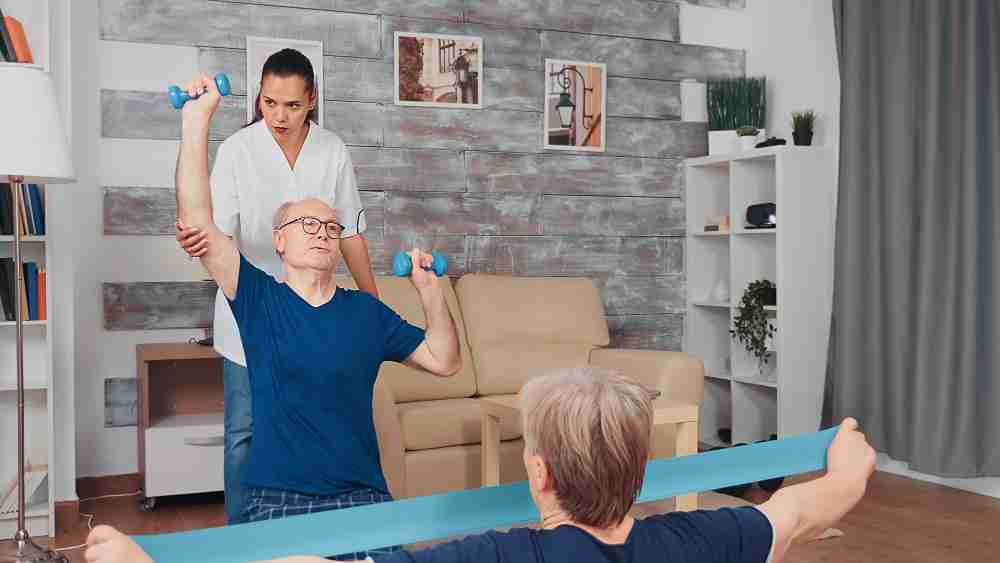
Chair exercises work well for:
- Adults over 60
- Beginners returning to exercise
- Seniors with limited mobility
- People recovering from illness
- Adults who spend long hours sitting
- Individuals looking for low-impact exercise
You don’t need to fit perfectly into one category.
Many healthy, active seniors use chair exercises simply because they enjoy them.
Before you start
A few simple guidelines make workouts safer and more comfortable.
- Choose a sturdy chair. Check this out
- Avoid chairs with wheels.
- Sit near the front edge of the seat unless the exercise says otherwise.
- Keep both feet flat on the floor.
- And move at your own pace.
There isn’t a prize for finishing first.
1. Seated marching
This exercise works as an excellent warm-up.
How to do it
- Sit tall.
- Lift your right knee.
- Lower slowly.
- Lift your left knee.
- Continue alternating for 1 to 2 minutes.
Your arms can move naturally as if you’re walking.
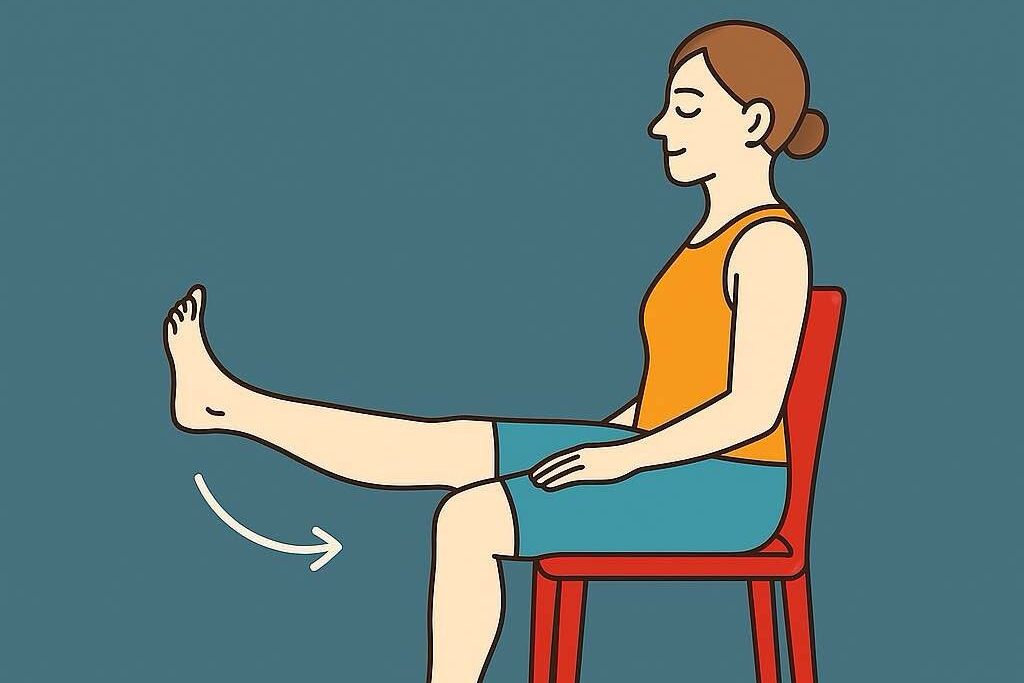
2. Seated knee extensions
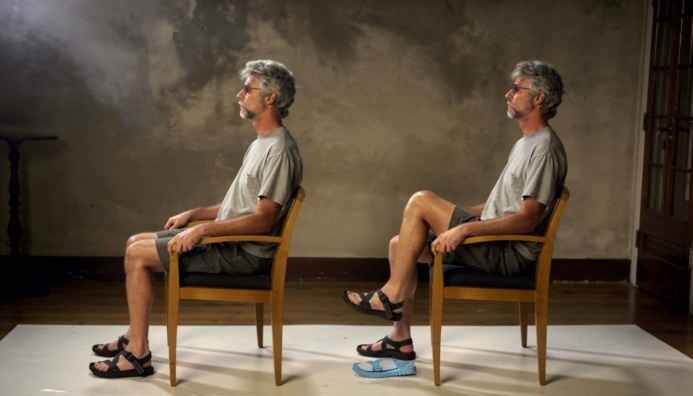
This movement targets the front of your thighs.
How to do it
- Sit upright.
- Straighten your right leg.
- Hold for 2 seconds.
- Lower slowly.
- Repeat 10 times.
- Switch legs.
Focus on control rather than speed.
3. Heel raises
Your calf muscles help support walking and balance.
How to do it
- Keep both feet on the floor.
- Lift your heels.
- Pause briefly.
- Lower slowly.
- Repeat 15 times.
Small movement. Useful exercise.
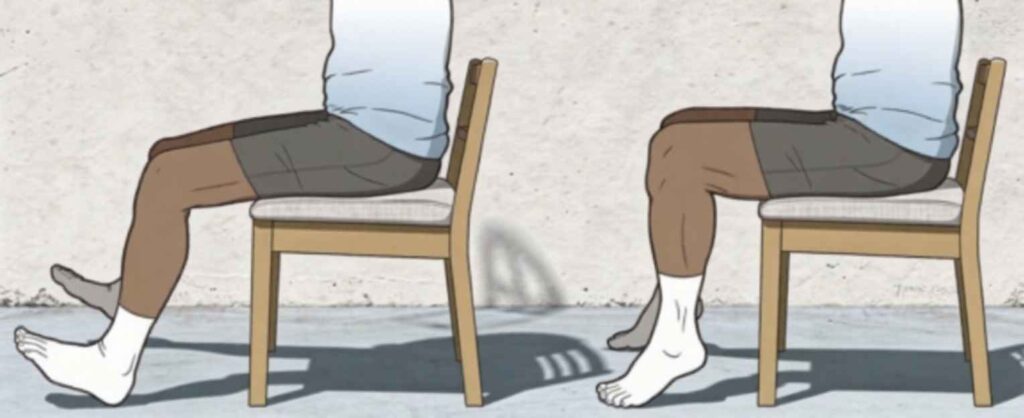
4. Toe raises
The muscles along the front of your lower legs deserve attention too.
How to do it
- Keep your heels planted.
- Lift your toes upward.
- Hold briefly.
- Lower slowly.
- Repeat 15 times.
Many people feel these muscles working almost immediately.
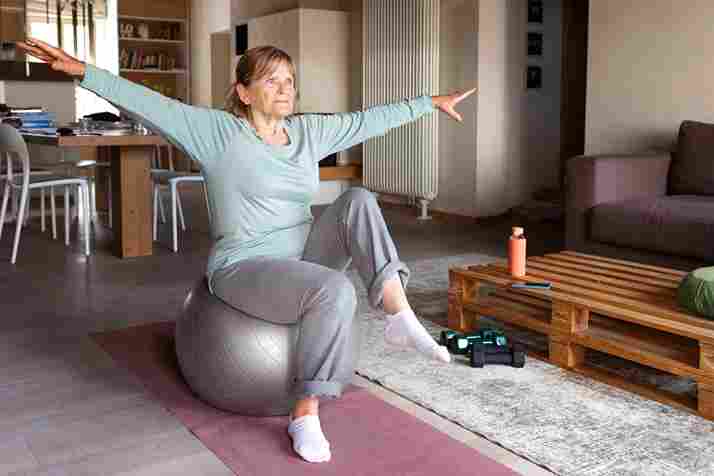
5. Seated arm circles
Shoulders can become tight after years of daily wear and tear.
How to do it
- Extend your arms to the sides.
- Make small forward circles.
- Continue for 15 seconds.
- Reverse direction for 15 seconds.
Relax your neck while performing the movement.
6. Seated punches
This exercise gets your upper body moving.
How to do it
- Sit tall.
- Make gentle fists.
- Extend one arm forward.
- Alternate sides.
- Continue for 30 to 60 seconds.
Think light and controlled.
You aren’t training for a heavyweight title.
Regular movement doesn’t need to be complicated. The Mayo Clinic notes that consistent physical activity can help older adults maintain strength, flexibility, and overall health.
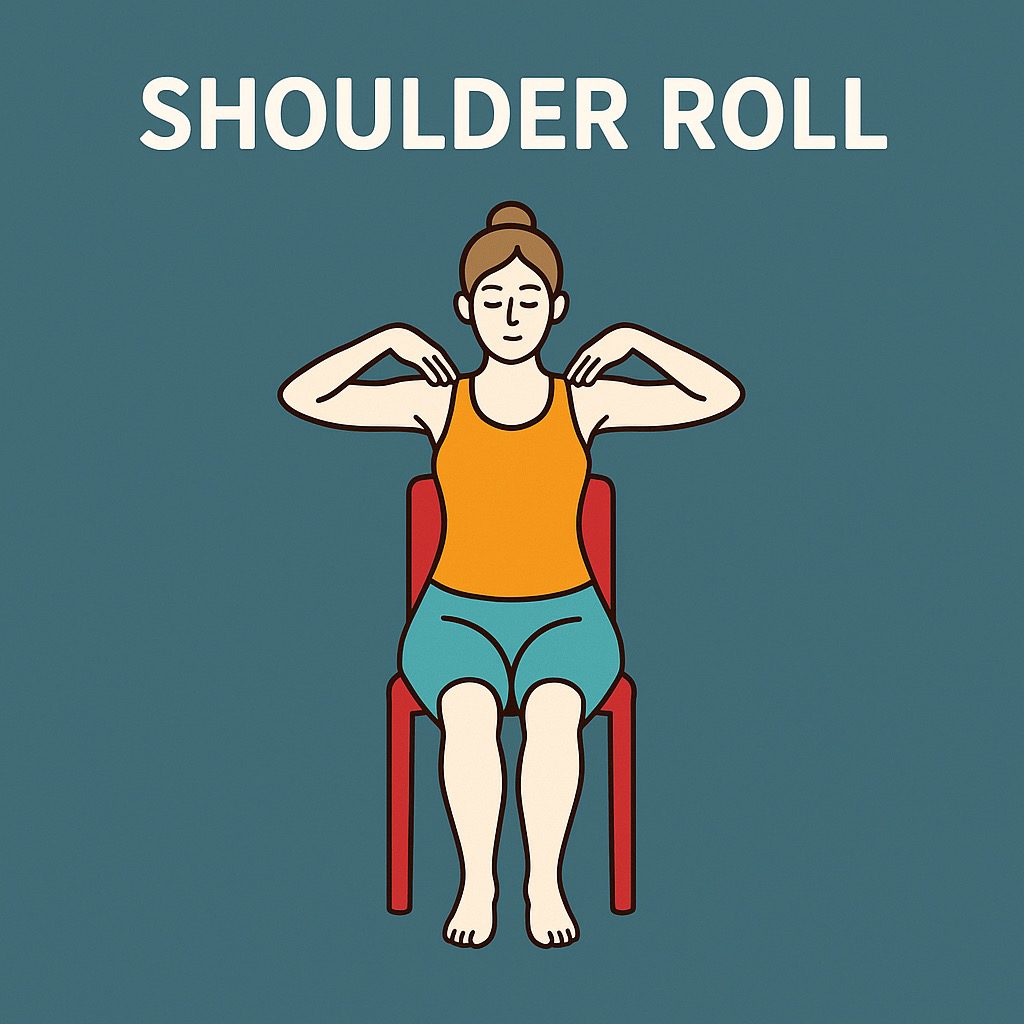
7. Shoulder rolls
Simple exercises often feel the best.
How to do it
- Lift your shoulders.
- Roll them backward.
- Lower them.
- Repeat 10 times.
Then switch directions.
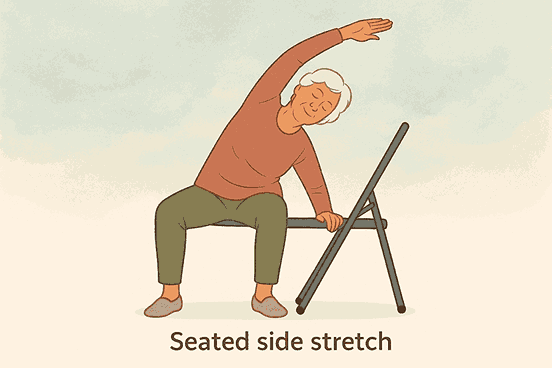
8. Seated side bends
This movement helps improve flexibility through the torso.
How to do it
- Place one hand beside the chair.
- Reach the opposite arm overhead.
- Bend gently toward the side.
- Return to center.
- Repeat on the other side.
Perform 8 repetitions per side.
9. Seated ankle circles
Healthy ankles contribute to healthy balance.
How to do it
- Lift one foot slightly.
- Rotate the ankle slowly.
- Complete 10 circles.
- Reverse direction.
- Switch feet.
Keep the movement smooth.
Gentle movement is often recommended because stiff joints tend to feel worse after long periods of inactivity. The Arthritis Foundation provides exercise guidance for adults living with arthritis.
10. Chair-assisted sit-to-stands
This exercise mimics a movement you use every day.
How to do it
- Sit near the front edge of the chair.
- Lean slightly forward.
- Stand up.
- Lower yourself back into the chair.
- Repeat 8 to 10 times.
Many seniors find this one challenging at first.
That’s completely normal.
11. Seated torso twists
Spinal mobility matters more than people think.
How to do it
- Sit tall.
- Place your hands across your chest.
- Rotate gently to one side.
- Return to center.
- Repeat on the opposite side.
Gentle Chair Yoga Guides for Adults 50+
Two beginner-friendly guides designed to help support flexibility, balance, mobility, and everyday comfort with simple chair-based routines.
Avoid forcing the movement.
12. Overhead reaches
This exercise encourages flexibility through the shoulders and upper body.
How to do it
- Reach both arms overhead.
- Lower slowly.
- Reach forward.
- Return to starting position.
- Repeat 10 times.
Imagine you’re reaching for a favorite mug on the top shelf.
A simple 15-minute chair exercise routine
Try this beginner-friendly routine:
| Exercise | Time |
|---|---|
| Seated Marching | 2 minutes |
| Knee Extensions | 2 minutes |
| Heel Raises | 1 minute |
| Toe Raises | 1 minute |
| Arm Circles | 2 minutes |
| Seated Punches | 2 minutes |
| Side Bends | 2 minutes |
| Sit-to-Stands | 3 minutes |
That’s enough for most beginners.
Consistency wins.
Chair exercises for seniors with bad knees
Knee pain changes how people move.
Sometimes it changes how much they move.
Many seniors become less active because they worry exercise will make knee discomfort worse.
Gentle chair exercises can help keep the surrounding muscles active without placing excessive pressure on the joints.
Exercises that often feel comfortable include:
- Seated marching
- Knee extensions
- Heel raises
- Toe raises
- Ankle circles
- Seated arm exercises
Move through a comfortable range of motion.
Some days your knees will feel better than others. That’s part of life.
Listen to your body and adjust accordingly.
Chair exercises for seniors with arthritis
Arthritis can make movement feel frustrating.
The natural reaction is often to move less.
Ironically, gentle movement often helps reduce stiffness.
Many seniors with arthritis find that light chair exercises help loosen joints and make everyday activities feel easier.
Good options include:
- Shoulder rolls
- Arm circles
- Side bends
- Seated marching
- Ankle circles
- Gentle reaching exercises
Start slowly.
Your joints may need a few minutes to warm up before movement feels comfortable.
Morning workouts work well for some people.
Others prefer exercising later in the day after they’ve had time to move around.
Common mistakes seniors make
A few mistakes show up repeatedly.
1. Moving too fast
- Fast movement often means poor control.
- Slow repetitions usually produce better results.
2. Holding your breath
- Many people don’t realize they’re doing it.
- Keep breathing naturally during every exercise.
3. Slouching
- Good posture helps muscles work properly.
- Sit tall whenever possible.
4. Doing too much too soon
- Motivation is wonderful.
- Overdoing it on day one isn’t.
- A short workout performed consistently beats an ambitious workout performed once.
5. Skipping exercise after a missed day
- Missing one workout doesn’t matter.
- Most fitness plans fail because people turn one missed day into three missed weeks.
Just start again.
Chair exercises for seniors Safety tips
A little caution goes a long way.
- Use a stable chair.
- Exercise on a flat surface.
- Stop if you feel dizzy.
- Keep water nearby.
- Wear supportive shoes if needed.
- Rest whenever necessary.
If you have concerns about a medical condition or recent surgery, talk with your healthcare provider before beginning a new exercise program.
FAQ’s for chair exercises for seniors
1. Are chair exercises effective for seniors?
Yes.
Regular chair exercises help improve strength, mobility, balance, and flexibility. Many seniors notice everyday activities becoming easier after several weeks of consistent practice.
2. How often should seniors do chair exercises?
- Most seniors do well with chair exercises 3 to 5 days per week.
- Some enjoy shorter daily sessions. Others prefer longer workouts a few times each week.
3. Can chair exercises help improve balance?
Absolutely.
Many chair exercises strengthen the muscles involved in balance, especially the legs, hips, core, and ankles.
4. Can chair exercises build strength?
They can.
Strength improvements depend on consistency and exercise selection, but even simple seated movements challenge muscles enough to create progress over time.
5. What is the best chair exercise for beginners?
- Seated marching is usually a great starting point.
- It’s easy to learn, gets blood flowing, and helps warm up the entire body.
6. How long should a chair exercise workout last?
- Most seniors benefit from 10 to 20 minutes.
- You don’t need marathon workouts.
- Regular movement matters more than workout length.
Balance training is a common recommendation for healthy aging. The National Institute on Aging Balance and Fall Prevention Resources discusses how balance-focused activities can help older adults stay active and confident.
The bottom line
Chair exercises for seniors create an easy path to staying active.
- You don’t need perfect mobility.
- You don’t need athletic ability.
You simply need a willingness to move a little more today than you did yesterday.
That effort adds up.
One workout becomes a week. A week becomes a month. And over time, everyday activities start feeling a little easier.
That’s a result worth working toward.
🙏 Did this guide help you move with more comfort?
Every guide on Chair Yoga is shared 100% free to help seniors and caregivers move safely at home.
Every coffee helps create more free content ❤️