

Kartik Sharma
Certified Nutrition & Health Educator
Kartik Sharma specializes in chair yoga, mobility, and senior wellness. His goal is to provide safe, science-backed exercises that help adults over 60 improve balance, flexibility, and daily comfort.
Medical Disclaimer
This content is for informational purposes only and does not replace professional medical advice. Always consult a qualified healthcare provider before starting any exercise program. Stop immediately if you feel pain or discomfort.
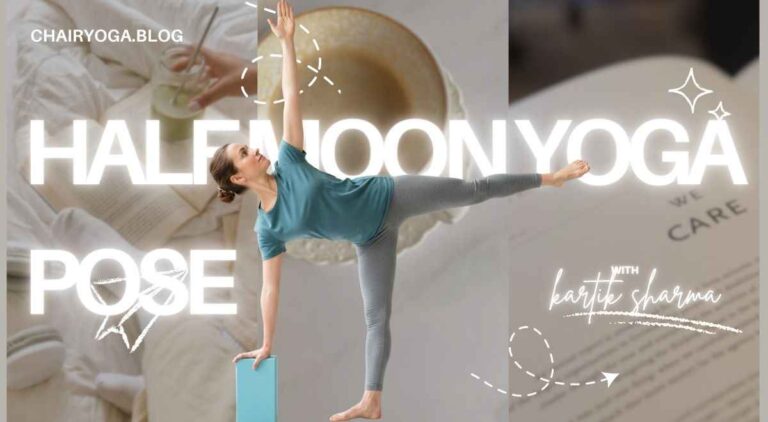
Learn how to do the half moon yoga pose safely. Discover benefits, step-by-step instructions, beginner modifications, common mistakes, and who should avoid this pose. Half Moon Yoga Pose (Ardha Chandrasana): Benefits, How to Do It & Mistakes to Avoid
The half moon yoga pose, also known as Ardha Chandrasana, looks graceful and powerful, but it’s also one of the most challenging balance poses in yoga.
When done correctly, it can:
- Build full-body strength
- Improve balance and coordination
- Increase hip and spine mobility
- Boost confidence and focus
But when done incorrectly, it can:
- Strain the knee
- Stress the lower back
- Cause balance loss or falls
This guide will show you exactly how to do the half moon yoga pose safely, even if you’re a beginner or have balance concerns.
Table of Contents
What Is the Half Moon Yoga Pose?
Half Moon Pose (Ardha Chandrasana) is a standing balance posture where:
- One leg supports the body
- The other leg lifts parallel to the floor
- The torso opens sideways like a half moon
It combines:
✔ Balance
✔ Strength
✔ Flexibility
✔ Focus
That’s why it’s considered a full-body pose.
How to Do the Half Moon Yoga Pose (Step-by-Step)
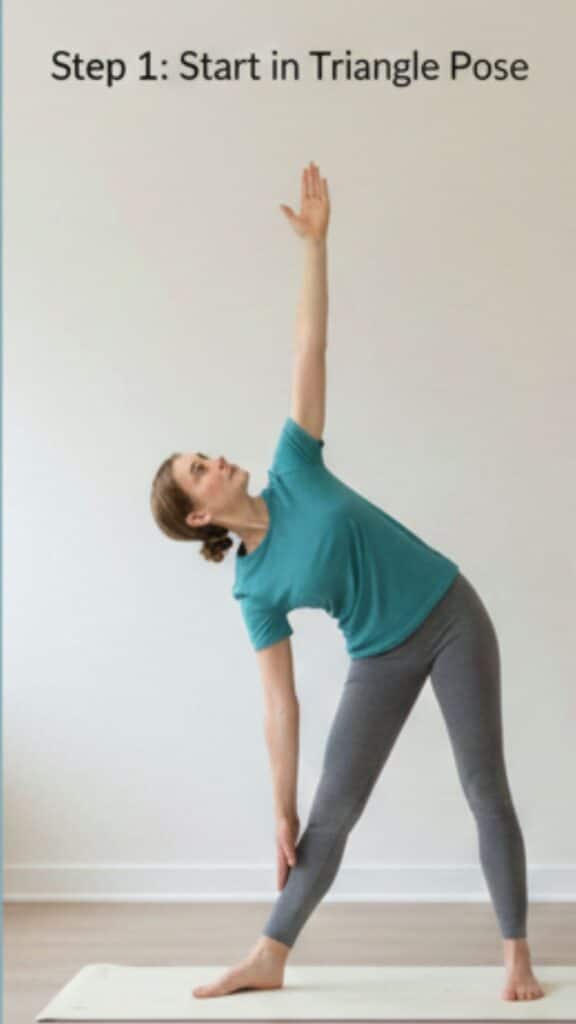
Starting Position
- Begin in Triangle Pose
- Front knee slightly bent
- Back foot grounded
- Eyes forward
Step-by-Step Instructions
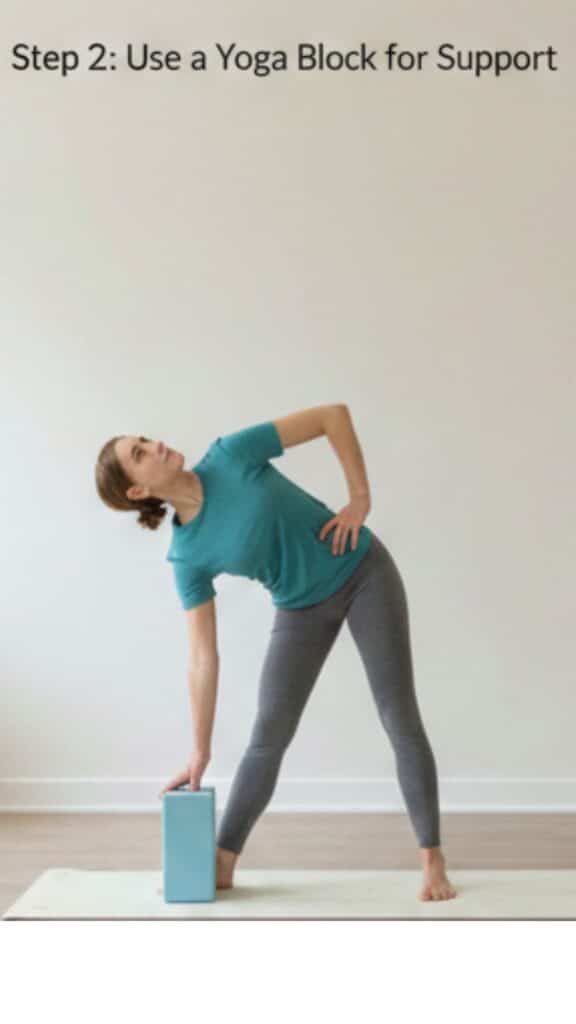
- Shift weight into your front foot
- Place your front hand on the floor or a yoga block
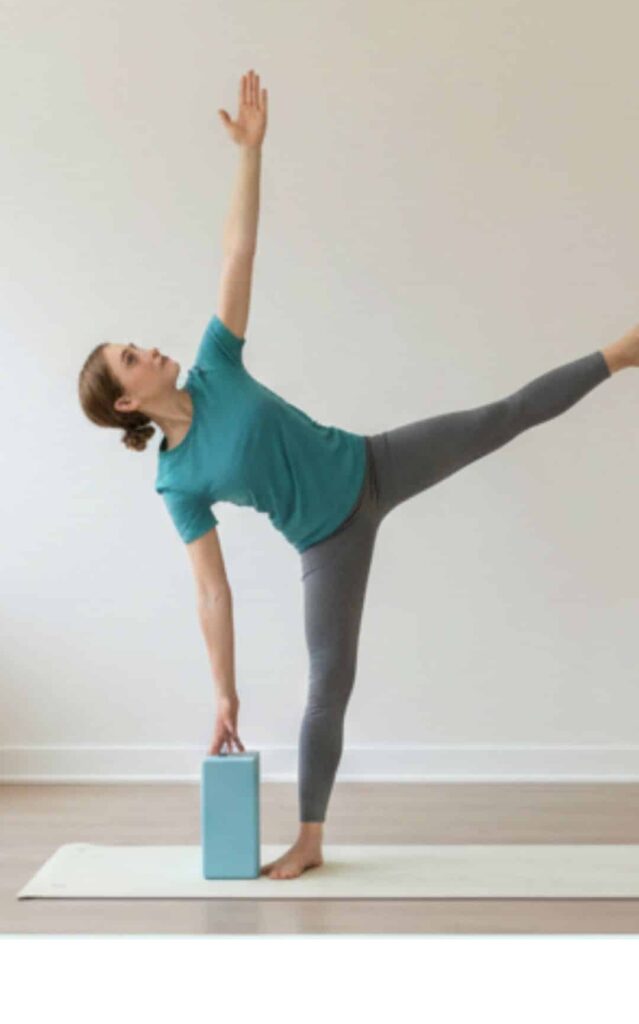
- Lift your back leg until it’s parallel to the floor
- Open your hips and chest to the side
- Extend your top arm upward
- Keep gaze forward or upward (only if stable)
Hold the Pose
- Hold for 15–30 seconds
- Breathe slowly
- Stay steady, not tense
Exit Safely
- Bend front knee slightly
- Lower lifted leg
- Return to Triangle Pose

Gentle Guides Trusted by Seniors
Simple, safe & pain-free chair yoga routines designed for seniors 60+. Improve mobility, balance, and daily comfort at home.
- ✔ Easy seated movements
- ✔ No floor exercises
- ✔ Beginner-friendly routines
- ✔ Quick daily plans
Repeat on the other side.
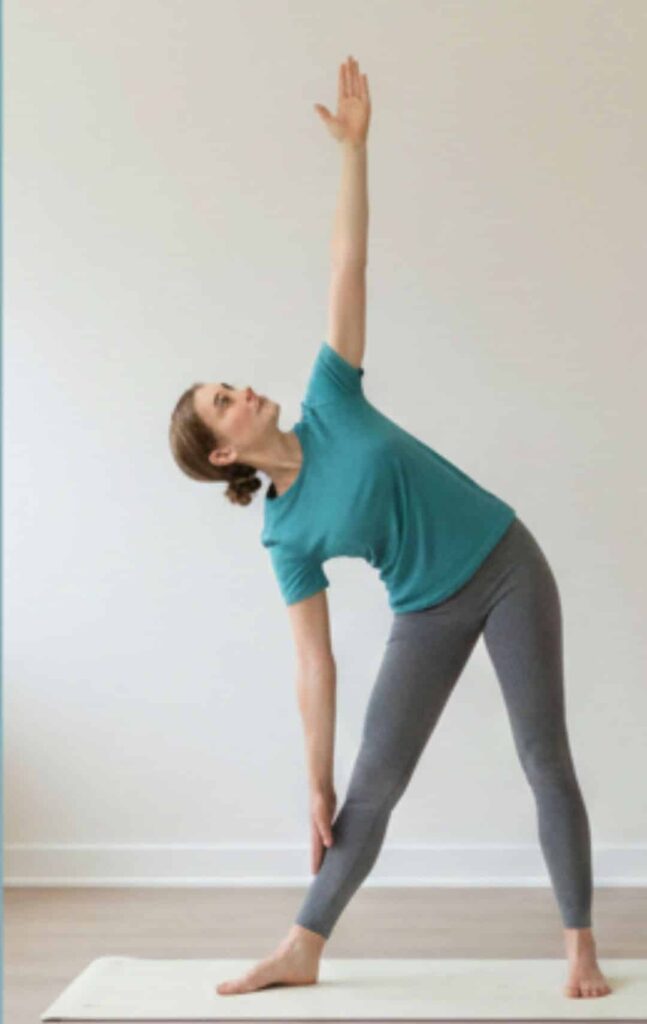
“The Half Moon yoga pose helps improve balance, body awareness, and stability by engaging core and leg muscles to coordinate your body in space.” YogaUOnline
Why the Half Moon Yoga Pose Is So Powerful
Most yoga poses focus on one thing, strength or flexibility.
The half-moon yoga pose trains both at the same time, plus balance.
What Makes It Unique
- Uses one leg for stability
- Engages core muscles deeply
- Opens hips and chest
- Requires mental focus
This is why many yogis say,
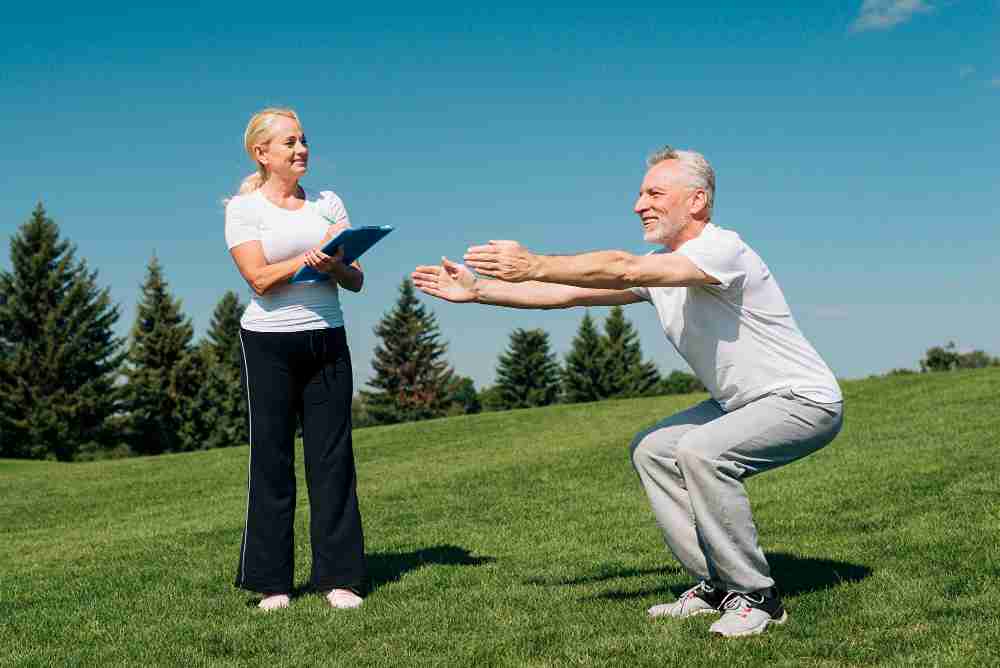
“Half Moon teaches you how to trust your body.”
7 Powerful Benefits of the Half Moon Yoga Pose
1. Improves Balance and Stability
Standing on one leg trains the body’s balance system, helping reduce fall risk.
2. Strengthens Legs and Ankles
The standing leg works hard, strengthening thighs, calves, and ankles.
3. Builds Core Strength
Your abdominal muscles engage to keep you steady and upright.
4. Opens Hips and Chest
The lifted leg and open torso stretch tight hips and chest muscles.
5. Improves Posture
The pose encourages spinal alignment and body awareness.
6. Boosts Focus and Concentration
Balancing requires attention and calming mental chatter.
7. Builds Confidence
Holding this pose, even briefly, creates a sense of strength and control.
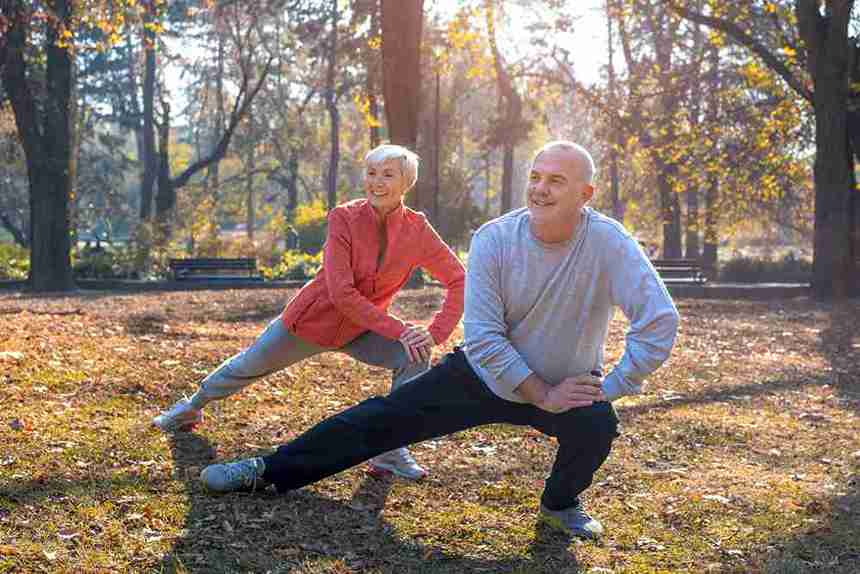
“Yoga practice has been shown to improve balance and physical mobility in adults aged 60 and over.” OUP Academic
Half Moon Yoga Pose for Beginners (Very Important)
This pose is not beginner-easy, and that’s okay.
Beginner Modifications
✔ Use a yoga block under the hand
✔ Keep gaze on the floor
✔ Bend the standing knee slightly
✔ Practice near a wall
👉 Modifications are not “cheating”; they’re smart yoga.
Using Yoga Blocks in Half Moon Pose
Yoga blocks make this pose:
- Safer
- More stable
- More accessible
How to Use a Block
- Place block under bottom hand
- Use highest height if needed
- Focus on balance first, openness later
Blocks reduce wrist strain and fear of falling.
Common Mistakes to Avoid (Very Important)
❌ Locking the Standing Knee
This strains the knee joint.
❌ Forcing the Hip Open
This can stress the lower back.
❌ Looking Up Too Soon
Keep gaze down until balance improves.
❌ Collapsing the Chest
Keep chest open and spine long.
Who Should Avoid or Modify Half Moon Pose?
Be cautious if you have:
- Severe balance issues
- Recent knee or ankle injury
- Lower back pain flare-ups
- Vertigo
Always use supports or consult a yoga professional.
Half Moon Yoga Pose vs Triangle Pose
| Feature | Half Moon Pose | Triangle Pose |
|---|---|---|
| Balance | High | Low |
| Strength | High | Moderate |
| Difficulty | Intermediate | Beginner |
| Core Use | Strong | Moderate |
How Long Should You Practice Half Moon Pose?
- Beginners: 10–15 seconds
- Intermediate: 30–45 seconds
- Advanced: 60 seconds or more
Quality matters more than duration.
FAQs: Half Moon Yoga Pose
What is the half-moon yoga pose good for?
The half-moon yoga pose improves balance, strength, flexibility, and focus.
Is half moon pose hard?
Yes, it is considered an intermediate balance pose, but beginners can use modifications.
Can seniors do half moon pose?
Yes, with support like yoga blocks or wall assistance.
Does half moon pose strengthen the core?
Yes, it strongly activates the abdominal and stabilizing muscles.
Final Thoughts
The half moon yoga pose is not about perfection.
It’s about:
- Balance
- Awareness
- Strength
- Patience
With proper support and practice, this pose can become a powerful tool for both physical and mental growth.
👉 Use blocks, move slowly, and respect your limits.