

Kartik Sharma
Certified Nutrition & Health Educator
Kartik Sharma specializes in chair yoga, mobility, and senior wellness. His goal is to provide safe, science-backed exercises that help adults over 60 improve balance, flexibility, and daily comfort.
Medical Disclaimer
This content is for informational purposes only and does not replace professional medical advice. Always consult a qualified healthcare provider before starting any exercise program. Stop immediately if you feel pain or discomfort.
Find the best yoga mat for seniors: non-slip, comfortable, and easy to clean. Science-backed advice plus a clear Amazon table (best yoga mats, hot yoga mats, non-slip picks). Best Yoga Mat for Seniors. How to choose (quick answer)
For seniors the priority is safety and comfort: choose a mat that is stable (non-slip), cushioned enough to protect knees and hips (≈4–6 mm typical), easy to clean, and made of non-toxic materials. For sweaty/hot yoga classes, prefer cork, PU-topped, or microfiber-towel-style mats because they maintain grip when damp.
Table of Contents
Why this matters for seniors (science & safety)
- Slip & falls: Poor mat traction increases the risk of slipping during transitions. Tests and expert reviews repeatedly show that grip (especially when hands are sweaty) matters a lot for safety. LINK
- Hygiene: Mats can harbor bacteria and fungi if not cleaned regularly; fitness-environment studies show mats may carry microbes similar to other high-contact gym surfaces. Cleanability is therefore important for older adults. LINK
- Materials & durability: Natural rubber and dense TPE give long-term support; cork and PU surfaces are often recommended for wet-grip performance. Manufacturer tests and independent reviews back these claims. LINK
(These three points are core claims — see sources above.)
Quick buyers’ checklist for seniors
- Grip when wet: essential if you sweat or do hot yoga (look for cork, PU top, or microfiber towel mats).
- Thickness: 4–6 mm is a good balance of cushioning and stability; thicker (>6 mm) is softer but can reduce balance feedback.
- Material: natural rubber or high-quality TPE for durability; PVC is cheaper but can be less eco-friendly and may smell.
- Cleanability: Look for smooth surfaces (PU, cork) or mats that accept a quick wipe with mild soap and air-dry.
- Weight & width: seniors often prefer stable, full-size mats (72″ x 24″) with reasonable weight so they’re not hard to move.
Short science corner (what studies actually say)
- Contamination of mats: Environmental microbiology studies of gyms and rehab clinics show mats and exercise surfaces can carry bacterial and fungal loads, cleaning reduces contamination risk. This matters for seniors with more sensitive immune systems.
- Material & grip tests: Independent reviews and hands-on “water tests” confirm that cork and PU surfaces often become grippier when slightly damp, while some smooth PVC surfaces get slippery. For hot yoga, PU-top or cork mats usually perform better.
- Thickness vs. balance: Consumer testing (editorial reviews) suggests ~4–5 mm is a sweet spot for most users, enough cushion but still stable for standing balance work important to seniors.
Best yoga mats
Below are 6 top, widely recommended mats you can find on Amazon or brand stores. The table shows the best use, material, thickness, and why it’s senior-friendly. (Prices vary by size and region; links point to product pages/reviews.)
| # | Brand & Model | Best for | Material | Thickness | Why seniors like it | Source |
|---|---|---|---|---|---|---|
| 1 | Lululemon The Mat (Lululemon) | All-around / cushioned practice | FSC rubber base, dense foam | 3–5 mm variants | Excellent cushioning and grip, premium feel — stable for standing & gentle on joints. | Shop on their website (not available on Amazon) |
| 2 | Manduka Manduka PRO / PROlite | Durability & studio use | High-density PVC (Manduka PRO) / lighter PROlite | 4.7–6 mm (PRO), 4.7mm (Prolite) | Exceptionally durable, stable, lifetime warranty on PRO; supportive for seniors doing regular practice. | AMAZON LINK |
| 3 | JadeYoga Jade Harmony | Eco & steady grip | Natural rubber | ~3/16″ (~4.5 mm) | Natural rubber gives a tacky grip, good cushioning and eco credentials (trees planted per mat). | AMAZON LINK |
| 4 | Liforme Liforme Original | Alignment & non-slip | Eco TPE with special top finish | ~4.2 mm | Patented grip & alignment lines — excellent non-slip surface and sweat-resistant feel. Good for guided practice. | AMAZON LINK |
| 5 | Gaiam Gaiam Classic / Essentials | Value / gentle practice | PVC/TPE blends | 4–6 mm options | Budget friendly, widely available, cushy options for beginners and seniors. | AMAZON LINK |
| 6 | Cork / PU hybrid mats (various brands — e.g., Yoloha, YogaZeal, Manduka’s PU lines) | Hot yoga / sweaty hands | Cork top / PU microfiber | 3–4 mm typical | Cork & PU exhibit strong wet-grip; cork is naturally antimicrobial and becomes grippier when damp. Great for hot yoga or sweat-prone seniors. | AMAZON LINK |
Tip: If the senior practices at home and needs extra knee protection, choose a slightly thicker mat or place a folded towel under knees for seated/ground poses.
How did I choose these?
- Cross-checked editorial test lists (Tom’s Guide, Health, People), brand product pages, and hands-on reviews for wet grip (hot yoga), durability, and cleanability.
- Prioritized mats with proven non-slip reputations (Manduka, Jade, Liforme, and Lululemon); widely sold value options (Gaiam); and cork/PU options for hot yoga.
Which mat for which senior use case?
- Gentle daily home chair yoga, mostly seated: 4–6 mm support like Manduka PROlite or Gaiam Classic for cushioned comfort.
- Balance & standing sequences (fall risk): choose a mat with a firm surface and moderate thickness (≈4 mm), such as a Manduka PRO or Liforme.
- Hot yoga / heavy sweating: Use cork or PU-topped mats (or microfiber towel hybrids) for the best wet grip.
- Budget + occasional practice: Gaiam / Value From mats—okay for light daily practice, but replace if you notice slip or wear.
Cleaning & hygiene: quick, senior-friendly routine
- Daily: quick wipe with a damp microfiber cloth and mild soap (or a 1:3 white vinegar:water spray) then air dry. LINK
- Weekly: light soda treatment or microfiber wash for towel-top mats; deep soak only if mat manufacturer allows (many natural-rubber mats should NOT be soaked). Always follow manufacturer cleaning instructions. LINK
- spray) andWhy: lab studies show mats and gym surfaces carry microbial loads; cleaning reduces this and protects seniors with lower immune resilience. LINK
Practical buying & safety tips (senior-friendly)
- Check weight — heavy mats (Manduka PRO) are stable but bulky; confirm you can lift/move one.
- Try wet grip if you sweat — when possible, test a mat’s grip with a small water spray (many reviewers do this). Cork and PU usually perform well in tests.
- Look for antimicrobial or easy-wash surfaces if you use community studios or shared equipment.
- Avoid very thick, soft mats if balance work is needed — too much cushioning reduces stability feedback.

FAQ for Best Yoga Mat
Q: What is the best yoga mat for hot yoga?
A: Cork or PU-topped mats (or microfiber hybrid mats) are best for wet grip. Examples include cork mats and specific hot-yoga designs. LINK
Q: Are expensive mats worth it for seniors?
A: Often yes — premium mats (Manduka, Liforme, Lululemon, Jade) give better durability and grip; for regular practice the lifetime value can be better than repeatedly replacing cheap mats. LINK
Q: How do I clean a mat safely?
A: Wipe daily with mild soap or 1:3 vinegar/water; deep clean per manufacturer guidance. Avoid harsh bleach or machine drying that damages materials. LINK
Final recommendation (for most seniors)
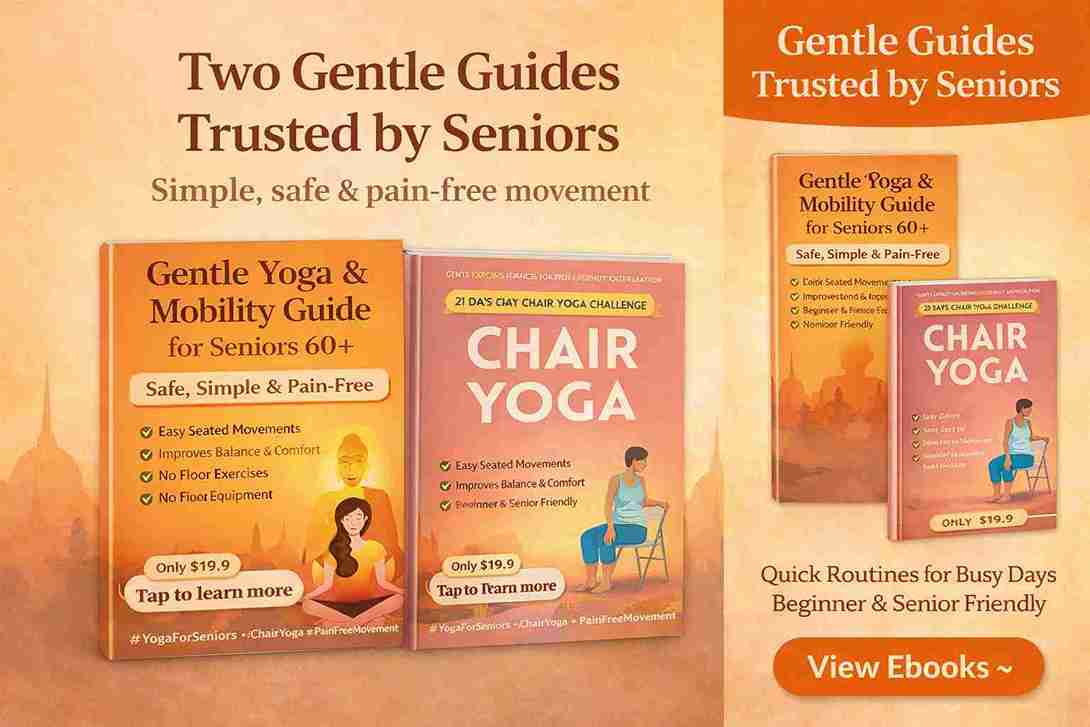
Gentle Guides Trusted by Seniors
Simple, safe & pain-free chair yoga routines designed for seniors 60+. Improve mobility, balance, and daily comfort at home.
- ✔ Easy seated movements
- ✔ No floor exercises
- ✔ Beginner-friendly routines
- ✔ Quick daily plans
If you want one reliable, safe, all-round mat: choose a 4–5 mm natural rubber or high-quality TPE mat (e.g., JadeYoga Jade Harmony or Liforme Liforme Original) for good grip, comfort, and eco-credentials. If you practice hot yoga, look to cork or PU-topped options.